Tag: Movement & Physical Fitness

  • Beat Winter Doldrums By Using A Pool Indoors

    BE FIT

    Image of smiling female standing next to indoor pool.

    If you think swimming pools are just for summer fun, think again. Winter is a great time to take advantage of an indoor pool to get some low-impact exercise. Exercising in water offers many benefits no matter what the season. Try it this winter because:

    *  It’s low impact, so it’s easy on joints that may get sore with activities like running or jumping.

    *  It helps you be more flexible. In the water, you may be able to move your arms and legs in ways that are difficult on land.

    *  Warm water pools can feel soothing, especially in cold weather.

    *  It helps people with arthritis or orthopedic/joint injuries to improve joint movement without pain or strain from traditional exercise.

    *  It offers a nice change from land exercises – and variety may help you stick with a workout.

    *  A pool workout helps keep you cool, even if you’re working hard.

    *  Water exercise may improve mood and mental well-being.

    *  Water offers natural resistance that can tone and strengthen muscles.

    Don’t swear off pool exercise because you can’t swim.

    There are many exercises that can be done in the water that don’t include traditional swimming. If you can’t swim, stick to the shallow end or wear a life jacket. Try these exercises:

    *  Walk or jog from end to end in the shallow end.

    *  Grab the edge of the pool and kick your legs from side to side.

    *  Try the “superman”: hold the edge of the pool and point your body out straight behind you. Keep your body in a straight line and hold the pose for a few seconds.

    *  Do jumping jacks in chest-deep water

    Many local fitness centers have pools for exercise and even water aerobics classes. A community center, hotel or school may offer public swim times as well.

    To help keep public pools clean and to avoid illness:

    *  Shower before and after using a pool

    *  Don’t get pool water in your mouth

    *  Don’t use the pool if you’re sick, especially if you have had vomiting or diarrhea within the last week

    *  Stay out of the pool if you have an open wound that’s not fully healed or fully covered with a waterproof bandage

    © American Institute for Preventive Medicine

  • Fitting In Fitness When Life Is Busy

    BE FIT

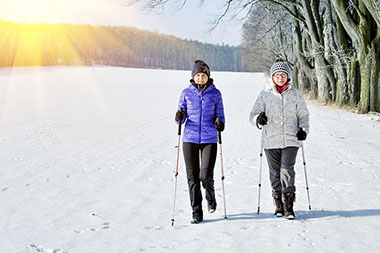
    Image of two female friends walking outside in the winter.

    Regular exercise improves your physical and mental health in many ways. Despite its benefits, exercise can be hard to fit into a busy schedule. But no matter how busy your life is, there are ways to make physical activity a part of your routine. Try these small steps to work toward a more active life.

    *Focus on small chunks of time.Many people feel overwhelmed when they think about having to exercise for 30 to 60 minutes. But even 10 minutes of exercise has health benefits. Instead of surfing the web for 10 or 15 minutes, turn on some music and dance, climb the stairs or take a walk.

    *Schedule it in.Most people have at least a few minutes a day they could spend doing exercising instead of leisure activities. TV or Internet time are great examples of things you could cut back on to make time for physical activity. Put your exercise time in your calendar or set an alarm to remind you to get up and move.

    *Make it convenient.Try to find a gym that’s close to your home or work so you can stop by without going out of your way. Or, check out fitness DVDs from the library to use at home. If you make it easier to get started, it may be easier to stick with it.

    *Don’t forget about weekends.Use your days off to get in a few extra minutes of exercise. Instead of quick 10-minute walks, make it 30 minutes. Or, go to a park or walking trail and enjoy the scenery and the extra time for yourself. Go for a family exercise outing to help everyone get healthier!

    *Make the most of break time.Take just five to 10 minutes to walk around the building or up some stairs when you have a break from work.

    © American Institute for Preventive Medicine
  • Learn To Love Exercise

    BE FIT

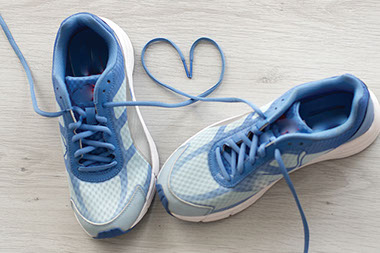
    Image of gym shoes with laces shaped as a heart.

    We know exercise improves our health and well-being. So why do so many of us struggle to get and stay active?

    Maybe we need to look at exercise in a different way. Look at it as something you want to do for yourself and not as a chore or something you have to do. You can look forward to exercise, and even learn to love it, with these tips:

    *Think about who you are.If you are social, look into group classes and activities. “Home bodies” might enjoy using exercise DVDs or online programs in their living room. If you enjoy nature, use your neighborhood or local walking paths to get fresh air. Sports fans might like to join a softball or soccer team.

    *Branch out.Take a chance on a new activity such as dance classes, rock climbing or water aerobics. You may discover a new way to get exercise that is fun and exciting for you.

    *Be a kid again.If you loved basketball, skating or swimming as a child, who says you can’t do it now? Look for local adult clubs or gatherings that include your favorite childhood activities.

    *Add variety.Being bored with exercise will lower your motivation. Change things up, such as walking two days a week and an aerobics or swimming class on the weekend.

    *Find your rhythm.Your favorite music can help you enjoy a walk, jog or weight lifting session. Load your favorite upbeat songs on a music player or smartphone and take it along for your workout. Be careful not to turn it up too loud. You still need to hear what is going on around you. And, prolonged use of headphones at high volumes can cause hearing loss.

    Source: National Institutes of Health

    © American Institute for Preventive Medicine

  • Staying Active With A Disability

    BE FIT

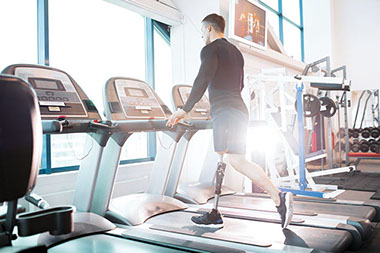
    Image of disabled man on treadmill.

    Most of us know that exercise is great for our health. But, if you or someone in your family has a disability, exercise can feel like a difficult task. Not only do you have to find time and energy to do it, but you need to worry about accessibility, too.

    Make sure your doctor gives you the okay before you begin any exercise program.

    It can be frustrating when your favorite activity doesn’t seem to work for you. But, some extra research may be worth the effort. These tips can help you get started:

    *  Check into races. There are many 5K, 10K and longer races that are accessible to people with many types of disabilities. And, many of them raise money for charitable causes. This may also help motivate your family to get out and train for a race and have fun together. Be sure to ask in advance about accessibility to be sure it will work for you.

    *  Get outside and do what you love. Have outside time a few times a week. This can be as simple as throwing a ball in the yard, going to an accessible playground, gardening or playing with the hose or sprinkler on a hot day.

    *  Ditch the car for short trips. If you live near a town, consider walking to the store for an errand. If this isn’t realistic, get some miles in at a mall or shopping center. Park at one end and visit the shops all the way at the other end.

    *  Modify your sports. Many sports can be fun and challenging with some minor changes. Walking instead of running for soccer, using a larger or softer ball for volleyball, or omitting the net in tennis may make the game work for you.

    *  Try low impact activities. Joining an aquatic exercise program or using rowing machines are two great activities for those who have joint limitations.

    Activities for people with disabilities

    Check with the following organizations to see who offers adaptive programs and activities:

    *  Your city or county recreation department

    *  Local YMCA or YWCA

    *  Boy Scouts or Girl Scouts councils

    *  Nearby high schools, colleges and universities

    *  Chamber of Commerce

    *  Center for Independent Living (CIL)

    *  National and State parks (many have paved hiking trails)

    Finally, talk with your doctor or health care provider about your desire to get active. They may have resources to help you get started. Join support groups with people who have disabilities like yours and use the power of community to find out about fun and active things you can do.

    Sources: The National Center on Health, Physical Activity and Disability (NCHPAD), U.S. Department of Health and Human Services

    © American Institute for Preventive Medicine
  • Beating Exercise Barriers

    BE FIT

    Image of older couple jogging with their dog.

    Exercise is one of the best things you can do for your health. It reduces your risk of heart disease, type 2 diabetes, and some types of cancer. It can also improve your mental well-being and increase your energy. So why don’t more people do it? A variety of things can come between you and your fitness goals. Here are some ways to overcome them:

    Problem: You find exercise boring.

    Solution:Invite a friend to walk with you or attend an exercise class together. Having a fitness buddy gives you more to look forward to, and helps you stick with your commitment.

    Problem: You’re too tired.

    Solution:Identify a time of day when you feel more energetic. Even a short walk during your lunch hour has health benefits. Remind yourself that once you get started, you may find that your energy levels increase and it gets easier.

    Problem: You think you’re out of shape.

    Solution:You don’t have to do exercises that are too challenging for you. Start with walking, biking, or something else you enjoy. Go at your own pace and build up to longer, harder workouts as your fitness level improves.

    Problem: You’re just too busy.

    Solution:Find small amounts of time to fit in a walk or class. If you have children at home, take them with you for walks and make it a family activity. You can add activity into your daily life. Park farther from your destination and walk. Take the stairs instead of the elevator. March in place or use a treadmill while you watch TV.

    Source: Centers for Disease Control and Prevention

    © American Institute for Preventive Medicine

  • Fueling Your Workout The Healthy Way

    BE FIT

    Image of man at the gym.

    Food is your body’s fuel. When it comes to exercise, healthy food can power you through a workout session, while less healthy food can leave you feeling flat.

    Finding the right pre-workout foods doesn’t have to be complicated. Listen to your body and keep track of your diet. This can help you discover what you should eat – and avoid eating – when you want to make the most of your exercise time.

    No “quick fixes”

    Though many products on the market claim to boost energy and performance, many of them aren’t as healthy as nutritious, whole foods. Some energy bars and drinks contain high levels of sugar, caffeine and other additives. These may give you a quick “jolt,” but when your blood sugar drops and the caffeine wears off, you could feel sluggish or downright exhausted.

    Is timing everything?

    Some athletes swear by eating 30 minutes before a workout. Others experience cramping or tiredness if they eat too close to when they exercise.

    If you’re doing an intense workout, such as running or high-impact aerobics, you may need to give your body longer to digest a meal. But lower-intensity activities, such as walking or gardening, may be more enjoyable if you’ve had a small meal first.

    Healthy pre-workout choices

    Whole foods are often a great choice pre-workout – and in daily life. But don’t stick to fruits and vegetables only. The body needs some protein and fat to make energy. Try avocados, nuts, seeds, eggs, fish or beans with some fruit or veggies. If you’re going to exercise within the hour, make it a smaller portion.

    Skip sugary treats, sweetened beverages, and energy bars and drinks. Drink plenty of water before your workout and continue to drink during and afterward. If you’ll be sweating excessively, a sports drink may be advised – but make water the drink of choice most of the time.

    Coffee and exercise – a good match?

    Some people find they have a better workout after they’ve had their morning cup of joe. This can be helpful for those who already drink coffee, but it’s not for everyone. Coffee can dehydrate you, so drink plenty of water. And, if you don’t already drink caffeinated beverages, you could end up jittery or anxious. If your doctor has told you to avoid caffeine, don’t try this.

    Consuming the right foods at the right time may help you feel your best during and after your workout.

    © American Institute for Preventive Medicine

  • More Than A Bump On The Old Noggin

    BE FIT

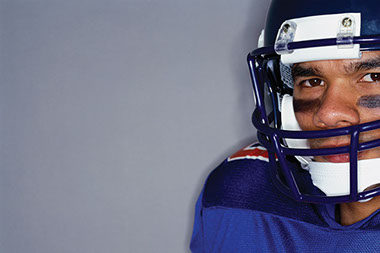
    Image of a football player.

    You’re hearing more about sports-related concussions. Why? Because there are simply more of them. Like 3 million each year, says the CDC.

    Does anyone suspected of having a concussion need a CT or MRI scan right away? Dr. Howard Derman, director of the Methodist Concussion Center in Houston, explains. While there is damage to the brain cells in a concussion, the damage is at a microscopic level and cannot be seen on MRI or CT scans. The injured brain looks normal on these tests, even though it has been seriously injured. Even if a CT scan or MRI shows you’re “okay,” your doctor should also perform a physical exam.

    The signs and symptoms of concussion can appear immediately after the injury or may not appear until days after. Some of the many apparent signs to note are these:

    * Appears dazed or stunned

    * Answers questions slowly

    * Has nausea or vomiting

    * Feels sensitivity to light or noise

    * Cannot recall events prior to the hit or fall

    With a concussion, athletes need to be medically cleared to return to activity. The brain is bruised. It needs time to heal.

    © American Institute for Preventive Medicine

  • Take Golf Injuries Seriously

    BE FIT

    Image of man playing golf.

    Golf doesn’t hold the same kind of injury risk as high-impact sports such as football or hockey. But the repetitive motion and twisting of the spine can set the stage for potential injuries that may be underestimated for this low-impact lifetime sport.

    Mike Markee, instructor of physical therapy and athletic training at Saint Louis University, has spent time on the senior PGA tour and developed exercise and fitness programs for golfers.

    “It is possible to avoid injury and improve performance, especially through muscle strength and proper form,” Markee said. “The great thing is that the same things that help you avoid injury also will improve your game.”

    It comes down to these 3 tips:

    1.Warm up and keep moving.There can be a lot of down time in golf, so it takes deliberate focus to keep moving. Stretch before, during, and after the game. If you’re able to walk and the course allows, skip the cart and get a few miles under your belt by the end of the game.

    2.Strengthen your core.Golfers use the muscles closest to the spine, including hip and shoulder muscles. This is where the power comes from in your golf swing. A weakness in your core can lead to an unbalanced swing, with some muscles compensating for others. You can develop more power by training the right muscles. Now we know that strength training and flexibility aren’t polar opposites and, in fact, core strength training can actually improve your performance.

    3.Develop good body mechanics.Golf’s main injury risk comes from the repeated motions of the swing. Working with a pro to learn to swing properly can help you reduce forces on the spine due to twisting and rotating and ensure that you aren’t developing bad habits that can take their toll on your back, shoulder and elbow.

    © American Institute for Preventive Medicine
  • Best Exercise For People With Diabetes

    BE FIT

    Image of middle-aged Hispanic man playing with a soccer ball.

    The best exercise for anyone with diabetes may be a notch above a casual walk, according to Jamie Cooper, assistant professor of nutritional sciences at Texas Tech University.

    “A person should exercise to the point when they’re breathing a little bit harder and sweating a little bit-then they know they’re working more intensely,” Cooper said.

    The type of exercise really doesn’t matter as long as you’re moving and getting some exercise on a regular basis. Finding something you enjoy and are motivated to do is probably more important than a specific type of exercise to treat diabetes.

    “It’s not something you just do once a month or for a couple of weeks and quit. It has to be something you adapt into your new, healthier lifestyle and do on a regular basis,” Cooper said.

    © American Institute for Preventive Medicine

  • Fun, Fast Indoor Workouts

    BE FIT

    Image of middle-aged man with headphones on dancing.

    When the winter months hit, it can be difficult to get outside to exercise. Snow, ice, wind, and rain can put a damper on your regular walk around the neighborhoods.

    But regular exercise cuts your risk for heart disease, diabetes, depression, and even some cancers, according to the CDC. So don’t cut your workout routine when the weather doesn’t cooperate. Bring the workout into your home with these tips:

    1.Just dance.Not only is it fun, but you can burn a lot of calories and customize it to work for you. Turn on your favorite tunes and start moving. For maximum benefit, do a 5-minute warm-up, 20-30 minutes of active dancing, and a 5-minute cool down. If you can’t do that much to start, just try a few minutes and add more time each week as you are able.

    2.March or jump.If dancing isn’t for you, marching around the house, or even just in your living room, can provide great benefits. Mix it up every few minutes by doing a few jumping jacks. You can also “pretend” you’re jumping rope by doing the motions without a rope. Watch videos that guide you through indoor walking or other aerobic activities.

    3.Strength training.You don’t need fancy weight machines or equipment. Use a resistance band to strengthen your arms and legs. Try simple exercises like squats, lunges, and push-ups. Take care to do them correctly. If you have an injury or health condition that restricts movement, talk with your doctor about exercises that are right for you.

    With a little creativity, you can have your own body-and-mind-boosting workout in the comfort of your home – no matter what the weather.

    © American Institute for Preventive Medicine