Tag: Movement & Physical Fitness

  • Move In Minutes

    SELF-CARE CORNER

    Image of business man walking while talking on the phone.

    Sitting for extended periods can raise the chances of developing cancer even for people who exercise regularly, says recent research. In response to these findings, fitness experts at The University of Texas MD Anderson Cancer Center share advice on how to get moving in minutes.

    “Taking just one- to two-minute breaks from sitting may help lower your cancer risk,” said Dr. Karen Basen-Engquist, professor in the Department of Behavioral Science. “That’s because even short spurts of movement can help minimize inflammation, insulin resistance, and long-term weight gain-all factors that make it harder for the body to fight off cancer.”

    Basen-Engquist, who uses a pedometer and tries to get at least 500 steps an hour, offers these tips to get moving-no matter how many minutes you can grab each day.

    Have 5 minutes? Stretch.

    Take breaks from sitting at work or home by standing up and stretching your back, forearms, wrists, legs, and hamstrings. Among the benefits: more energy, better circulation, and less muscle tension and stress.

    Have 10-15 minutes? Take a brisk walk.

    Head out during your lunchtime. Take walking meetings with coworkers. Plan a quick trip around the neighborhood. Walking helps maintain a healthier blood pressure, boosts metabolism, curbs stress, and possibly reduces breast and colorectal cancer risk.

    Just keep in mind that brisk walking yields more benefits than a casual stroll. So you should feel a little out of breath and feel your heart beating a little faster.

    Have 20-30 minutes? Tidy the house.

    Tidying up does more than limit couch time. It can also qualify as aerobic activity. To get your heart rate up, focus on repetitive activities that use large muscle groups, like the legs and back. This includes vacuuming, mopping, scrubbing, gardening, and even taking multiple trips upstairs to put away laundry.

    Have just 1-2 minutes? Take the stairs.

    Skip the elevator or escalator and take the stairs at work and when doing errands. Stairs get your heart pumping, build muscle, strengthen bones, and burn calories. The more often you take one step at a time, the bigger the payoff.

    © American Institute for Preventive Medicine

  • The Aerobic Mile

    BE FIT

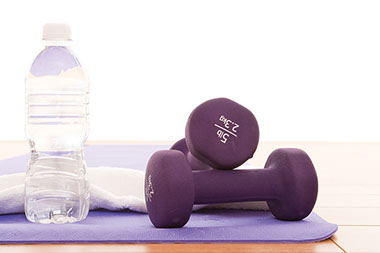
    Image of water bottle, towel and dumb bells on a mat.

    How much exercise do you need? The answer is 30 minutes most days of the week, according to government guidelines. But you can calculate your own fitness level by using the aerobic mile as your guideline.

    An aerobic mile, simply, is how much energy you expend jogging one mile. Okay, you don’t want to jog. But you can burn the same number of calories by doing other exercises. Here are some examples of activities you can do to equal one aerobic mile:

    *  Walking one mile at any pace

    *  Bicycling at a moderate pace for 12 minutes

    *  Vigorous rowing for 12 minutes

    *  Swimming for 24 minutes

    *  Tennis for 20 minutes (11 if your game is vigorous)

    *  Weight training at a moderate pace for 15 minutes

    *  Easy gardening for one hour

    *  Aerobic exercise to music, easy pace for 20 minutes

    Beginning exercisers should strive to achieve the equivalent of 6 aerobic miles a week. Those with good fitness levels can move up to 10 hours a week. High fitness levels are achieved with 15 aerobic miles each week, according to ACSM Guidelines for Exercise Testing.

    © American Institute for Preventive Medicine