Tag: Movement & Physical Fitness

  • Move Your Way

    Fitness

    Man wearing apron and cleaning gloves, using a broom stick as a guitar.

    The key to moving more is finding and doing activities you really enjoy. Dancing, walking, gardening…if it moves you and makes you happy, it works! When you do move, work toward 20 minutes a day of moderate to vigorous levels of movement. Regular physical activity helps with weight management and improving cardiovascular health. Add some weighted hand gloves for increased resistance and to build muscle while you move.

    Be More Earth-Friendly

    Want to help the earth while exercising? Plogging – or picking up trash while you jog or walk – is one way you can do your part to keep your community, and the environment, clean.

    Page from HealthyLife Weigh book by the American Institute for Preventive Medicine. www.HealthyLife.com. All rights reserved.

    © American Institute for Preventive Medicine

  • Exercise Safely In The Heat 2

    BE FIT

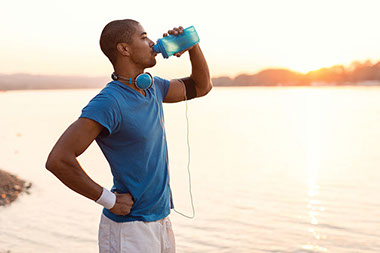
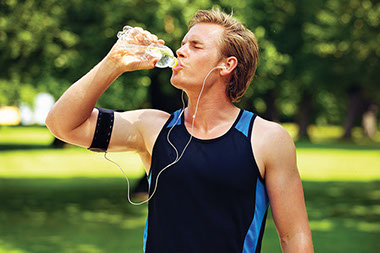
    Man outside drinking water and exercising.

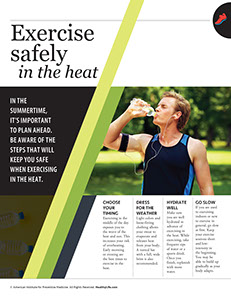
    In the summertime, it’s important to plan ahead. Be aware of the steps that will keep you safe when exercising in the heat.

    Choose your timing

    Exercising in the middle of the day exposes you to the worst of the heat and sun. This increases your risk of overheating. Early morning or evening are the best times to exercise in the heat.

    Dress for the weather

    Light colors and loose-fitting clothing allows your sweat to evaporate and releases heat from your body. A vented hat with a full, wide brim is also recommended.

    Hydrate well

    Make sure you are well hydrated in advance of exercising in the heat. While exercising, take frequent sips of water or a sports drink.  Once you finish, replenish with more water.

    Go slow

    If you are used to exercising indoors or new to exercise in general, go slow at first. Keep your exercise sessions short and low-intensity in the beginning. You may be able to build up gradually as your body adapts.
    © American Institute for Preventive Medicine
  • Tips For Exercise After Knee Replacement

    BE FIT

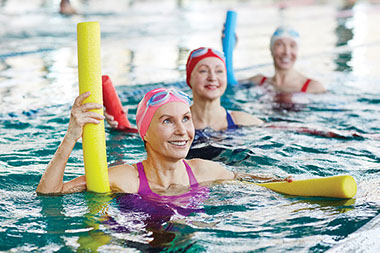
    Three older women doing water exercises.

    After a knee replacement, you may want to get back on your feet. Follow these tips when you’re ready to exercise again:

    *  Ask your doctor before you try any new exercise.

    *  Continue to do the exercises your doctor or physical therapist prescribed.

    *  Consider swimming, biking and walking, as they’re easy on the knees.

    *  Limit or avoid high-impact exercise like running, skiing or racquetball.

    Source: American Academy of Orthopaedic Surgeons

    © American Institute for Preventive Medicine
  • Choose An Exercise That Suits Your Body Type

    Fitness

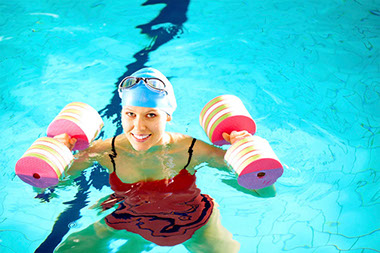
    Image of women doing water aerobics.

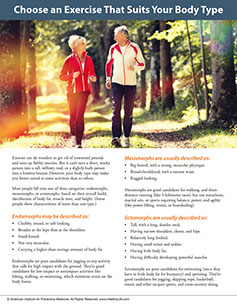
    Exercise can do wonders to get rid of unwanted pounds and tone up flabby muscles. But it can’t turn a short, stocky person into a tall, willowy reed, or a slightly built person into a brawny bruiser. However, your body type may make you better suited to some activities than to others. Most people fall into one of three categories: endomorphs, mesomorphs, or ectomorphs, based on their overall build, distribution of body fat, muscle tone, and height. (Some people show characteristics of more than one type.)

    Endomorphs may be described as:

    *  Chubby, round, or soft looking.

    *  Broader at the hips than at the shoulders.

    *  Small-boned.

    *  Not very muscular.

    *  Carrying a higher-than-average amount of body fat.

    Endomorphs are poor candidates for jogging or any activity that calls for high impact with the ground. They’re good candidates for low-impact or nonimpact activities like biking, walking, or swimming, which minimize strain on the body frame.

    Mesomorphs are usually described as:

    *  Big-boned, with a strong, muscular physique.

    *  Broad-shouldered, with a narrow waist.

    *  Rugged looking.

    Mesomorphs are good candidates for walking, and short-distance running (like 5-kilometer races) but not marathons, martial arts, or sports requiring balance, power, and agility (like power lifting, tennis, or boardsailing).

    Ectomorphs are usually described as:

    *  Tall, with a long, slender neck.

    *  Having narrow shoulders, chests, and hips.

    *  Relatively long limbed.

    *  Having small wrists and ankles.

    *  Having little body fat.

    *  Having difficulty developing powerful muscles.

    Ectomorphs are poor candidates for swimming (since they have so little body fat for buoyancy) and sprinting. They’re good candidates for jogging, skipping rope, basketball, tennis and other racquet sports, and cross-country skiing.

    Page image from A Year of Health Hints book by the American Institute for Preventive Medicine. www.HealthyLife.com. All rights reserved.

    © American Institute for Preventive Medicine
  • Pedal For Fitness

    Fitness

    A closeup image of a bike tire while a cyclist rides through a trail.

    Riding a bicycle is good for body and soul. Cycling gets you out in the fresh air, leaves you feeling invigorated, and can do wonders for cardiovascular health. And you don’t have to ride fast and furiously to benefit from cycling.

    Here’s what to do to avoid undue muscle aches when you cycle.

    *  To avoid back and knee problems, take your bike to a bike shop and have the handlebars and seat adjusted to fit you properly. The seat should be adjusted so that when one leg is extended and bent slightly, the ball of your foot contacts the pedal at the lowest point of its revolution. Handlebars should be positioned no lower than your seat.

    *  Stretch your shoulders, back, and legs slowly and gently before and after biking.

    Page image from A Year of Health Hints book by the American Institute for Preventive Medicine. www.HealthyLife.com. All rights reserved.

    © American Institute for Preventive Medicine
  • Exercising When The Days Are Short

    BE FIT

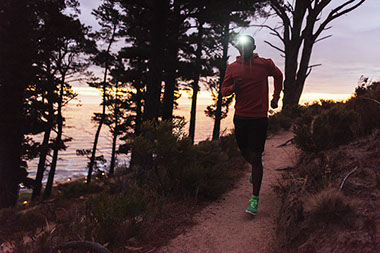
    Man running at dusk with head light.

    December 21 marks the shortest day of the year. If you exercise outdoors, you may find yourself in the dark. Keep these things in mind if you go out at dawn or dusk:

    *  Wear reflective gear and bright colors. Also consider taking a head lamp or flashlight. You want to be as visible as possible and have your own light source to see.

    *  Don’t use headphones. You’ll want your hearing to be sharp when visibility is low.

    *  Go against the flow if you’re walking. Always walk against the flow of traffic. But, if you’re biking, go in the same direction of traffic.

    *  Take a friend if you can. They can keep you motivated and offer extra safety.

    Source: Department of Health and Human Services

    © American Institute for Preventive Medicine
  • Tips For Joining A Gym

    BE FIT

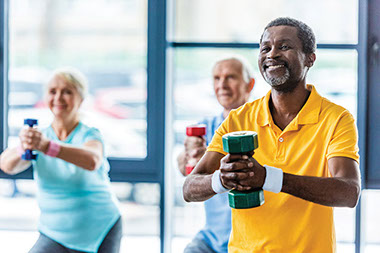
    Older adults using dumb bells in fitness class.

    A gym can be a great option if you like to work out indoors, but out of your house. And they can help you beat boredom if they offer classes and a variety of equipment. Before you join a gym, keep these things in mind:

    Ask the right questions

    The gym staff should allow people to visit and check it out before signing a contract. See if the equipment is clean and well-maintained. You should also ask:

    *  Do you have a membership limit? If they allow unlimited members, the gym could get very crowded at peak times. This could mean waiting in line to use equipment or full classes.

    *  Do classes cost extra? Some gyms include classes. Others charge a fee.

    *  Who are your instructors? Ask if the gym staff, teachers and trainers have fitness backgrounds.

    Pricing it out

    Many gyms have you sign a monthly or yearly contract. Think about how many times per week you will go to the gym. Then divide it up and see how much you will pay each time you work out.

    Find out if you are locked into a long-term contract. What is their cancellation policy?

    Good health is worth the cost of the gym – but only if you use it!

    YMCAs  often have discounted programs for seniors that may be covered as a Medicare benefit at no cost.

    Check out reviews

    Before signing up, search reviews of the gym on the Internet. See what others have to say about the gym’s staff, facilities and equipment.

    This is a good way to get some insider information before you move forward. And don’t let them pressure you into joining before you’re ready. Tell them, “I need to think about it” if you’re not sure yet. Then sleep on it for a day or two and check reviews – before you decide.

    Source: Federal Trade Commission

    © American Institute for Preventive Medicine
  • Commit To Be Fit 2

    Fitness

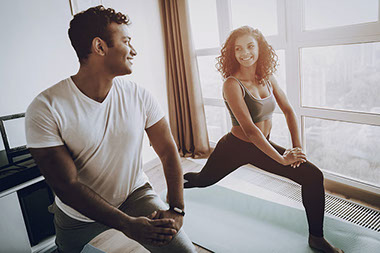
    Couple stretching.

    You don’t have to join a gym to get fit. There are lots of ways you can break a sweat, shed pounds and improve your health. Small steps can make a big difference.

    *  Do leg lifts before you get out of bed.

    *  Walk the dog. Instead of slowing Fido down, pick up your pace.

    *  Use exercise equipment as intended, not as a clothes rack.

    *  Clean the house. That’s right, dust, mop, scrub and vacuum.

    *  Brainstorm ideas with co-workers while walking.

    *  Take the stairs instead of the elevator.

    *  If you must take the elevator, do squats during the ride.

    *  Do sit ups, pushups, and jumping jacks during TV commercials.

    *  Take your bike for a spin around the block.

    *  March while talking on the phone. (Stop if you start panting.)

    *  Work in your garden, garage, and basement.

    *  Drink plenty of water.

    Action Step:Challenge family to a contest of sit ups or pushups during TV commercials. Try to improve your count each time.

    Page from HealthyLife Weigh book by the American Institute for Preventive Medicine. www.HealthyLife.com. All rights reserved.

    © American Institute for Preventive Medicine
  • Rate Your Aerobics Class

    Fitness

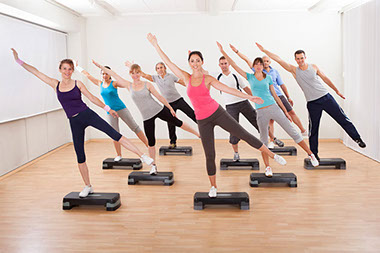
    Image of an aerobic class.

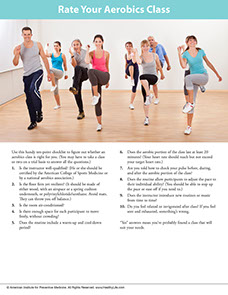
    Use this handy ten-point checklist to figure out whether an aerobics class is right for you. (You may have to take a class or two on a trial basis to answer all the questions.)

    1.  Is the instructor well-qualified? (He or she should be certified by the American College of Sports Medicine or by a national aerobics association.)

    2.  Is the floor firm yet resilient? (It should be made of either wood, with an airspace or a spring cushion underneath, or polyvinylchloride / urethane. Avoid mats. They can throw you off balance.)

    3.  Is the room air-conditioned?

    4.  Is there enough space for each participant to move freely, without crowding?

    5.  Does the routine include a warm-up and cool-down period?

    6.  Does the aerobic portion of the class last at least 20 minutes? (Your heart rate should reach but not exceed your target heart rate.)

    7.  Are you told how to check your pulse before, during, and after the aerobic portion of the class?

    8.  Does the routine allow participants to adjust the pace to their individual ability? (You should be able to step up the pace or ease off if you need to.)

    9.  Does the instructor introduce new routines or music from time to time?

    10. Do you feel relaxed or invigorated after class? If you feel sore and exhausted, something’s wrong.

    “Yes” answers mean you’ve probably found a class that will suit your needs.

    Page image from A Year of Health Hints book by the American Institute for Preventive Medicine. www.HealthyLife.com. All rights reserved.

    © American Institute for Preventive Medicine
  • Find The Energy To Exercise

    BE FIT

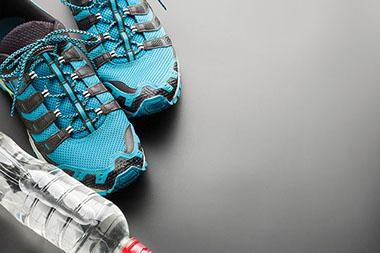
    Image of athletic shoes and a bottle of water.

    Too tired to work out? Try these tips to boost energy and get moving.

    1.  Move around. At work, try to switch between sitting and standing. Doing too much of one or the other may leave you feeling drained.

    2.  Sip lots of water. Starting in the morning, drink water and keep drinking it throughout the day. This can keep energy levels from sinking in the afternoon.

    3.  Eat healthy carbs. Choose whole grains, fruits and vegetables, such as carrots.

    4.  Watch your breathing. Slow, deep breaths can relax and energize you throughout the day.

    © American Institute for Preventive Medicine