Tag: Movement & Physical Fitness

  • Zone Minutes Explained

    BE FIT

    Women looking at watch before exercising.

    When we are active, our heart and muscles increase the circulation of blood throughout the body. The more we get our heart pumping, the more efficient the body becomes at using oxygen.

    Zone minutes refer to the amount of time spent in any activity that gets the heart rate elevated into a range that promotes health. We all need a certain amount of time in the “zone” to keep our heart, muscles, lungs, and brain in peak condition.

    Getting at least 30 zone minutes a day, or 150 a week, is the recommended minimum for good health.

    The heart-rate zone

    Your recommended heart-rate zone depends on your age and physical condition. The simplest way to find your zone is to calculate 220 minus your age. This tells you your maximum recommended heart rate in beats per minute (BPM).

    In general, you earn zone minutes for activities that get you to 50-85% of your maximum heart rate.

    For example: A fifty-year-old in good health has a maximum heart rate of 170. When engaged in moderate to vigorous activity, their heart rate should be in the zone of 85-145 BPM.

    Activities to get in the zone

    To reach 150 zone minutes per week, make time for activities that get your heart pumping. Remember your zone minutes require moderate to vigorous exertion. Here are some great options:

    *  A moderately paced walk

    *  Playing a sport

    *  Biking

    *  Swimming

    *  Dancing

    *  Weight training

    If you’re new to being active, check with your doctor before you start. In the beginning, stick with moderate activity and don’t overexert yourself. As your body becomes more efficient, you will likely feel more comfortable in your target heart rate zone.

    Tracking your zone minutes

    There are many options for tracking how many zone minutes you accumulate each day. Choose the option that works best for you.

    *  Use a smartwatch to track your heart rate and minutes in the zone.

    *  Wear a heart rate monitor when you exercise to make sure you get in your ideal range.

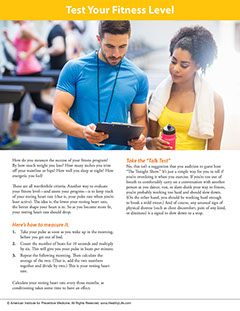
    *  Do the talk test when being active: if you can talk and sing easily, you’re at a low intensity; if you can talk but not sing, you’re at moderate intensity, and if you cannot comfortably talk or sing, you’re at high intensity.

    © American Institute for Preventive Medicine

  • Do Your Chores

    Fitness

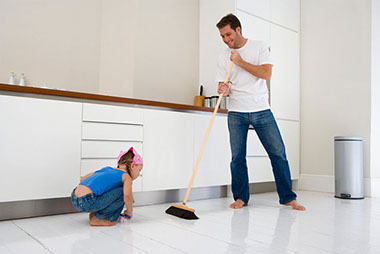
    Image of father and daugher cleaning.

    Burn calories while you clean.

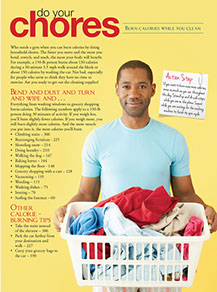
    Who needs a gym when you can burn calories by doing household chores. The faster you move and the more you bend, stretch, and reach, the more your body will benefit. For example, a 150-lb person burns about 130 calories during a 30-minute 3.5 mph walk around the block or about 150 calories by washing the car. Not bad, especially for people who seem to think they have no time to exercise. Are you ready to get out the cleaning supplies?

    Bend and dust and turn and wipe and . . .

    Everything from washing windows to grocery shopping burns calories. The following numbers apply to a 150-lb person doing 30 minutes of activity. If you weigh less, you’ll burn slightly fewer calories. If you weigh more, you will burn slightly more calories. And the more muscle you put into it, the more calories you’ll burn.

    *  Climbing stairs – 306

    *  Rearranging furniture – 225

    *  Shoveling snow – 214

    *  Doing laundry – 210

    *  Walking the dog – 147

    *  Raking leaves – 144

    *  Mopping the floor – 140

    *  Vacuuming – 119

    *  Weeding – 115

    *  Washing dishes – 75

    *  Ironing – 70

    *  Surfing the Internet – 60

    Other calorie – burning tips

    *  Take the stairs instead of the elevator – 306

    *  Park the car farther from your destination and walk – 227

    *  Carry your grocery bags to the car – 190

    Action Step

    If you want to burn even more calories, move as much as you can throughout the day. Stand up and do side steps while you are on the phone. Squat while you are waiting for the washing machine to finish its spin cycle.
    Page image from Ways to Well-Being book by the American Institute for Preventive Medicine. www.HealthyLife.com. All rights reserved.

    © American Institute for Preventive Medicine
  • Stop Making Excuses

    Fitness

    Take control of your health.

    The Centers for Disease Control and Prevention says that more than 50 percent of adults in the U.S. don’t exercise enough. Of those, 25 percent are not active at all. Combined, they probably have a million and one excuses – 99.9 percent of which are probably not valid.

    Excuse No. 1 – I don’t have time to exercise.

    Excuse zappers:

    *  Write down what you do in a day. How much time do you spend in front of the TV? Exercise while you watch TV.

    *  Get up half an hour earlier to work out.

    *  Split up your workouts. Do two 30-minute sessions or three 10-minute sessions.

    Excuse No. 2 – I’m too tired to exercise.

    Excuse zappers:

    *  Exercise can relieve sluggish feelings and a general lack of energy.

    *  Something as easy as a brisk walk may do the trick.

    *  Do yoga or tai chi to feel physically and mentally refreshed.

    Excuse No. 3 – I’m too heavy to exercise.

    Excuse zappers:

    *  Ask your doctor for the top five reasons you need to lose some weight.

    *  Start slowly, even if it means walking in 10-minute spurts.

    *  Work out at home with dumbbells and a stability ball. Go online for information on how to use them.

    Excuse No. 4 – Exercise is boring.

    Excuse zappers:

    *  Choose activities you enjoy and look forward to.

    *  Set up a walking program with a friend or coworker you like to be with.

    *  Enjoy a sunny day and fresh air with outdoor activities.

    Action Step

    Make a list of all the reasons you aren’t working out. Then come up with solutions that fit your schedule, your lifestyle, and your interests.

    Page image from the Ways to Well-Being book by the American Institute for Preventive Medicine. www.HealthyLife.com. All rights reserved.

    © American Institute for Preventive Medicine
  • Bike Safety

    BE FIT

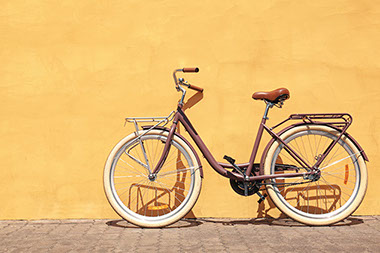
    Bike up against a yellow wall.

    Bike sales have increased during the COVID-19 pandemic. Bicycling is great exercise! However, it’s important to keep yourself safe while on two wheels. Collisions can and do occur, and some can be serious.

    To minimize your risk of injury while riding a bicycle:

    *Wear a helmet.Studies show that a helmet lowers your risk of serious head and brain injuries by 85%. Make sure it is snug on your head. It should have a chin strap that stays in place.

    *Ride right.Use the right shoulder of the road and follow traffic signs and signals. Signal your turns with your arm so drivers know what you’re doing.

    *Use a bike lane if there is one.If not, try to choose wide roads with less traffic and lower speed limits. When a lane is too narrow for a car and bike to safely ride side by side, you will need to ride toward the middle of the road.

    *Be aware.Sometimes drivers don’t see you. Be careful at intersections and when riding next to parked cars and in parking lots.

    *Don’t use headphones.It’s important to be able to hear cars coming from behind you so you can react safely and move over if needed.

    *Wear bright colors and use reflectors.This will make it easier for drivers to see you.

    *Don’t ride.It is dangerous to cycle if you’ve been drinking alcohol or using drugs.

    *Cover your toes.Don’t wear sandals or flip flops while riding.

    *Bring water.Most bikes have a water bottle holder. Drink often to avoid dehydration, especially on longer rides.

    *Keep kids safe.Children should not ride on roads with traffic. Keep young bike riders in areas that are away from cars.

    Source: American Academy of Orthopaedic Surgeons

    © American Institute for Preventive Medicine
  • Getting Fit In Less Time

    BE FIT

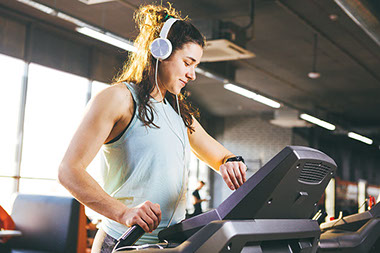
    Women on treadmill looking at watch.

    Have you heard of interval training for exercise? You may have assumed this type of exercise is only for athletes. However, people of almost all fitness levels can use it.

    Interval training means you add short bursts of more intense activities into your regular exercise routine. How fast and how long you do your intervals is completely up to you. This can be as simple as 10 seconds of running and then 4 minutes of walking. If that’s not possible, alternate brisk walking with slower walking.

    Intervals don’t have to be more than a few seconds. One of the biggest advantages is that you don’t need any special equipment to get started!

    Why should I do it?

    The American College of Sports Medicine (ACSM) says interval training has several benefits, including:

    *  Burn more calories: Even if you can only do short intervals, you’re still burning more calories than if you hadn’t done the intervals at all.

    *  Most of your time: Many people can’t find time for longer workouts. Instead, use the time you have to work harder with intervals.

    *  Boost mood: Exercise releases endorphins. These are feel-good chemicals in the brain. More vigorous exercise may release more endorphins than only doing light exercise.

    *  Fight boredom: Doing the same exercises all the time can lead to boredom. But, mixing it up with intervals can help keep you interested.

    *  More aerobic fitness: Higher intensity will improve your cardio fitness. With time and practice, you’ll be able to exercise harder and longer.

    For beginners

    *  Choose a distance if you don’t want to count or use a stopwatch. For instance, jog or walk briskly to the next tree or driveway.

    *  If using equipment like an elliptical machine or bike, alternate faster bouts of that exercise with your usual pace.

    Interval training can be done at your fitness level. But, don’t be too aggressive at first because you could get an injury. While you want to get your heart pumping, you don’t want to make it so hard that you can’t stick with it.

    Studies suggest that interval training can be safe and helpful to most people. Ask your doctor before starting a new exercise plan to be sure it’s right for you.

    Source: American College of Sports Medicine

    © American Institute for Preventive Medicine
  • 10 Minutes Of Fitness

    BE FIT

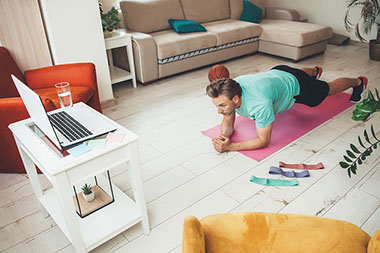
    Man working out at home.

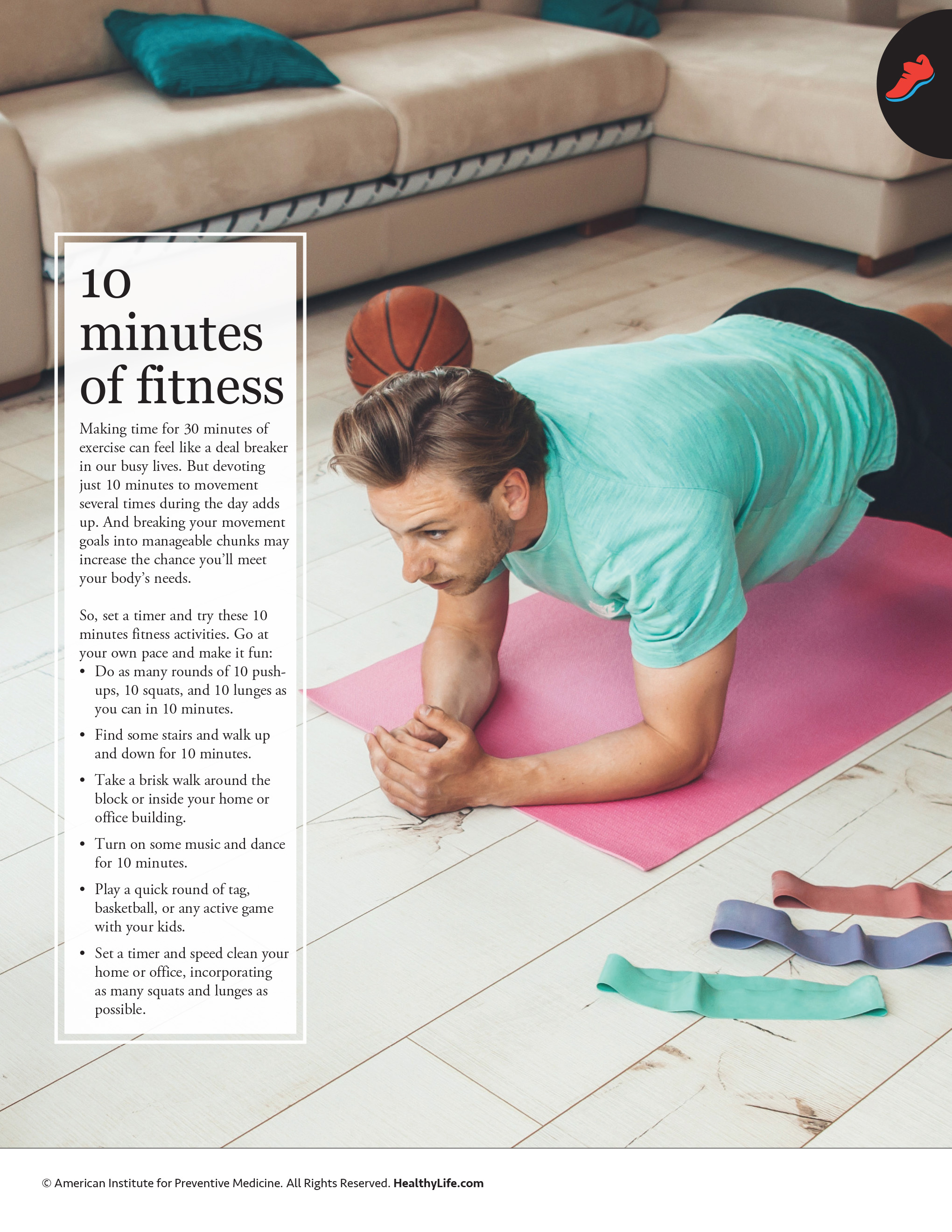
    Making time for 30 minutes of exercise can feel like a deal breaker in our busy lives. But devoting just 10 minutes to movement several times during the day adds up. And breaking your movement goals into manageable chunks may increase the chance you’ll meet your body’s needs.

    So, set a timer and try these 10 minutes fitness activities. Go at your own pace and make it fun:

    *  Do as many rounds of 10 push-ups, 10 squats, and 10 lunges as you can in 10 minutes.

    *  Find some stairs and walk up and down for 10 minutes.

    *  Take a brisk walk around the block or inside your home or office building.

    *  Turn on some music and dance for 10 minutes.

    *  Play a quick round of tag, basketball, or any active game with your kids.

    *  Set a timer and speed clean your home or office, incorporating as many squats and lunges as possible.

    © American Institute for Preventive Medicine
  • Eating For Peak Performance

    Fitness

    Image of oat cereal with fresh fruit.

    No pill or magic formula can instantly turn you into a super-athlete. But eating right can help you perform at your best.

    Carbohydrates-from bread, pasta, potatoes, and fruit-provide energy for vigorous activity. So active people need to replenish this fuel frequently.  Don’t expect to get a quick energy boost from a snack you eat just before starting out, though.  Instead, consuming a high-carbohydrate food like skim milk and a banana, whole wheat bread, or an orange an hour or two before a workout acts like a time-release capsule of energy.

    Because you lose electrolytes (potassium, sodium, magnesium, and calcium) in sweat during vigorous activity, drink plenty of water and eat foods that are rich in these minerals. Almost all fruits and vegetables are rich in potassium, but potatoes, bananas, orange juice, winter squash, cantaloupe, sweet potatoes, and cooked beans are especially high. Sodium is rarely lost in quantities greater than amounts you would normally consume, so you don’t need to worry about getting extra.

    Page image from the A Year of Health Hints book by the American Institute for Preventive Medicine. www.HealthyLife.com. All rights reserved.

    © American Institute for Preventive Medicine

  • Take That First Step

    Fitness

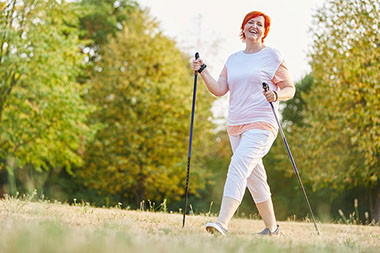
    Smiling women walking with walking sticks.

    Walking is one of the most beneficial, and safest, exercises you can do. That makes walking a great way to start if you’re just beginning an exercise routine. It’s also ideal for weight loss. And, it’s a great way to exercise with friends! Set a target for the number of steps you want to walk each day or week. Over time, you can increase the number of steps, or the intensity, by walking faster or including hills. Aim for at least 150 minutes of exercise each week.

    Be More Earth-Friendly

    Motor vehicles are responsible for significant amounts of greenhouse gas emissions in the U.S. Choose to walk rather than drive to help reduce air pollution and greenhouse gases.

    Page from HealthyLife Weigh book by the American Institute for Preventive Medicine. www.HealthyLife.com. All rights reserved.

    © American Institute for Preventive Medicine
  • Burn Calories Without Trying

    BE FIT

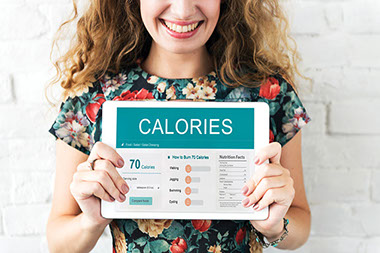
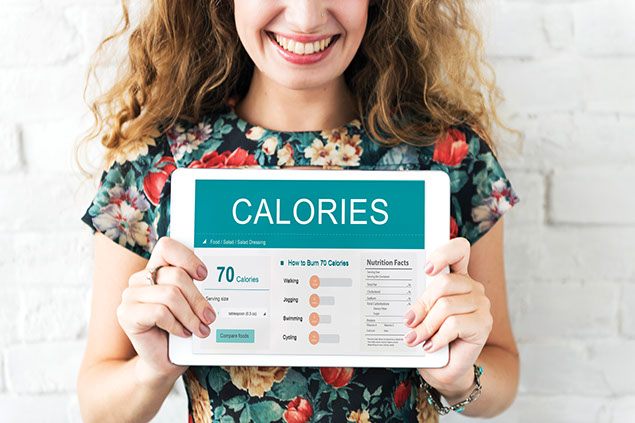
    Image of women holding up tablet with calorie tracking.

    When you’re not exercising, you can still burn extra calories! Use little ways to get more fit every day.

    Don’t make things convenient.

    Take the stairs instead of the elevator. Park farther away from your destination and walk. Use your bike instead of a car for quick grocery store runs. Put your favorite snack foods in the basement, rather than on the main floor near the TV.

    Get up.

    Take a short break every hour if you sit at a desk. Get up, move your arms and legs or even do a few jumping jacks. Use a hands-free headset so you can get up and walk or lift weights while you’re on the phone. Have a meeting? See if you can stand during part of it or even have a walking meeting.

    Sneaky exercises.

    Do some isometric exercises if you sit a lot. Try squeezing your glute muscles and knees together for eight counts, holding for five seconds then release. Do this every couple of hours.

    Move whenever you can. Walk in place instead of standing still.

    © American Institute for Preventive Medicine
  • How Walking Can Change Your Life

    BE FIT

    Image of couple and pet dog walking along beach.

    Many people don’t exercise because they believe it takes too much time or money. They may think they need to spend an hour at the gym each day to get healthier. These myths could be standing in the way of a healthier life.

    Exercise is a universal way to improve health. We know that physical activity can reduce the risk of heart disease, diabetes and even cancer. It also boosts energy levels and can help you sleep better. But there’s another benefit to exercise that many people may not know about: better mental health.

    If you are thinking about being more active, a walking program is a tried and true favorite form of physical activity. As an exercise, walking is easy to begin and maintain. Plus, it needs no special skills or expensive equipment, and can be done year-round, outdoors and indoors.

    For those who thought they didn’t have time to walk or exercise, there’s good health news. Even a small amount of exercise can help you feel better mentally by reducing feelings of depression and anxiety, and improving cognition.

    Getting a treadmill: Questions to ask

    Treadmills have been a mainstay in gyms for years. Many people also get one for their homes. They’re simple to use and can adjust to your fitness level. But should you buy one? Here’s what to consider:

    How much money do you want to spend?

    A new treadmill can cost hundreds – or even thousands – of dollars. But many people can get used treadmills for a fraction of the cost. If you buy a used one, make sure to test it first to be sure it works. Ask the seller if they have the instruction manual.

    Can you do other indoor exercise?

    You don’t need a treadmill to get a good workout inside. You can turn on music and dance or use a fitness video or interactive game. Consider how many days per year you would need the treadmill because of bad weather. Then, weigh that against the cost.

    Will it “work”  for you?

    Do your research before making the investment. Check out online reviews of the exact treadmill you’re considering. Find out if it’s good for running, walking or both. Will it work with your height? Taller people often need a longer treadmill belt.

    Source: Centers for Disease Control and Prevention

    © American Institute for Preventive Medicine