Tag: Movement & Physical Fitness

  • Exercise For Free

    BE FIT

    Group of older friends walking through the park.

    Staying fit shouldn’t cost a fortune. While trying each new fitness fad is tempting, not everyone has the money to invest in gym memberships or fancy equipment.

    And the good news is, you don’t need to! There are endless options for healthy movement that don’t cost a thing.

    Join a walking club

    Find an existing group that walks in your area, or gather friends to start a club of your own. It won’t cost anything. As a bonus, you get quality time to invest in meaningful relationships, all while moving.

    Find free yoga

    Many yoga studios that train new teachers offer free community classes as a chance for their trainees to practice teaching. Not only do you get to do yoga for free, but you also get to support the teachers as they learn.

    Outdoor games

    When the weather is nice, get your friends and family together for frisbee, badminton, bocce, and any other yard game you can think of. Don’t sit on the sidelines; get in there and play! It’s quality time combined with quality movement.

    Online videos

    A quick search online will reveal a wealth of free exercise videos you can try. If you don’t have any equipment, no problem; just search for “free no-equipment exercise videos,” and you’ll find lots of options. All you need is a bit of space and yourself.

    Check local library & parks

    Many non-profit organizations offer occasional free fitness classes to get the community involved and active. You may need to sign up in advance to get a spot. Find information before you go so you arrive prepared.

    Check nearby athletic stores

    Running stores, athletic clothing stores, and sporting goods stores often have free fitness classes or exercise meet-ups. It’s a great way to connect with people in your area who share common fitness goals.

    © American Institute for Preventive Medicine

  • Find Your Fitness Personality

    Fitness

    Body type isn’t the only trait that determines which activities are best for you, though. You’ve probably already given some thought to what you’d like, based on whether you prefer to do activities alone or in a group; competitive or noncompetitive activities, or outdoor or indoor activities.

    Finding a fitness activity that suits your personality is also a big factor in how much you’ll enjoy exercise and stick with it long enough to reap the benefits. Do any of the following descriptions of fitness personalities sound like you? If so, read the “hint for success” that pertains to each one.

    The Weekend Warrior

    The weekend warrior is sedentary throughout the work week and binges on exercise or sports over the weekend. Hint: Add minimal activity (even as little as 15 minutes twice per week) during the week to help condition your heart and lungs, sustain muscular endurance, and prevent strains or injuries on the weekend.

    The Fanatic

    The fanatic thinks that if a moderate exercise is good, then a lot is better. He or she always tries to work out a little more, a lot harder, or more intensely than others, and feels anxious and irritable if he or she misses a workout. Hint: Fitness should be a pleasure, not an addiction or ball and chain.

    The Social Butterfly

    The social butterfly has difficulty sticking with a solo fitness program, and loves to chat and mingle with other participants in a group. Hint: Don’t always depend on group activities or other people to enable you to meet your fitness goals. Be willing to go it alone if you must.

    The Cannonball

    The cannonball jumps into a fitness program with a burst of energy and determination but loses enthusiasm a few weeks later. Hint: Don’t try to do too much, too soon, or you’ll probably burn out after 2 or 3 weeks. It takes 10 to 12 weeks to start to see the results of your efforts.

    The Flipper

    The flipper dabbles in one activity, then quickly abandons it for another, and is related to the cannonball. Sometimes he or she may remain inactive for long intervals between flurries of activity. Hint: Real fitness results from consistent efforts, over the long term.

    The Analyst

    The analyst loves exercise gadgets and equipment. He or she reads lots of fitness books and magazines and likes to talk about the benefits of exercise. Hint: This is not a problem if you actually pursue the activities you’re learning about. But remember, the important thing is to get out and move.
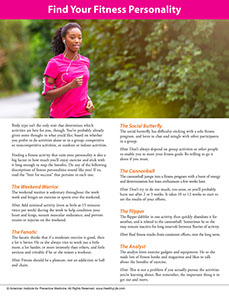
    Page image from A Year of Health Hints book by the American Institute for Preventive Medicine. www.HealthyLife.com. All rights reserved.

    © American Institute for Preventive Medicine
  • Walk For Well-Being

    Fitness

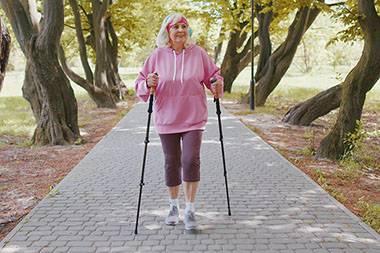
    Mother and daughter walking.

    You already know that walking and other physical activities help prevent and manage arthritis, diabetes, heart disease, and high blood pressure. Get these benefits from walking, too:

    *  Relieve tension and stress.

    *  Get more energy.

    *  Improve balance and lower the risk for falling.

    *  Get better sleep.

    *  Boost you overall mood.

    Walking briskly at 3 miles per hour is a great way for adults to get 150 minutes of moderate-intensity physical activity a week (30 minutes a day). Children need 60 minutes of physical activity a day.

    *  Plan walking into your daily / weekly schedules. Split 30 minutes into two 15-minute or three 10-minute sessions.

    *  Wear a good pair of walking shoes that fit well and absorb shock. Look straight ahead when you walk.

    *  Don’t make the excuse that you have no time to exercise.

    *  Don’t text while you are walking. Don’t listen to music if it hinders hearing sounds around you.

    Page from HealthyLife Weigh book by the American Institute for Preventive Medicine. www.HealthyLife.com. All rights reserved.

    © American Institute for Preventive Medicine
  • Beware Of Exercise Gimmicks

    BE FIT

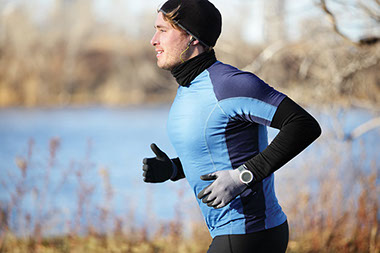
    Image of man running outside.

    Let’s face it: working out is, well, work. It takes time and commitment to exercise regularly, and sticking to it can be tough.

    Exercise gimmicks and fads target the millions of people who want the benefits of exercise but may be looking for a quicker solution. Some products may claim to “spot reduce,” or slim one area of the body, such as the tummy or legs. Others may claim to give you the benefits of a long workout in just a few minutes.

    Sometimes it’s hard to tell whether something is an effective piece of equipment or a scam. Before purchasing, ask yourself if the product:

    *  Promises amazing results without any work or “sweat”

    *  Focuses on just one area of the body, saying you can trim this problem area

    *  Advertises that you can lose many inches or pounds in just a few days or weeks

    *  Doesn’t provide a clear cost for the equipment or only offers monthly payment plans

    Unfortunately, many of these products don’t do what they claim, and some may not work at all. But, you don’t need a device or special equipment to reap the benefits of exercise. You can lose weight and get healthier with just 30 minutes a day of activity. Walking, gardening, dancing and biking are possible options. Pick something you enjoy so you’ll stick with it. If you don’t have 30 minutes in your day, break it up into three 10-minute chunks.

    Instead of worrying about the latest fitness gimmick, stick to the activities listed above. Your health and fitness level will improve, and you can save your money for fitness rewards, such as a new pair of walking shoes or exercise clothes.

    Source: National Institute of Diabetes and Digestive and Kidney Diseases

    © American Institute for Preventive Medicine
  • Get Back Into The Exercise Habit

    BE FIT

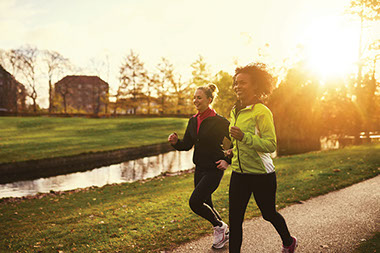
    Image of 2 females jogging.

    Stressful and busy times in our lives often get in the way of exercise. Whether you’ve been busy with your job, family, or other commitments, it is possible to get back into a fitness habit. If you haven’t exercised for months or even years, here are some safe ways to start fresh and enjoy all the healthy benefits of exercise again.

    1.Go easy at first.Understand that your body will need to work back up to its prior fitness level. Go for a shorter and lighter workout and see how you feel the next day. Gradually make it longer and more difficult each time. This will help you avoid injury and soreness.

    2.Don’t be frustrated.Perhaps you can’t run as fast or lift as many pounds as you did before. That’s to be expected. You can, however, keep working at your fitness goals to be your healthiest self. Each day you exercise, you get closer to that goal.

    3.Recovery is important.You may notice more soreness at first, as your body adjusts to exercise again. Be sure you cool down at the end of your workout and stretch your muscles.

    4.Set realistic goals.Fitness goals can help move you forward. But goals that are too difficult to reach may cause you to throw in the towel. Be proud of any progress you make and each day you choose to be active.

    5.Ask a friend to join you.Having a workout buddy can help you stay motivated and make it fun. Perhaps your friend can join you at the gym or for walks around the neighborhood a few times a week.

    6.Consider a coach or trainer.Professional fitness experts can help you avoid injury and get you on a good fitness plan. Some gyms offer free or low-cost training sessions to new members.

    Source: Office of Disease Prevention and Health Promotion

    © American Institute for Preventive Medicine

  • Physical Fitness And Sports

    BE FIT

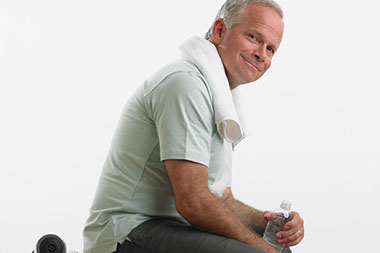
    Image of older man ready to exercise.

    Along with healthy eating, physical activity increases your chances of living longer. Exercise can also help:

    *  Control your blood pressure, blood sugar, and weight

    *  Lower your “bad” cholesterol and raise your “good” cholesterol

    *  Prevent heart disease, colorectal and breast cancer, and type 2 diabetes

    And that’s not all. Being more active can:

    *  Be fun

    *  Help you look your best

    *  Improve your sleep

    *  Make your bones, muscles, and joints stronger

    *  Lower your chances of becoming depressed

    *  Reduce falls and arthritis pain

    *  Help you feel better about yourself

    For adults, most health benefits come with at least 150 minutes a week of moderate-intensity physical activity, such as brisk walking. Extra benefits occur with more physical activity. Both aerobic (endurance) and muscle-strengthening (resistance) physical activity are helpful.

    Children need 60 minutes of play with moderate to vigorous activity every day. If this sounds like a lot, consider that eight to 18 year olds spend an average of 7.5 hours a day sitting. This includes using computers, video games, cell phones and watching TV and movies.

    Make exercise fun

    No matter what shape you are in, you can find activities that you enjoy. If you think of exercise as a chore that you have to do, it can be harder to stick with it.

    *  Choose activities you enjoy and look forward to. Do ones you enjoyed as a child.

    *  Set up a walking program with a friend, family member, or coworker you enjoy being with.

    *  Wear a pedometer to track your steps. Aim for a goal of 10,000 steps a day.

    *  Enjoy a sunny day and fresh air with outdoor activities.

    *  Play outdoors with your children and grandchildren.

    *  Use fitness facilities at your work.

    © American Institute for Preventive Medicine
  • The Downside Of Skiing: Falls And Spills

    BE FIT

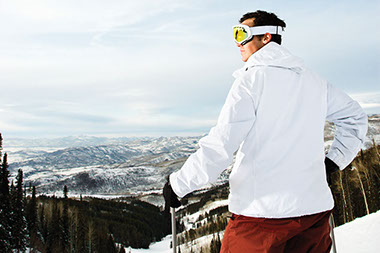
    Image of man on top of a skiing slope.

    If you find yourself heading downhill on skis, but you’re swooshing down on your backside because of a fall, you’ll be glad you prepared for the inevitable spills.

    According to the American College of Sports Medicine, falls account for up to 85% of skiing injuries. The majority of those injuries are sprains, broken bones, cuts, and dislocations-and now more knee injuries because mid-calf plastic ski boots are protecting ankles.

    Thirty to 40% of ski injuries affect the knee area, most likely the MCL (medial collateral ligament). This trauma often occurs with slow twisting falls or when beginners maintain a snowplow position for lengthy periods and stress the ligament. If skiers catch an edge (when the lower leg is suddenly twisted away from the upper leg) or skis separate, the foot is forced away from the body, which causes a distraction force on the inside of the knee.

    Another common knee injury is rupture of the anterior cruciate ligament (ACL), which can be caused by a backward fall as the lower leg moves forward. Catching an edge causes a sudden external rotation below the knee, which can cause the ACL to become sprained or snap (5 times more common in women skiers).

    Your pre-conditioning program should include 4 elements: endurance, strength training, flexibility, and balance. Aerobic fitness is the key to preventing the end-of-the-day injuries. Cross training, which includes multiple sports and activities, will help with cardiovascular endurance, while strength and flexibility focusing on the legs is vital for injury prevention, says Scott M. Levin, MD, a board-certified orthopaedic surgeon and sports medicine specialist.

    “Besides conditioning, skiers need to warm up and stretch before starting down the hill because cold muscles are more prone to injury,” notes Dr. Levin. Warm up with jumping jacks, running, or walking in place for a few minutes and then stretch your hamstrings, hip flexors, and quadriceps.

    © American Institute for Preventive Medicine

  • Boomers Beware

    BE FIT

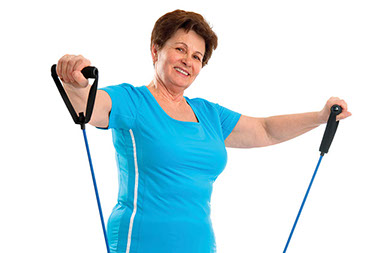
    Image of older women with exercise equipment.

    Boomers are now age 50 and older. And they are getting lots of injuries to backs, knees, hips, ligaments and tendons (the structures that attach muscles to bones).

    Regular exercise is critical for maintaining and improving bone and muscle strength. And yet if not done properly, exercise can result in pain and injury, sprains and strains. The American Academy of Orthopaedic Surgeons offers the following exercise safety advice for anyone older than 50:

    Warm up and stretch.Walking, bending, jumping jacks, and running in place before exercise gets and keeps the circulatory system moving and helps prevent injury. Stretching can be done before or after a workout.

    Exercise consistently.Don’t be a weekend warrior. Try to get at least 30 minutes of moderate physical activity every day.

    Take lessons.Consider taking lessons for the sport you love. Whether you’re new to a sport or have been taking part in it a long-time, proper form and instruction reduce the chance of an overuse injury like tendonitis or stress fractures.

    Wear the proper equipment.Select the proper gear and shoes for your sport.

    Listen to your body.As you age, you may find that you are not as flexible as you once were, or that you cannot tolerate the same types of activities. If so, modify your exercise routine to accommodate your body’s needs. For example, if you’ve been a daily runner for many years, consider replacing a day or two of that activity with swimming, biking, or another sport that puts less impact on your joints.

    Use the 10% rule.When changing your activity level, increase it in increments of no more than 10% per week. Slowly build up each week until you reach your higher goal. This will prevent overuse injuries that may keep you from exercising or enjoying your favorite sport for some time.

    Develop and maintain a balanced fitness program.Include cardiovascular exercise, strength training, and flexibility. A balanced exercise program will provide a total body workout. This keeps you from getting bored and lessens your chances for injury.

    Take a break.Hard workouts can take a toll on your body and thus require strategies aimed at recovery. Learn to take a day off or cut back your training to allow your body to adapt and recover. Gentle stretching, light aerobic exercises, and proper nutrition and hydration are all helpful to the recovery process.

    Consult your doctor.If you develop or have had a sports or orthopedic injury like tendonitis, arthritis, stress fracture, or low back pain, consult an orthopedic surgeon who can help design or modify your fitness routine to promote wellness and minimize the chance of injury.

    © American Institute for Preventive Medicine
  • Get Fit While Cleaning House

    BE FIT

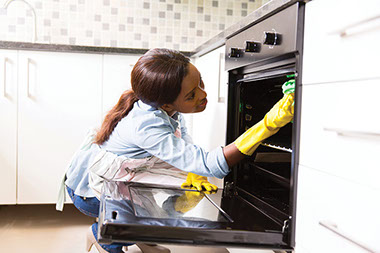
    Image of women cleaning the oven.

    If you have a home, you probably spend a good amount of time cleaning it. What if you spent that time not only cleaning your house, but cleaning up your health too?

    If you do your chores with a few fitness upgrades, you could burn extra calories and feel great when you’re done. Here’s how you can do it:

    1. Turn on the tunes.

    Use upbeat music to get motivated and set it for 30 minutes of play time. Or, set an oven timer for 30 minutes. Then, dance and move around the house as you organize, sweep, wash dishes or put laundry away. Keep your body moving as much as possible but make it fun!

    2. Focus on a muscle group while working.

    If you’re vacuuming or mopping floors, you’re already burning some calories. But, take it up a notch by working your muscles even harder during the task. For instance, hold your abdominal core (belly) muscles tight as you do your task. Try holding them for 10 seconds. Then, take a 10-second break. If this becomes too easy, increase the time to 20 seconds.

    3. Do squats as you pick up.

    If you’re spending time getting toys, clothes or other items off the floor, use this chore to work your lower body. After you pick up something, do a squat. Keeping your back straight and belly tight, slowly bend your knees and lower your bottom slightly toward the floor. Don’t let your knees reach over your toes. Come back up slowly. If this hurts your knees or back, you should stop.

    Remember, exercise doesn’t have to be a workout at the gym. You can move your body while doing everyday jobs and multitask for your health!

    Sources: Calorie Control Council, Compendium of Physical Activities

    © American Institute for Preventive Medicine

  • Practically Free Ways To Get Fit

    BE FIT

    Image of women listening to head phones while dancing.

    “Can’t afford to get fit” is one of the top excuses people give when asked why they don’t exercise. That’s about as logical as saying, “I can’t drive because I can’t afford a Mercedes.” Here are penny-wise ways to get fit from University of Alberta exercise experts:

    *  Walk. Most people walk 4,000 to 5,000 steps per day anyway. Aim to add more steps in your daily activities.

    *  Use a pedometer to help keep track of your steps. You can get one for about $10, but sometimes health fairs give them away free.

    *  Take the stairs every chance you get, even if it’s only one flight.

    *  Don’t use your children as an excuse not to exercise. Take them along for a walk or run in a stroller, wagon, or on a bike.

    *  Turn on your radio and dance up a storm for 20 to 30 minutes in the privacy of your own home.

    *  Use the lowest stair or stairs in your home and create your own step workout.

    *  Turn your canned goods into weights. Or pour sand or water into empty milk bottles to create weights.

    *  Grab a chair or the kitchen counter and do some push-ups, squats and leg lifts.

    *  Pair a favorite TV show with some sit-ups. Just hook your toes under the sofa. Stand up and jog during commercials.

    *  Got rope? Jump it for a total body workout.

    *  Check with your company wellness program, community league or local rec center for any exercise classes, walking clubs, or team sports you can join.

    *  Go for a walk or just stand by your workstation and stretch for 5 to 10 minutes every hour.

    © American Institute for Preventive Medicine