Tag: Movement & Physical Fitness

  • Timing Is Everything: When To Exercise

    BE FIT

    Image of older couple brisk walking.

    Some people swear by a 6 a.m. run each day. Others are night-owls and hit the gym after dinner. Still others might go to a yoga class on their lunch hour. When is the right time of day to work out?

    Experts say there is no big difference in the time of day – as long as you stick with it. The key is to find a time that works for you and your schedule, according to the American Heart Association.

    Workout partners

    Studies show that people who have an exercise buddy are more likely to exercise regularly. If you can meet a friend at the gym or walk together, find a time that works for both of you.

    Think about sleep

    If you already have trouble falling asleep at night, a late-night workout probably won’t help. Exercise can make you feel more energetic and alert, instead of allowing you to wind down for rest. Schedule your workout at least two hours before you plan to go to sleep.

    Morning means consistency

    If you have a busy schedule, it may be easier to fit your workout into the early morning hours. People who exercise before work or other commitments find that they can get it done and “out of the way” before other things can interfere.

    Make it work for you

    If you dread going to the gym, you’re less likely to do it. Try different times of day and different routines to see which ones suit you best. Make it as fun as you can, and do it at a time of day when you feel your best. It can take two weeks or longer to build a habit, so give it a chance – and don’t give up if it’s difficult at first. You may find that over time, you have more energy and start to look forward to your exercise routine.

    Another reason to get moving

    During exercise, your body releases endorphins, which are special chemicals in the brain that reduce stress, relieve pain, and help you sleep better.

    Source: Anxiety and Depression Association of America

    © American Institute for Preventive Medicine

  • Build A Strong Core

    BE FIT

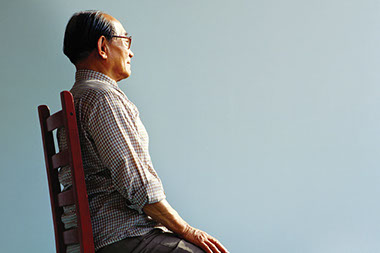
    Image of older man sitting on chair.

    “A strong core is key to good posture and for doing most day-to-day activities with ease, such as getting in or out of a car, walking up and down stairs, or reaching for a book from a shelf,” said Michelle Miller, an exercise physiologist at Indiana University. Weak core muscles can result in poor posture, increased susceptibility to back injuries, poor balance, lack of range of motion, and an altered walking stride.

    See how it feels to turn on your core muscles-in less than a minute.

    *  Sit on the edge of a firm chair with feet and legs at a 90-degree angle and place both hands on the front of your stomach area.

    *  Now, draw your bellybutton toward the center and pretend to lift at the same time to feel contracted and lengthened throughout the middle of the body-but not so much you hold your breath. Miller often tells clients to imagine putting on a tight jacket and then zipping it up. When doing this, the front and back of the body should contract at the same time.

    *  Finding the neutral position of the hips is important for proper posture. The hips should not be tipped forward or backward. Miller encourages you to “think of your pelvis as a bucket of water-tipping means spilling.”

    *  Now, for the shoulders and head. The head should not jut forward, nor the shoulders round in. Face straight ahead, chest high and sit tall.

    “If you can hold this position sitting, you can hold it when you walk, drive, do household chores or other leisure time activities,” Miller said.

    © American Institute for Preventive Medicine
  • Get Your Game On

    BE FIT

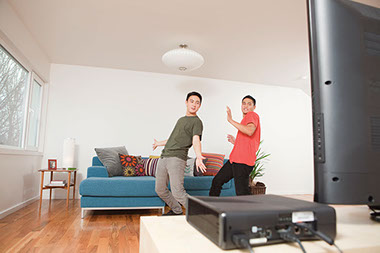
    Image of two males playing active video game, such as the Wii.

    Active video games, also known as “exergames,” are not the perfect solution to getting the nation moving, but they can play a role in getting some people up off the couch and moving right in front of it.

    Michigan State University researchers reviewed published research of studies of these games and say that most of the games provide only “light-to-moderate” intensity physical activity.

    And that, they say, is not nearly as good as what would be real exercise, but video gaming may be a step in the right direction. They generally do not provide the recommended 30 minutes of moderate activity per day, but for some people, the researchers said, light activity can sometimes be enough.

    The researchers named the three video gaming systems that offer active video games as ways to increase physical activity: Nintendo’s Wii, Xbox 360 (Kinect), and PlayStation 3 (Move). The study was published in Health Education and Behavior.

    © American Institute for Preventive Medicine

  • A Prescription For Exercise?

    BE FIT

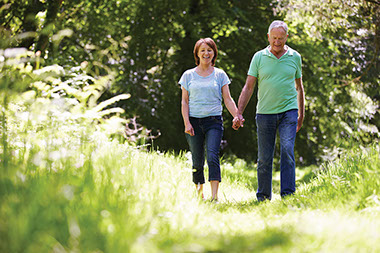
    Image of couple walking through woods.

    Many doctors recommend exercise to help with weight loss, strength and well-being. But, an exercise program may do even more than that. Research shows that exercise can help with certain health conditions. In fact, many people are now getting a “prescription” for exercise from their doctor.

    Fibromyalgia:Several studies support using exercise as a treatment for fibromyalgia pain. Fibromyalgia can cause chronic pain and fatigue. These symptoms may improve when a person exercises regularly.

    Depression:Depression is one of the most common mental health disorders in the U.S. Some studies have found that getting regular exercise helps with mild to moderate depression. This may be because exercise releases the brain’s “feel-good” chemicals. Exercise may also help support other brain functions, which help with depression.

    Osteoporosis:Osteoporosis causes bones to become weaker or more brittle. But, regular exercise can help strengthen muscles and bones, which lowers the risk of breaking bones or falling. Often, people with osteoporosis get good results by doing a combination of aerobic and weight training exercises.

    Arthritis:Exercise is considered the best non-drug option for treating pain and stiffness from arthritis. Walking and water exercise are usually good choices. Plus, exercise can help you maintain a healthy weight which helps to reduce pressure on your weight-bearing joints.

    Hard work pays off

    It can be hard to get up and exercise when you have a health condition, especially one that causes pain or fatigue. But, the evidence shows that the extra effort may be well worth it!

    Always talk to your doctor before beginning any exercise program. Exercise alone may not be enough to treat some health problems. But, it may make you feel better and may be a good “natural” option to try. It can be used along with other treatments, such as medication or therapy.

    © American Institute for Preventive Medicine
  • Train Like An Olympian

    BE FIT

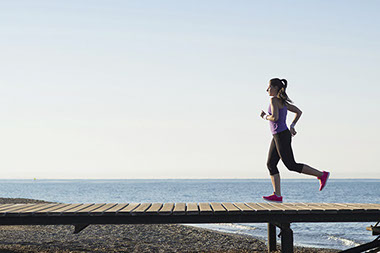
    Image of women running.

    Olympic athletes inspire us with their fierce discipline and natural talent as they smash records, going higher, farther and faster. Their can-do   spirit motivates us all to take on  new challenges.

    Whether your goal is to complete your first marathon or improve your golf game, there are lessons to be learned from the best of the best.

    Saint Louis University assistant professor of physical therapy, Chris Sebelski, gives this guidance on how to train like a champion:

    *Set a goal and break it down.For instance, if you’re training to get in shape for a cross-country hiking trip, you might aim to walk 3 miles a day for the first 2 weeks and build up to 10 miles a day by the end of 10 weeks.

    *Cross-train.Cross-training reduces risks of overtraining and helps avoid injury. It also enhances muscle performance and stimulates the mind so you don’t become bored by too much repetition.

    *Work out with others.Olympic athletes don’t train alone and they don’t train only with those at the same skill level. Run with different people. On one day, partner with someone slower than your normal pace. You’ll stay out longer and practice endurance. Another day, run with someone faster than your average pace. You’ll do a more intense cardio workout.

    *Create a team.Olympic athletes know that they cannot do it on their own. You shouldn’t expect to either. Seek people and methods that can help you accomplish your goal. It could be a face-to-face session with a trainer, a nutrition class, or an online chat room of like-minded people.

    *Find your motivation.Olympians use lots of techniques to manage their emotions. This year, for example, athletes reported using yoga, meditation, and even watching their favorite TV shows to calm themselves before an event.

    *Put on an Olympic attitude.For most of us, our jobs, families and personal commitments mean we can’t spend as much time training as a world champion might. But  you can adopt the mentality of  an Olympian during the time you  do train.

    *Enjoy.Regardless of the scale of your goal, train for and accomplish a physical goal you set for yourself. Crossing that finish line is a feeling unlike any other.

    © American Institute for Preventive Medicine

  • Can You Take A Hit?

    BE FIT

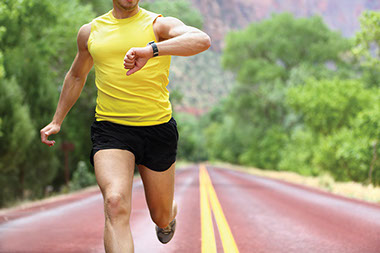
    Image of man running while looking at his watch.

    Short sprints might boost your fitness by significant levels in just 2 weeks. Really short sprints-like 6 seconds.

    Researchers at Abertay University in Scotland have claimed that people can improve their fitness levels with just small amounts of exercise.

    Participants were asked to cycle all out for 6 seconds then rest for one minute, repeating the cycle 10 times. They found that after 2 weeks participants recorded a 10% improvement in fitness.

    The 6-second bursts are one of the shortest sprint durations ever used in high-intensity training (HIT). HIT involves short bursts of intense exercise and achieves similar results to long-distance endurance training.

    However, the method is much less time consuming and comes with a lower risk of injury, making it ideal for athletes wishing to remain injury free.

    © American Institute for Preventive Medicine
  • Getting Motivated To Exercise

    BE FIT

    Image of couple running.

    We know exercise is healthy. But, without motivation, it’s hard to get started. Try these tips to get excited about working out, to get going and to stay with it.

    *Set goals you can achieve.Try 20 minutes of exercise, 3 days per week. Once you’ve mastered that habit, move it up to 30. Then, increase the number of days, and so on.

    *Make exercise “me time.”Exercise class, a walk or your favorite sport is time that helps your body and mind get healthier. Think of it as a treat to yourself.

    *Write down something you’ve achieved with exercise.Whether you met your goal for two weeks or perhaps noticed your mood was better, take note of it. Go back and look at the good things you’ve accomplished over time. This can give you positive encouragement.

    *Don’t dwell on setbacks.Everyone has a day where they miss a workout. Just move forward and figure out how you can get back into your routine tomorrow.

    *Find support when you need it.Sometimes, it helps to have a friend cheer you on. Or, maybe a family member is willing to babysit your kids while you exercise. Maybe you can ask a friend to exercise with you. Together, you can motivate each other.

    *Skip the stuff you don’t like.If you really dislike a certain class or activity, don’t do it. Instead, find an exercise you can look forward to. Do what gets you active and feels fun and invigorating.

    *Try something new.Whether it’s a new class, a new video or a new piece of equipment at the gym, variety can be fun. Doing the same exercise every day for weeks or months can kill motivation.

    If you have any health conditions, or haven’t exercised in a long time, ask your doctor which types of exercise would work best for you.

    Source: American Academy of Family Physicians

    © American Institute for Preventive Medicine

  • Race Drinking

    BE FIT

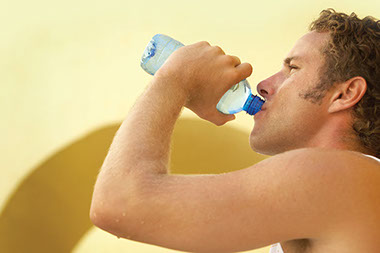
    Image of man drinking from a water bottle.

    Nearly half of recreational runners may be drinking too much fluid during races, according to a survey of runners by Loyola University Health System researchers. Expert guidelines recommend runners drink only when thirsty. But the Loyola survey found that 36.5% of runners drink according to a preset schedule or to maintain a certain body weight and 8.9% drink as much as possible.

    Drinking too much fluid while running can cause a potentially fatal condition called exercise-associated hyponatremia. It occurs when runners drink even when they are not thirsty. Drinking too much during exercise can dilute the sodium content of blood to abnormally low levels.

    Drinking only when thirsty will prevent overconsumption of fluids. “It’s the safest known way to hydrate during endurance exercise,” said Loyola sports medicine physician Dr. James Winger. The study is in the British Journal of Sports Medicine.

    Symptoms of hyponatremia can include nausea, vomiting, headache, confusion, loss of energy, muscle weakness, spasms or cramps. In extreme cases, the condition can lead to seizures, unconsciousness, and coma.

    © American Institute for Preventive Medicine
  • Walking Off The Midway Munchies

    BE FIT

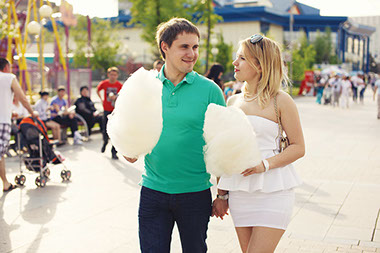
    Image of couple walking at a state fair with cotton candy.

    How far will you need to walk to burn off the calories of some of your favorite state fair foods? University of Nebraska Extension has it all calculated:

    *  Corn dog, large: 4.5 miles

    *  Cotton candy: 1.5 miles

    *  Fried candy bar on a stick: 4.5 miles

    *  Funnel cake, 6-inch diameter: 3 miles

    *  Soft drink, 32 oz.: 2.5 miles

    *  Sno-cone: 2.5 miles

    *  Soft pretzel: 3 miles

    So wear comfortable shoes and plan to walk off what you eat. But be prudent. Choose a small soft drink or bring along bottled water. Save your calories for the splurges. Split a funnel cake among friends; share that fried candy bar so everyone gets a bite. Limit yourself to one treat.

    © American Institute for Preventive Medicine

  • Cold Temps & Exercise: A Great Pair

    BE FIT

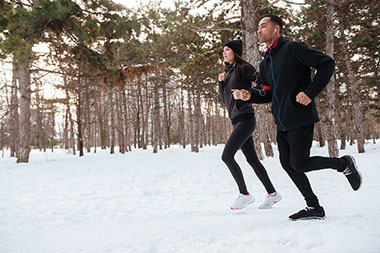
    Image of couple jogging in the winter.

    Has cold weather got you hiding under the blankets? Don’t let it turn you into a couch potato. Your body needs exercise year-round to be healthy. And, exercising in the cold can be enjoyable if you know how to prepare for it.

    Why cold weather workouts are cool

    Cold air can be refreshing! Stepping out into a chilly day may help you stay moving. There’s no sweltering heat or sticky humidity to slow you down. If fact, the lack of heat may help you work out a little longer and harder. You could burn even more calories and give your energy levels a boost.

    Getting out in the daylight can improve your mood. This can help you get through the long winter with good mental health. Your immune system will thank you, too. Just a few minutes a day of exercise may help you stave off colds and flu.

    How to work out when it’s cold

    Not sure what you should or shouldn’t do in the winter? Try these activities:

    *  Brisk walking or hiking

    *  Ice skating

    *  Sledding

    *  Cross-country skiing

    *  Snowshoeing

    Safety first

    Staying warm and dry is key during winter workouts. Hypothermia and frostbite are dangerous and are more likely to happen if you’re not properly dressed for the weather. These steps can help you avoid getting dangerously cold:

    *  Use a moisture-wicking fabric as the first layer against your skin. Never use cotton, as it traps moisture and will make you feel colder.

    *  The next layer should be a warm material, like fleece.

    *  The outside layer of clothing should be windproof to keep out moisture and chilly gusts.

    Don’t forget to drink plenty of water! Even if you don’t feel hot, your body needs hydration during exercise.

    Indoor workouts work, too

    If it’s simply too cold, icy or otherwise unsafe to exercise outdoors, you can still get off the couch and get healthier. Indoor workouts include:

    *  Going up and down stairs

    *  Dancing

    *  Vacuuming, mopping or other active housework

    *  Roller skating

    *  Yoga

    *  Workout classes at a local gym or community center

    People who have had a heart attack or stroke, or are at risk of either one, should ask their doctor about safe ways to exercise.

    Signs of hypothermia

    Hypothermia means the body temperature has dropped too low. Seek immediate care and/or go to an emergency room if hypothermia is suspected. Signs to look for include:

    *  Sudden clumsiness, lack of coordination

    *  Confusion

    *  Shivering

    *  Sleepiness

    *  Slurred speech

    *  Very cold feet or hands

    Source: American Heart Association

    © American Institute for Preventive Medicine