Tag: movement

  • Reduce Flight Risks

    Healthy Travel

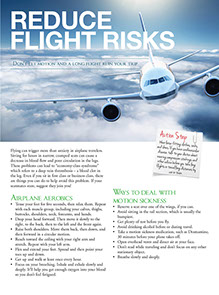
    Don’t let motion and a long flight ruin your trip.

    Flying can trigger more than anxiety in airplane travelers. Sitting for hours in narrow, cramped seats can cause a decrease in blood flow and poor circulation in the legs. These problems can lead to “economy-class syndrome” which refers to a deep vein thrombosis – a blood clot in the leg. Even if you sit in first class or business class, there are things you can do to help avoid this problem. If your seatmates stare, suggest they join you!

    Image of flying airplane.

    Airplane aerobics:

    *  Tense your feet for five seconds, then relax them. Repeat with each muscle group, including your calves, thighs, buttocks, shoulders, neck, forearms, and hands.

    *  Drop your head forward. Then move it slowly to the right, to the back, then to the left and the front again.

    *  Raise both shoulders. Move them back, then down, and then forward in a circular motion.

    *  Reach toward the ceiling with your right arm and stretch. Repeat with your left arm.

    *  Flex and extend your feet. Spread and then point your toes up and down.

    *  Get up and walk at least once every hour.

    *  Focus on your breathing. Inhale and exhale slowly and deeply. It’ll help you get enough oxygen into your blood so you don’t feel fatigued.

    To deal with motion sickness:

    *  Reserve a seat over one of the wings, if you can.

    *  Avoid sitting in the tail section, which is usually the bumpiest.

    *  Get plenty of rest before you fly.

    *  Avoid drinking alcohol before or during travel.

    *  Take a motion sickness medication, such as Dramamine, 30 minutes before your plane takes off.

    *  Open overhead vents and direct air at your face.

    *  Don’t read while traveling and don’t focus on any other stationary object.

    *  Breathe slowly and deeply.

    Action Step

    Wear loose-fitting clothes, socks, and shoes. If you have cardiovascular disease, talk to your doctor about wearing compression stockings and other advice before you take long flights or travel long distances by car or train.
    Page image from Ways to Well-Being book by the American Institute for Preventive Medicine. www.HealthyLife.com. All rights reserved.

    © American Institute for Preventive Medicine
  • Time To Get Physical

    Fitness

    Get fit and stay fit.

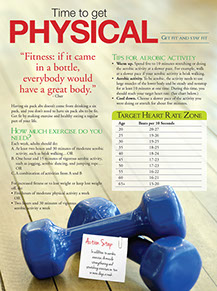
    “Fitness: if it came in a bottle, everybody would have a great body.”

    – Cher

    Having six pack abs doesn’t come from drinking a six pack, and you don’t need to have six pack abs to be fit. Get fit by making exercise and healthy eating a regular part of your life.

    How much exercise do you need?

    Each week, adults should do:

    A.  At least two hours and 30 minutes of moderate aerobic activity, such as brisk walking…OR

    B.  One hour and 15 minutes of vigorous aerobic activity, such as jogging, aerobic dancing, and jumping rope…OR

    C.  A combination of activities from A and B

    For increased fitness or to lose weight or keep lost weight off, do:

    *  Five hours of moderate physical activity a week…OR

    *  Two hours and 30 minutes of vigorous aerobic activity a week

    Tips for aerobic activity

    *  Warm up. Spend five to 10 minutes stretching or doing the aerobic activity at a slower pace. For example, walk at a slower pace if your aerobic activity is brisk walking.

    *  Aerobic activity. To be aerobic, the activity needs to use large muscles of the lower body and be steady and nonstop for at least 10 minutes at one time. During this time, you should reach your target heart rate. (See chart on this page.)

    *  Cool down. Choose a slower pace of the activity you were doing or stretch for about five minutes.

    Target Heart Rate Zone

    Age

    20

    25

    30

    35

    40

    45

    50

    55

    60

    65+

    Beats per 10 Seconds

    20-27

    19-26

    19-25

    18-25

    18-24

    17-23

    17-23

    16-22

    16-21

    15-20

    Action Step

    In addition to aerobic exercise, do muscle strengthening and stretching exercises on two or more days a week.

    Page image from the Ways to Well-Being Book by the American Institute for Preventive Medicine. www.HealthyLife.com. All rights reserved.

    © American Institute for Preventive Medicine
  • Getting Active As A Family

    FAMILY LIFE

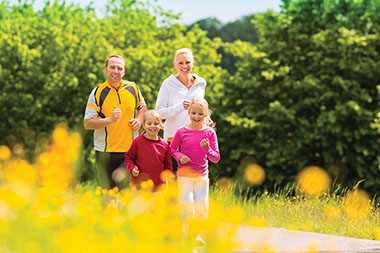
    Image of family jogging.

    One of the best ways to prevent weight problems in children is to make exercise and activity a family event. Not only can parents set a good example, but it helps everyone get healthier while bonding and having fun together. The U.S. Department of Health and Human Services offers some tips:

    *  Find some free time. Being active together just twice a week can have health and emotional benefits. Try to find some 30-minute time slots and put your activity time on the calendar.

    *  Don’t make too many changes at once. To get everyone on board, start gradually and be sure to celebrate each time you make a healthy change.

    *  Ask for the kids’ ideas. Ask your kids about where they’d like to walk or bike. Talk to them about sports or activities they want to try.

    Remember, any time you make a change toward more activity and less screen time, you’re helping everyone in your family lead a healthier life.

    © American Institute for Preventive Medicine

  • If You Have A Cold, Should You Exercise?

    BE FIT

    Image of women sick in bed.

    Yes and no. Moderate exercise (30 minutes a day, on most, if not all, days of the week) actually lowers your risk for respiratory infections, said David C. Nieman from the American College of Sports Medicine. But prolonged, intense exercise, on the other hand, can weaken your immune system and allow viruses to gain a foothold and spread. If you’re already sick with a respiratory infection (common cold or flu), approach exercise cautiously during your illness. To help you decide whether to hit the gym or stay in bed, Dr. Nieman says this:

    DOexercise moderately if your cold symptoms are confined to your head. If you’re dealing with a runny nose or sore throat, moderate exercise is okay. Intense exercise can be continued a few days after symptoms go away (in cases of the common cold).

    DON’Tsweat out your illness. Exercise during an illness does NOT help cure it.

    DOstay in bed if your illness has spread beyond your head. Respiratory infections, fever, swollen glands, and extreme aches and pains all indicate that you should rest up, not work out.

    DON’Tjump back in too soon. If you’re recovering from a more serious bout of cold or flu, gradually ease back into exercise after at least 2 weeks of rest.

    “In general, if your symptoms are from the neck up, go ahead and take a walk,” said Dr. Nieman. “But if you have a fever or general aches and pains, rest up and let your body get over the illness.”

    © American Institute for Preventive Medicine

  • Move In Minutes

    SELF-CARE CORNER

    Image of business man walking while talking on the phone.

    Sitting for extended periods can raise the chances of developing cancer even for people who exercise regularly, says recent research. In response to these findings, fitness experts at The University of Texas MD Anderson Cancer Center share advice on how to get moving in minutes.

    “Taking just one- to two-minute breaks from sitting may help lower your cancer risk,” said Dr. Karen Basen-Engquist, professor in the Department of Behavioral Science. “That’s because even short spurts of movement can help minimize inflammation, insulin resistance, and long-term weight gain-all factors that make it harder for the body to fight off cancer.”

    Basen-Engquist, who uses a pedometer and tries to get at least 500 steps an hour, offers these tips to get moving-no matter how many minutes you can grab each day.

    Have 5 minutes? Stretch.

    Take breaks from sitting at work or home by standing up and stretching your back, forearms, wrists, legs, and hamstrings. Among the benefits: more energy, better circulation, and less muscle tension and stress.

    Have 10-15 minutes? Take a brisk walk.

    Head out during your lunchtime. Take walking meetings with coworkers. Plan a quick trip around the neighborhood. Walking helps maintain a healthier blood pressure, boosts metabolism, curbs stress, and possibly reduces breast and colorectal cancer risk.

    Just keep in mind that brisk walking yields more benefits than a casual stroll. So you should feel a little out of breath and feel your heart beating a little faster.

    Have 20-30 minutes? Tidy the house.

    Tidying up does more than limit couch time. It can also qualify as aerobic activity. To get your heart rate up, focus on repetitive activities that use large muscle groups, like the legs and back. This includes vacuuming, mopping, scrubbing, gardening, and even taking multiple trips upstairs to put away laundry.

    Have just 1-2 minutes? Take the stairs.

    Skip the elevator or escalator and take the stairs at work and when doing errands. Stairs get your heart pumping, build muscle, strengthen bones, and burn calories. The more often you take one step at a time, the bigger the payoff.

    © American Institute for Preventive Medicine

  • 3 “S”S For Being Active At Work

    FAMILY LIFE

    Two coworkers holding a set of dumb bells in hands.

    Many people have jobs that require sitting at a desk or being inactive for long periods of time. This can make it hard to reap the benefits of exercise, like having more energy and weight loss. But you can fit in fitness at work with just a few tricks.

    1.  Shoes. If you wear a dress or work shoes, bring your sneakers to work. Keep them under your desk and slip them on during your lunch break so you can take a brisk walk in comfort.

    2.  Stairs & standing. Whenever possible, take the stairs instead of the elevator. A few extra calories burned is better than none. Try to stand or walk when you don’t need to be sitting. This could be during a phone conversation, or going down the hall to speak to someone instead of calling or emailing them.

    3.  Schedule. Put time in your schedule to exercise. It’s one of the most important things you can do for YOU! If you don’t have enough time at lunch, find a way to exercise either before or after work. Write it down in your work calendar as a reminder that it’s an important commitment.

    © American Institute for Preventive Medicine

  • Reduce Sit-Time

    Healthylife® Weigh

    Part 5

    Business team with folders walking along office building and talking.

    Find ways to move more throughout the day.

    *  Set an alarm on your watch or phone to get up every hour, if sitting.

    *  Stretch and walk for a few minutes to get more oxygen flowing through your body.

    *  Drink water regularly so you need to use the bathroom at least once every few hours.

    *  Get up to use a drinking fountain.

    *  Get up during commercial breaks on TV to tidy up a room or dust.

    *  Walk outside for a few minutes. Take a deep breath of fresh air.

    *  Have walking meetings with co-workers and friends. Walk and talk.

    *  Walk to get lunch.

    © American Institute for Preventive Medicine

  • 10 Ways To Avoid Holiday Weight Gain

    HEALTHY EATING

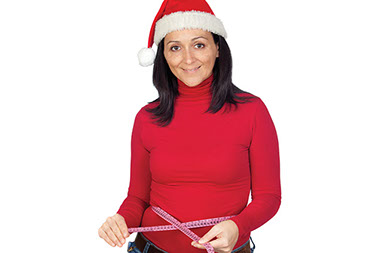
    Image of women wearing a santa hat while taking her waist measurement.

    It can be especially hard to avoid extra pounds when there’s holiday food everywhere you turn. Stick to the basics of healthy eating so you can make it to the new year without regrets.

    1.Drink more water:Drinking water before you eat may help you feel fuller and eat less.

    2.Skip the soda, hot cocoa and high-sugar coffee drinks:Replacing sugary drinks with water can help you lose weight.

    3.Get exercise:Even just a few minutes a day has health benefits and can help you burn calories.

    4.Eat fruits and vegetables:These foods are generally packed with nutrition and low in calories.

    5.Get enough sleep:Lack of sleep can cause more cravings for unhealthy foods.

    6.Listen to your body:Stop eating when you start to feel full, not when you’re stuffed.

    7.Start with small portions:Start with smaller amounts of food on your plate, and wait to see if you need more later.

    8.Keep a food diary:This helps you get a clear picture of what you’ve eaten.

    9.Don’t eat and watch TV:This can lead to mindless eating and consuming too many calories.

    10.Build muscle:Muscles help your body burn more calories, even when resting.

    © American Institute for Preventive Medicine

  • Agility Means Mobility

    SELF-CARE CORNER

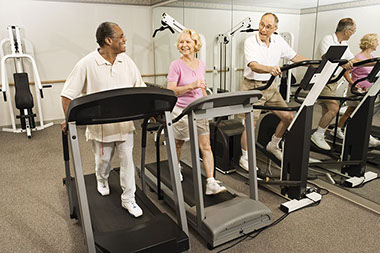
    Image of 3 senior citizens walking on treadmills.

    Want to be able to move around well as you age? Finding it more difficult to get down on your knees (and get up)? Interested in keeping your joints strong and flexible to meet the demands of daily life?

    Join the club. Without our ability to get around, all kinds of health problems set in, according to the CDC. MySilverAge.com challenges not just seniors but everyone else to work out to improve mobility with these 3 functional fitness workouts:

    *Use sandbells to minimize strain.While exercise equipment such as dumbbells strengthen arms, many weights can place too much strain on the hands. A sandbell-a weighted, contoured fabric bag filled with sand-is an easier alternative for older adults and others who have trouble gripping items, because they offer customizable weight and grip for strength exercises, while minimizing stress and strain on hands.

    *Use interval training for quick bursts of energy.Children tend to have short bursts of energy followed by periods of rest before they start again. Keep up with the kids with interval training. Walk on a treadmill at a normal speed for 5 minutes, then increase to a more challenging pace for 1 minute and repeat.

    *Use an exercise ball for better balance.Good balance is vital for safe walking, stair climbing, and avoiding falls. Use an exercise ball in place of a chair during traditional workouts, such as lifting weights, to help improve balance. The instability of the ball forces all the body’s muscles to work together to support stability and steady balance.

    © American Institute for Preventive Medicine