Tag: mucus

  • Bronchitis

    Respiratory conditions

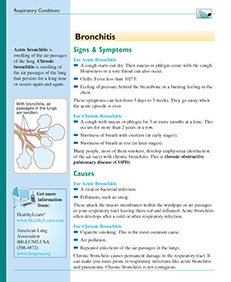
    Acute bronchitis is swelling of the air passages of the lung. Chronic bronchitis is swelling of the air passages of the lung that persists for a long time or occurs again and again.

    Acute Bronchitis

    Signs & Symptoms

    *  A cough starts out dry. Then mucus or phlegm come with the cough. Hoarseness or a sore throat can also occur.

    *  Chills. Fever less than 102ºF.

    *  Feeling of pressure behind the breastbone or a burning feeling in the chest.

    These symptoms can last from 3 days to 3 weeks. They go away when the acute episode is over.

    Causes

    *  A viral or bacterial infection.

    *  Pollutants, such as smog.

    These attack the mucus membranes within the windpipe or air passages in your respiratory tract leaving them red and inflamed. Acute bronchitis often develops after a cold or other respiratory infection.

    Treatment

    Most of the time, this type is caused by a virus and goes away without treatment. Sometimes, a doctor may prescribe:

    *  Bronchodilators. These medicines open up air passages in the lungs.

    *  An antibiotic if you smoke, are older than age 40, or if you have a condition or take medication that makes it hard for you to fight infections.

    Chronic Bronchitis

    Signs & Symptoms

    *  A cough with mucus or phlegm for 3 or more months at a time. This occurs for more than 2 years in a row.

    *  Shortness of breath with exertion (in early stages).

    *  Shortness of breath at rest (in later stages).

    Many people, most of them smokers, develop emphysema (destruction of the air sacs) with chronic bronchitis. This is chronic obstructive pulmonary disease (COPD).

    Causes

    *  Cigarette smoking. This is the most common cause.

    *  Air pollution.

    *  Repeated infections of the air passages in the lungs.

    Chronic bronchitis causes permanent damage to the respiratory tract. It can make you more prone to respiratory infections like acute bronchitis and pneumonia. Chronic bronchitis is not contagious.

    Treatment

    *  Not smoking. Avoiding secondhand smoke.

    *  Avoiding or reducing exposure to air pollution, chemical irritants, and cold, wet weather.

    *  Medical treatment as needed, for airway infections and heart problems.

    *  Oxygen, as prescribed.

    Questions to Ask

    Self-Care / Prevention

    *  Don’t smoke. Avoid secondhand smoke.

    *  Reduce your exposure to air pollution. Use air conditioning, air filters, and a mouth and nose filter mask if you have to. Stay indoors during episodes of heavy air pollution.

    *  Rest. Drink plenty of liquids.

    *  Breathe air from a cool-mist vaporizer. Bacteria grows in vaporizers, so clean your unit after each use. Breathing in mist with bacteria can make bronchitis worse. Use distilled (not tap) water in the vaporizer.

    *  Take an over-the-counter medicine for fever, pain, and/or inflammation as directed.

    *  Instead of cough suppressants, use expectorants.

    *  Use bronchodilators and/or take antibiotics as prescribed by your doctor.

    Resources
    American Lung Association

    800.LUNG.USA (586.4872)

    www.lungusa.org

    Healthier at Home book by the American Institute for Preventive Medicine. www.HealthyLife.com. All rights reserved.

    © American Institute for Preventive Medicine
  • Coughs

    Respiratory conditions

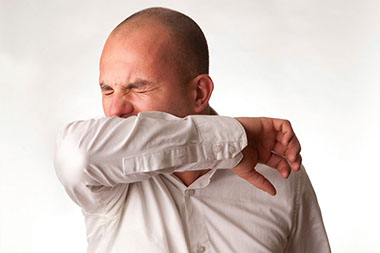
    Image of man coughing into elbow.

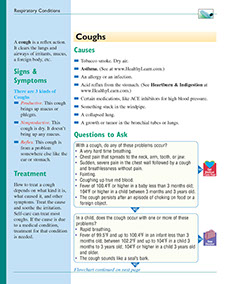
    A cough is a reflex action. It clears the lungs and airways of irritants, mucus, a foreign body, etc.

    Signs & Symptoms

    There are 3 kinds of Coughs

    *  Productive. This cough brings up mucus or phlegm.

    *  Nonproductive. This cough is dry. It doesn’t bring up any mucus.

    *  Reflex. This cough is from a problem somewhere else like the ear or stomach.

    Causes

    *  Tobacco smoke. Dry air.

    *  Asthma.

    *  An allergy or an infection.

    *  Acid reflux from the stomach.

    *  Certain medications, like ACE inhibitors for high blood pressure.

    *  Something stuck in the windpipe.

    *  A collapsed lung.

    *  A growth or tumor in the bronchial tubes or lungs.

    Treatment

    How to treat a cough depends on what kind it is, what caused it, and other symptoms. Treat the cause and soothe the irritation. Self-care can treat most coughs. If the cause is due to a medical condition, treatment for that condition is needed.

    Questions to Ask

    Self-Care / Prevention

    For Coughs that Bring Up Mucus

    *  Drink plenty of liquids.

    *  Don’t smoke. Avoid secondhand smoke.

    *  Use a cool-mist vaporizer, especially in the bedroom. Put a humidifier on the furnace.

    *  Take a shower. The steam helps thin mucus.

    *  Use an over-the-counter expectorant medicine, as directed. This helps you spit out phlegm or mucus. Try a decongestant for postnasal drip.

    For Coughs that Are Dry

    *  Drink lots of liquids. Hot drinks like tea with lemon and honey soothe the throat.

    *  Suck on cough drops or hard candy. (Don’t give these to children under age 5.)

    *  Take an over-the-counter cough medicine that has dextromethorphan.

    *  Make your own cough medicine. Mix 1 part lemon juice and 2 parts honey. (Don’t give this to children less than 1 year old.)

    Other Tips

    *  Don’t smoke. Avoid secondhand smoke. Avoid chemical gases that can hurt your lungs.

    *  Don’t give children under age 5 small objects that can easily get caught in the throat or windpipe. Examples are buttons, balloons, peanuts, and popcorn. Even adults should be careful to chew and swallow foods slowly so they don’t “go down the wrong way.”

    *  If you cough and have heartburn symptoms when you lie down, try a liquid antacid. Don’t lie down for 2 to 3 hours after you eat.

    Resources

    American Lung Association

    800.LUNG.USA (586.4872)

    www.lungusa.org

    Healthier at Home book by the American Institute for Preventive Medicine. www.HealthyLife.com. All rights reserved.

    © American Institute for Preventive Medicine