Tag: myths

  • Busting The Myths About Breast Cancer

    MEDICAL NEWS

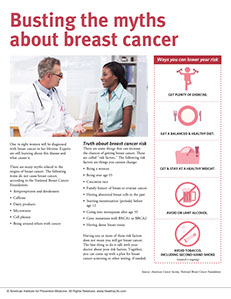
    Image of doctor and patient.

    One in eight women will be diagnosed with breast cancer in her lifetime. Experts are still learning about this disease and what causes it.

    There are many myths related to the origins of breast cancer. The following items do not cause breast cancer, according to the National Breast Cancer Foundation:

    *  Antiperspirants and deodorants

    *  Caffeine

    *  Dairy products

    *  Microwaves

    *  Cell phones

    *  Being around others with cancer

    Truth about breast cancer risk

    There are some things that can increase the chances of getting breast cancer. These are called “risk factors.” The following risk factors are things you cannot change:

    *  Being a woman

    *  Being over age 55

    *  Caucasian race

    *  Family history of breast or ovarian cancer

    *  Having abnormal breast cells in the past

    *  Starting menstruation (periods) before age 12

    *  Going into menopause after age 55

    *  Gene mutations with BRCA1 or BRCA2

    *  Having dense breast tissue

    Having one or more of these risk factors does not mean you will get breast cancer. The best thing to do is talk with your doctor about your risk factors. Together, you can come up with a plan for breast cancer screening or other testing, if needed.

    Ways you can lower your risk

    *  Get plenty of exercise.

    *  Eat a balanced & healthy diet.

    *  Get & stay at a healthy weight.

    *  Avoid or limit alcohol.

    *  Avoid tobacco, including second-hand smoke (research is ongoing)

    Sources: American Cancer Society, National Breast Cancer Foundation
    © American Institute for Preventive Medicine

  • No Yoke?

    HEALTHY EATING

    Image of salad with hard boil eggs.

    Adding eggs to a salad with a variety of raw vegetables is an effective method to improve the absorption of carotenoids. Those are fat-soluble nutrients that help reduce inflammation and oxidative stress, according to research from Purdue University. “Eating a salad with a variety of colorful vegetables provides several unique types of carotenoids, including beta-carotene, lutein, zeaxanthin, and lycopene,” said Wayne Campbell, a professor of nutrition science. “The lipid contained in whole eggs (including the yoke especially) enhances the absorption of all these carotenoids.”

    This research is published in the American Journal of Clinical Nutrition.

    FYI:

    The 2010 Dietary Guidelines for Americans recommends limiting dietary cholesterol to no more than 300 mg a day. (A single egg has almost 200 mg.) The 2015 Dietary Guidelines, to be published later this year, will no longer restrict dietary cholesterol. Why? The 2015 Dietary Guidelines Advisory Committee’s found no evidence to show a strong enough link between consuming dietary cholesterol and blood cholesterol levels. As with all medical guidelines, discuss your particular needs with your doctor.

    © American Institute for Preventive Medicine

  • Ulcers Not Caused By Stress

    MEDICAL NEWS

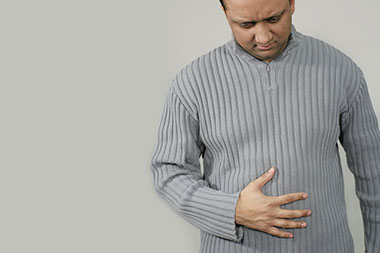
    Image of man holding this stomach.

    The lining of your stomach makes acid and enzymes that help break down food into the nutrients you need. The lining protects itself from acid damage by releasing mucus. But sometimes the lining gets inflamed and starts making less acid, enzymes, and mucus. This type of inflammation is called gastritis.

    You may have gastritis if you have pain or an uncomfortable feeling in your upper stomach. You could have nausea or vomiting. Or you may have no symptoms at all.

    Untreated, some types of gastritis can lead to ulcers. These are sores in the stomach lining.

    Some people think ulcers are caused by stress and spicy foods. But according to the NIH in Health, bacteria called H. pylori are often to blame. These bacteria break down the inner protective coating in the stomach and can cause inflammation.

    H. pylori can spread by passing from person to person or through contaminated food or water. Infections can be treated with antibiotics.

    One type of gastritis, called erosive gastritis, wears away the stomach lining. The most common cause of erosive gastritis is long-term use of medications called non-steroidal anti-inflammatory drugs. These include aspirin and ibuprofen. Stop taking these pain relievers and the gastritis usually clears up.

    Less common causes of gastritis include digestive disorders (such as Crohn’s disease) and autoimmune disorders in which the body’s protective immune cells attack healthy cells in the stomach lining.

    Gastritis can be diagnosed with an endoscope. A thin tube with a tiny camera on the end is inserted through the patient’s mouth or nose and into the stomach. The doctor looks at the stomach lining and may remove some tissue samples for testing. Treatment will depend on the type of gastritis found.

    Although stress and spicy foods don’t cause gastritis and ulcers, they can make symptoms worse. Milk might provide brief relief, but it also increases stomach acid, which can worsen symptoms. Your doctor may advise taking antacids or other drugs to  reduce acid in the stomach.

    Gastritis can lead to ulcers over time. Symptoms of ulcers include pain between the belly button and breastbone that starts between meals or during the night. It briefly stops if you eat or take antacids, lasts for minutes to hours, and comes and goes for several days or weeks.

    Contact your doctor right away if you have sudden sharp stomach pain that doesn’t go away, black or bloody stools, or vomit that is bloody or looks like coffee grounds.

    © American Institute for Preventive Medicine