SELF-CARE CORNER
Toes are an important part of walking and balance. And their bones and ligaments are small, so they can be easily injured.
Many people think doctors won’t do anything about an injured toe. This is not true. A broken or sprained toe may need medical attention. But minor toe injuries may get better with some simple home care.
What to do if you hurt your toe
* If the pain is not severe, try putting ice on it for 10 minutes at a time. Be careful not to get the toe too cold.
* If needed, take an over-the-counter pain medicine.
* Stay off the foot if possible. Try to elevate it when sitting down.
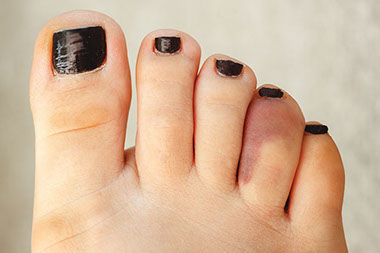
* Look for signs of bruising and swelling, which could mean a possible sprain or broken toe.
* If the pain is severe, contact your doctor or seek urgent medical care.
* If pain and swelling don’t get better within two days, see a health care provider.
* Elevate the affected toe to help with swelling.
Sprained vs. broken toe
A sprain means that the ligaments in the toe have been injured. You can usually walk on a sprained toe, but it may still be very sore from swelling and bruising.
Sprains may happen when you overstretch the toe during sports, running or jumping. “Turf toe” is a sprain of the big toe that is quite common in athletes.
If you have a broken toe, you may not be able to move the toe or put weight on it. It may have a lot of swelling and bruising. The pain may not get better, even after a couple of days. Broken toes can happen during sports and activities. They also occur with falls and accidents or when you drop something heavy on your foot.
Should you get medical care?
Some minor toe injuries can be treated at home. But toe sprains and breaks can be more serious. Don’t ignore toe pain that lasts more than two days. See a health care provider if you think your toe is sprained or broken.
If you have diabetes
Always see a health care provider for any kind of foot or toe injury.
Sources: American College of Foot and Ankle Surgeons, American Podiatric Medical Association
© American Institute for Preventive Medicine