Tag: natural

  • Natural Remedies For Menopause Symptoms

    SELF-CARE CORNER

    Women sitting with eyes closed and relaxed.

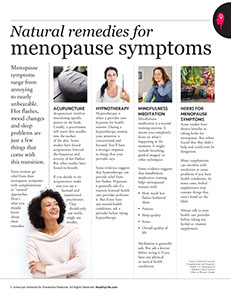
    Menopause symptoms range from annoying to nearly unbearable. Hot flashes, mood changes and sleep problems are just a few things that come with this transition.

    Some women get relief from their menopause symptoms with complementary or “natural” approaches. Here’s what you should know about these remedies.

    Acupuncture

    Acupuncture involves stimulating specific points on the body. Usually, a practitioner will insert thin needles into the surface of the skin. Some studies have found acupuncture lowered the frequency and severity of hot flashes. But other studies have found no benefit.

    If you decide to try acupuncture, make sure you use a licensed and experienced practitioner. They should only use sterile, single-use needles.

    Hypnotherapy

    Hypnotherapy is when a provider uses hypnosis for health reasons. During a hypnotherapy session, your attention is concentrated and focused. You’ll have a stronger response to things that your provider says.

    Some evidence suggests that hypnotherapy can provide relief from hot flashes. Hypnosis is generally safe if a trained, licensed health care provider performs it. But if you have any mental health conditions, ask a provider before trying hypnotherapy.

    Mindfulness meditation

    Mindfulness meditation is a mental training exercise. It means you completely focus on what’s happening in the moment. It might include breathing, guided imagery or other techniques.

    Some evidence suggests that mindfulness meditation training helps menopausal women with:

    *  How much hot flashes bothered them

    *  Anxiety

    *  Sleep quality

    *  Stress

    *  Overall quality of life

    Meditation is generally safe. But ask a doctor before trying it if you have any physical or mental health conditions.

    Herbs for menopause symptoms

    Some studies have shown benefits to taking herbs for menopause. But others found that they didn’t help and could even be dangerous.

    Many supplements can interfere with medicines or cause problems if you have health conditions. In some cases, herbal supplements may contain things that aren’t listed on the label.

    Always talk to your health care provider before taking any herbal or vitamin supplement.

    Sources: National Center for Complementary and Integrative Health, U.S. Department of Health & Human Services Office on Women’s Health
    © American Institute for Preventive Medicine
  • Are Natural Sleep Aids Safe?

    WELL-BEING

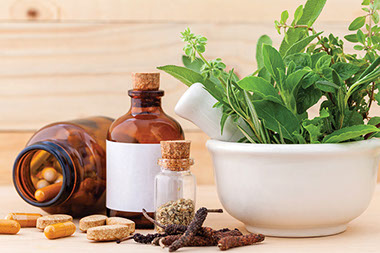
    Image of different supplements.

    Many herbal and “natural” sleep supplements are available in stores today. Although they claim to help you sleep without side effects, experts say you should use caution before taking one.

    The Food and Drug Administration (FDA) considers these natural remedies to be “dietary supplements.” This means they are not regulated as strictly as medicines. In fact, the companies that make these supplements don’t have to get FDA approval before selling them.

    Herbs and supplements can interact with medicines you already take. Be sure to talk with your doctor before taking any natural supplement. And parents should not give any natural supplements to children without first talking with the child’s pediatrician. These supplements can have effects on children’s growing bodies.

    © American Institute for Preventive Medicine

  • Is Cinnamon Good For Your Health?

    HEALTHY EATING

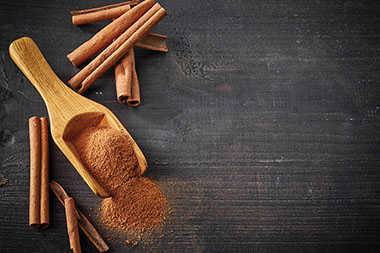
    Image of cinnamon.

    Cinnamon is often used in sugar-loaded treats like cinnamon rolls and lattes. And though it’s a popular spice for desserts, it’s not necessarily an unhealthy choice. The spice has been used for thousands of years, and some recent studies suggest cinnamon may even have health benefits:

    *  A study in the journal Diabetes Care studied 60 people with type 2 diabetes. Some were given cinnamon capsules, and others were given a placebo (a fake pill that contained no cinnamon). Those who consumed the cinnamon for 40 days had lower levels of blood sugar, triglycerides, LDL (“bad”) cholesterol, and total cholesterol.

    *  A study in the Journal of Nutrition suggests that cinnamon and other spices may help reduce triglyceride levels after eating a fatty meal.

    *  The Journal of Neuroimmune Pharmacology published a study that suggests cinnamon may be able to protect the brain against changes that can cause Parkinson’s disease.

    Want to spice up your health with cinnamon? Try adding it to your favorite foods or drinks in place of sugar. Its natural flavor can be a welcome addition to coffee, tea, oatmeal, fruit, and even chili.

    High doses of cinnamon can be dangerous, though. Be sure to talk with your doctor before taking cinnamon or other natural supplement.

    © American Institute for Preventive Medicine