Tag: nicotine

  • Move Your Body

    Healthylife® QuitWell™

    Part 5

    Couple outside stretching.

    All physical activity has benefits for the body and mind. View exercise as a break from your day. Use this time to focus on the present, instead of past or future problems and worries. What are your favorite ways to be physically active?

    Physical activity can help you quit and stay quit. It can also improve your energy level, ability to learn, and focus.

    Emotional Health

    Exercise releases endorphins and increases levels of serotonin and dopamine in the brain. These brain chemicals help create feelings of happiness and euphoria. You may start to feel these benefits after just a few minutes of moderate exercise. This leads to a happiness buzz and overall mood boost!

    Stress Management

    Norepinephrine is a chemical that can moderate the brain’s response to stress. Exercise helps to increase that chemical. Exercise can decrease worry and tension. These may be triggers for you to smoke, dip, or vape. Exercise also enhances the mind’s ability to deal with daily stressors. Managing stressors can reduce urges to reach for your old habit. The calming effect of exercise can last at least four hours after the exercise is over.

    Physical Health

    Exercise helps strengthen your muscles and bones. This helps you have good posture and keeps your joints and body more aligned. Exercise strengthens your heart muscle so your heart is more efficient. This also helps reduce your risk of having a heart attack or blood clot. Exercise can also help lower your blood pressure. Your ability to breathe also improves, especially as you reduce and eliminate smoking. Exercise improves the circulation of immune cells in your blood that fight off viruses and bacteria. Exercise also helps combat damage done to cells, tissues, and organs.

    Recommendation: Be physically active for at least 2 ½ hours (150 minutes) per week. You can do this for 10, 15, 20, or 30 minutes at a time. Consult your doctor before beginning an exercise routine if you:

    *  Have a chronic health problem, such as heart disease or diabetes.

    *  Have high blood pressure.

    *  Feel faint or dizzy when you try to exercise.

    *  Have an injury or bone or joint problems, such as arthritis, that have been or could become aggravated by exercise.

    Reduce Sit-Time

    Find ways to move more throughout the day.

    *  Set an alarm on your watch or phone to get up every hour, if sitting.

    *  Stretch and walk for a few minutes to get more oxygen flowing through your body.

    *  Drink water regularly so you need to use the bathroom every few hours.

    *  Get up during commercial breaks on TV to tidy up a room or dust.

    *  Walk outside for a few minutes. Take a deep breath of fresh air.

    *  Walk to get lunch.

    Move in Different Ways

    All exercise and movement help give you the benefits. Finding activities you like doing and that you will keep doing is important for long-term success.

    Cardiovascular (cardio) training uses large movements that involve multiple muscle groups, such as your legs, buttocks, and abdominals, all at once. Popular aerobic activities are brisk walking, running, cycling, swimming, and dancing.

    Resistance training uses body weight or weights to build muscle. Move slowly through exercises, breathing regularly. Squats, lunges, push-ups, calf raises, and bicep curls are basic resistance movements.

    Stretching helps your body be more flexible. This helps you prevent injury during exercise and everyday activities. Stretching can also help you relax.
    © American Institute for Preventive Medicine
  • Relapse Rehearsal

    Healthylife® QuitWell™

    Part 5

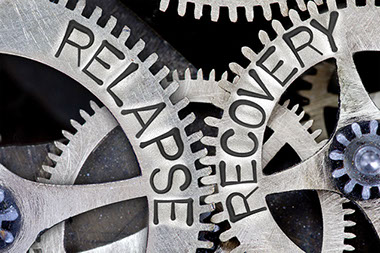
    Image of gears with 'Relapse' and 'Recovery' imprinted.

    Choose three events from that could cause you to return to your old habit. Choose situations that you are almost sure you will come across after you have quit. Think about your plan for these times. These plans can include thoughts and actions. They may include someone else’s help. Use the tools learned in this program to write a short plan.

    Event:

    Response Plan:

    Event:

    Response Plan:

    Event:

    Response Plan:

    You may need to update your plan or improve it over time, after you have gone through the situation.

    © American Institute for Preventive Medicine

  • Why Does It Matter If I Quit?

    Healthylife® QuitWell™

    Part 1

    Man smoking, while half his body in vanishing into smoke.

    Tobacco and nicotine products can affect many areas of your life.

    *  If you aren’t sure if you want to quit, read this section to learn more about how tobacco/nicotine use may be affecting your current and future life. Think about how important each of these reasons is to you. This may change over time, or if you start noticing impacts in your life.

    *  If you are ready to quit, consider adding these to your list of reasons you are making this change. Building a longer and stronger list of reasons you are choosing to make this change can help when the going gets tough.

    *  If you have already quit and are trying to stay quit, this information can help you talk yourself through a craving or tough situation. It may reinforce your decision and help you feel good about the change you have made.

    © American Institute for Preventive Medicine
  • Time Management

    Systematic Stress Management Program

    Step 6: Time Management

    Step 6: Time Management Section

    Introduction

    Does Time Get the Best of You?

    Defining Your Life Goals

    Activity Worksheet

    Activity Log

    Time Management Techniques

    Action Plan for Improving Time Usage

    Procrastination Quiz

    How Do I Procrastinate?

    One Dozen Ways to Overcome Procrastination

    Should You Delegate?

    Delegation Caddy

    Read the following suggestions on how to manage your time more effectively. Concentrate on correcting those areas that waste the most time for you.

    Decreasing Time Wasters

    1. Learn to say “no.”

    This technique helps to prioritize the people and tasks in your life. Lower priority people and tasks require a “no” response. Use assertiveness. Learn to say “no” to unwanted interruptions, invitations, and requests.

    2. Put perfectionism in its proper place.

    Perfectionism is often a poor use of time. Not everything requires perfection. High priority items require more perfection than low priority items. By demanding perfection of yourself and others, you may be wasting time in unnecessary effort.

    3. Avoid or manage interruptions.

    Interruptions are one of the biggest time wasters. Common time wasters are emails, instant messages (IMs), text messages, phone calls, and uninvited guests. Follow these guidelines and gain some control over daily interruptions.

    Technology Tools

    *  Make and return calls and send and return emails, Instant Messages (IMs), and texts at times that allow the most efficient use of your time.

    *  Screen calls. Send them to voicemail, as needed.

    *  Keep IMs work-related and brief. Keep email responses to four sentences or less.

    *  Monitor lengths of calls. Limit chit chat.

    *  Use “do not disturb” technology, as needed.

    *  Send and accept personal calls, texts, etc. on non-work times.

    Uninvited Visitors

    *  Close your door.

    *  Face desk away from office traffic.

    *  Establish quiet time – no guests.

    *  Plan regular visiting time.

    *  Remain standing when a visitor is present.

    *  Don’t add to chatter.

    *  Let the visitor know how you honestly feel about interruptions.

    4. Delegate when possible.

    Try assigning some low priority tasks to others. This can free up your time for more important things. Delegation is also a good option for tasks that do not require perfection.

    5. Remember: Handle each piece of paper or mail only once.

    Immediately make your decisions about what attention it requires. Don’t stack papers that you will look at again and again. Deal with emails efficiently, too. Delete ones you do not need. Unsubscribe to mailing lists not relevant to your work or that you do not read. Use your email server’s “Tools” menu to create “Action” and “Archive” folders, labels, and filters to organize emails. Set aside specific times to read and respond to emails.

    6. Transform commuting and waiting time.

    Listen to books, language programs, and education materials on audio cassettes while commuting, exercising, or waiting in line.

    7. Have assigned places and systems for routine items and tasks.

    Always store keys, purse, briefcase, tools, and utensils in the same place. Often used clothing and grooming items also need a special place. This reduces the time wasted searching for routine items.

    Increase Productive Activities

    1. Think of the 80/20 Principle.

    Carefully choose where you will concentrate your efforts. The 80/20 principle states that 80% of the most valuable results come from 20% of the tasks you do. Concentrate your working time on just these important tasks. Avoid the trivial.

    2. Distinguish between activity and productivity.

    Are you wasting time on busy work (activity) that may not lead to a goal or are you spending time productively in a way that will produce results? Concentrate on productive time. Ask yourself often, “Am I just keeping busy or am I really being productive?”

    3. Ask the question: “What is the best use of my time right now?”

    Ask this question when you are uncertain about your use of time. Use this question to get you back on track in the following situations:

    *  after an interruption

    *  when distracted

    *  when procrastinating

    *  when you run out of steam

    4. Make a “To Do” list.

    Make this list every day! Write it down! Keep it at your fingertips! Having a list of activities that can be checked off is gratifying. It also gives you some idea of progress. Don’t list routine items, such as brushing teeth and commuting to work. However, do allow time for these activities.

    5. Follow the ABC Priority System.

    Categorize your activities under A, B, C priorities with “A” being the top priority. Focus your energies on completing the A’s. Perhaps B’s and C’s could be delegated to others. Some C’s may never even have to be done.

    6. Avoid over-commitment.

    This can be caused by inflexible scheduling or over-booking. Know your personal limits and time frames and have realistic expectations.

    7. Schedule quiet time.

    Establish a regular quiet time for yourself. Inform key interrupters and don’t take telephone calls. Allow yourself quiet time to restore your energy.

    8. Balance quiet time and activity time.

    Too much quiet time can reduce the productivity of those around you. They may depend upon your input – emotional and otherwise. Ask your co-workers/family if your quiet time is a problem for them.

    Page from the Systematic Stress Management book by the American Institute for Preventive Medicine. www.HealthyLife.com. All rights reserved.

    © American Institute for Preventive Medicine
    Step 1: Understanding Stress

    Step 3: Type A & B Behavior Patterns

    Step 5: Thinking Differently

    Step 7: Communication & Stress

    Step 2: Stress Management at Work

    Step 4: Biofeedback Training & Relaxation

    Step 6: Time Management

    Steps to Systematic Stress Management™

    RELATED ARTICLES

    © American Institute for Preventive Medicine  –  All Rights Reserved.Disclaimer|www.HealthyLife.com

  • Food & Drink Tips

    Healthylife® QuitWell™

    Part 2

    Image of a dish filled with healthy snacks.

    What you eat or drink and how you eat or drink can influence your urges for tobacco products. By working on quitting, you are taking an important step to manage what goes into your body.

    *  Drink at least 8 glasses of low-sugar, natural liquids per day: water, herbal tea, sparkling water. This will make you feel less hungry and give your body the water it needs to function. Water is important for clearing toxins from the body.

    *  Eat small, nutrient-dense meals and snacks throughout the day. This will help your blood sugar and energy stay steady and avoid feeling too tired during the day. You will also get the fuel your body needs.

    *  Eat protein as part of all meals and most snacks: lean meats, fish, poultry, low-fat cheese, nut butters, nuts, and seeds. These foods are full of nutrients and help give you even energy throughout the day. They are also filling, so you will find you don’t reach for as many snacks.

    *  Eat plenty of vegetables, fruits, and salads. These foods are filling, vitamin-rich, and low in calories.

    *  Eat foods high in calcium, such as dairy or calcium-fortified juice. Smoking can add to your chances of having brittle bones, so extra calcium may be needed.

    *  Avoid high sugar foods. Look at food labels to spot added sugars. “Sweets” are not the only culprit! Cutting out added sugar helps prevent your blood sugar from going too high or too low. Low blood sugar can trigger an urge.

    *  Cut down on coffee, tea, colas, and other caffeinated drinks. These drinks are often tied to a smoking habit. Cutting out caffeine, even temporarily, while you are quitting, can help reduce urges.

    *  Avoid alcohol. Alcohol causes blood sugar to rise. Your habit may also be linked to drinking habits. Alcohol can lessen your desire to quit in the moment.

    *  After eating, brush your teeth and rinse with mouthwash. The minty fresh taste in your mouth won’t go well with tobacco. It also helps scramble your old routine, if you smoked after a meal.

    © American Institute for Preventive Medicine
  • Moving Through Stages

    Healthylife® QuitWell™

    Part 1

    Image of couple walking down a paved trail.

    Over the next few weeks, as you move through the QuitWell™ program, you might notice yourself moving back and forth between the stages as different factors affect your thinking. For example, a stressful day at work can make you feel like you’ve taken a step backward. Don’t let that stop you! This guide will give you tools to work through challenges and be better prepared for future ones.

    You can try out nearly all the activities in this guide, though pay special attention to the activities highlighted for your stage of change. Look for the tips throughout the guide that help you fit an activity to your stage of change. This will help you feel good about where you are at and help you feel more confident about the future. When you feel yourself moving forward in the stages of change, you can go back to these activities and do them again, using the tips for your new stage of change.

    In a few words, describe how you are feeling right now about quitting. What brought you here? What stage of change do you feel fits you best right now?

    © American Institute for Preventive Medicine

  • Relaxation Techniques

    Healthylife® QuitWell™

    Part 4

    A couple resting on sofa with their dog.

    We will teach you four skills to relax:

    *Relaxation Reflex:Getting rid of muscle tension.

    *Mental Imagery:Thinking of calm, restful places.

    *Deep Natural Breathing:Feeling relaxed by breathing in more oxygen.

    *Spend Time with Animals:Feeling relaxed, happy and secure.

    These relaxation strategies are not designed to take your stress away. Done correctly, they will help you calm your body and mind so that you can think more logically, see major problems as manageable challenges, and get through a tough day.

    If something helps you-even a little-add it to your quitting tool kit. Remember, you will probably need a lot of strategies to be successful in the long run. One strategy may work on Monday morning, but you’ll need another tool on Friday afternoon!

    © American Institute for Preventive Medicine

  • Creative Imagination 2

    SleepWell® Program

    Week 4

    Image of women sitting outside in nature, thinking.

    This tool allows you to rehearse an event or thought in your mind so that you are better prepared to deal with it when it occurs.

    Identify an upcoming event or challenge. Picture other people there, what you do, what you say, and how you react to challenges you know are likely to arise. Mentally practice your feelings and actions to increase your confidence. Identify and address gaps in your plan.

    You can also use creative imagination to save thoughts for later. Take stressful thoughts out of your present mind to reduce anxiety and help you feel calmer. Try these techniques:

    *  Imagine your stressful thoughts in a fishbowl or behind thick glass. You can see the thought floating around but you cannot touch it or hear anything that is going on behind the glass.

    *  Imagine your thought is in a bubble floating away in the wind. The bubble dances in the breeze and eventually blows away.

    *  Imagine your thoughts are a baseball. Then imagine whacking that ball high into the sky, far away.

    *  Imagine your worries falling into the depths of the ocean.

    *  Imagine putting your ideas on a shelf to think about later.

    Make it Real

    Write your worries on an index card and put them in a shoebox. Put the box on a shelf, in the back of the closet, or in a drawer.

    Say this: “I can retrieve these thoughts later, but now it is time to sleep.”

    © American Institute for Preventive Medicine
  • A Strategy For Stress

    Healthylife® QuitWell™

    Part 4

    Image of friends playing cards.

    Many people use tobacco to manage stress-and return to old habits in times of stress. If you currently use tobacco/nicotine products to manage stress, it is very likely your mind will go there in times of stress in the future. If you have quit, having a plan for when stress increases will help you from returning to tobacco/nicotine.

    What is stress?

    Stress is normal and can be a healthy, productive force in your life. Stress can have a good or bad effect on you depending on:

    *  The type of stress

    *  The amount of stress

    *  How well you deal with stress

    “Good” stress can help you pay attention, stay focused, feel challenged, stay interested, and complete tasks.

    “Bad” stress or chronic stress is intense stress over a long period of time. You may not be able to manage this stress as you would like. You tend to stay tense and don’t or can’t relax after things are once again under control. In our modern world, there are many things that can “push your buttons” and stress can become a way of life.

    When we have too much stress to manage, our bodies can be more prone to illness-heart disease, cancer, ulcers, asthma, and colitis.

    The stress response is the way your body and mind react to change. Our bodies have an inborn “fight or flight” response to a stressor:

    *  Heart rate and breathing speed up

    *  Blood pressure rises

    *  Blood moves away from the internal organs to the muscles

    *  Muscles tense

    *  Sweating occurs

    *  Blood sugar (glucose) increase which gives the muscles and brain a lift

    Create Your Stress Strategy

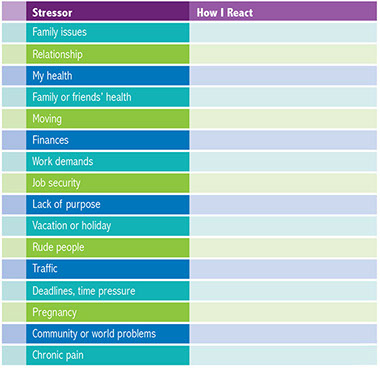
    1. Explore what causes you stress and how you react to these stressors.

    2. Identify stressors that can be reduced.

    3. Learn tools to reduce the feeling of stress, even with the same trigger.

    4. Learn ways to manage the stress that remains.

    Know Your Stressors

    Everyone reacts differently to stress. In order to manage stress, you need to find out the source of your stress and how you react to it.

    1. Look at the list that follows and think about stressors in your life. Check off any that apply to you right now or that are common stressors for you. Knowing your stressors will help you better prepare for triggers.

    2. In the space next to each, write how you react to these stressors. What do you do? How do you feel?

    Chart of different stressors with an empty space to fill in how to react.

    © American Institute for Preventive Medicine

  • How Smoking Hurts The Body

    Healthylife® QuitWell™

    Part 1

    Concept image of doctor with icons of different human organs.

    Heart Disease

    Smoking is the greatest risk factor for heart disease. A smoker’s chance of having a heart attack is 3 times that of a non-smoker. High blood pressure is a major cause of stroke and a prime risk factor for heart disease. High blood pressure is more severe in smokers. People with high blood pressure can lower their risk of heart disease by 50% when they quit.

    1. Carbon monoxide reduces oxygen going to the heart.

    2. The heart works harder to move  the oxygen through the body. Breathing speeds up.

    3. Nicotine causes the blood vessels to constrict. Blood pressure goes up. The heart becomes more stressed.

    4. A greater amount of cholesterol forms on the blood vessel walls.

    5. Over time, less oxygen puts strain on the heart and heart cells die.

    Cancer

    Cigarette smoke has been proven to contain cancer-causing agents (carcinogens) and co-agents (co-carcinogens). The parts of the body that come into direct contact with smoke are more likely to develop cancer: lungs, mouth, trachea, esophagus, and larynx. The breakdown products in smoke also affect other organs that do not come into direct contact with smoke:  the pancreas, kidney, and bladder.

    Chronic Bronchitis

    Chronic bronchitis can make it very hard to breathe. This is because the lining of your bronchial tubes (the tubes that air goes through to get to your lungs) becomes inflamed and irritated. While acute (temporary) bronchitis caused by a cold or virus usually goes away within a few weeks, excess mucus and lung damage can mean months and months of coughing and breathlessness.

    1. Cigarette smoke paralyzes hair like fibers (cilia) that line and clean the bronchial tubes.

    2. Excess mucus is produced in the tubes. The result is a mucus plug.

    3. Chronic coughing is the way a smoker removes the plug so oxygen can get in.

    Emphysema

    Emphysema can also make it very difficult to breathe. This problem develops in a different way than chronic bronchitis:

    1. Oxygen enters the blood stream through air sacs in the lungs. The ‘tars’ from cigarette smoke gather on the lung walls and burst the sacs.

    2. These heavy tars also make the lungs longer and less able to stretch.

    3. Breathing becomes difficult.

    © American Institute for Preventive Medicine