Tag: nicotine

  • Moving Through Stages

    Healthylife® QuitWell™

    Part 1

    Image of couple walking down a paved trail.

    Over the next few weeks, as you move through the QuitWell™ program, you might notice yourself moving back and forth between the stages as different factors affect your thinking. For example, a stressful day at work can make you feel like you’ve taken a step backward. Don’t let that stop you! This guide will give you tools to work through challenges and be better prepared for future ones.

    You can try out nearly all the activities in this guide, though pay special attention to the activities highlighted for your stage of change. Look for the tips throughout the guide that help you fit an activity to your stage of change. This will help you feel good about where you are at and help you feel more confident about the future. When you feel yourself moving forward in the stages of change, you can go back to these activities and do them again, using the tips for your new stage of change.

    In a few words, describe how you are feeling right now about quitting. What brought you here? What stage of change do you feel fits you best right now?

    © American Institute for Preventive Medicine

  • Relaxation Techniques

    Healthylife® QuitWell™

    Part 4

    A couple resting on sofa with their dog.

    We will teach you four skills to relax:

    *Relaxation Reflex:Getting rid of muscle tension.

    *Mental Imagery:Thinking of calm, restful places.

    *Deep Natural Breathing:Feeling relaxed by breathing in more oxygen.

    *Spend Time with Animals:Feeling relaxed, happy and secure.

    These relaxation strategies are not designed to take your stress away. Done correctly, they will help you calm your body and mind so that you can think more logically, see major problems as manageable challenges, and get through a tough day.

    If something helps you-even a little-add it to your quitting tool kit. Remember, you will probably need a lot of strategies to be successful in the long run. One strategy may work on Monday morning, but you’ll need another tool on Friday afternoon!

    © American Institute for Preventive Medicine

  • Creative Imagination 2

    SleepWell® Program

    Week 4

    Image of women sitting outside in nature, thinking.

    This tool allows you to rehearse an event or thought in your mind so that you are better prepared to deal with it when it occurs.

    Identify an upcoming event or challenge. Picture other people there, what you do, what you say, and how you react to challenges you know are likely to arise. Mentally practice your feelings and actions to increase your confidence. Identify and address gaps in your plan.

    You can also use creative imagination to save thoughts for later. Take stressful thoughts out of your present mind to reduce anxiety and help you feel calmer. Try these techniques:

    *  Imagine your stressful thoughts in a fishbowl or behind thick glass. You can see the thought floating around but you cannot touch it or hear anything that is going on behind the glass.

    *  Imagine your thought is in a bubble floating away in the wind. The bubble dances in the breeze and eventually blows away.

    *  Imagine your thoughts are a baseball. Then imagine whacking that ball high into the sky, far away.

    *  Imagine your worries falling into the depths of the ocean.

    *  Imagine putting your ideas on a shelf to think about later.

    Make it Real

    Write your worries on an index card and put them in a shoebox. Put the box on a shelf, in the back of the closet, or in a drawer.

    Say this: “I can retrieve these thoughts later, but now it is time to sleep.”

    © American Institute for Preventive Medicine

  • A Strategy For Stress

    Healthylife® QuitWell™

    Part 4

    Image of friends playing cards.

    Many people use tobacco to manage stress-and return to old habits in times of stress. If you currently use tobacco/nicotine products to manage stress, it is very likely your mind will go there in times of stress in the future. If you have quit, having a plan for when stress increases will help you from returning to tobacco/nicotine.

    What is stress?

    Stress is normal and can be a healthy, productive force in your life. Stress can have a good or bad effect on you depending on:

    *  The type of stress

    *  The amount of stress

    *  How well you deal with stress

    “Good” stress can help you pay attention, stay focused, feel challenged, stay interested, and complete tasks.

    “Bad” stress or chronic stress is intense stress over a long period of time. You may not be able to manage this stress as you would like. You tend to stay tense and don’t or can’t relax after things are once again under control. In our modern world, there are many things that can “push your buttons” and stress can become a way of life.

    When we have too much stress to manage, our bodies can be more prone to illness-heart disease, cancer, ulcers, asthma, and colitis.

    The stress response is the way your body and mind react to change. Our bodies have an inborn “fight or flight” response to a stressor:

    *  Heart rate and breathing speed up

    *  Blood pressure rises

    *  Blood moves away from the internal organs to the muscles

    *  Muscles tense

    *  Sweating occurs

    *  Blood sugar (glucose) increase which gives the muscles and brain a lift

    Create Your Stress Strategy

    1. Explore what causes you stress and how you react to these stressors.

    2. Identify stressors that can be reduced.

    3. Learn tools to reduce the feeling of stress, even with the same trigger.

    4. Learn ways to manage the stress that remains.

    Know Your Stressors

    Everyone reacts differently to stress. In order to manage stress, you need to find out the source of your stress and how you react to it.

    1. Look at the list that follows and think about stressors in your life. Check off any that apply to you right now or that are common stressors for you. Knowing your stressors will help you better prepare for triggers.

    2. In the space next to each, write how you react to these stressors. What do you do? How do you feel?

    Chart of different stressors with an empty space to fill in how to react.

    © American Institute for Preventive Medicine

  • How Smoking Hurts The Body

    Healthylife® QuitWell™

    Part 1

    Concept image of doctor with icons of different human organs.

    Heart Disease

    Smoking is the greatest risk factor for heart disease. A smoker’s chance of having a heart attack is 3 times that of a non-smoker. High blood pressure is a major cause of stroke and a prime risk factor for heart disease. High blood pressure is more severe in smokers. People with high blood pressure can lower their risk of heart disease by 50% when they quit.

    1. Carbon monoxide reduces oxygen going to the heart.

    2. The heart works harder to move  the oxygen through the body. Breathing speeds up.

    3. Nicotine causes the blood vessels to constrict. Blood pressure goes up. The heart becomes more stressed.

    4. A greater amount of cholesterol forms on the blood vessel walls.

    5. Over time, less oxygen puts strain on the heart and heart cells die.

    Cancer

    Cigarette smoke has been proven to contain cancer-causing agents (carcinogens) and co-agents (co-carcinogens). The parts of the body that come into direct contact with smoke are more likely to develop cancer: lungs, mouth, trachea, esophagus, and larynx. The breakdown products in smoke also affect other organs that do not come into direct contact with smoke:  the pancreas, kidney, and bladder.

    Chronic Bronchitis

    Chronic bronchitis can make it very hard to breathe. This is because the lining of your bronchial tubes (the tubes that air goes through to get to your lungs) becomes inflamed and irritated. While acute (temporary) bronchitis caused by a cold or virus usually goes away within a few weeks, excess mucus and lung damage can mean months and months of coughing and breathlessness.

    1. Cigarette smoke paralyzes hair like fibers (cilia) that line and clean the bronchial tubes.

    2. Excess mucus is produced in the tubes. The result is a mucus plug.

    3. Chronic coughing is the way a smoker removes the plug so oxygen can get in.

    Emphysema

    Emphysema can also make it very difficult to breathe. This problem develops in a different way than chronic bronchitis:

    1. Oxygen enters the blood stream through air sacs in the lungs. The ‘tars’ from cigarette smoke gather on the lung walls and burst the sacs.

    2. These heavy tars also make the lungs longer and less able to stretch.

    3. Breathing becomes difficult.

    © American Institute for Preventive Medicine

  • Negative Reinforcement

    Healthylife® QuitWell™

    Part 4

    Women wearing a rubber band around wrist.

    If you are punished for doing something, you are less likely to keep doing it. If a person threw a bucket of water in your face each time you walked around the block, you would take fewer walks.

    Urge Zapper

    1. Place a stretchy band on your wrist.

    2. Snap your wristband whenever you have an urge to use tobacco/nicotine.

    Tobacco Consequence Control

    When you get an urge, think of something you want to avoid-shortness of breath, cancer, heart disease, or letting someone down. What do you want to avoid?

    As the urge goes away, reward yourself by thinking of something you are looking forward to with quitting-feeling in control, breathing more easily, or having more money. What do you look forward to?

    Butt Bottle Revival

    1. Keep your butt bottle where you can see it.

    2. Open it up and smell.

    3. Add water to highlight the foul odor.

    © American Institute for Preventive Medicine

  • Secondhand Smoke

    Healthylife® QuitWell™

    Part 1

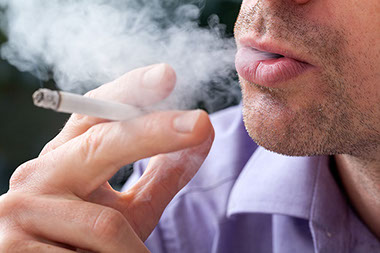
    Image of cigarette and smoke.

    Secondhand smoke is the smoke that occurs when a cigarette, pipe, or cigar is lit. The secondhand smoke going into the room from the end of a burning cigarette is not filtered. People breathing in secondhand smoke are breathing in this smoke, as well as what the smoker blows into the room. Secondhand smoke puts non-smoking bystanders (maybe your loved ones) at risk for the same health problems as the smoker.

    Some of the toxins found in secondhand smoke are tar, nicotine, carbon monoxide, carbon dioxide, methane, nitrogen dioxide, cadmium, benzpyrene, ammonia, hydrogen cyanide, acetone, pyridine, and formaldehyde. Although secondhand smoke becomes mixed with the air, there are safety risks for both the smoker and non-smokers, as well as pets who breathe these vapors in.

    Infants & Children

    Children of smokers are at a higher risk for respiratory infections, tonsillitis, pharyngitis, and middle ear infections. Asthma can become more severe. Children of smokers are also much more likely to start smoking.

    Pets

    Your beloved fur ball can develop serious health problems, including nose and lung cancers, from secondhand smoke. Secondhand smoke can also cause respiratory illness in cats and dogs and make skin conditions worse. Thirdhand smoke, or the smoke residue that settles on surfaces, can be especially damaging to cats. When cats lick their fur to clean themselves, they lick the toxins from smoke. This makes cats more than twice as likely to develop malignant lymphoma, a type of cancer.

    Protect Your Loved Ones

    To protect others from secondhand smoke, avoid smoking in enclosed spaces that you share with others, like your house or car. If you are going to smoke, go outside and make sure windows are closed to the house near the area you are smoking. Avoid using a “smoking room” in the house or smoking in an attached garage-smoke will still get into the rest of the house.

    © American Institute for Preventive Medicine

  • Review & Prepare 4

    SleepWell® Program

    Week 1

    Image of sleeping mask, pillow, clock, and pajamas.

    Complete the following.

    *  Why I am concerned about my sleep?

    *  What I think is the biggest challenge with my sleep: (e.g. not being able to fall asleep or stay asleep, waking up often, not feeling refreshed when I wake up)?

    *  Could any medical issues or medications be causing my sleep problems? (If you answered yes to this question, talk with your doctor about your sleep issues.)

    © American Institute for Preventive Medicine

  • Action Planning

    Healthylife® QuitWell™

    Part 4

    Women writing in notebook.

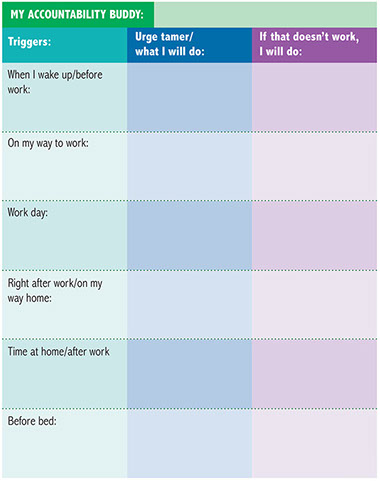
    Remember, an “okay” plan today beats a “great” plan tomorrow. Use this template to write out your quit plan. By this point, you probably know most of your expected triggers during the day. Write both your planned urge tamer/response to the trigger and another idea to try, in case you need it.

    Chart to help with Action Planning.

    © American Institute for Preventive Medicine

  • How To Help Me Quit

    Healthylife® QuitWell™

    Part 3

    Friends sitting talking and drinking tea.

    1.Be patient.I am trying to free myself from tobacco/nicotine. Quitting may make me tense, anxious, and prone to sudden mood swings. This is because I am doing without something I was used to having. Soon I will be secure in my ability to manage and I will be better than ever. Please bear with me a little longer.

    2.Be curious.For years I have been using tobacco/nicotine to pass the time, to reward myself, to calm myself, to wake up, to help me think, and to get through stressful events. Now I am coping all on my own. Ask me how I am managing; ask me what my life is like without nicotine. It’s all very new to me and I may want to talk about it.

    3.Be sensitive.All day long I must deal with the urge to use tobacco/nicotine. Sometimes it seems as if just about everything makes me think about it: getting ready for work, talking on the phone, ending a meal… I could really use your help to distract myself from these thoughts. Unless I mention it first, please don’t bring up the subject of my quitting.

    4.Be supportive.I really need someone to root for me right now, someone to be on my side. I enjoy the special attention (like rewarding my first week without tobacco/nicotine with a special treat) that you give me while I am in the “crawling” stage of quitting.

    5.Be positive. Sometimes I feel it is hard to remember all the good things that come with quitting. I like it when you notice the positive changes that you see in me. It means a lot to know that you are proud of me.

    6.Be confident.I want to make it, but sometimes I am not sure that I have what it takes to quit. I need the people around me to believe that I can do it… and to say so.

    What else will be helpful to you? Share this with those who want to support you.

    © American Institute for Preventive Medicine