
Tag: no equipment

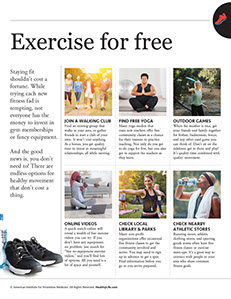
  • Exercise For Free

    BE FIT

    Group of older friends walking through the park.

    Staying fit shouldn’t cost a fortune. While trying each new fitness fad is tempting, not everyone has the money to invest in gym memberships or fancy equipment.

    And the good news is, you don’t need to! There are endless options for healthy movement that don’t cost a thing.

    Join a walking club

    Find an existing group that walks in your area, or gather friends to start a club of your own. It won’t cost anything. As a bonus, you get quality time to invest in meaningful relationships, all while moving.

    Find free yoga

    Many yoga studios that train new teachers offer free community classes as a chance for their trainees to practice teaching. Not only do you get to do yoga for free, but you also get to support the teachers as they learn.

    Outdoor games

    When the weather is nice, get your friends and family together for frisbee, badminton, bocce, and any other yard game you can think of. Don’t sit on the sidelines; get in there and play! It’s quality time combined with quality movement.

    Online videos

    A quick search online will reveal a wealth of free exercise videos you can try. If you don’t have any equipment, no problem; just search for “free no-equipment exercise videos,” and you’ll find lots of options. All you need is a bit of space and yourself.

    Check local library & parks

    Many non-profit organizations offer occasional free fitness classes to get the community involved and active. You may need to sign up in advance to get a spot. Find information before you go so you arrive prepared.

    Check nearby athletic stores

    Running stores, athletic clothing stores, and sporting goods stores often have free fitness classes or exercise meet-ups. It’s a great way to connect with people in your area who share common fitness goals.
    © American Institute for Preventive Medicine
  • Exercise On A Budget 2

    Fitness

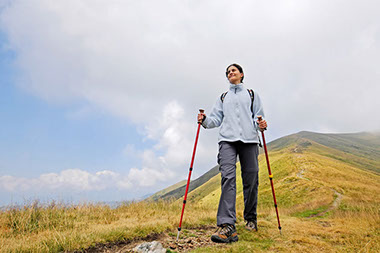
    Image of women hiking.

    Lean times are no excuse to ignore your health.

    Don’t let gym memberships, personal training fees, or the cost of the latest exercise gadget weigh you down. Exercise is about moving, stretching, lifting, bending, breathing – things you can easily do at home. Or simply walk – around the block, at a mall, or on a local school’s track.

    Get started.

    Start with a few simple stretches to warm up your muscles. If you need help, go online for how-to instructions on everything from stretching to full routines. You can also find exercise tools to track your progress.

    No equipment necessary

    Do what you were taught in gym class – squats, push-ups, jumping jacks, and crunches. Lift your legs and arms, touch your toes, bend from side to side, jog in place, and twist. Just make sure you target all your major muscle groups at least once every week.

    No free weights? Try these substitutes.

    *  Use cans for triceps and biceps exercises instead of dumbbells.

    *  A gallon jug filled with water, sand, or powdered detergent is just as effective as a kettle bell for squats and arm lifts.

    *  Put a paper plate under one foot and lunge forward. You can also attach plates to both feet with rubber bands to simulate skating. Or, get down on all fours, put the plates under your hands and slide them back and forth for a great chest workout.

    *  Pantyhose move just as well as resistance bands for rowing and stretching routines.

    *  Use a chair or countertop as a push-up bench.

    *  A low, sturdy stool or a bottom stair can be used for a step exercise routine.

    Action Step

    Don’t wait until you have a block of time to exercise. You can do leg lifts in the elevator, calve raises in the grocery line, lunges as you walk the dog. Every little bit counts.

    Page image from Ways to Well-Being book by the American Institute for Preventive Medicine. www.HealthyLife.com. All rights reserved.

    © American Institute for Preventive Medicine
  • Exercise On A Budget

    BE FIT

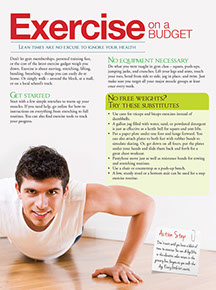
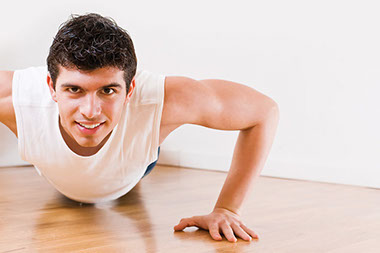
    Image of young man doing push-ups.

    Don’t let gym memberships, personal training fees, or the cost of the latest exercise gadget weigh you down. Exercise is about moving, stretching, lifting, bending, breathing – things you can easily do at home. Or simply walk – around the block, at a mall, or on a local school’s track.

    Get started

    Start with a few simple stretches to warm up your muscles. If you need help, go online for how-to instructions on everything from stretching to full routines. You can also find exercise tools to track your progress.

    No equipment necessary

    Do what you were taught in gym class – squats, push-ups, jumping jacks, and crunches. Lift your legs and arms, touch your toes, bend from side to side, jog in place, and twist. Just make sure you target all your major muscle groups at least once every week.

    No free weights? Try these substitutes

    *  Use cans instead of dumbbells to exercise biceps and triceps.

    *  A gallon jug filled with water, sand, or powdered detergent is just as effective as a kettle bell for squats and arm lifts.

    *  Put a paper plate under one foot and lunge forward. You can also attach plates to both feet with rubber bands to simulate skating. Or, get down on all fours, put the plates under your hands and slide them back and forth for a great chest workout.

    *  Pantyhose stretch just as well as resistance bands for rowing and stretching routines.

    *  A low, sturdy stool or a bottom stair can be used for a step exercise routine.

    © American Institute for Preventive Medicine
  • Simple Workouts For Beginners

    BE FIT

    Image of young African American women with dumb bells.

    Anyone can exercise and enjoy its healthy perks! Here’s how to get started:

    *Check with your doctor first.If you haven’t exercised in the past or have health conditions, ask your doctor for tips before you start.

    *Get your arms and legs moving.This means you’ll get your heart pumping too. Choices include walking, running, swimming, biking or dancing.

    *Warm up for five to ten minutes.Try gentle stretches, and start at a slower pace for these few minutes.

    *Aim for 30-60 minutes of activity each time.Break it up into smaller amounts of time if needed. For instance, two 15-minute walks can be done instead of one 30-minute walk.

    *Don’t overdo it.If you don’t feel well, or you have pain or nausea, stop.

    *Try strength training.Working your muscles with weights, or at-home exercises like push-ups, squats, and sit-ups can help your bones and muscles stay strong. Ask a trainer at the gym or your doctor for help if you’re not sure what’s safe for you.

    *Cool down when you’re finished.Don’t stop exercising suddenly. Instead, slow down for the last five to ten minutes. Follow up with more stretching while your muscles are warm.

    Source: American Academy of Family Physicians

    © American Institute for Preventive Medicine