Tag: nutrition

  • Eating Disorders 4

    Mental Health

    Common eating disorders are anorexia nervosa, binge eating disorder, and bulimia nervosa. With these, persons are obsessed with food and/or body weight. Eating disorders are a way to cope. They are serious health problems.

    Signs & Symptoms

    For Anorexia Nervosa

    *  Loss of a lot of weight in a short time.

    *  Intense, irrational fear of weight gain and/or of looking fat. Obsession with fat, calories, and weight.

    *  Distorted body image. Despite being below a normal weight for height and age, the person sees himself or herself as fat.

    *  A need to be perfect or in control in one area of life.

    *  Marked physical signs. These include loss of hair, slowed heart rate, and low blood pressure. The person feels cold due to a lowered body temperature. In females, menstrual periods can stop.

    For Binge Eating Disorder

    *  Periods of nonstop eating that are not related to hunger.

    *  Impulsive binging on food without purging.

    *  Dieting and/or fasting over and over.

    *  Weight can range from normal weight to mild, moderate, or severe obesity.

    For Bulimia Nervosa

    *  Repeated acts of binge eating and purging. Purging can be through vomiting; taking laxatives, water pills, and/or diet pills; fasting; and exercising a lot to “undo” the binge.

    *  Excessive concern about body weight.

    *  Being overweight, underweight, or normal weight.

    *  Dieting often.

    *  Dental problems. Mouth sores. Chronic sore throat.

    *  Spending a lot of time in bathrooms.

    *  Because of binge-purge cycles, severe health problems can occur. These include an irregular heartbeat and damage to the stomach, kidneys and bones.

    Causes

    An exact cause has not been found. Persons from all backgrounds, ages, and genders are affected.

    Risk Factors for Eating Disorders

    *  A family history of eating disorders.

    *  Pressure from society to be thin.

    *  Personal and family pressures.

    *  Sexual, physical, or alcohol abuse in the past.

    *  Fear of starting puberty. Fear of having sex.

    *  Pressure for athletes to lose weight or to be thin for competitive sports.

    *  Chronic dieting.

    Treatment

    *  Counseling. This can be individual, family, group, and/or behavioral therapy.

    *  Support groups.

    *  Medication.

    *  Nutrition therapy.

    *  Outpatient treatment programs.

    *  Hospitalization, if needed.

    Questions to Ask

    Self-Care / Prevention

    Eating disorders need professional treatment.

    To Help Prevent an Eating Disorder

    *  Learn to accept yourself and your body. You don’t need to be or look like anyone else. Spend time with people who accept you as you are, not people who focus on “thinness.”

    *  Know that self-esteem does not have to depend on body weight.

    *  Eat nutritious foods. Focus on whole grains, beans, fresh fruits and vegetables, low-fat dairy foods, and low-fat meats.

    *  Commit to a goal of normal eating. Realize that this will take time. It will also take courage to fight fears of gaining weight.

    *  Don’t skip meals. If you do, you are more likely to binge when you eat.

    *  Avoid white flour, sugar and foods high in sugar and fat, such as cakes, cookies, and pastries. Bulimics tend to binge on junk food. The more they eat, the more they want.

    *  Find success in things that you do.

    *  Get regular moderate exercise 3 to 4 times a week. If you exercise more than your doctor advises, do non-exercise activities with friends and family.

    *  Learn as much as you can about eating disorders from books and places that deal with them.

    *  To help their children avoid eating disorders, parents should promote a balance between their child’s competing needs for independence and family involvement.

    To Treat an Eating Disorder

    *  Follow your treatment plan.

    *  Attend counseling sessions and/or support group meetings as scheduled.

    *  Identify feelings before, during, and after you overeat, binge, purge, or restrict food intake. What is it that you are hoping the food will do?

    *  Set small goals that you can easily reach. Congratulate yourself for every success. This is a process. Accept setbacks. Learn from them.

    *  Talk to someone instead of turning to food.

    *  Learn to express your rights. You have the right to say “no” and the right to express your feelings and your opinions. You have the right to ask that your needs are met.

    *  Keep a journal of your progress, feelings, thoughts, etc., but not about what you eat. The journal is just for you, not for others to read or judge. This is a safe place to be honest with yourself. The journal can also help you identify your “triggers” so that you can deal with them in the future.

    *  Don’t let the scale run your life. Better yet, throw out the scale!

    Resources

    Eating Disorders Awareness and Prevention

    202.382.3587

    nationaleatingdisorders.org

    Healthier at Home book by the American Institute for Preventive Medicine. www.HealthyLife.com. All rights reserved.

    © American Institute for Preventive Medicine

  • Cancer-Fighting Foods

    HEALTHY EATING

    Top view cup of tea and tea pot.

    A healthy diet plays an important role in supporting a healthy immune system. And a strong immune system can prevent and neutralize cancer cells.

    Some specific foods contain compounds that have cancer-fighting properties. While more research is needed, these foods may offer protective benefits in a balanced diet.

    Colorful fruits & vegetables

    The rich color of fruits and vegetables comes from phytonutrients, plant compounds that provide health benefits.

    Eating a variety of different colored fruits and vegetables provides the body with a wealth of potent antioxidants, vitamins, and minerals to support good health.

    Dark green and orange vegetables, tomatoes, cruciferous vegetables, and alliums (onions, garlic, etc.) show particular promise for cancer-fighting ability.

    Beans, peas, & lentils

    Packed with fiber and nutrients, pulses such as beans, peas, and lentils show evidence of lowering the risk of colorectal cancer.

    Regular consumption of these powerful plants provides a boost of fiber that feeds and nourishes the microbiome in the gut.

    Your microbiome is an essential player in the immune system and one of the first lines of defense against colon cancer growth.

    Walnuts

    While all kinds of nuts and seeds should be part of a healthy plant-based diet, walnuts deserve a special mention.

    Walnuts contain healthy fats and plant compounds called polyphenols which may combat oxidative stress in the body.

    The tannins in walnuts give them their distinctive taste and may also provide cancer-fighting benefits.

    Tea

    Your daily cup of tea is more than a soothing drink. Tea contains flavonoids. These compounds act as antioxidants, reduce inflammation, and may potentially be anti-carcinogens.

    The plants found in tea create flavonoids as part of their own personal protection system. When you drink tea, those same compounds that protect the plants from disease and pests go to work defending you.

    © American Institute for Preventive Medicine

  • Eating To Enhance Gut Health

    HEALTHY EATING

    Three stacked jars with picked carrots, beets and onion.

    The health of your gut microbiome is a significant factor in the health of your entire digestive system. How well your stomach and intestines digest and absorb the food you eat depends on the condition of the microorganisms in your gut.

    In turn, what you eat can either support the diversity of your microbiome or disrupt the delicate balance.

    Certain foods provide necessary nutrients to support the growth of beneficial bacteria. The more beneficial bacteria you have in your digestive tract, the less room there is for unhealthy bacteria to grow.

    Probiotics

    Probiotics are live bacteria and yeasts which have beneficial functions in the body. Probiotics may be present in foods that have undergone fermentation. Ingesting probiotics through food or supplements can boost the number of beneficial microorganisms in your digestive system.

    Regular consumption of foods that contain probiotics may improve digestive health and boost the immune system. Choose some of these foods as part of your daily diet:

    *  Yogurt (with live active cultures) or kefir

    *  Saukraut

    *  Kombucha

    *  Tempah

    *  Miso

    *  Kimchi

    *  Pickles

    Prebiotics

    Prebiotics provide essential nutrients that feed beneficial bacteria and encourage their growth.

    Most prebiotics are a type of fiber that is indigestible to the body. The microorganisms in the digestive tract can break down these fibers into short-chain fatty acids (SCFA). These SCFAs provide valuable food for the probiotic communities in the body. Beneficial prebiotic foods include:

    *  Garlic

    *  Onion

    *  Asparagus

    *  Bananas

    *  Oats

    *  Flaxseeds

    *  Apples

    Should you take a supplement?

    Supplements containing probiotics are widely available. However, supplements are not regulated by the FDA and should be approached with caution.

    Talk to your doctor before starting any supplement to make sure it is a safe choice for you. In the meantime, probiotic and prebiotic foods are a generally safe way to support gut health.

    © American Institute for Preventive Medicine

  • How Caffeine Affects Your Brain

    WELL-BEING

    Two people walking and talking.

    Every day, millions of people wake up with a hot cup of coffee or tea. Caffeine in these products helps you feel alert. But how does caffeine work – and what does it do to your brain?

    Adenosine and sleepiness

    Your body naturally makes a chemical called adenosine. It builds up in your body during the day. As levels get higher, you start to feel tired.

    Caffeine blocks adenosine from working on brain cells. This prevents you from feeling sleepy. But it can’t fool your body forever. Over time, your body makes more adenosine. Then you need more caffeine to get the same “perk-up” effects.

    Adenosine is one of the reasons it’s hard to quit caffeine. When you suddenly stop, your body must start making lower levels of adenosine again. This takes time. You might feel more tired or get headaches while your body adjusts.

    Sensitivity varies

    Have you ever had too much caffeine? You might feel sick to your stomach or like your heart is racing. You may also feel anxious or nervous.

    But not everyone has this reaction. Some people break down caffeine faster than other people. How fast you process caffeine depends on your genes.

    Who should skip caffeine?

    Avoid caffeine if you have:

    *  Acid reflux or other digestive problems

    *  Trouble sleeping or sleep disorders

    *  High blood pressure

    *  Heart conditions

    Children, teens and women who are pregnant or breastfeeding are often advised to stay away from caffeine, too.

    Is caffeine safe?

    For most healthy adults, a little caffeine each day is OK. But choose sources without lots of added sugar, such as overly sweetened coffee drinks and sweet teas. And if you’re tired all the time, make sure you’re:

    *  Getting enough sleep

    *  Eating a healthy diet

    *  Drinking enough water each day

    *  Getting regular exercise, which can boost your energy levels

    Talk to your doctor if you have questions about caffeine and your health.

    Source: National Institutes of Health

    © American Institute for Preventive Medicine

  • Popcorn: A Healthy Corn Option

    HEALTHY EATING

    Popcorn in a bowl on a yellow background.

    Fresh corn is healthy, but there’s another great way to enjoy corn: popcorn.

    When you think of popcorn, you might think of movie theatres and lots of butter. But popcorn is a naturally healthy food without all the extra butter, oil and salt.

    Popcorn is whole grain corn. It’s made from a specific type of corn that pops open when it’s heated. It can be a healthy alternative to higher-calorie snacks like potato chips and crackers. One cup of air-popped corn has just 31 calories and over one gram of fiber.

    To keep it healthy, go light on the butter, oil and salt.

    Source: United States Department of Agriculture

    © American Institute for Preventive Medicine

  • Turmeric

    HEALTHY EATING

    Small bowl filled with turmeric spice.

    Turmeric is a member of the ginger family and widely grown in India. Its color comes from curcumin, the major active compound in turmeric.

    Using Turmeric In Cooking

    The savory, earthy flavor of turmeric can add depth to many dishes. Experiment with adding it to some of the foods you commonly eat. You might be surprised how well it complements dishes you already love.

    Here are some foods that are delicious when flavored with turmeric:

    *  Rice

    *  Eggs

    *  Smoothies

    *  Soups and stews

    *  Vegetable dishes

    *  And, of course, curry

    Whenever you use turmeric, add a bit of pepper as well. Pepper contains a compound called piperine, which enhances the absorption of the curcumin in turmeric.

    © American Institute for Preventive Medicine

  • Destination: Healthy Vacation

    Healthy Travel

    Image of father and child playing in the pool.

    Plan ahead to have a safe and fun trip!

    You deserve a break. In fact, doctors recommend it. Vacations are good for your health and happiness. Planning ahead, packing smart, and knowing about your destination will help you relax and enjoy.

    Do your homework.

    Learn about the places you plan to go to. Check out their weather conditions, construction areas, crime rates, and health concerns. Find out what your health insurance plan does and does not cover and if you need extra insurance. No matter where you travel, following these steps could make the difference between a great and a dreadful vacation.

    Dos

    *  Pack a basic first-aid kit.

    *  Pack all prescriptions and other valuables, such as jewelry in your carry-on luggage.

    *  Stretch your arms and legs at least every hour during travel.

    *  Stay hydrated. If the drinking water could be unsafe, choose bottled water.

    *  Wash your hands often. Take travel-size hand sanitizer gels and cloths.

    *  Talk to your family about safety concerns. Set rules for the kids.

    *  Tell a trusted friend or relative your trip schedule so you can be contacted for emergencies.

    *  Stop deliveries of papers and mail. Or, arrange to have someone pick them up.

    *  Ask your cell phone provider if you will have coverage. If not, consider renting a cell phone that does.

    Don’ts

    *  Don’t carry large amounts of cash or wear expensive jewelry.

    *  Don’t let kids wander or swim unsupervised.

    *  Don’t announce your vacation on Facebook, Twitter, or any other social network.

    *  Don’t hide the house key under the doormat.

    *  Don’t leave your pets home alone.

    Traveling abroad?

    Find out if you need certain vaccines. Contact the CDC Travelers’ Information Line at 800.CDC.INFO (232.4636) orwww.cdc.gov/travel. Ask your doctor, too. Discuss what medications you need to take to prevent and treat illnesses for you and your family.

    Action Step

    Make a To-Do list. Ask others traveling with you to contribute. Nothing is too obvious to write down. Check off tasks as you complete them.

    Page image from Ways to Well-Being book by the American Institute for Preventive Medicine. www.HealthyLife.com. All rights reserved.

    © American Institute for Preventive Medicine

  • Navigate The Holiday Buffet

    Nutrition

    Table filled with different food dishes.

    There’s a healthy way to get around the buffet table and avoid over-eating during the holidays.

    *Make a plan:First, take a lap around the buffet table to plan what to choose and what to limit.

    *Go for color:Start your meal with a veggie-packed salad with lots of variety.

    *Take your time:Eat slowly. Enjoy your meal and be mindful to recognize when you’ve had enough.

    *Add healthy options:Arrive at a holiday party with a festive vegetable platter to increase your healthy choice options.

    Page from HealthyLife Weigh book by the American Institute for Preventive Medicine. www.HealthyLife.com. All rights reserved.

    © American Institute for Preventive Medicine

  • Handle Food With Care

    Home Safety

    Healthy eating starts with preparation.

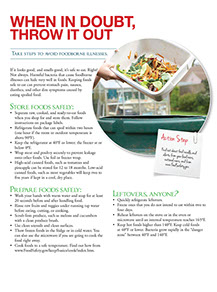
    Your body will know if you’ve eaten harmful bacteria, because it can make you mildly to very sick. Bacteria spread easily onto hands, cutting boards, utensils, and countertops – all things that come into contact with food. To avoid problems, cook foods to  proper temperatures and follow some simple steps.

    Clean: Wash your hands and surfaces often.

    *  Wash your hands with warm water and soap for at least 20 seconds before and after handling food or touching other surfaces.

    *  Wash cutting boards, dishes, utensils, and countertops with hot soapy water after preparing each food item.

    *  Rinse fruits and vegetables with running tap water.

    Separate: Don’t cross-contaminate.

    *  Keep raw meat, poultry, seafood and eggs separate from other foods.

    *  Use one cutting board for fruits and vegetables and another for meat, poultry, seafood, or eggs.

    *  Never place cooked food on a plate that held raw food.

    Chill: Refrigerate perishable foods.

    *  Refrigerate or freeze meat, poultry, eggs, and other perishables as soon as you get home from shopping for foods.

    *  Don’t let raw meat, poultry, eggs, cooked food, or cut fruits or vegetables sit at room temperature more than two hours.

    *  Defrost foods in the refrigerator or cold water. Use the microwave on the defrost setting if you are cooking the food right away.

    Cook foods to proper temperatures.

    Eggs: 160ºF (Scrambled eggs should not be runny; whites and yolks should be firm.)

    Casseroles and leftovers: 165ºF

    Ground meat and meat mixtures: 160ºF

    Fresh or ground poultry: 165ºF

    Fresh beef, pork, veal, and lamb: 145ºF (with a 3-minute rest time)

    Fish: 145ºF

    Action Step

    During your next trip to the grocery store, start with foods that don’t spoil − items in boxes and bags. Then choose meats, poultry, eggs, milk, and frozen foods last to keep them from being at unsafe temperatures for too long.

    Ways to Well-Being book by the American Institute for Preventive Medicine. www.HealthyLife.com. All rights reserved.

    © American Institute for Preventive Medicine

  • Cholesterol: To Eat Or Not To Eat?

    HEALTHY EATING

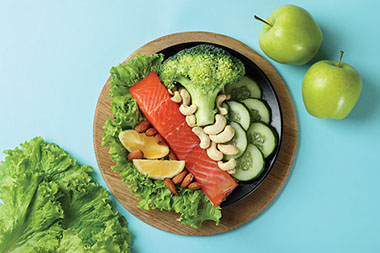
    Bowl with salman, nuts, cucumbers.

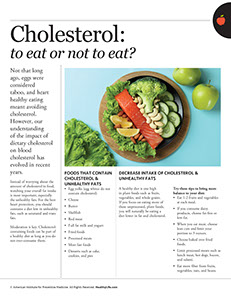
    Not that long ago, eggs were considered taboo, and heart healthy eating meant avoiding cholesterol. However, our understanding of the impact of dietary cholesterol on blood cholesterol has evolved in recent years.

    Instead of worrying about the amount of cholesterol in food, watching your overall fat intake is most important, especially the unhealthy fats. For the best heart protection, you should consume a diet low in unhealthy fats, such as saturated and trans fats.

    Moderation is key. Cholesterol-containing foods can be part of a healthy diet as long as you do not over-consume them.

    Foods that contain cholesterol & unhealthy fats

    *  Egg yolks (egg whites do not contain cholesterol)

    *  Cheese

    *  Butter

    *  Shellfish

    *  Red meat

    *  Full fat milk and yogurt

    *  Fried foods

    *  Processed meats

    *  Most fast foods

    *  Desserts such as cake, cookies, and pies

    Decrease intake of cholesterol & unhealthy fats

    A healthy diet is one high in plant foods such as fruits, vegetables, and whole grains. If you focus on eating more of these unprocessed, plant foods, you will naturally be eating a diet lower in fat and cholesterol.

    Try these tips to bring more balance to your diet:

    *  Eat 1-2 fruits and vegetables at each meal.

    *  If you consume dairy products, choose fat-free or low-fat.

    *  When you eat meat, choose lean cuts and limit your portion to 3 ounces.

    *  Choose baked over fried foods.

    *  Limit processed meats such as lunch meat, hot dogs, bacon, and salami.

    *  Eat more fiber from fruits, vegetables, oats, and beans.

    © American Institute for Preventive Medicine