Tag: nutrition

  • Quick & Easy Grain Bowls

    HEALTHY EATING

    Homemade grain bowl.

    Grain bowls offer a nutritious, simple meal to fuel your day. They are also a great way to maximize your daily plant intake. Here’s how to make each bowl both delicious and healthy:

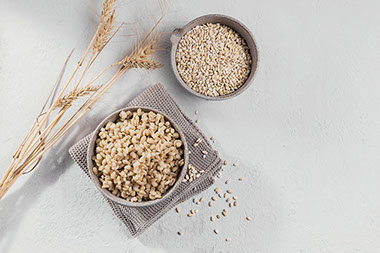
    *Start with a tasty grain.Amaranth, quinoa, rice, farro, millet, and bulgur wheat can be made in large batches and used all week long.

    *Add a well-seasoned protein.Roasted chickpeas, sauteed tofu, tempeh, or seasoned beans make tasty plant choices. Salmon, chicken, or eggs work, too.

    *Pile on the vegetables.Roast, steam, or sautée your favorite in-season vegetables to add to your bowl. Broccoli, peppers, squash, and carrots make great additions. And don’t forget the leafy greens!

    *Top with healthy fats.Avocados, olives, olive oil dressings, nuts, and seeds make your grain bowl a complete meal. Cheese also adds a punch of flavor.

    *Spice it up.Salsa, green onions, pesto, sriracha, herbs, or vinaigrette add flavor and an extra helping of nutrients.

    © American Institute for Preventive Medicine
  • Vegetarian Alternatives To Turkey

    HEALTHY EATING

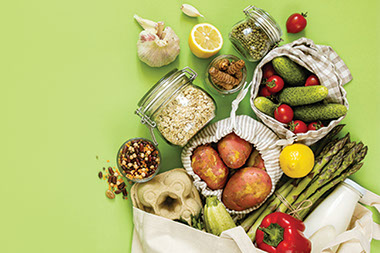
    Variety of fresh food ingredients.

    Your vision of a traditional Thanksgiving feast may have a giant roasted turkey as its centerpiece. But, increasingly, people are turning to vegetarian or low-meat diets as a healthy and environmentally friendly option. Whether you’re hosting a vegetarian holiday meal or just want to have vegetarian options available alongside your turkey, don’t worry. Vegetarian dishes are just as plentiful, easy to prepare, and satisfying. Try these four ingredients as vegetarian features at your holiday meal.

    Winter Squash

    A baked winter squash filled with delicious vegetables or stuffing mixture is delicious and will add an impressive fall display to your table. Here are a few types of winter squash that make the best holiday meal main dish:

    *  Pumpkin

    *  Acorn squash

    *  Butternut squash

    *  Spaghetti squash

    Tofurky

    The name says it all – tofu plus turkey makes tofurky. There are a variety of brands available, and you can even find it made into traditional turkey shapes.

    Remember that plain tofu itself doesn’t have a lot of flavor. If the brand you choose isn’t seasoned, find a recipe that is big on spices and flavorful ingredients.

    Mushrooms

    Mushrooms provide a big, savory taste. It’s easy to make them the star of the show. So many main dishes are enhanced with mushrooms, and they can even take the place of meat in some classic dishes.

    *  Stuffed mushroom caps

    *  Mushroom risotto or casserole

    *  Mushroom soup

    *  Mushroom with pasta

    Lentils

    Lentils have a deeper, meatier flavor and texture compared to other beans. Their savory profile makes them an easy feature for the main dish. They also pair well with cheese or nuts for added flavor.

    *  Lentil soups or stews

    *  Lentil meatloaf or meatballs

    *  Lentil salads

    *  Cheesy lentil bakes or casseroles

    © American Institute for Preventive Medicine
  • Drink Water, The Nutrient For Every Cell

    Nutrition

    Image of person filling up glass with tap water.

    Two-thirds of your body is composed of water, making it your body’s most vital nutrient. Water:

    *  Provides a valuable source of minerals, like calcium and magnesium.

    *  Helps digest food and absorb nutrients into the body.

    *  Carries nutrients to organs via the bloodstream.

    *  Moistens mucous membranes and lubricates the joints.

    *  Carries away bodily waste products.

    *  Cools the body through perspiration.

    Many people underestimate their need for water. The average adult should drink six to eight 8-ounce glasses of water (or its equivalent) a day. You can meet part of that quota by consuming high water content foods.

    Some examples include:

    *  Iceberg lettuce (95 percent water).

    *  Cantaloupe (91 percent water).

    *  Raw carrots (88 percent water).

    Page from A Year of Health Hints book by the American Institute for Preventive Medicine. www.HealthyLife.com. All rights reserved.

    © American Institute for Preventive Medicine
  • One More Veggie A Day

    Nutrition

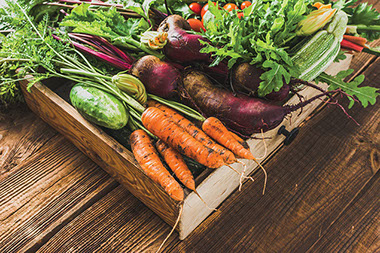
    Women carrying a basket filled with vegetables.

    Focus on ways to add just one more serving of vegetables each day.

    *Microwave for faster cooking:Steam fresh or frozen green beans, broccoli or bok choy for a quick and easy side dish.

    *Cut up and package for later:Use veggies like cauliflower and bell peppers in a stir-fry, casserole or as a snack.

    *Frozen – just as nutritious as fresh:Good buys include frozen peas, corn and green beans.

    *Enjoy vegetable soups:Look on the package for reduced-sodium or low-sodium. If you have time, make and freeze a large batch of soup with lots of added vegetables.

    Page from HealthyLife Weigh book by the American Institute for Preventive Medicine. www.HealthyLife.com. All rights reserved.

    © American Institute for Preventive Medicine
  • When In Doubt, Throw It Out

    Home Safety

    Take steps to avoid foodborne illnesses.

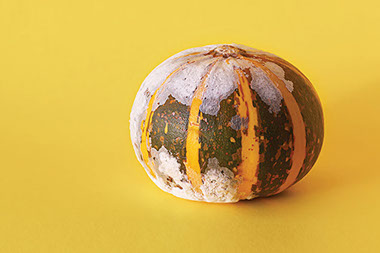
    If it looks good, and smells good, it’s safe to eat. Right? Not always. Harmful bacteria that cause foodborne illnesses can hide very well in foods. Keeping foods safe to eat can prevent stomach pain, nausea, diarrhea, and other dire symptoms caused by eating spoiled food.

    Store foods safely:

    *  Separate raw, cooked, and ready-to-eat foods when you shop for and store them. Follow instructions on package labels.

    *  Refrigerate foods that can spoil within two hours (one hour if the room or outdoor temperature is above 90°F).

    *  Keep the refrigerator at 40°F or lower; the freezer at or below 0°F.

    *  Wrap meat and poultry securely to prevent leakage onto other foods. Use foil or freezer wrap.

    *  High-acid canned foods, such as tomatoes and pineapple can be stored for 12 to 18 months. Low-acid canned foods, such as most vegetables will keep two to five years if kept in a cool, dry place.

    Prepare foods safely:

    *  Wash your hands with warm water and soap for at least 20 seconds before and after handling food.

    *  Rinse raw fruits and veggies under running tap water before eating, cutting, or cooking.

    *  Scrub firm produce, such as melons and cucumbers with a clean produce brush.

    *  Use clean utensils and clean surfaces.

    *  Thaw frozen foods in the fridge or in cold water. You can also use the microwave if you are going to cook the food right away.

    *  Cook foods to a safe temperature.

    Leftovers, anyone?

    *  Quickly refrigerate leftovers.

    *  Freeze ones that you do not intend to eat within two to four days.

    *  Reheat leftovers on the stove or in the oven or microwave until an internal temperature reaches 165°F.

    *  Keep hot foods higher than 140°F. Keep cold foods at 40°F or lower. Bacteria grow rapidly in the “danger zone” between 40°F and 140°F.

    Action Step

    Find out about food recalls and alerts from your local news, national news, and from

    www.FoodSafety.gov.

    Ways to Well-Being book by the American Institute for Preventive Medicine. www.HealthyLife.com. All rights reserved.

    © American Institute for Preventive Medicine
  • Clean Cut: Cutting Board Safety

    HEALTHY EATING

    Bird-eyes view, cutting vegetable on a cutting board.

    Cutting boards are useful for all types of slicing, dicing and chopping. They can save your countertops and make meal prep easier. But without careful cleaning, your cutting board could contaminate your foods and make you sick. Every surface your food touches needs to be clean, especially those that touch raw meat, poultry and seafood.

    When to clean your cutting board

    For a clean surface, remember to wash your board:

    *  Before using it for the first time.

    *  After it has held raw meat, poultry, seafood, eggs or flour.

    *  Before switching foods and moving on to the next step, even if it’s for the same meal.

    *  After you’re done using it.

    How to clean your cutting board

    *  Scrub your board thoroughly with hot, soapy water and a clean cloth or brush. Then rinse with hot water.

    *  If your board touched meat, fish or poultry, disinfect it after you wash it. You can do this by using a diluted bleach solution. Combine one tablespoon of bleach with one gallon of water. Pour the solution all over the board and let it sit for five minutes. Finally, rinse it well.

    *  Let it air dry or dry it with a clean towel if you need to dry it quickly.

    *  If it’s dishwasher safe, put your cutting board in the dishwasher. Be aware that some cutting boards may crack or split in the dishwasher, so follow the manufacturer’s directions.

    Other tips for clean cutting

    Buy two different boards. Use one board for meats and the other for ready-to-eat foods like fruits and breads. Get different colors so you can tell them apart.

    Replace your cutting board if it has a lot of wear, cuts or grooves. It can be hard to clean in the small grooves, which can be a hiding spot for germs.

    © American Institute for Preventive Medicine
  • Escape The Holiday Carbohydrate Trap

    HEALTHY EATING

    Small chaulk board with the word CARBS written with a variety of carbs.

    The holidays can feel like one big carbohydrate trap. For people who are watching their carb intake, this time of year can be challenging. Between all the bread, mashed potatoes, and desserts, many people throw up their hands and declare, “I’ll start eating better AFTER the holidays.” But, there is no reason to take an all-or-nothing approach. You can enjoy holiday meals and avoid overdoing it.

    Whether you’re managing diabetes or just trying to eat fewer empty carbs, here are some holiday eating tips:

    *Focus on eating more vegetables.Have the turkey and some of your favorite veggie sides, and hold off on the mashed potatoes or rolls. You might find yourself satisfied, but if not, you can always go back for another serving.

    *Bring a dish you know is low-carb.Make sure it is something you enjoy eating, and that feels festive for the occasion. You’re not depriving yourself; you’re enjoying delicious, low-carb food.

    *Think in advance about what foods are worth the indulgence.Instead of sitting down and throwing caution to the wind, pick one or two of your favorite carbohydrate-rich foods to enjoy. If you really want dessert, try limiting your servings of potato, rolls, stuffing, and macaroni in your main meal.

    *Have a healthy snack in advance.If you show up at the table starving, you’re more likely to be tempted. A handful of nuts or an apple with peanut butter can take the edge off and prevent overeating.

    © American Institute for Preventive Medicine
  • Magnificent Magnesium

    HEALTHY EATING

    Image of magnesium food sources.

    Magnesium plays a role in more than 300 functions in the body. It is needed for muscle and nerve function, bone health, blood sugar control and regulating blood pressure. We also need magnesium to release energy in our body.

    Long-term low levels of magnesium could be linked to certain health problems like migraine headaches, osteoporosis, type 2 diabetes and high blood pressure. This doesn’t mean magnesium can cure these diseases. It also doesn’t mean that low magnesium is the only cause. Many factors are involved with these health conditions. Researchers are still working to learn how magnesium is connected to these health conditions.

    Today’s foods & magnesium

    The recommended dietary allowance (RDA) for magnesium is 320 mg for women and 420 mg for men. Most people get their magnesium from food.

    But, some researchers believe that levels of magnesium in foods may be getting lower. Also, magnesium is not found in most processed or packaged foods. That’s why it’s recommended to get the magnesium your body needs by eating healthy foods.

    People with type 2 diabetes or digestive diseases may have a higher risk of not getting enough magnesium. In addition, certain medicines can cause depletion of magnesium. These medicines include:

    *  Loop diuretics, including furosemide and bumetanide

    *  Thiazide diuretics, including hydrochlorothiazide and ethacrynic acid

    *  Proton pump inhibitors (PPIs), including esomeprazole magnesium and lansoprazole

    If you take these medicines, your doctor may talk to you about your magnesium levels and whether you need extra magnesium.

    Should I take a supplement?

    There are many different types of magnesium supplements. Some do not absorb in the body very well. High doses of magnesium supplements can cause diarrhea, nausea, and stomach cramps. Extremely high doses can also be toxic.

    Magnesium can also interact with certain medicines. If you take any of the following medicines, do not take magnesium supplements within two hours of taking your medication:

    *  Biophosphonates like alendronate, which treat osteoporosis

    *  Antibiotics including tetracyclines and quinolones

    However, getting magnesium from healthy foods does not cause these side effects. If you’re interested in a supplement, always ask your doctor first to be sure it’s safe for you.

    Source: National Institutes of Health

    © American Institute for Preventive Medicine
  • Quick Facts About Sodium

    HEALTHY EATING

    A bowl filled with salt and a wooden spoon.

    Everyone needs some sodium. It helps with the body’s fluids, muscles and nerves. But most people eat too much. Here’s why cutting back can do you some good:

    Eating less sodium can lower the risk of a heart attack, heart failure, stroke and kidney disease.

    If people lowered sodium intake to 1,500 mg per day, fewer people would die of heart disease. Up to 1.2 million people could be saved over the next 10 years.

    About 70 percent of people’s sodium comes from processed foods like chips, cookies and crackers, not the salt shaker!

    Source: American Heart Association

    © American Institute for Preventive Medicine
  • What Is The Intermittent Fasting Diet?

    HEALTHY EATING

    Concept image of plate with "DO NOT" sign and clock hands.

    The intermittent fasting (IF) diet is one of the latest diet trends. The idea behind the IF diet is to use fasting, or periods of not eating, to lose weight.

    The IF diet does not focus on the types of foods you eat. Instead, it tells you to eat within certain time frames. Some IF plans say you should eat within a few hours of each day. For instance, you can eat within an 8-hour window, from noon to 8 p.m. Then, during the other 16 hours, you do not eat.

    Other IF plans tell you to eat normally for a few days a week and do a “fast” on other days. This fast may mean not eating at all or eating only small amounts. Some plans tell you to eat normally five days a week, followed by a  24-hour fast for two days.

    The history of fasting

    People who support IF diet plans say that humans are built for fasting. Our ancient ancestors didn’t have food available all the time as we do today. They didn’t have refrigerators or ways to keep food fresh and on hand. They didn’t have grocery stores and restaurants open all night.

    Before modern times, humans hunted or gathered plants for food during the day. Then, there would be no food for several hours. Sometimes, they would go for a day or more without eating because they couldn’t get food at all. For these reasons, some people believe that fasting is a way to use a similar approach today.

    More studies

    Many of the IF diet studies have been done using rats. But some small human studies show that IF can help some people lose weight.

    Research shows that IF doesn’t seem to work better than other healthy diets. And, fasting can be hard to do.

    The intermittent fasting diet is not a magical weight loss solution for everyone. But, if you are in good health and your doctor says it’s OK, it may be worth a try.

    © American Institute for Preventive Medicine