
Tag: opioids

  • What To Know About Rainbow Fentanyl

    WELL-BEING

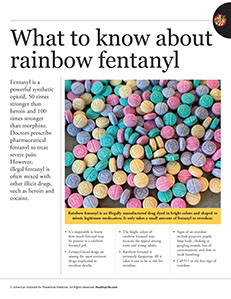
    Image of rainbow fentanyl.

    Fentanyl is a powerful synthetic opioid, 50 times stronger than heroin and 100 times stronger than morphine. Doctors prescribe pharmaceutical fentanyl to treat severe pain. However, illegal fentanyl is often mixed with other illicit drugs, such as heroin and cocaine.

    Rainbow fentanyl is an illegally manufactured drug dyed in bright colors and shaped to mimic legitimate medication. It only takes a small amount of fentanyl to overdose.

    *  It’s impossible to know how much fentanyl may be present in a rainbow fentanyl pill.

    *  Fentanyl-laced drugs are among the most common drugs implicated in overdose deaths.

    *  The bright colors of rainbow fentanyl may increase the appeal among teens and young adults.

    *  Rainbow fentanyl is extremely dangerous. All it takes is one to be at risk for overdose.

    *  Signs of an overdose include pinpoint pupils, limp body, choking or gurgling sounds, loss of consciousness, and slow or weak breathing.

    *  Call 911 at the first sign of overdose.
    © American Institute for Preventive Medicine

  • Rx Painkiller Deaths On The Rise

    MEDICAL NEWS

    Image of open pill bottle with 3 pills next to the bottle.

    From 1999 to 2010, deaths from prescription pain relief drugs increased more than 400 percent in women and 265 percent in men. These facts are from a recent report from the Centers for Disease Control and Prevention (CDC).

    “Prescription painkiller deaths have skyrocketed in women (6,600 in 2010), four times as many as died from cocaine and heroin combined,” said CDC Director Tom Frieden, M.D., M.P.H. “Stopping this epidemic in women – and men – is everyone’s business. Doctors need to be cautious about prescribing and patients about using these drugs.”

    Use Rx pain relief medicines wisely

    *  Let your doctor know about all prescribed and OTC medicines you take. This includes ones that treat depression, anxiety, or sleep problems. It includes vitamins and herbal products, too.

    *  Ask your doctor the risk of addiction when he or she prescribes sleeping pills, strong painkillers, etc. Find out how long you should take the medicines. Ask if there are ways to help treat your problem without them.

    *  Find out how much alcohol, if any, can be taken with your prescribed medicines.

    *  Follow the guidelines that your doctor and pharmacist provide with every prescription.

    *  Do not take another person’s prescribed medicines.

    *  Do not share your medicines with others.

    © American Institute for Preventive Medicine