MEDICAL NEWS
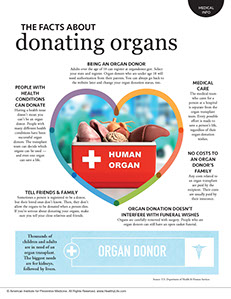
Thousands of children and adults are in need of an organ transplant. The biggest needs are for kidneys, followed by livers.
Being an organ donor
Adults over the age of 18 can register at organdonor.gov. Select your state and register. Organ donors who are under age 18 will need authorization from their parents. You can always go back to the website later and change your organ donation status, too.
People with health conditions can donate
Having a health issue doesn’t mean you can’t be an organ donor. People with many different health conditions have been successful organ donors. The transplant team can decide which organs can be used – and even one organ can save a life.
Tell friends & family
Sometimes a person is registered to be a donor, but their loved ones don’t know. Then, they don’t allow the organs to be donated when a person dies. If you’re serious about donating your organs, make sure you tell your close relatives and friends.
Medical care
The medical team who cares for a person at a hospital is separate from the organ transplant team. Every possible effort is made to save a person’s life, regardless of their organ donation wishes.
No costs to an organ donor’s family
Any costs related to an organ transplant are paid by the recipient. Their costs are usually paid by their insurance.
Organ donation doesn’t interfere with funeral wishes
Organs are carefully removed with surgery. People who are organ donors can still have an open casket funeral.
Source: U.S. Department of Health & Human Services
© American Institute for Preventive Medicine