Tag: pain

  • Backaches

    Pregnancy & Prenatal Care

    Causes

    Pregnant women get backaches because:

    *  The growing uterus and extra weight pull the body forward. Standing this way can strain the back muscles.

    *  Hormones are released during pregnancy. These make the ligaments soften and stretch. Ligaments are tissues that surround and support the joints.

    *  Joints in the lower back get sore from pressure. This happens to joints in the pelvic area, too. The baby is growing in size and weight.

    *  The baby presses against the tailbone.

    Prevention

    Do exercises your health care provider tells you to do. Use good posture, too. Keep your spine straight when you are standing. Have a friend check your back for curving: Stand with your heels against a wall. Ask your friend to look at your back. Tell him or her to let you know if it curves. Center your weight over the pelvic area. Be careful when you bend over, too. Bending wrong can give you a backache.

    Back Labor

    Most women have some back pain during labor. Some women have it through their whole labor. This is called back labor. It is caused by the way the baby is lying. The back of the baby’s head presses against the tailbone. Or it may press slightly to one side of it. Back labor can occur in preterm labor, too.

    Questions to Ask

    Self-Care

    Tips for Good Posture

    When you stand:

    *  Stand straight.

    *  Tuck in your bottom.

    *  Don’t hollow your back.

    *  Don’t tighten your shoulders or hold them back. Keep them dropped.

    *  If you have to stand for a long time: Stretch your feet and shift your weight. Rest one foot and then the other on a footstool or telephone book.

    When you sit:

    *  Sit on a straight chair with a high back.

    *  Rest your back against the chair’s back.

    *  Put a pillow at the small of your back.

    *  Rest one or both feet on a footstool.

    *  Don’t sit too long. It strains your lower back. Get up and walk around.

    When you bend:

    *  To pick something up, squat down on your heels and bend your knees. Keep your upper body straight. Don’t lean over from the waist. Use the strength from your legs, not your back.

    *  To do something down low, kneel or squat. Or get down on all fours. That way, you help take the baby’s weight off your spine.

    When you lie down or sleep:

    *  Use a firm mattress. If you don’t have one, have someone help you place a board under your mattress. Or have someone put your mattress on the floor.

    *  Lie on your left side with your knees bent. Bend the upper knee more than the lower knee. Leave a lot of space between your legs.

    *  Put a pillow under your upper knee and leg.

    Other Self-Care Tips

    *  Don’t gain too much weight.

    *  Wear shoes with low (but not flat) heels.

    *  On a long car ride, stop every two hours. Get out and walk around.

    *  Don’t take medicine for pain. Ask your health care provider first.

    *  Don’t lift objects over 15 pounds.

    *  Don’t do exercises where you lift both legs at the same time.

    *  Do exercises for stronger back and belly muscles. Ask your health care provider for these.

    *  Do relaxation and deep breathing exercises. Do yoga.

    *  Have someone massage your lower back. Massage won’t cure a backache. It can loosen tight muscles, though.

    *  Apply warm, moist heat to your back. Use a hot water bottle or warm wash cloth.

    *  Ask your health care provider if you should wear a back support girdle, a back brace, or a special elastic sling.

    *  Do an exercise called the “pelvic rock”. This exercise helps your lower back be more flexible. It helps make the muscles in your belly stronger.

    You can stand to do the pelvic rock.

    Step 1

    *  Stand 2 feet away from the back of a chair.

    *  Put your hands on the chair’s back. Keep your elbows straight.

    *  Bend a little forward from your hips.

    Step 2

    *  Push your hips backward and relax the muscles in your belly. Relax your back.

    *  Bend your knees a little.

    Step 3

    *  Slowly pull your hips forward.

    *  Tuck your buttocks under as if someone were pushing you from behind.

    Step 4

    *  Repeat steps 1, 2, and 3.
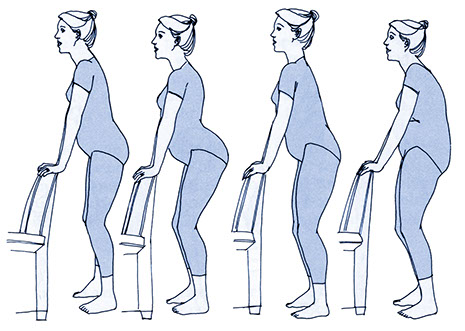
    Illustration of pregnant women doing the pelvic rock exercise while standing.

    You can do the pelvic rock on your hands and knees.

    Step 1

    Get down on all fours. Have your knees slightly apart. Have your back and elbows straight.

    Step 2

    Breathe in. As you breathe in, relax your back. Use the muscles in your lower belly.

    Step 3

    Breathe out. As you breath out, let your back relax down to a flat position. Do not let your back sag.

    Step 4

    Repeat steps 1, 2, and 3.

    {Note: Tell your health care provider if you get pain when you do the pelvic rock. Ask for help if you have a problem doing the pelvic rock.}
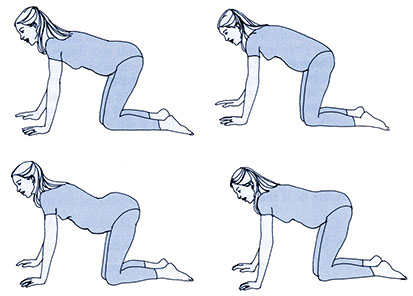
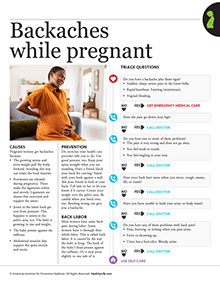
    Illustration of pregnant women doing the pelvic rock on hands and knees.
    Prenatal Self-Care book by the American Institute for Preventive Medicine. www.HealthyLife.com. All rights reserved.

    © American Institute for Preventive Medicine
  • Urinary Problems

    Women’s Health

    Common urinary problems in women are urinary incontinence, overactive bladder (OAB), and urinary tract infections (UTIs).

    Signs & Symptoms

    Urinary incontinence means you lose bladder control or can’t store urine like you should. Although there are many types, the most common ones in women are stress incontinence and urge incontinence.

    For Stress Incontinence

    Urine leaks out with a sudden rise in pressure in the abdomen. This can occur when you cough, sneeze, lift, jump, run, or strain to pass stool.

    For Urge Incontinence

    Urine is released before you can get to the toilet due to a sudden and intense urge to urinate.

    For Overactive Bladder

    You urinate often (8 or more times during the day and at least 2 times during the night) and you have a sudden and urgent need to urinate.

    For Urinary Tract Infections

    Bladder Infection Symptoms

    *  You urinate more often than usual. It burns or stings when you urinate.

    *  Your urine is bloody or cloudy.

    *  You have pain in the abdomen or over your bladder.

    *  Confusion or other change in mental status, especially if you are over age 70.

    Kidney Infection Symptoms

    *  Fever and shaking chills. Nausea and vomiting

    *  Pain in one or both sides of your mid back.

    Sometimes, there are no symptoms with a UTI.

    Causes & Risk Factors

    For Urinary Incontinence

    Problems occur with bladder muscles and nerves that help you hold or release urine and structures that support the bladder. This can be due to many factors:

    *  Physical changes due to aging or injury.

    *  Pregnancy and childbirth.

    *  Menopause.

    *  Multiple sclerosis.

    *  Spinal cord injury.

    For Overactive Bladder

    Abnormal nerves send signals to the bladder at the wrong time. This causes spasms in the bladder muscles to squeeze without warning.

    For Urinary Tract Infections

    Bacteria infect any part of the urinary tract – the kidneys, bladder, and ureters (tubes that connect the kidneys to the bladder).

    Treatment

    For Incontinence:

    *  Bladder training, pelvic floor muscle training, or Kegel exercises.

    *  Medications.

    *  Medical treatment, such as an electric or magnetic stimulation device.

    *  Surgical procedures.

    For Overactive Bladder

    Medications that help relax muscles of the bladder and prevent bladder spasms.

    For Urinary Tract Infections

    An antibiotic is prescribed to treat the specific infection. Pain relievers are taken as needed.

    Questions to Ask

    Self-Care / Prevention

    For Urinary Tract Infections (UTIs)

    *  Drink at least 8 glasses of water a day. Drink juice made from unsweetened cranberry juice concentrate. Take cranberry tablets.

    *  For pain, take acetaminophen, ibuprofen, naproxen sodium, or Uristat®, an over-the-counter medicine for bladder infection pain.

    *  Wear cotton underwear and loose-fitting slacks.

    *  Avoid alcohol, caffeine, and spicy foods.

    For Urinary Incontinence

    *  Avoid caffeine. Limit or avoid fluids 2 to 3 hours before bedtime.

    *  Limit carbonated drinks, alcohol, citrus juices, greasy and spicy foods, and artificial sweeteners.

    *  Empty your bladder before you leave the house, take a nap, or go to bed.

    *  Try to urinate often, even if you don’t feel the urge. When you urinate, empty your bladder as much as you can. Relax for a minute and try to go again.

    *  Keep a diary of when you leak urine. If you do this every 3 hours, empty your bladder every 2 hours. Use an alarm clock or wristwatch with an alarm to remind you.

    *  Wear absorbent pads or briefs, as needed.

    *  Ask your doctor if your type of incontinence could be managed by using self-catheters. These help to empty your bladder all the way. A doctor needs to prescribe self-catheters.

    Kegel Exercises

    Kegel exercises are pelvic floor exercises. These help treat or cure stress incontinence. Follow these steps:

    1.  Start to urinate, then hold back and try to stop. If you can slow the stream of urine, even a little, you are using the right muscles. You should feel muscles squeezing around the anus and the urethra (the tube through which urine is passed).

    2.  Relax your body. Close your eyes. Imagine that you are going to pass urine and then hold back from doing so. You should feel the muscles squeeze like you did in step 1.

    3.  Squeeze the muscles for 3 seconds. Then relax them for 3 seconds. When you squeeze and relax, count slowly. Start out doing this 3 times a day. Gradually work up to 3 sets of 10 contractions. Hold each one for 10 seconds at a time. You can do Kegel exercises when you lie down, sit, and/or stand.

    4.  When you do these exercises do not: Tense the muscles in your belly or buttocks; hold your breath; clench your fists or teeth; or make a face.

    5.  Squeeze your pelvic floor muscles right before and during whatever it is (jumping, etc.) that causes you to leak urine. Relax the muscles once the activity is over.

    6.  You can also use pelvic weights prescribed by your doctor. You insert a weighted cone into the vagina and squeeze the correct muscles to keep it from falling out.

    Do pelvic floor muscles daily. It may take several months to benefit from them. Get help to do them from:www.medicinenet.com/kegel_exercises_for_women/article.htm.

    FYI: Interstitial Cystitis (IC)

    Note: Symptoms of a condition called Interstitial Cystitis (IC) mimic those of an acute UTI. Intense pain and pressure in the lower abdomen come with the need to urinate. (This can be more than 50 times a day.) Nine out of 10 persons who have IC are women. Antibiotics do not give relief, because bacteria is not present with IC. This condition needs medical diagnosis and treatment.

    Resources

    National Institute of Diabetes and Digestive and Kidney Diseases (NIDDK)

    www2.niddk.nih.gov

    National Association for Continence (NAFC)

    800.BLADDER (252.3337)

    www.nafc.org

    Women's Self-Care book by the American Institute for Preventive Medicine. www.HealthyLife.com. All rights reserved.

    © American Institute for Preventive Medicine
  • Broken Or Knocked-Out Tooth

    Dental & Mouth Concerns

    Signs & Symptoms

    *  Loss of a tooth or part of a tooth.

    *  Nicked or chipped tooth or teeth.

    Causes

    An injury or a strain on a tooth, such as from biting on a hard object can cause a broken, knocked-out, or chipped tooth.

    Treatment

    When a tooth gets knocked out, go to the dentist as soon as possible. Keep the tooth moist until you get to the dentist. Follow up treatment is also needed.

    Questions to Ask

    Self-Care / Prevention

    For a Knocked-Out Tooth

    *  If you find the tooth, pick it up by the crown. Avoid contact with the root.

    *  Rinse off the rest of the tooth with clear water. Do not scrub the tooth or remove any tissue that is attached to the tooth.

    *  If possible (and if you’re alert), gently put the tooth back in its socket or hold it under your tongue. Otherwise, put the tooth in a glass of milk, cool salt water, or a wet cloth. Don’t let the tooth dry out.

    *  If the gum is bleeding, hold a gauze pad or a clean tissue tightly in place over the wound.

    *  Try to get to a dentist within 30 minutes of the accident. If the dentist is not available, go to a hospital emergency department. Take the tooth with you.

    For a Broken Tooth

    *  To reduce swelling, apply a cold compress to the area.

    *  Save any broken tooth fragments. Put them in a wet cloth or milk. Take them to the dentist.

    To Protect Teeth From Damage and Injury

    *  Don’t chew on ice, pens, pencils, etc.

    *  Don’t use your teeth to pry things open.

    *  If you smoke a pipe, don’t bite down on the stem.

    *  If you grind your teeth at night, ask your dentist if you should be fitted or a bite plate.

    *  If you play contact sports like football or hockey, wear a protective mouthguard. Mouthguards may also be useful for noncontact sports, such as gymnastics. Discuss the need of using a mouthguard with your dentist.

    *  Always wear a seat belt when riding in a car.

    *  Don’t suck on lemons or chew aspirin or vitamin C tablets. Acids in these wear away tooth enamel.

    Healthier at Home book by the American Institute for Preventive Medicine. www.HealthyLife.com. All rights reserved.

    © American Institute for Preventive Medicine
  • Varicose Veins

    Women’s Health

    Varicose veins may occur in almost any part of the body. They are most often seen in the back of the calf or on the inside of the leg between the groin and the ankle.

    Signs & Symptoms

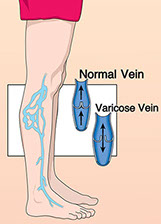
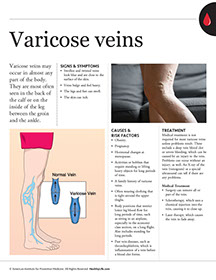
    Illustration of varicose veins.

    *  Swollen and twisted veins look blue and are close to the surface of the skin.

    *  Veins bulge and feel heavy.

    *  The legs and feet can swell.

    *  The skin can itch.

    Causes & Risk Factors

    *  Obesity.

    *  Pregnancy.

    *  Hormonal changes at menopause.

    *  Activities or hobbies that require standing or lifting heavy objects for long periods of time.

    *  A family history of varicose veins.

    *  Often wearing clothing that is tight around the upper thighs.

    *  Body positions that restrict lower leg blood flow for long periods of time. One example is sitting in an airplane, especially in the economy class section, on a long flight.

    *  Past vein diseases, such as thrombophlebitis. This is inflammation of a vein before a blood clot forms.

    Treatment

    Medical treatment is not required for most varicose veins unless problems result. These include a deep vein blood clot or severe bleeding, which can be caused by an injury to the vein. Problems can occur without an injury, as well. An X-ray of the vein (venogram) or a special ultrasound can tell if there are any problems.

    Medical Treatment

    *  Surgery can remove all or part of the vein.

    *  Sclerotherapy. This uses a chemical injection into the vein, causing it to close up.

    *  Laser therapy. This causes the vein to fade away.

    Questions to Ask

    Self-Care / Prevention

    *  Don’t cross your legs when sitting.

    *  Exercise regularly. Walking is a good choice. It improves leg strength and vein strength.

    *  Maintain a healthy weight. Lose weight if you are overweight.

    *  Don’t stand for long periods of time.

    *  If your job or hobby requires you to stand, shift your weight from one leg to the other every few minutes. Just wiggling your toes can help, too.

    *  Wear elastic support stockings or support hose, as advised by your doctor.

    *  Don’t wear clothing or undergarments that are tight or constrict your waist, groin, or legs.

    *  Eat high-fiber foods, like bran cereals, whole-grain breads, and fresh fruits and vegetables, to promote regularity. Constipation may be a factor in varicose veins.

    *  Elevate your legs when resting.

    *  Exercise your legs. From a sitting position, rotate your feet at the ankles, turning them first clockwise, then counterclockwise, using a circular motion. Next, extend your legs forward and point your toes to the ceiling then to the floor. Next, lift your feet off the floor and gently bend your legs back and forth at the knees.

    *  Get up and move about every 35 to 45 minutes when traveling by air or even when sitting in an all-day conference. Opt for an aisle seat in such situations.

    *  Stop and take short walks at least every 45 minutes when taking long car rides.

    Resources

    American Academy of Dermatology

    866.503.SKIN (503.7546)

    www.aad.org

    American College of Phlebology

    www.phlebology.org

    Women's Self-Care book by the American Institute for Preventive Medicine. www.HealthyLife.com. All rights reserved.

    © American Institute for Preventive Medicine
  • Diverticulosis & Diverticulitis

    Abdominal & Urinary Conditions

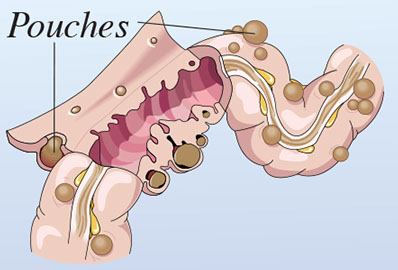
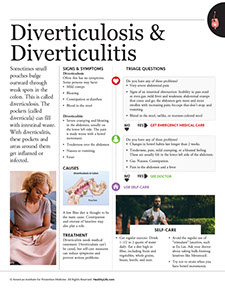
    Illustration of diverticulosis in colon.

    Diverticulosis in Colon

    Sometimes small pouches bulge outward through weak spots in the colon. This is called diverticulosis. The pockets (called diverticula) can fill with intestinal waste. With diverticulitis, these pockets and areas around them get inflamed or infected.

    Signs & Symptoms

    For Diverticulosis

    Often this has no symptoms. Some persons may have:

    *  Mild cramps.

    *  Bloating

    *  Constipation.

    *  Blood in the stool.

    For Diverticulitis

    *  Severe cramping and bloating in the abdomen, usually on the lower left side. The pain is made worse with a bowel movement.

    *  Tenderness over the abdomen.

    *  Nausea.

    *  Fever.

    Causes

    A low fiber diet is thought to be the main cause. Constipation and overuse of laxatives may also play a role.

    Treatment

    Diverticulitis needs medical treatment. Diverticulosis can’t be cured, but self-care measures can reduce symptoms and prevent serious problems.

    Questions to Ask

    Self-Care / Prevention

    *  Get regular exercise. Drink 1-1/2 to 2 quarts of water daily. Eat a diet high in fiber, but avoid foods that bother you (e.g., corn, nuts, etc.).

    *  Avoid the regular use of “stimulant” laxatives, such as Ex-Lax. Ask your doctor about taking bulk-forming laxatives like Metamucil.

    *  Try not to strain when you have bowel movements.

    Healthier at Home book by the American Institute for Preventive Medicine. www.HealthyLife.com. All rights reserved.

    © American Institute for Preventive Medicine
  • Don’T Let Shin Splints Stop You

    BE FIT

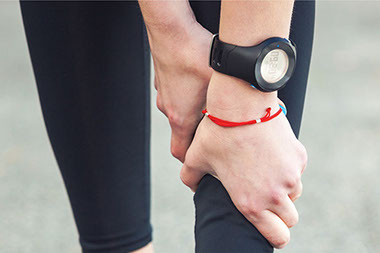
    Close up images of hands holding shins in pain.

    If you’ve ever felt aching or shooting pain up the front of your lower legs after running, it could be shin splints. Though it’s usually not serious, it can be painful enough to stop even the most dedicated exerciser.

    If you get shin splints, try these tips:

    *Switch to lower impact exercise.Until the pain goes away, try swimming, biking, or using an elliptical machine, so you put less pressure on your legs.

    *Wear proper shoes.If you’ve had the same running shoes for years, it may be time for a new pair. Support wears down over time, causing pain in the feet and legs. Make sure you have enough support under the arch and heel areas.

    *Ice the area.Apply ice packs for up to 20 minutes at a time, a few times a day, to help with pain.

    If the pain doesn’t go away, see your doctor. Sometimes shin splints may be a sign of a small bone break or inflammation of tendons in the legs.

    Source: American Academy of Orthopedic Surgeons

    © American Institute for Preventive Medicine
  • Fibroids

    Women’s Health

    Fibroids are benign (not cancerous) tumors made mostly of muscle tissue. They are found in the wall of the uterus and sometimes on the cervix. They can range in size from as small as a pea to more than 6 inches wide. With larger fibroids, a woman’s uterus can grow to the size of a pregnancy more than 20 weeks along. About 20% to 25% of women over the age of 35 get fibroids.

    Signs & Symptoms

    Some women with uterine fibroids do not have any symptoms. When symptoms occur, they vary due to the number, size, and locations of the fibroid(s). Symptoms include:

    *  Abdominal swelling, especially if they are large.

    *  Heavy menstrual bleeding, bleeding between periods or after intercourse, or bleeding after menopause.

    *  Backache, pain during sex, pain with periods, etc.

    *  Anemia from excessive bleeding.

    *  Pelvic pressure.

    *  Passing urine often from pressure on the bladder.

    *  Chronic constipation from pressure on the rectum.

    *  Infertility. The fallopian tubes may be blocked or the uterus may be distorted.

    *  Miscarriage. If the fibroid is inside the uterus, the placenta may not implant the way it should.

    Diagnosis

    Fibroids are diagnosed with a medical history and a pelvic exam. Your doctor can also do other tests, such as an ultrasound and hysteroscopy to confirm their presence, location, and size.

    Causes & Risk Factors

    Reasons a Woman is More Likely To Get Fibroids

    *  She has not been pregnant.

    *  She has a close relative who also had or has fibroids.

    *  She is African American. The risk is three to five times higher than it is for Caucasian women.

    The exact cause is not known, but fibroids need estrogen to grow. They may shrink or go away after menopause.

    Treatment

    “Watchful waiting”

    Your doctor will “watch” for any changes and may suggest “waiting” for menopause, since fibroids often shrink or disappear after that time. If you have problems during this “waiting” period, you may decide that you do not want to “wait” for menopause, but choose to have something done to treat your fibroids. Problems include: Too much pain; too much bleeding; an abdomen that gets too big; the need to take daily iron to prevent anemia; and other abdominal problems.

    Medication

    One type is called GnRH agonists. These block the production of estrogen by the ovaries. This shrinks fibroids in some cases, but is not a cure. The fibroids return when the medicine is stopped. Shrinking the fibroids might allow a minor surgery (with less blood loss) to be done instead of a major one. GnRH agonists are taken for a few months, but not more than six, because their side effects mimic menopause and may lead to osteoporosis. In some cases, GnRH agonists can be used longer with “Add Back Therapy.” This uses low dose estrogen to make side effects milder.

    Surgery Methods Include:

    *  Myomectomy. The fibroids are removed. The uterus is not. This can be done using a laparoscope and a laser (laparoscopy). The fibroids could also be cut out using a resectoscope (hysteroscopy). Fibroids can be removed under direct vision during abdominal surgery (laparotomy). Myomectomy methods may allow fibroids to grow back. The more fibroids there are to begin with, the greater the chance they will grow back.

    *  Procedures to destroy the uterine lining. These do not remove fibroids or the uterus, but stop or lighten menstrual flow from then on. The uterine lining can be destroyed using a laser, heat, or ultra cold.

    *  Uterine artery embolization. A catheter is inserted in a large blood vessel in the groin and sent to the level of the uterine arteries. A substance is given that blocks blood flow to the uterine arteries that nourish the fibroids. This treatment shrinks the fibroids.

    *  Hysterectomy. This surgery removes the uterus and the fibroids with it. This method is advised when the fibroid is very large or when other treatments don’t stop severe bleeding. It is the only way to get rid of fibroids for sure. A women can no longer get pregnant after the surgery. This treatment is also advised if the fibroid is cancerous. This rarely occurs.

    Questions to Ask

    Self-Care / Prevention

    *  Take medications as advised.

    *  Maintain a healthy body weight. Follow a diet low in fat. The more body fat you have, the more estrogen your body is likely to have. This promotes fibroid growth.

    *  Do regular exercise. This may reduce your body’s fat and estrogen levels.

    Resources

    National Women’s Health Information Center

    www.womenshealth.gov

    Women's Self-Care book by the American Institute for Preventive Medicine. www.HealthyLife.com. All rights reserved.

    © American Institute for Preventive Medicine
  • Go Red To Manage Pain

    SELF-CARE CORNER

    Image of cherry juice.

    Tart cherries may help reduce chronic inflammation, especially for the millions of Americans suffering from joint pain and arthritis, according to research from Oregon Health & Science University. The researchers suggest tart cherries have the “highest anti-inflammatory content of any food” and can help people with osteoarthritis manage their disease.

    In a study of women ages 40 to 70 with inflammatory osteoarthritis, the researchers found that drinking tart cherry juice twice daily for three weeks led to significant reductions in important inflammation markers-especially for women who had the highest inflammation levels at the start of the study.

    Often thought of as “wear-and-tear” arthritis, osteoarthritis is the most common type of arthritis. Athletes are often at a greater risk for developing the condition, given their excessive joint use that can cause a breakdown in cartilage and lead to pain and injury, according to the Arthritis Foundation.

    Along with providing the fruit’s bright red color, the antioxidant compounds in tart cherries-called anthocyanins-have been specifically linked to high antioxidant capacity and reduced inflammation, at levels comparable to some well-known pain medications.

    Available every day of the year in dried, frozen, and juice forms, tart cherries are a versatile ingredient to include in any training or inflammation-fighting diet.

    © American Institute for Preventive Medicine

  • Fractured Jaw

    Dental & Mouth Concerns

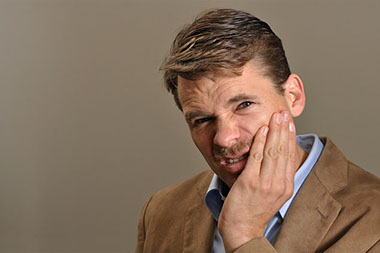
    Image of man holding jaw in pain.

    A fractured (or broken) jaw is when the jaw bone breaks.

    Signs & Symptoms

    *  Jaw and/or facial pain, swelling, or numbness.

    *  Not being able to open or close the mouth normally.

    *  Bleeding from the mouth.

    *  Having a hard time drinking, speaking, and swallowing.

    *  Drooling.

    *  The jaw area is bruised or discolored.

    *  Teeth are loose or damaged.

    *  The jaw area is tender to touch.

    Causes

    Most often, the cause is trauma from a blow to the face, such as from a car accident, sports injury, assault, etc. Osteoporosis can also be the cause.

    Treatment

    A fractured jaw needs emergency medical care.

    Questions to Ask

    Self-Care / Prevention

    First Aid Before Medical Care

    *  Gently align the jaws. Do not use force.

    *  Try not to talk. Write notes instead.

    *  Close your mouth and secure the jaw with a necktie, towel, or scarf tied around your head and chin. Remove this if vomiting occurs. Tie it back when vomiting stops. If you don’t have anything to tie the jaw with, keep it from moving by holding the jaw gently with your hands.

    *  Hold an ice pack on the fractured bone to reduce pain and swelling.

    Self-Care after Jaw Surgery

    *  Follow post-operative instructions from your doctor.

    *  Remove elastic bands if you are choking on food or need to vomit. Go to the dentist to replace the elastic bands.

    To Help Prevent a Fractured Jaw

    *  Wear a seat belt whenever you ride in a car, etc.

    *  Wear protective gear, as needed, for boxing, football, etc.

    Healthier at Home book by the American Institute for Preventive Medicine. www.HealthyLife.com. All rights reserved.

    © American Institute for Preventive Medicine
  • Ipad Pain

    WELL-BEING

    Image of man using a tablet.

    When your iPad or other tablet causes pain in the neck and shoulders –

    *  Use a case that positions the device at a comfortable viewing angle.

    *  Routinely shift hands and weight. Stand up if seated, or sit down if standing.

    When using a laptop or desktop computer, follow the same tips for a tablet plus:

    *  Use an external keyboard.

    *  Keep shoulders relaxed and elbows close to the body.

    *  Keep hands, wrists, forearms, and thighs parallel to the floor.

    *  Take a break and change position every 15 minutes.

    Holding a tablet computer too low, say on the lap, forces the neck to bend forward too much, straining and possibly even injuring muscles, nerves, tendons, ligaments, or spinal discs. Simply placing a tablet on a table propped at an angle in a tablet case can reduce neck strain and potential pain, according to research conducted at the Harvard School of Public Health.

    © American Institute for Preventive Medicine