Tag: physical

  • Time To Get Physical

    Fitness

    Get fit and stay fit.

    “Fitness: if it came in a bottle, everybody would have a great body.”

    – Cher

    Having six pack abs doesn’t come from drinking a six pack, and you don’t need to have six pack abs to be fit. Get fit by making exercise and healthy eating a regular part of your life.

    How much exercise do you need?

    Each week, adults should do:

    A.  At least two hours and 30 minutes of moderate aerobic activity, such as brisk walking…OR

    B.  One hour and 15 minutes of vigorous aerobic activity, such as jogging, aerobic dancing, and jumping rope…OR

    C.  A combination of activities from A and B

    For increased fitness or to lose weight or keep lost weight off, do:

    *  Five hours of moderate physical activity a week…OR

    *  Two hours and 30 minutes of vigorous aerobic activity a week

    Tips for aerobic activity

    *  Warm up. Spend five to 10 minutes stretching or doing the aerobic activity at a slower pace. For example, walk at a slower pace if your aerobic activity is brisk walking.

    *  Aerobic activity. To be aerobic, the activity needs to use large muscles of the lower body and be steady and nonstop for at least 10 minutes at one time. During this time, you should reach your target heart rate. (See chart on this page.)

    *  Cool down. Choose a slower pace of the activity you were doing or stretch for about five minutes.

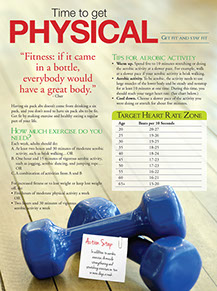
    Target Heart Rate Zone

    Age

    20

    25

    30

    35

    40

    45

    50

    55

    60

    65+

    Beats per 10 Seconds

    20-27

    19-26

    19-25

    18-25

    18-24

    17-23

    17-23

    16-22

    16-21

    15-20

    Action Step

    In addition to aerobic exercise, do muscle strengthening and stretching exercises on two or more days a week.
    Page image from the Ways to Well-Being Book by the American Institute for Preventive Medicine. www.HealthyLife.com. All rights reserved.

    © American Institute for Preventive Medicine

  • 5 Wellness Factors

    Personal Safety

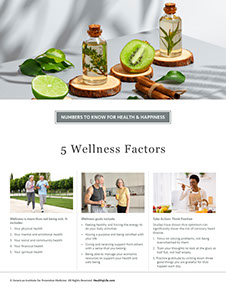
    Slices of lime and kiwi, with bottles of oil and herbs.

    Wellness is more than not being sick. It includes:

    1.  Your physical health

    2.  Your mental and emotional health

    3.  Your social and community health

    4.  Your financial health

    5.  Your spiritual health

    Wellness goals include:

    *  Feeling healthy and having the energy to do your daily activities

    *  Having a purpose and being satisfied with your life

    *  Giving and receiving support from others with a sense that you belong

    *  Being able to manage your economic resources to support your health and well-being

    Take Action: Think Positive

    Studies have shown that optimism can significantly lower the risk of coronary heart disease.

    1.  Focus on solving problems, not being overwhelmed by them.

    2.  Train your thoughts to look at the glass as half full, not half empty.

    3.  Practice gratitude by writing down three good things you are grateful for that happen each day.

    A Year of Health Hints book by the American Institute for Preventive Medicine. www.HealthyLife.com. All rights reserved.

    © American Institute for Preventive Medicine
  • A Routine Checkup

    Medical Exams

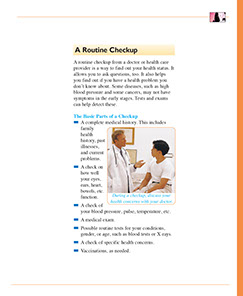
    A routine checkup from a doctor or health care provider is a way to find out your health status. It allows you to ask questions, too. It also helps you find out if you have a health problem you don’t know about. Some diseases, such as high blood pressure and some cancers, may not have symptoms in the early stages. Tests and exams can help detect these.

    The Basic Parts of a Checkup

    *  A complete medical history. This includes family health history, past illnesses, and current problems.

    *  A check on how well your eyes, ears, heart, bowels, etc. function.

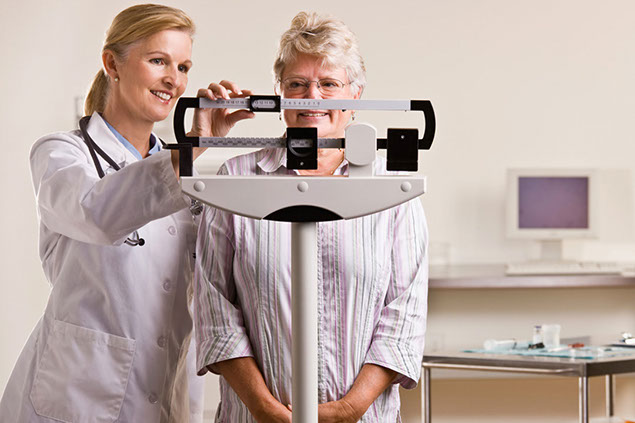
    *  A check of your blood pressure, pulse, temperature, etc.

    *  A medical exam.

    *  Possible routine tests for your conditions, gender, or age, such as blood tests or X-rays.

    *  A check of specific health concerns.

    *  Vaccinations, as needed.

    Page from the Healthier at Home book by the American Institute for Preventive Medicine. www.HealthyLife.com. All rights reserved.

    © American Institute for Preventive Medicine
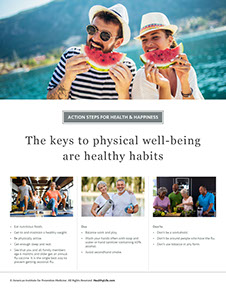
  • The Keys To Physical Well-Being Are Healthy Habits

    Personal Safety

    Couple eating watermelon.

    *  Eat nutritious foods.

    *  Get to and maintain a healthy weight.

    *  Be physically active.

    *  Get enough sleep and rest.

    *  See that you and all family members age 6 months and older get an annual flu vaccine. It is the single best way to prevent getting seasonal flu.

    Dos

    *  Balance work and play.

    *  Wash your hands often with soap and water or hand sanitizer containing 60% alcohol.

    *  Avoid secondhand smoke.

    Don’ts

    *  Don’t be a workaholic.

    *  Don’t be around people who have the flu.

    *  Don’t use tobacco in any form.

    A Year of Health Hints book by the American Institute for Preventive Medicine. www.HealthyLife.com. All rights reserved.

    © American Institute for Preventive Medicine
  • Physical Vs. Emotional Hunger

    Healthylife® Weigh

    Part 6

    Close up shot of pizza on table, with group of people sitting around and picking up a portion.

    Eat when you are physically hungry. Know the difference between physical and emotional hunger.

    Physical Hunger

    *  Your stomach feels empty.

    *  Comes on gradually and can be postponed.

    *  You feel sluggish and need energy.

    *  You haven’t eaten for several hours.

    * You are hungry enough to eat anything.

    Emotional Hunger

    *  You have a psychological desire to eat.

    *  Comes on suddenly and feels urgent.

    *  You only want certain foods.

    *  You eat something because it looks or smells good, even though your hunger is satisfied.

    *  You eat as a response to boredom, not the physical need to eat.

    Q: Is my hunger physical or emotional?

    A: Yes, I am physically hungry

    Ways to Manage Hunger

    *  Eat meals at regular times and intervals every day.

    *  Exercise regularly.

    *  Eat snacks that are high in fiber and/or protein:

    – Raw and cooked veggies

    – A piece of fruit

    – Unbuttered popcorn

    – Trail mix with nuts, seeds and  dried fruit

    *  Drink water throughout the day.

    A: No, I am emotionally hungry

    Ways to Manage a Craving

    *  Do an activity that takes your mind off of food. Walk to another room.

    *  Go for a walk or do your favorite exercise.

    *  Do a burst of exercise, like 10 jumping jacks, squats, or lunges.

    *  Take 10 deep breaths as you stretch.

    *  Drink a glass of water.

    *  Wait 10 minutes. Re-evaluate the hunger.

    *  Have a small amount of the specific food you are craving. If you are worried you can’t control your portion, skip this tip.

    *  Use the tips in this section for managing the emotion.

    © American Institute for Preventive Medicine