Tag: picky

  • Getting Your Kids To Eat Right

    Children’s Health

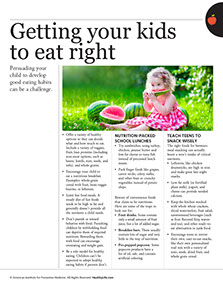
    Image of young girl eating watermelon.

    Persuading your child to develop good eating habits can be a challenge. Here are some pointers.

    *  Start your child’s day with a good breakfast. Hot cereal is a better choice than over-sweetened breakfast foods that are heavily advertised to kids.

    *  Buy snacks that are low in fat, sugar, and salt. Fresh fruit, unbuttered popcorn, whole-grain muffins, juice, milk, and yogurt are tasty, nutritious foods that appeal to kids. Crackers with small amounts of peanut butter or cheese are also acceptable between-meal treats.

    *  Limit fast-food meals. A steady diet of fast-food menu items tends to be high in fat and generally doesn’t provide all the essential nutrients a child needs.

    *  Don’t punish or reward behavior with food. Punishing children by withholding food can deprive them of required nutrients. Rewarding them with food can encourage overeating and weight gain.

    *  Set a good example. Children can’t be expected to adopt good eating habits if parents don’t.

    For nutrition-packed school lunches:

    *  Try sandwiches, using turkey, chicken, peanut butter with no added oil or sugar, and low-fat cheese or tuna fish instead of processed lunch meats.

    *  Pack finger foods like grapes, carrot sticks, celery stalks, and other fruit or crunchy vegetables instead of potato chips. Single-serving cans of fruit or applesauce are also handy ways to round out a lunch.

    Beware of convenience foods that claim to be nutritious.

    Here are some of the traps to look out for.

    *  Fruit drinks. Some contain only a small amount of fruit juice, but a lot of added sugar.

    *  Breakfast bars. These usually contain lots of sugar and very little in  the way of nutrition.

    *  Pre-popped popcorn. Some popcorn products have a lot of oil, salt, and contain artificial coloring.

    Teach Teens to Snack Wisely

    Once kids reach their teens, they tend to eat what they want, when they want it. But these years of rapid growth and change call for added nutrients which might be lacking in diets that are hit-or-miss. And as their bones grow rapidly, teens need plenty of calcium. Adolescent girls need plenty of iron to offset iron lost due to menstrual flow. If the right foods are available, between-meal snacking can actually boost a teen’s intake of those critical nutrients.

    *  Leftovers, like chicken drumsticks, are high in iron and make good late-night snacks.

    *  Low-fat milk, yogurt, and cheese can provide needed calcium.

    *  Keep the kitchen stocked with whole wheat crackers, sliced watermelon, fruit salad, and other ready-to-eat alternatives to junk food.

    *  Encourage teens to invent their own, easy-to-eat snacks, like “ants on a log”-celery stalks stuffed with peanut butter and dotted with raisins.

    Resources

    Page from A Year of Health Hints book by the American Institute for Preventive Medicine. www.HealthyLife.com. All rights reserved.

    © American Institute for Preventive Medicine

  • Picky Eaters

    Healthylife® Weigh

    Part 3

    Women having lunch.

    Perhaps you buy food or cook for a picky eater. Perhaps that picky eater is you! Vegetables tend to be one of the biggest sticking points with picky eaters, though picky eating can apply to all food groups. Don’t give up!

    Here are some tips for managing picky eating:

    *  Set an example by trying it yourself and using positive language. Even if you don’t like the taste, you can express gratitude or pat yourself on the back for trying a new food.

    *  Add the new food to a food you already like. For example, if peanut butter and jelly is a favorite, swap white bread for whole grain bread. This will add extra nutrients while keeping the preferred peanut butter & jelly filling!

    *  Stock up on healthy choices. Limit junk food and unhealthy options.

    *  Try new foods. Serve a variety of foods at meals to provide a choice. Encourage kids to pick out a new vegetable when grocery shopping. To make it fun, have a child pick a color first. Then, have the child pick out a vegetable that matches that color.

    *  Don’t force a food that is disliked. Part of managing weight is developing a healthy relationship with food.

    *  If it has been more than 6 months since you tried it, try it again! Tastes can change.

    Appreciate your own willingness and effort to try something new! If you have children, they are watching and learning the value of openness.

    © American Institute for Preventive Medicine

  • Picky Eater?

    HEALTHY EATING

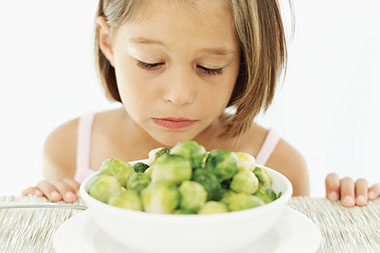
    Image of young child with a sad face looking down at a bowl of brussel sprouts.

    Is dinner time a war zone at your house? Do you fight battles with your kids over vegetables and mac and cheese?

    Picky eating is as normal as potty-training. Even the best of parents can have a difficult time getting their child to eat. In fact, picky eating is one of the most common events in children, often outgrown as the child reaches adolescence.

    But when eating behavior affects normal development, it could be something much more serious-a pediatric feeding disorder.

    “The difference between a fussy eater and a child with a feeding disorder is the impact the eating behavior has on a child’s physical and mental health,” said Dr. Peter Girolami, clinical director of the Pediatric Feeding Disorders Program at the Kennedy Krieger Institute in Baltimore.

    Pediatric feeding disorders are more common than most think, affecting 1 in 10 infants and children. Some kids just don’t eat enough calories and nutrients to thrive.

    Common symptoms of a pediatric feeding disorder are these:

    *  A sudden change in eating habits lasting longer than 30 days

    *  Delayed development of skills needed to feed or eat foods with greater textures

    *  Weight loss or failure to gain weight

    *  Choking/coughing during meals

    *  Unexplained fatigue, loss of energy

    *  Disruptive behavior during mealtime, throwing utensils

    Early diagnosis and treatment is extremely important.

    © American Institute for Preventive Medicine