Skin Conditions
Acne is a common skin condition. It occurs most often in teenagers and young adults, but can persist into adulthood.
Signs & Symptoms
* Whiteheads and/or blackheads.
* Red and painful pimples.
* Deeper lumps (cysts or nodules).
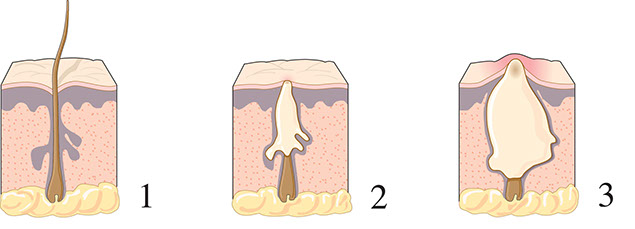
How acne forms.
Causes
Foods and beverages, such as chocolate, nuts, greasy foods, and cola do not cause acne. If you find that eating certain foods make your acne worse, avoid them.
Acne results when oil ducts below the skin get clogged. Factors that help cause acne include:
* Hormone changes during adolescence, before a female’s menstrual period, or during pregnancy.
* Rich moisturizing lotions. Oily makeup.
* Emotional stress.
* Nutritional supplements that have iodine.
* Medications, such as lithium and corticosteroids.
* Illegal (anabolic) steroids. These are used for muscle-building.
Treatment
Mild acne can be treated with Self-Care / Prevention. When this is not enough, a doctor may prescribe one or more of these 1 medications:
* A topical cream, gel, or liquid with retinoic acid (Retin-A). {Note: Retin-A makes your skin more sensitive to the sun.}
* A topical cream, lotion, or wipe with an antibiotic, such as clindamycin.
* A topical gel with dapsone. A brand name is AczoneTM Gel 5%.
* An antibiotic pill, such as minocycline or tetracycline. {Note: These medicines can make birth control pills less effective and make your skin more sensitive to the sun.}
* For some females, a certain birth control pill.
* Isotretinoin. Brand names are Accutane, Amnesteem, Sotret, Claravis. This medicine is usually prescribed for severe acne. {Note: This medicine can have serious side effects. These include bone and fracture problems, severe birth defects, depression, psychosis, aggressive and/or violent behaviors, and suicide.}
Treatments Other Than Medications
* Chemical peels.
* Laser treatments.
* Surgery for acne scarring.
Questions to Ask
Self-Care / Prevention
* Keep your skin clean. Gently wash your skin, where the acne appears, twice a day. Use a mild soap, such as Neutrogena. Use a clean washcloth every time. Work the soap into your skin gently for 1 to 2 minutes and rinse well. Don’t scrub.
* Don’t squeeze, scratch, or poke at pimples. They can get infected and leave scars.
* Wash after you exercise or sweat.
* Use an over-the- counter lotion or cream that has benzoyl peroxide. (Some people are allergic to benzoyl peroxide. Try a little on your arm first to make sure it doesn’t hurt your skin.) Follow the directions as listed.
* Use only oil-free and water-based makeups. Don’t use greasy or oil-based creams, lotions, or makeups.
* For males, wrap a warm towel around your face before you shave. Shave along the natural grain of the beard.
* Don’t spend too much time in the sun especially if you take antibiotics for acne. Don’t use sun lamps.
Resources
American Academy of Dermatology
866.503.SKIN (503.7546)
National Institute of Arthritis and Musculoskeletal and Skin Diseases (NIAMS)
© American Institute for Preventive Medicine