Tag: plan

  • Plan Problem-Solving

    Healthylife® Weigh

    Part 6

    Problem, think, idea, solution diagram.

    Your worries and concerns take up time in your day. Many issues cannot simply be ignored or brushed aside. To avoid letting these thoughts trigger unhealthy eating habits, plan time to address them.

    Steps to Address Your Worries

    1. Write a worry at the top of a piece of paper.

    2. Divide the paper into three columns:

    a. What I can’t do. Recognize what is out of your control.

    b. What I can do. List possible actions that are within your control. Write things you know how to do and that are realistic actions for you to take.

    c. What I will do. Decide which action you are ready to take first. This action may not solve every part of the problem, but is a small step toward a solution. Write when you will do this.

    Mind Dump

    Use this tool when you feel you have too many thoughts to juggle and aren’t sure where to start. Use small pieces of paper or index cards to “mind dump” thoughts that come to mind. Write down concerns, ideas, and things you need to remember. Pull one card and use the steps above to address this worry. Don’t pull another card until you are satisfied with your plan to deal with the first worry.

    © American Institute for Preventive Medicine

  • Set Fitness Goals

    Healthylife® Weigh

    Part 5

    Active women with armband to hold smartphone.

    Set your own fitness goals. Other people may have suggestions, but choose a goal that you want to go after. Other people’s fitness goals should not interfere with one you set for yourself.

    *  Write down your goals. This gives them more importance.

    *  Your goals should be within reach, but challenging. Make sure your goals are S.M.A.R.T. Does your goal meet the criteria?

    *  Know why you are setting each goal. For example, you may be doing this exercise for stress relief or to try something new. Or, you are meeting a friend and want to help them stick to their goal.

    *  Review and adjust your goals as needed. It takes practice to know how to set reasonable but challenging goals for yourself.

    *  Track your progress and reward yourself for successes.

    © American Institute for Preventive Medicine

  • Set Goals

    Healthylife® Weigh

    Part 3

    The word Smart spelled out with wood lettering and hand writing definition for setting a smart goal.

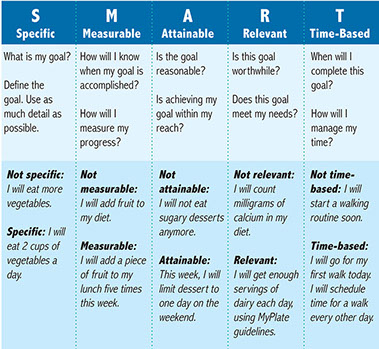
    Think of the actions you take on a daily basis as small steps toward your bigger goal. This guide has already given you many ideas for small steps, such as making half of your plate fruits and vegetables and choosing fewer sugar-sweetened drinks. Identify your next step and use the S.M.A.R.T. tool to improve the chances of reaching your goal.

    Stay motivated with the small successes you achieve along the way. Use yourEating & Exercise Tracker™every day for feedback on the effect your actions have on your energy level, mood, and weight.

    S.M.A.R.T. chart.

    © American Institute for Preventive Medicine

  • Sporting Events And Concerts

    Healthylife® Weigh

    Part 3

    Couple enjoying snacks at an outdoor event.

    Food courts and concession stands usually have very limited menus. Stadiums or arenas may not allow you to bring your own food or drink into the venue. Here are some tips to help you stick to your healthy goals:

    *  Eat before you go.

    *  Order water.

    *  Follow the fast food guidelines.

    *  Split a meal or snack with a friend.

    *  Choose treats wisely.

    *  Limit alcohol.

    What to do when no healthy choices are available:

    1. If you are hungry, eat something small. It may not be the healthiest choice, but it is important to listen to your body’s physical hunger cues.

    2. Drink water.

    3. Chew on sugar-free gum with xylitol.

    4. Make your next meal or snack a healthy one.

    5. Plan ways to make healthy choices for future events. If possible, eat a meal or have a healthy snack before the event. Plan to limit how much you will eat of items sold at the event.

    © American Institute for Preventive Medicine

  • 7 Steps To A Great Work Day

    WORK LIFE

    Image of construction workers.

    1.  Allow yourself plenty of time in the morning. Don’t hit snooze on the alarm. Starting your day without rushing can help keep your stress levels down.

    2.  Take an invigorating shower or listen to upbeat music to wake up your body and mind. This will help jump-start your day.

    3.  Have a healthy breakfast with some protein and fiber to keep you going all morning. Try oatmeal with low-fat milk or an egg with whole grain toast. Pack a healthy lunch too!

    4.  When you get to work, write down the most urgent things that should be done. Respond to the most important emails or calls first. But, don’t forget about less urgent items. Write down a list of what you hope to get done by the end of the day.

    5.  Smile when you talk to people on the phone. Others will “hear” your smile in the tone of your voice. Even if you don’t feel like smiling, try it. You may find that it helps you have a more positive outlook. Smiling can “trick” your brain into feeling happy.

    6.  Don’t get overwhelmed. If your workload isn’t doable, speak up. Talk to your supervisor about small concerns before they become big problems. You may be able to get a deadline extension or find a creative way to get it done with help from a coworker.

    7.  Get to bed on time so you can start fresh and rested again tomorrow. Aim for seven to nine hours of sleep each night. Allow for some relaxing activity before bedtime to get your body and mind ready for sleep.

    Sources: American Institute of Stress, National Sleep Foundation

    © American Institute for Preventive Medicine

  • Stranded In A Storm?

    WELL-BEING

    Image of young women looking out the car window.

    Whether you’re stuck in your car or at home or elsewhere, know how to extend your cell phone’s battery life, advises the Auto Club Group.

    In an emergency, do this:

    *  Turn the phone off. Only turn it on when you are expecting or making a call.

    *  If you’re in an area with no reception, turn off the phone to prevent it from constantly searching for service. Even with automatic power-save features, this function can take up to 30 minutes and it is depleting your battery.

    *  Limit use of the vibrate function on your phone. Use a ring tone because it uses less of the battery’s power.

    *  Don’t use extra features such as the Internet, WiFi, GPS, a camera, and a hands-free device.

    © American Institute for Preventive Medicine

  • Tips To Survive The Workweek

    WORK LIFE

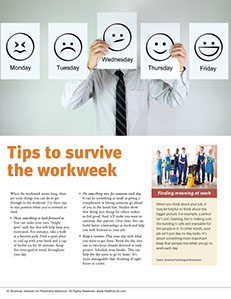
    Image of the days of the week on paper with emotion faces.

    When the workweek seems long, there are some things you can do to get through to the weekend. Try these tips to stay positive when you’re stressed or tired:

    *  Have something to look forward to. You can make your own “bright spot” each day that will help keep you motivated. For instance, take a walk at a favorite park. Find a quiet place to curl up with your book and a cup of herbal tea for 30 minutes. Keep this mini-goal in mind throughout your day.

    *  Do something nice for someone each day. It can be something as small as giving a compliment or letting someone go ahead of you in the lunch line. Studies show that doing nice things for others makes us feel good. And, it’ll make you want to continue that pattern. Over time, this can build better relationships at work and help you look forward to your job.

    *  Keep a routine. Plan your day with what you want to get done. Break the day into one or two-hour chunks devoted to each project. Schedule your breaks. This can help the day seem to go by faster. It’s more manageable than thinking of eight hours at a time.

    Finding meaning at work

    When you think about your job, it may be helpful to think about the bigger picture. For example, a janitor isn’t just cleaning; but is making sure the building is safe and enjoyable for the people in it. In other words, your job isn’t just day-to-day tasks. It’s about something more important. Keep that perspective when you go to work each day.

    Source: American Psychological Association

    © American Institute for Preventive Medicine

  • Want To Quit? Start Here

    WELL-BEING

    Image of broken cigarette and nicotine gum.

    There’s no one right way to quit smoking. Some people find that they just quit on their own. Others use medical treatments to help. If you’re thinking about quitting, you have several options:

    *  Attend support groups or counseling

    *  Get your doctor’s advice and support

    *  Choose medicines that contain nicotine and help with nicotine addiction, including patches, gum, lozenges, inhalers and nasal spray. Some are available in stores and others need a prescription.

    *  Find a prescription medicine that doesn’t contain nicotine and still helps a person quit smoking.

    *  Go cold turkey: stop completely, all at once, without any help.

    *  Slowly decrease the amount of cigarettes smoked each day until you stop altogether.

    Counseling and medicine together may be more helpful than using just one method. Sometimes, you may need to try a few different approaches to find the one that works for you.

    Get free quitting help by phone

    If you’d like to talk with someone about quitting, call 1-800-QUIT-NOW (1-800-784-8669). This service is FREE and may include support and advice, a quit plan, free or discounted medications and other resources.

    Free quitting help online

    For those with a computer or tablet, help with quitting is just a few clicks away. Smokefree.gov offers a number of resources to help people quit smoking. There are tools and tips, information and support throughout the process of quitting.

    Source: Centers for Disease Control and Prevention, National Institutes of Health

    Reasons to quit smoking

    Quitting smoking isn’t easy. But, it means you will start to become healthier within just minutes of quitting. Take a look at the benefits of quitting:

    *  20 minutes after quitting: Blood pressure and heart rate gets lower.

    *  12 hours after quitting: Carbon monoxide levels in the blood go back to normal.

    *  2 weeks to 3 months after quitting: Lungs start to work better and blood circulation gets better.

    *  1 to 9 months after quitting: Lungs can handle mucus and recover from infections more easily. This means less coughing and shortness of breath.

    *  1 year after quitting: The risk of a heart attack drops dramatically. The increased risk of heart disease is cut in half.

    *  2 to 5 years after quitting: Risk of a stroke is now the same as a non-smoker.

    *  5 years after quitting: Risk of several cancers is slashed in half. This includes cancers of the bladder, mouth, throat and esophagus.

    *  10 years after quitting: Risk of lung cancer decreases by half. Risk of cancer of the voice box and pancreas drop.

    *  15 years after quitting: The risk of heart disease drops to that of a non-smoker.

    Don’t forget about benefits to your appearance. Yellowed teeth and fingers can become a thing of the past, as well as bad breath and smoke odors on clothes and in hair. Tobacco also causes wrinkling of the skin and tooth loss, so quitting can mean better skin and a brighter smile.

    It’s never too late to quit. Quitting at any age can extend a person’s life, reduce or eliminate health problems, and lower the risk of dying from smoking-related diseases.

    Source: American Cancer Society

    © American Institute for Preventive Medicine

  • 3 Steps To Cleaner Eating

    HEALTHY EATING

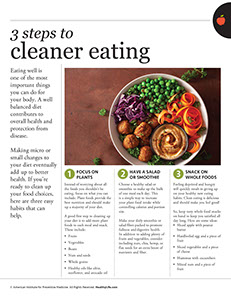
    A bowl of falafel with hummus, green peas, carrots, and purple cabbage.

    Eating well is one of the most important things you can do for your body. A well balanced diet contributes to overall health and protection from disease.

    Making micro or small changes to your diet eventually add up to better health. If you’re ready to clean up your food choices, here are three easy habits that can help.

    1. Focus on plants

    Instead of worrying about all the foods you shouldn’t be eating, focus on what you can include. Plant foods provide the best nutrition and should make up a majority of your diet.

    A good first step to cleaning up your diet is to add more plant foods to each meal and snack. These include:

    *  Fruits

    *  Vegetables

    *  Beans

    *  Nuts and seeds

    *  Whole grains

    *  Healthy oils like olive, sunflower, and avocado oil

    2. Have a salad or smoothie

    Choose a healthy salad or smoothie to make up the bulk of one meal each day. This is a simple way to increase your plant food intake while controlling calories and portion size.

    Make your daily smoothie or salad fiber-packed to promote fullness and digestive health. In addition to adding plenty of fruits and vegetables, consider including nuts, chia, hemp, or flax seeds for an extra boost of nutrients and fiber.

    3. Snack on whole foods

    Feeling deprived and hungry will quickly result in giving up on your healthy new eating habits. Clean eating is delicious and should make you feel good!

    So, keep tasty whole food snacks on hand to keep you satisfied all day long. Here are some ideas:

    *  Sliced apple with peanut butter

    *  Hardboiled egg and a piece of fruit

    *  Sliced vegetables and a piece of cheese

    *  Hummus with cucumbers

    *  Mixed nuts and a piece of fruit

    © American Institute for Preventive Medicine