HEALTHY EATING
If you have a health condition, talk to a doctor before trying any diet.
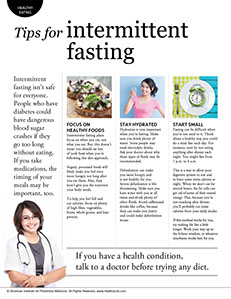
Intermittent fasting isn’t safe for everyone. People who have diabetes could have dangerous blood sugar crashes if they go too long without eating. If you take medications, the timing of your meals may be important, too.
Focus on healthy foods
Intermittent fasting plans focus on when you eat, not what you eat. But, this doesn’t mean you should eat lots of junk food when you’re following this diet approach.
Sugary, processed foods will likely make you feel even more hungry not long after you eat them. Also, they won’t give you the nutrients your body needs.
To help you feel full and cut calories, focus on plenty of high fiber, vegetables, fruits, whole grains, and lean protein.
Stay hydrated
Hydration is very important when you’re fasting. Make sure you drink plenty of water. Some people may need electrolyte drinks. Ask your doctor about why these types of fluids may be recommended.
Dehydration can make you more hungry and is not healthy for you. Severe dehydration is life-threatening. Make sure you have water with you at all times and drink plenty of other fluids. Avoid caffeinated drinks like coffee, because they can make you jittery and could make dehydration worse.
Start small
Fasting can be difficult when you’re not used to it. Think about a healthy way you could do a mini fast each day. For instance, start by not eating anything after dinner each night. You might fast from 7 p.m. to 6 a.m.
This is a way to allow your digestive system to rest and to burn some extra calories at night. When we don’t eat for several hours, the fat cells can get rid of some of their stored energy. Plus, because you’re not snacking after dinner, you’ll probably cut some calories from your daily intake.
If this method works for you, try making the fast a little longer. Work your way up to the 8-hour window, or whatever timeframe works best for you.
© American Institute for Preventive Medicine



_web380x254.jpg "Image of couple running.")