Tag: planning

  • Four Ingredients For A Happy Retirement

    Mature Health: Over Age 50
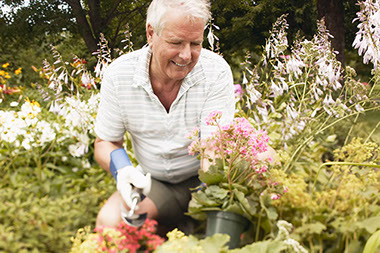
    Image of retired man gardening.

    Retirement involves major changes in your income, lifestyle, social life, and self-image. Not surprisingly, retirement can be very stressful-or blissful. Advance planning is a key ingredient for a happy retirement. A survey conducted by researchers at the University of Michigan found that 75 percent of those who had planned for retirement enjoyed it. Here are some specific ways you can make retirement less stressful and more satisfying.

    Get a part-time job.

    For some people, gradual retirement is easier to handle than being employed one day and unemployed the next. To smooth the transition, you may want to either work part-time at your present job for a few months or get a part-time job at another firm when you leave.

    Practice living on a retirement budget before you retire.

    And start saving for retirement as far ahead of time as possible. Don’t expect Social Security to cover all your expenses.

    Take care of yourself while you’re young.

    You can help to preserve your health by eating a low-fat diet, not smoking, drinking moderately (if at all), learning to manage stress, getting regular checkups, and being physically active.

    Cultivate hobbies and other outside interests.

    Fitness activities, community work, or academic studies can fill the void left by not having to report to work every day. To prevent boredom, consider a variety of activities-indoor and outdoor, mental and physical, group and individually oriented. And start thinking about projects you’d like to work on well before retirement, so you don’t stall out when the time comes.
    A Year of Health Hints book by the American Institute for Preventive Medicine. www.HealthyLife.com. All rights reserved.

    © American Institute for Preventive Medicine
  • Want To Eat Healthier?

    HEALTHY EATING

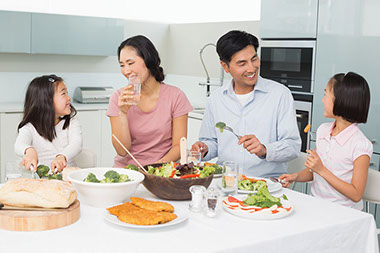
    Image of family eating dinner at the kitchen table.

    Then cook meals at home

    People who frequently cook meals at home eat healthier and consume fewer calories than those who cook less, according to Johns Hopkins Bloomberg School of Public Health research.

    “When people cook most of their meals at home, they consume fewer carbohydrates, less sugar and less fat than those who cook less or not at all-even if they are not trying to lose weight,” according to a study in Public Health Nutrition.

    © American Institute for Preventive Medicine

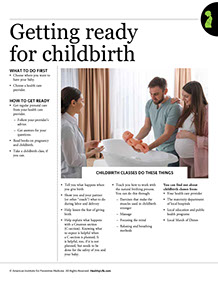
  • Getting Ready For Childbirth

    Pregnancy & Prenatal Care

    What to Do First

    *  Choose where you want to have your baby.

    *  Choose a health care provider.

    How to Get Ready

    *  Read books on pregnancy and childbirth.

    *  Take a childbirth class, if you can.

    *  Get regular prenatal care from your health care provider.

    Childbirth Classes Do These Things

    *  Tell you what happens when you give birth

    *  Show you and your partner (or other “coach”) what to do during labor and delivery

    *  Help lessen the fear of giving birth

    *  Help explain what happens with a Cesarean section (C-section). Knowing what to expect is helpful when a C-section is planned. It is helpful, too, if it is not planned, but needs to be done for the safety of you and your baby.

    *  Teach you how to work with the natural birthing process. You can do this through:

    – Exercises that make the muscles used in childbirth stronger

    – Massage

    – Focusing the mind

    – Relaxing and breathing methods

    You can find out about childbirth classes from:

    *  Your health care provider

    *  The maternity department of local hospitals

    *  Local education programs

    *  Local March of Dimes

    Prenatal Self-Care book by the American Institute for Preventive Medicine. www.HealthyLife.com. All rights reserved.

    © American Institute for Preventive Medicine
  • You Can Survive A Family Vacation With The In-Laws

    FAMILY LIFE

    Image of multi-generation family at the beach.

    Instead of calling it “the 7 worst days of your life,” change the mantra to “this will be fun and interesting,” advises Wake Forest University Professor of Counseling Samuel T. Gladding, when describing a family vacation that includes your in-laws.

    Time spent together on the beach or at another vacation place can help children bond with grandparents, Gladding said. “If you don’t have some exposure to extended family, you will never truly get to know them. It takes time, effort and expense to be in the same place with them. The dividend is that you get to know them and then you can build a relationship. That’s how people grow.”

    Connecting with extended families is important because family members have skills, contacts, and abilities beyond those found in nuclear families, he said. Tapping into that family power is a good idea.

    Plan the right activities. Arrange constructive activities that involve interaction, such as cooking or playing board games. A Gladding family favorite is charades because it is silly and makes people laugh. When people laugh together, they create good memories that help build relationships.

    But don’t plan to spend every minute with the group. Set aside time to go out to eat or do some other favorite activity with your own immediate family. It’s okay to say, “For this block of time, we want to have just our small family together.”

    If you set expectations in advance, no one will be surprised when you take a break on Tuesday night to go play miniature golf. It also gives the grandparents some space they might appreciate just as much as you do.

    © American Institute for Preventive Medicine

  • Healthy Pregnancy Checklist

    Pregnancy & Prenatal Care

    You can do a lot of things to improve the chance of having a healthy pregnancy. And you should not do some other things! Knowing what to do and what to avoid will help you and your baby stay well.

    *  Ask your health care provider before you take any medicines, even ones you can buy without a prescription.

    *  Go to all your prenatal health care visits.

    *  Don’t drink alcohol, take drugs, or smoke. When you drink alcohol, smoke, or take drugs, your baby does, too!

    *  Have a routine for exercise. Follow your health care provider’s advice.

    *  Eat healthy foods.

    *  Take your prenatal vitamins (vitamin pills) every day. These also supply the minerals you need.

    *  Get plenty of rest.

    *  Wash your hands throughout the day.

    *  Accept all your emotions. Express your feelings to others.

    *  Learn to deal with stress. Experts think stress may limit blood supply to the placenta. The placenta is the baby’s only source of oxygen and nutrients.

    *  Don’t have X-rays unless your prenatal health care provider says it’s okay.

    *  Avoid harmful chemicals such as paint fumes, insect poisons, and weed killers. Ask your health care provider what else you should avoid.

    *  When you use cleaning agents, wear rubber gloves. Make sure there is plenty of fresh air.

    *  Don’t wear high-heeled shoes.

    *  Don’t pick up, carry, or move heavy objects.

    *  Stay out of hot tubs and saunas. When you bathe, use warm water only. Never use hot water. Put a rubber mat in the tub or shower to prevent slipping.

    *  Don’t handle cat feces or cat litter. If you have a cat, have someone else empty the litter box. Cat droppings can carry a disease called toxoplasmosis. (Eating meat that is not cooked enough can cause this, too.) If a pregnant woman gets this disease, the baby can be harmed. It’s okay to pet your cat.

    *  Don’t have any contact with hamsters, guinea pigs or any rodents. These animals can carry a virus that can cause severe harm to your baby.

    *  Discuss your work life with your health care provider. Find out if it is healthy for you and your baby.

    *  Find out if you should limit or stop having sex. Bleeding or pain during sex could be reasons. Ask your health care provider.

    *  Always wear lap and shoulder seat belts when you ride in a vehicle. Fasten the lap belt as low as you can, below your belly.

    *  Are you going far from home late in your pregnancy? Have your health care provider refer you to a provider in the area where you are going. Take a copy of your prenatal records with you.

    *  When you travel:

    – By plane or train, get up and walk around every now and then. Get an aisle seat.

    – By car, stop at least every 2 hours and do the same.

    Prenatal Self-Care book by the American Institute for Preventive Medicine. www.HealthyLife.com. All rights reserved.

    © American Institute for Preventive Medicine

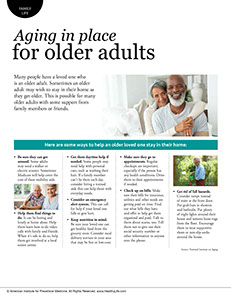
  • Aging In Place For Older Adults

    FAMILY LIFE

    Smiling, happy older couple.

    Many people have a loved one who is an older adult. Sometimes an older adult may wish to stay in their home as they get older. This is possible for many older adults with some support from family members or friends.

    Here are some ways to help an older loved one stay in their home:

    *Be sure they can get around.Some adults may need a walker or electric scooter. Sometimes Medicare will help cover the cost of these mobility aids.

    *Help them find things to do.It can be boring and lonely at home alone. Help them learn how to do video calls with family and friends. When it’s safe to do so, help them get involved at a local senior center.

    *Get them daytime help if needed.Some people may need help with personal care, such as washing their hair. If a family member can’t be there each day, consider hiring a trained aide that can help them with everyday needs.

    *Consider an emergency alert system.This can call for help if your loved one falls or gets hurt.

    *Keep nutrition in mind.Be sure your loved one can get healthy food from the grocery store. Consider meal delivery services in your area that may be free or low-cost.

    *Make sure they go to appointments.Regular checkups are important, especially if the person has any health conditions. Drive them to their appointments if needed.

    *Check up on bills.Make sure their bills for insurance, utilities and other needs are getting paid on time. Find out what bills they have and offer to help get them organized and paid. Talk to them about scams, too. Tell them not to give out their social security number or other information to anyone over the phone.

    *Get rid of fall hazards.Consider ramps instead of stairs at the front door. Put grab bars in showers and bathtubs. Put plenty of night lights around their house and remove loose rugs from the floor. Encourage them to wear supportive shoes or non-slip socks around the house.

    Source: National Institute on Aging

    © American Institute for Preventive Medicine
  • Plan For A Healthy Pregnancy

    Women’s Health

    To help a pregnancy get off to a good start, take these steps before you get pregnant:

    *  Get a medical checkup. Discuss your medical history and your family medical history with your doctor.

    *  Do you have a chronic medical problem, such as asthma, diabetes, or high blood pressure? If you do, ask your doctor if changes need to be made in your treatment plan.

    *  Find out what medicines you can take. Ask which ones you should not take. Tell or show your doctor all prescribed and over-the-counter medicines, vitamins, herbal products, etc. that you take. Ask if you need to change any of these while you try to get pregnant.

    *  Take 400 to 800 micrograms (.4 to .8 milligrams) of folic acid every day. This B vitamin can help prevent serious birth defects of the brain and spine. Make sure you take folic acid for at least one month before you get pregnant. Women who have had a baby with a serious problem of the brain or spine should take the amount of folic acid their doctors advise.

    *  Discuss current and past birth control methods.  Ask what method you should use until you decide to get pregnant.

    *  If you or your partner has a family history of sickle-cell disease, Tay-Sachs disease, etc., get genetic counseling. Do this, too, if you are older than age 35 or if your partner is age 60 or older.

    *  Do you smoke? Do you take street drugs? If so, now is the time to quit. Get help if you need it.

    *  Stop or limit alcohol use. This will make it easier to go without it when you are pregnant.

    *  Get vaccines, as advised by your doctor.

    *  Avoid exposure to X-rays.

    *  Caffeine is okay for women planning to get pregnant, but limit it to 400 milligrams a day. This is the amount in about two 8-ounce cups of coffee. Follow your doctor’s advice for caffeine during pregnancy.

    *  Get regular exercise.

    *  If you are overweight, lose weight before you get pregnant.

    *  Eat healthy foods. These include:

    – Fruits and vegetables.

    – Whole grain breads and cereals.

    – Low-fat dairy foods and other calcium-rich foods.

    Resources

    March of Dimes

    www.marchofdimes.com

    Women's Self-Care book by the American Institute for Preventive Medicine. www.HealthyLife.com. All rights reserved.

    © American Institute for Preventive Medicine

  • Take Control Of Your Health

    General Health Conditions

    Man jogging with his dog.

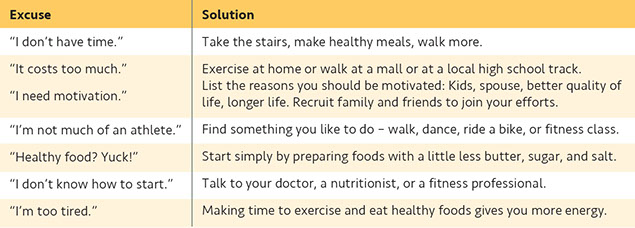
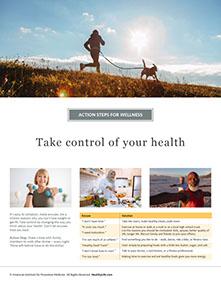
    It’s easy to complain, make excuses, list a million reasons why you can’t lose weight or get fit. Take control by changing the way you think about your health. Don’t let excuses hold you back.

    Action Step:Make a date with family members to walk after dinner – every night. Those left behind have to do the dishes.

    Health at Home Lifetime book by the American Institute for Preventive Medicine. www.HealthyLife.com. All rights reserved.

    © American Institute for Preventive Medicine
  • Manage Your Time

    Healthylife® Weigh

    Part 5

    Couple on a walk.

    Incorporate more movement into your daily activities. Take the stairs, park farther away from the building, and get up to stretch every hour. Also, plan at least 30 minutes each day, most days of the week, to engage in moderate-to-intense exercise. Add exercise to your daily schedule.

    Decrease Time Wasters

    If you feel time is a barrier for you, look at how you spend your time now. Keep a time log for a full day. Block off chunks of time when you sleep and are at work or school. Write down how much time you spend getting ready to go places, preparing food, relaxing, doing household chores, watching TV, or browsing social media.

    *  Decrease time spent watching TV or browsing social media. Set limits for yourself. Record shows so you can skip through commercials.

    *  Prepare meals ahead of time. Make more than one meal at once.

    *  Get help from others, especially with household chores and meal preparation.

    It may not be practical to make changes in all areas or plan physical activity every day. Start by taking small steps, such as being active on a weekend day or getting up a little earlier one morning to walk around the neighborhood.

    © American Institute for Preventive Medicine
  • Meal Planning Basics

    Healthylife® Weigh

    Part 3

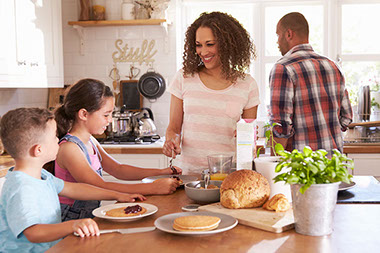
    Family at home eating breakfast in the kitchen.

    This online guide uses the terms breakfast, lunch, dinner, and snacks.

    *  Breakfast: The first time you eat upon waking

    *  Lunch: 3-4 hours later

    *  Dinner: 4-5 hours later

    *  Snacks: Small meals between breakfast, lunch, and dinner. These are optional, but snacks may help you manage hunger.

    Your work schedule, culture, travel, dietary restrictions, or preferences may mean you have a different meal schedule. Label each meal or snack in a way that makes sense to you.

    Goals for all meals and snacks:

    *  Get enough energy and nutrients.

    *  Choose foods from the main food groups.

    *  Meet, but try not to go over, your daily goals for all food groups.

    *  Avoid spikes or drops in blood sugar that can trigger overeating,  sugar cravings, mood swings, and tiredness.

    *  Include tasty foods.

    *  Build time management into the meal plan.

    Do I have to eat breakfast?

    Breakfast is an important meal that you shouldn’t skip. Eating breakfast:

    *  Gives your body energy after a long break in eating.

    *  Kick-starts your metabolism and helps you burn energy during the day.

    *  May help with memory, concentration, and focus.

    *  May lower your risk for heart disease, type 2 diabetes, and obesity.

    You don’t have to eat typical breakfast foods to get the benefits of eating breakfast. Choose foods high in protein and nutrient-dense carbohydrates. Try whole grain pancakes with yogurt and fruit. Or, re-heat leftovers from the night before.

    © American Institute for Preventive Medicine