Tag: plant

  • Get Ready To Garden

    WELL-BEING

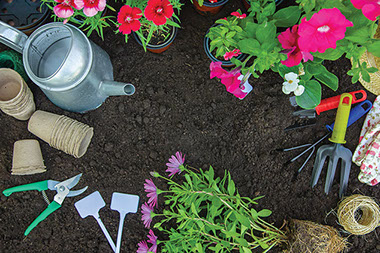
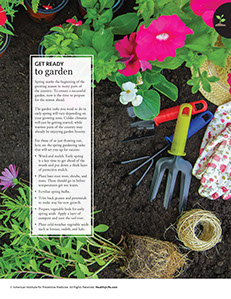
    Gardening tools on dirt with flowers ready to plant.

    Spring marks the beginning of the growing season in many parts of the country. To ensure a successful garden, now is the time to prepare for the season ahead.

    The garden tasks you need to do in early spring will vary depending on your growing zone. Colder climates will just be getting started, while warmer parts of the country may already be enjoying garden bounty.

    For those of us just thawing out, here are the spring gardening tasks that will set you up for success:

    *  Weed and mulch. Early spring is a key time to get ahead of the weeds and put down a thick layer of protective mulch.

    *  Plant bare-root trees, shrubs, and roses. These should go in before temperatures get too warm.

    *  Fertilize spring bulbs.

    *  Trim back grasses and perennials to make way for new growth.

    *  Prepare vegetable beds for early spring seeds. Apply a layer of compost and turn the soil over.

    *  Plant cold-weather vegetable seeds such as lettuce, radish, and kale.

    © American Institute for Preventive Medicine

  • Plan An Anti-Cancer Diet

    Nutrition

    The American Cancer Society estimates that one-third of cancer deaths that occur in the U.S. each year are due to dietary factors, inactivity, and being overweight. It’s hard to say exactly how much changing your diet reduces the risk of cancer, but it’s fair to say that the following steps can help.

    Eat less fat, especially from animal sources.

    These include foods such as beef, pork, butter, cream, sour cream, and cheese. Choose non-fat and low-fat dairy products and other foods low in fat. Replace fat-rich foods with fruits, vegetables, grains, and beans.

    Eat more fruits, vegetables, and whole-grain products like cereal and bread.

    Eat at least 5 servings of fruits and vegetables each day. Fruits and vegetables help protect against some cancers due to the vitamins, minerals, fiber, and plant chemicals they contain. Vary your choices. Foods with whole grains (wheat, rice, oats, and barley) also contain vitamins, minerals, and dietary fiber. Have six to 11 servings of whole-grain breads, cereals, etc. each day.

    Eat fewer cured, grilled, or smoked foods.

    When eaten in excess, these foods may increase the risk of stomach and esophageal cancer. This increase may be due to one or more of the following: nitrites and nitrates they contain; their high fat content; or changes that occur when they’re cooked or processed.

    Limit consumption of alcohol, if you drink at all.

    Combined with cigarette smoking, over-consumption of alcohol has been shown to increase the risk of cancer of the mouth, esophagus, and larynx. Also, alcohol may promote breast cancer regardless of whether you smoke or not. Excessive drinking also contributes to liver cancer. Cancer risk increases with the amount of alcohol consumed. The risk may start to rise having as few as two drinks per day. A drink is defined as 12 ounces of regular beer, 4 to 5 ounces of wine, or 1-1/2 ounces of 80-proof distilled spirits, like vodka or whiskey.

    Be physically active and maintain a desirable weight.

    Obesity is associated with an increased risk of cancers of the colon and rectum, prostate, breast (for women past menopause), endometrium, and kidney. Lose weight if you are overweight. Exercise on a regular basis.
    Page from A Year of Health Hints book by the American Institute for Preventive Medicine. www.HealthyLife.com. All rights reserved.

    © American Institute for Preventive Medicine

  • Poison Ivy, Oak & Sumac

    Skin Conditions

    Poison ivy, oak, and sumac are the most common plants that cause a skin rash. A sap that comes from these plants causes the rash. The sap is not really a poison, but can cause an allergic reaction in some people.

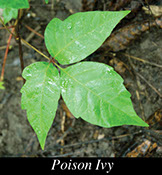
    Image of posion ivy leaf.
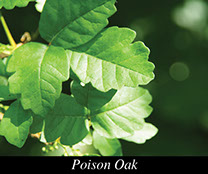
    Image of poison oak leaf.
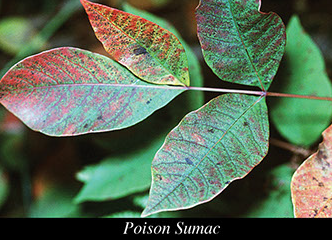
    Image of poison sumac.

    Signs & Symptoms

    The skin rash comes a day or two after contact with the plant. Symptoms that follow can range from mild to severe.

    *  Itching.

    *  Redness.

    *  Burning feeling.

    *  Swelling.

    *  Blisters.

    Causes

    You can get poison ivy, oak, or sumac when you touch one of these plants or touch pets, clothes, shoes, etc. that have the sap on them. Contact with the smoke of these burning plants can also cause a rash.

    Treatment

    Self-care treats most cases of poison ivy, oak, and sumac. For severe cases, your doctor may prescribe medicine(s).

    Questions to Ask

    Self-Care / Prevention

    To Prevent Getting a Rash

    *  Know what these plants look like and avoid them.

    – Poison ivy and poison oak both have 3 leaflets per stem. This is why you may have heard the saying, “Leaflets three, let them be.”

    – Each branch of poison sumac has 7 to 13 leaflets on a reddish stem. A single leaf is on the end of the stem. The others are paired along each side of the stem. Poison sumac grows in wetlands.

    *  Use an over-the-counter lotion (IvyBlock), which blocks skin contact with the sap. Use it as directed.

    *  Wear pants and long-sleeved shirts.

    *  Use an over-the-counter product (e.g., Tecnu) that removes poison ivy sap.

    *  Rinse the affected area with water.

    *  To help prevent an allergic reaction, do the things listed below. Do them within 6 hours of contact with one of the plants.

    – Remove all clothes and shoes that have touched the plant.

    – Wash the skin area well with soap and water.

    – Use an over-the-counter product (e.g., Tecnu) that removes poison ivy sap.

    To Treat Poison Ivy, Oak, or Sumac

    *  Take a cold shower, put the rash area in cold water, or pour cold water over it. Use soap when you shower.

    *  To relieve itching, take an over-the-counter antihistamine, such as Benadryl. Follow the label’s directions.

    *  For weeping blisters, mix 2 teaspoons of baking soda in 4 cups of water. Dip squares of gauze in this mixture. Cover the blisters with wet gauze for 10 minutes, 4 times a day. Do not apply this to the eyes.

    *  Wash all clothes and shoes with hot water and a strong soap. Bathe pets that have come in contact with the plant. The sap can stay on pets for many days. Clean items used to wash clothing and pets. Wear rubber gloves when you do all these things.

    *  Keep your hands away from your eyes, mouth, and face.

    *  Do not scratch or rub the rash.

    *  Take baths with lukewarm water. Add an over- the-counter product called Aveeno colloidal oatmeal.

    *  Apply any of these to the skin rash:

    – Calamine (not Caladryl) lotion.

    – Over-the-counter hydrocortisone cream. Follow the directions on the label.

    – A paste of 3 teaspoons of baking soda and 1 teaspoon of water.

    Healthier at Home book by the American Institute for Preventive Medicine. www.HealthyLife.com. All rights reserved.

    © American Institute for Preventive Medicine