Tag: plant-based

  • Pick Healthy Proteins

    HEALTHY EATING

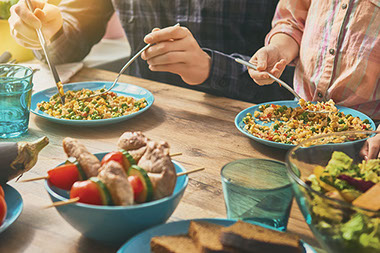
    Close up on dinner table with food and hands with silverware about to eat.

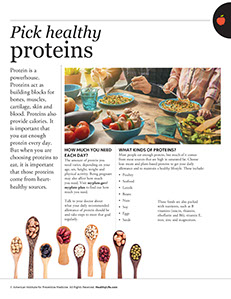
    Protein is a powerhouse. Proteins act as building blocks for bones, muscles, cartilage, skin and blood. Proteins also provide calories. It is important that you eat enough protein every day. But when you are choosing proteins to eat, it is important that those proteins come from heart-healthy sources.

    How Much You Need Each Day?

    The amount of protein you need varies, depending on your age, sex, height, weight and physical activity. Being pregnant may also affect how much you need. Visitmyplate.gov/myplate-planto find out how much you need.

    Talk to your doctor about what your daily recommended allowance of protein should be and take steps to meet that goal regularly.

    What Kinds of Proteins?

    Most people eat enough protein, but much of it comes from meat sources that are high in saturated fat. Choose lean meats and plant-based proteins to get your daily allowance and to maintain a healthy lifestyle. These include:

    *  Poultry

    *  Seafood

    *  Lentils

    *  Beans

    *  Nuts

    *  Soy

    *  Eggs

    *  Seeds

    These foods are also packed with nutrients, such as B vitamins (niacin, thiamin, riboflavin and B6), vitamin E, iron, zinc and magnesium.
    © American Institute for Preventive Medicine
  • Plant-Forward Eating

    HEALTHY EATING

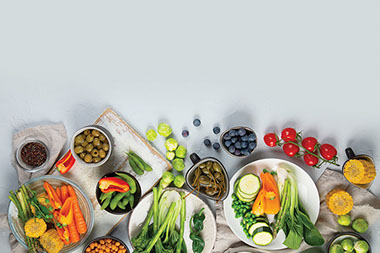
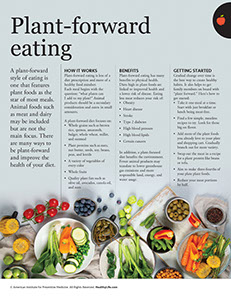
    Variety of plant based foods.

    A plant-forward style of eating is one that features plant foods as the star of most meals. Animal foods such as meat and dairy may be included but are not the main focus. There are many ways to be plant-forward and improve the health of your diet.

    How it works

    Plant-forward eating is less of a diet prescription and more of a healthy food mindset.

    Each meal begins with the question: “what plants can I add to my plate?” Animal products should be a secondary consideration and eaten in small amounts.

    A plant-forward diet focuses on:

    *  Whole grains such as brown rice, quinoa, amaranth, bulger, whole wheat, millet, and oatmeal

    *  Plant proteins such as nuts, nut butter, seeds, soy, beans, peas, and lentils

    *  A variety of vegetables of every color

    *  Whole fruits

    *  Quality plant fats such as olive oil, avocados, canola oil, and nuts

    Benefits

    Plant-forward eating has many benefits to physical health. Diets high in plant foods are linked to improved health and a lower risk of disease. Eating less meat reduces your risk of:

    *  Obesity

    *  Heart disease

    *  Stroke

    *  Type 2 diabetes

    *  High blood pressure

    *  High blood lipids

    *  Certain cancers

    In addition, a plant-focused diet benefits the environment. Fewer animal products may translate to lower greenhouse gas emissions and more responsible land, energy, and water usage.

    Getting started

    Gradual change over time is the best way to create healthy habits. It also helps to get family members on board with “plant forward.” Here’s how to get started:

    *  Take it one meal at a time. Start with just breakfast or lunch being meat-free.

    *  Find a few simple, meatless recipes to try. Look for those big on flavor.

    *  Add more of the plant foods you already love to your plate and shopping cart. Gradually branch out for more variety.

    *  Swap out the meat in a recipe for a plant protein like beans or tofu.

    *  Aim to make three-fourths of your plate plant foods.

    *  Reduce your meat portions by half.

    © American Institute for Preventive Medicine
  • Vegan Diet: Myths & Facts

    HEALTHY EATING

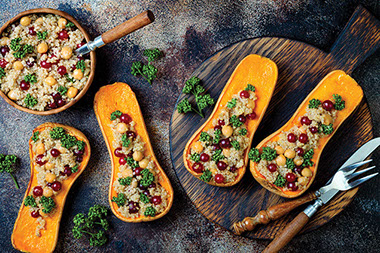
    Stuffed butternut squash with chickpeas, cranberries, quinoa cooked in nutmeg, cloves, cinnamon.

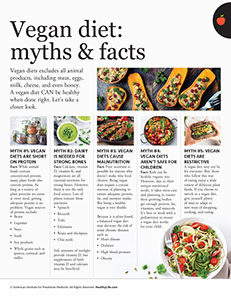
    Vegan diets excludes all animal products, including meat, eggs, milk, cheese, and even honey. A vegan diet CAN be healthy when done right. Let’s take a closer look.

    Myth #1: Vegan diets are short on protein

    Fact: While animal foods contain concentrated protein, many plant foods also contain protein. As long as a variety of plant proteins are eaten at every meal, getting adequate protein is no problem. Vegan sources of protein include:

    *  Beans

    *  Legumes

    *  Nuts

    *  Seeds

    *  Soy products

    *  Whole grains such as quinoa, oatmeal, and millet

    Myth #2: Dairy is needed for strong bones

    Fact: Calcium, vitamin D, vitamin K, and magnesium are all essential nutrients for strong bones. However, dairy is not the only food source. Lots of plants contain those nutrients:

    *  Spinach

    *  Broccoli

    *  Tofu

    *  Edamame

    *  Beans and chickpeas

    *  Chia seeds

    Safe amounts of sunlight provide vitamin D, but supplements of both vitamin D and calcium may be beneficial.

    Myth #3: Vegan diets cause malnutrition

    Fact: Poor nutrition is possible for anyone who doesn’t make wise food choices. Being vegan does require a certain amount of planning to ensure adequate protein, fat, and nutrient intake. But being a healthy vegan is very doable.

    Because it is plant-based, a balanced vegan diet may decrease the risk of some chronic diseases such as:

    *  Heart disease

    *  Diabetes

    *  High blood pressure

    *  Obesity

    Myth #4: Vegan diets aren’t safe for children

    Fact: Kids can be healthy vegans, too. However, due to their unique nutritional needs, it takes extra care and planning to ensure their growing bodies get enough protein, fat, vitamins, and minerals. It’s best to work with a pediatrician to ensure a vegan diet works  for your child.

    Myth #5: Vegan diets are restrictive

    A vegan diet may not be for everyone. But, those who follow this way of eating enjoy a wide variety of delicious plant foods. If you choose to switch to a vegan diet, give yourself plenty of time to adapt to new ways of shopping, cooking, and eating.

    © American Institute for Preventive Medicine
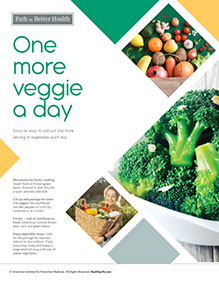
  • One More Veggie A Day

    Nutrition

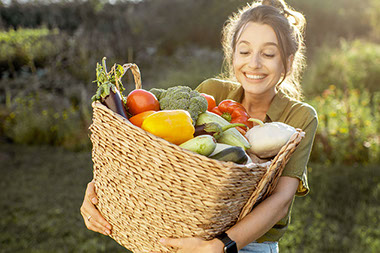
    Women carrying a basket filled with vegetables.

    Focus on ways to add just one more serving of vegetables each day.

    *Microwave for faster cooking:Steam fresh or frozen green beans, broccoli or bok choy for a quick and easy side dish.

    *Cut up and package for later:Use veggies like cauliflower and bell peppers in a stir-fry, casserole or as a snack.

    *Frozen – just as nutritious as fresh:Good buys include frozen peas, corn and green beans.

    *Enjoy vegetable soups:Look on the package for reduced-sodium or low-sodium. If you have time, make and freeze a large batch of soup with lots of added vegetables.

    Page from HealthyLife Weigh book by the American Institute for Preventive Medicine. www.HealthyLife.com. All rights reserved.

    © American Institute for Preventive Medicine
  • Meatless Meals (Try It)

    HEALTHY EATING

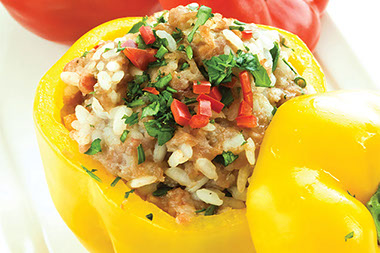
    Image of yellow and red peppers stuffed with rice and other vegetables.

    You don’t have to become a vegetarian to enjoy a meatless meal. Try working more meatless meals into your week, suggests the Recipe Doctor, Elaine Magee, MPH, RD, author of Food Synergy.

    *  Substitute a soy “meat” product for the meat ingredient in casseroles, stews, tacos, and chili.

    *  Break out a can of beans. They make great meal replacers because they’re super satisfying, with high amounts of protein and fiber. In a nice vegetable stew bursting with beans, you might not notice the meat is missing.

    *  Try a veggie potpie featuring potatoes, peas, mushrooms, and any other vegetables with vegetarian gravy and pie crust.

    *  Make Mexican dishes (burritos, nachos, enchiladas, for example) featuring beans and veggies instead of beef and chicken.

    *  Stir-fry Chinese cuisine with veggies and tofu and serve over rice or noodles.

    *  Stuff bell peppers with a mixture of rice with spices and vegetables plus vegetarian sausage, tofu, or beans to make the dish more satisfying.

    *  Layer lasagna with veggies instead of meat. Spinach replaces ground beef.

    *  A grilled Portobello mushroom can stand in for a burger on a bun.

    © American Institute for Preventive Medicine
  • Seeds 101

    HEALTHY EATING

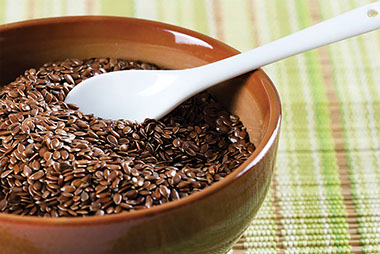
    Image of flax seeds in a bowl.

    Edible seeds can play an important part in the human diet, not only because they’re nutritious, but they can also add appearance, texture, and taste to a variety of foods. Experts at the Institute of Food Technologists provide a short lesson in popular seeds:

    Seed: Chia

    Origin:Mexico, Central America

    Taste:Mild, slightly nutty

    Uses:Cookies, salads, oatmeal, soups, yogurt, baked goods

    Nutritional Value:Contains the highest levels of total omega-3 fatty acids of any plant source, rich in fiber, protein, antioxidants, vitamins, and minerals

    Health Benefits:Helps control blood sugar levels, promotes satiety (feeling of fullness after eating), and slows the breakdown of carbohydrates

    Fun Fact:When added to water, chia seeds can swell to 12 times their weight in liquid and create a gel that could be used as an alternative to eggs and some oils in recipes.

    Seed: Quinoa

    Origin:South America

    Taste:Mild, slightly nutty

    Uses:Breakfast cereals, artisan-style breads, muffins, pizza crusts, bakery products, salads, meat-free burgers, vegan and vegetarian products

    Nutritional Value:Contains the highest protein levels of all the cereal grains, good source of magnesium, vitamin E, potassium and fiber

    Health Benefit:Provides all of the essential amino acids for optimal health

    Fun Fact:The United Nations has declared 2013 the “International Year of Quinoa.” Pronounced KEEN-wha.

    Seed: Flax

    Origin:Eastern Mediterranean to India

    Taste:Mild, nutty

    Uses:Soups, salads, stews, hamburgers, hot and cold cereals, chilies, sauces and dips, fruit smoothies, cookies, muffins and bread dough, dairy-free milk product for people with lactose-allergies

    Nutritional Value:Source of polyunsaturated fat, omega-3 fatty acids, essential amino acids, antioxidants, folate, vitamin B-6, magnesium potassium, and iron

    Health Benefit:Easily digestible

    Fun Fact:The seed was valued as both a food and a medicine in ancient Mesopotamia 10,000 years ago.

    Seed: Sunflower

    Origin:North America

    Taste:Mild

    Uses:Baked goods such as bagels, muffins, multigrain breads, and in trail mixes, hot breakfast cereals, coated in chocolate for confectionary applications, sprinkled in yogurt or on salads, and much more

    Nutritional Value:Contains polyunsaturated oil

    Health Benefit: Weight management

    Fun Fact:Used by Native Americans as a high-energy food source

    © American Institute for Preventive Medicine