Tag: plaque

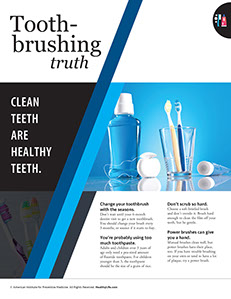
  • Tooth-Brushing Truth

    WELL-BEING

    Toothburshs, toothpaste, floss and mouthwash.

    Clean teeth are healthy teeth.

    Change your toothbrush with the seasons.

    Don’t wait until your 6-month dentist visit to get a new toothbrush. You should change your brush every 3 months, or sooner if it starts to fray.

    You’re probably using too much toothpaste.

    Adults and children over 3 years of age only need a pea-sized amount of fluoride toothpaste. For children younger than 3, the toothpaste should be the size of a grain of rice.

    Don’t scrub so hard.

    Choose a soft-bristled brush and don’t overdo it. Brush hard enough to clean the film off your teeth, but be gentle.

    Power brushes can give you a hand.

    Manual brushes clean well, but power brushes have their place, too. If you have trouble brushing on your own or tend to have a lot of plaque, try a power brush.

    © American Institute for Preventive Medicine

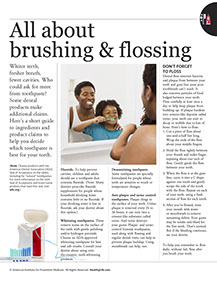
  • All About Brushing And Flossing

    Dental & Mouth Concerns

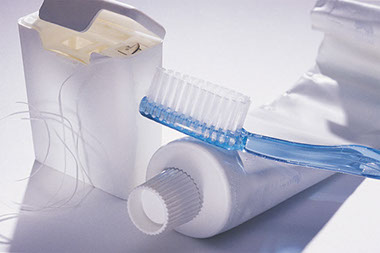
    Image of toothbrush and toothpaste with floss.

    Whiter teeth, fresher breath, fewer cavities. Who could ask for more from toothpaste? Some dental products make additional claims. Here’s a short guide to ingredients and product claims to help you decide which toothpaste is best for your teeth. (Note: Choose products with the American Dental Association (ADA) Seal of Acceptance on the labels. For more information on the ADA Seal of Acceptance and brand name products that have this seal, accesswww.ada.org.)

    Fluoride. To help prevent cavities, children and adults should use a toothpaste that contains fluoride. (Note: Many dentists prescribe fluoride supplements for people whose household drinking water contains little or no fluoride. If your drinking water is low in fluoride, you might want to ask your dentist about this option.)

    Desensitizing toothpaste. Some toothpastes are specially formulated for people whose teeth are sensitive to touch or temperature changes.

    Anti-plaque and tartar control toothpastes. Plaque is a sticky, bacteria-laden goo that clings to the surface of your teeth. Unless plaque is removed every 24 to 36 hours, it can turn into a cement-like substance called tartar. And tartar destroys your gums. Plaque- and tartar-control formula toothpastes, used along with flossing and regular dental visits, can help to prevent plaque buildup. Mouthwash can help, too.

    Whitening toothpastes. These remove stains on the surface of the teeth with gentle polishing, chemical agents, or other nonbleaching action. (Note: Consult your dentist before using over-the-counter peroxide-containing whiteners or bleaching agents.)

    Don’t Forget to Floss

    Waxed. Unwaxed. Fine. Regular. Plain or fancy, all dental floss does the job: It removes bacteria and plaque from between your teeth and above and below the gum line areas your toothbrush can’t reach. It also removes particles of food lodged between your teeth. Floss carefully at least once a day to help keep plaque from building up. (If plaque hardens into cement-like deposits called tartar, your teeth can start to decay or wobble due to loss of bone.)

    Here’s how to floss.

    1.  Cut a piece of floss about one-and-a-half feet long. Wrap the ends of the floss about your middle fingers.

    2.  Hold the floss tightly between your thumb and index finger, exposing about one inch of floss. Gently guide the floss between your teeth, being careful not to snap it into the gums.

    3.  With the floss at the gum line, curve it into a C shape against one tooth and gently scrape the side of the tooth with the floss. Repeat on each of your teeth, top and bottom, using a fresh section of floss for each tooth.

    4.  After you’ve flossed, rinse your mouth with water or mouthwash to remove remaining debris. Your gums may be tender and bleed for the first week. That’s normal. But if the bleeding continues, see your dentist.

    Here are some additional hints.

    *  If you find flossing awkward and messy, try using a dental floss holder sold in drugstores. Instead of wrapping the floss around your fingers, you insert the floss in a small, plastic fork-like holder.

    *  To help you remember to floss daily, without fail, floss after you brush your teeth.

    A Year of Health Hints book by the American Institute for Preventive Medicine. www.HealthyLife.com. All rights reserved.

    © American Institute for Preventive Medicine

  • Gum (Periodontal) Disease

    Dental & Mouth Concerns

    Image of women sitting in dental chair shaking hands with the dentist.

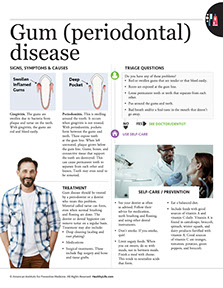
    Signs, Symptoms & Causes

    Gum (periodontal) diseases include:

    Gingivitis. The gums are swollen due to bacteria from plaque and tartar on the teeth. With gingivitis, the gums are red and bleed easily.

    Periodontitis. This is swelling around the tooth. It occurs when gingivitis is not treated. With periodontitis, pockets form between the gums and teeth. These expose teeth at the gum line. When left untreated, plaque grows below the gum line. Gums, bones, and connective tissue that support the teeth are destroyed. This can cause permanent teeth to separate from each other and loosen. Teeth may even need to be removed.

    Treatment

    Gum disease should be treated by a periodontist or a dentist who treats this problem. Material called tartar can form, even when normal brushing and flossing are done. The dentist or dental hygienist can remove tartar on a regular basis. Treatment may also include:

    *  Deep cleaning (scaling and root planing).

    *  Medications.

    *  Surgical treatments. These include flap surgery and bone and tissue grafts.

    Questions to Ask

    Self-Care / Prevention

    *  See your dentist as often as advised. Follow his or her advice for medication, teeth brushing and flossing and using other dental instruments.

    *  Don’t smoke. If you smoke, quit.

    *  Eat a balanced diet.

    *  Limit sugary foods. When you eat sweets, do so with meals, not in between meals. Finish a meal with cheese. This tends to neutralize acids that form.

    *  Include foods with good sources of vitamin A and vitamin C daily. Vitamin A is found in cantaloupe, broccoli, spinach, winter squash, and dairy products fortified with vitamin A. Good sources of vitamin C are oranges, tomatoes, potatoes, green peppers, and broccoli.

    Healthier at Home book by the American Institute for Preventive Medicine. www.HealthyLife.com. All rights reserved.

    © American Institute for Preventive Medicine

  • Why You Should Floss

    WELL-BEING

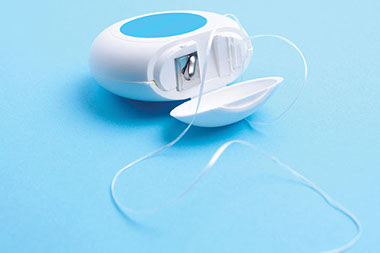
    Image of floss.

    According to a survey by the American Dental Association, only 4 in 10 Americans floss at least once a day. And, 20 percent of Americans don’t do it at all.

    Most dentists agree that everyone should floss daily. There are places between teeth that a brush simply can’t reach. If you’re wondering if it’s worth spending the small amount of time each day, consider these benefits of flossing:

    *Less scraping at the dentist.At your next checkup, the hygienist may spend less time removing tartar between your teeth and at the gum line. Flossing removes it from these hard-to-reach areas before it hardens on your teeth.

    *A lower risk of gum disease and cavities.By removing plaque between your teeth, you remove bacteria that can lead to tooth decay and gum disease.

    *Fresher breath.Small particles of food between the teeth, even if you can’t see them, can make breath smell unpleasant.

    The American Dental Association says you can floss any time of day. Pick the time when you’re more likely to stick with it, whether it’s morning, after lunch or before bed.

    © American Institute for Preventive Medicine