Tag: plate

  • Myplate

    Healthylife® Weigh

    Menus & Recipes
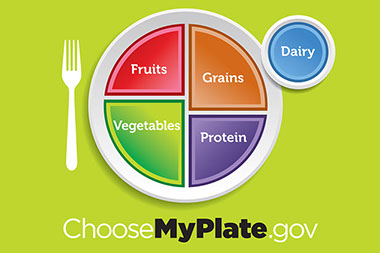
    Choose MyPlate logo.

    The nutrition guidelines in HealthyLife® Weigh and this menu planning guide are based on USDA’s MyPlate and the 2015-2020 Dietary Guidelines for Americans. MyPlate helps to identify how much food makes up a healthy and balanced meal by showing how different food groups take up space on a plate:

    *  Make ½ of your plate fruits and vegetables.

    * ¼ of your plate is lean protein.

    * ¼ of your plate is a whole grain or high-fiber starch.

    * Drink low-fat dairy or consume other calcium-rich foods or drinks.

    Menus & Recipes

    QUICK LINKS: PART 1

    MyPlate

    Plan a Balanced Day

    Fruits & Vegetables

    Grains & Starches

    Protein

    Dairy

    Healthy Fats & Oils

    Limit Added Sugars

    Limit Sodium

    Getting Started with Menu Planning

    Plan MyPlate

    Plan Your Week

    Suggestions for Meals & Snacks

    Improve a Packaged Meal

    Eating Out

    Map Your Meal Plan
    © American Institute for Preventive Medicine
  • Myplate 2

    Healthylife® Weigh

    Part 2

    Choose MyPlate logo.

    MyPlate, developed by the USDA, shows how different food groups should take up space on a plate. The nutrition guidelines in HealthyLife® Weigh are based on MyPlate and the 2015-2020 Dietary Guidelines for Americans.

    *  Make ½ of your plate fruits and vegetables.

    *  ¼ of your plate should be lean protein.

    *  ¼ of your plate should be a whole grain or high-fiber starch.

    *  Drink low-fat dairy or consume other calcium-rich foods and beverages.

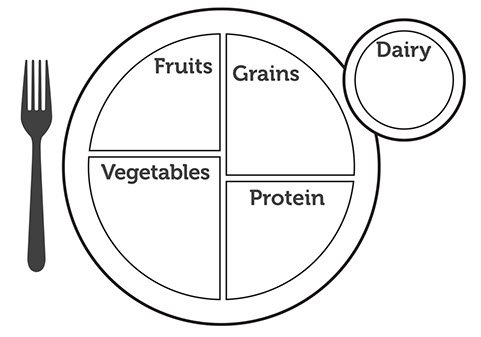
    While this graphic is far from a complete nutrition guide, the basic principle of having HALF of your plate fruits and vegetables, a QUARTER of your plate grains or starches, and a QUARTER of your plate a quality protein is a good rule of thumb.

    *  How often does your plate look like the one above?

    *  Which section is the fullest in your current diet?

    *  Which section is the emptiest in your current diet?

    © American Institute for Preventive Medicine

  • Plan Myplate

    Healthylife® Weigh

    Menus & Recipes

    Woman reading shopping list, next to her on the kitchen counter is a burlap sac with a variety of fruits.

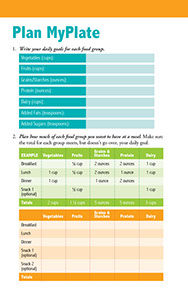
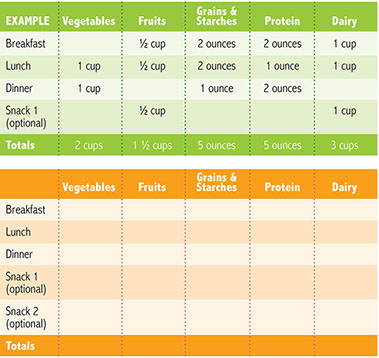
    1. Write your daily goals for each food group.

    *  Vegetables (cups)

    *  Fruits (cups)

    *  Grains/Starches (ounces)

    *  Protein (ounces)

    *  Dairy (cups)

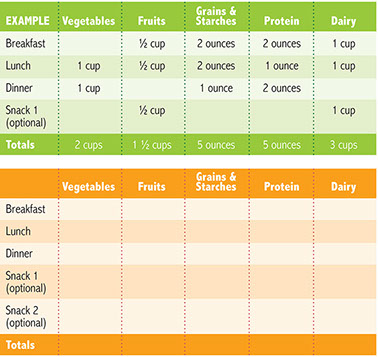
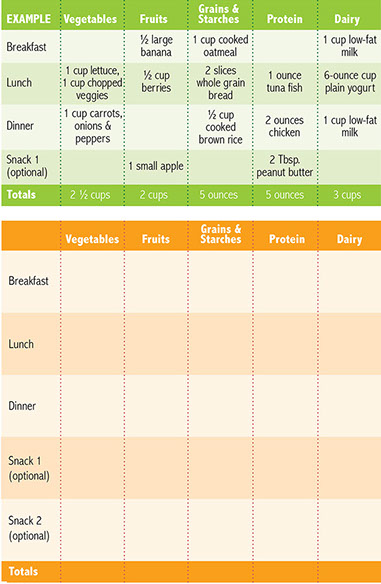
    2. Plan how much of each food group you want to have at a meal. Make sure the total for each group meets, but doesn’t go over, your daily goal.

    3. Select foods for each meal or snack. Refer to what counts as an ounce or a cup for each food group. Choose foods that you like to eat and that are convenient for you.

    © American Institute for Preventive Medicine
  • Plan Myplate 2

    Healthylife® Weigh

    Part 3

    Woman reading shopping list, next to her on the kitchen counter is a burlap sac with a variety of fruits.

    1. Write your daily goals for each food group.

    *  Vegetables (cups)

    *  Fruits (cups)

    *  Grains/Starches (ounces)

    *  Protein (ounces)

    *  Dairy (cups)

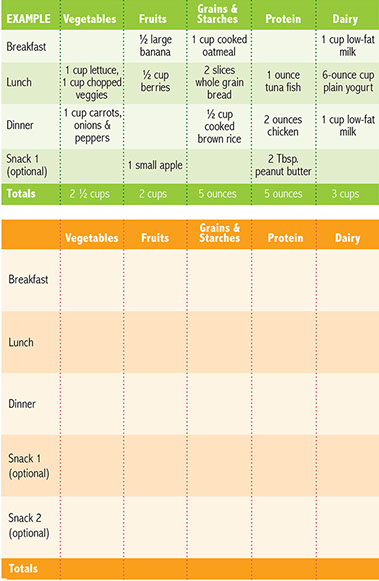
    2. Plan how much of each food group you want to have at a meal. Make sure the total for each group meets, but doesn’t go over, your daily goal.

    3. Select foods for each meal or snack. Refer to what counts as an ounce or a cup for each food group. Choose foods that you like to eat and that are convenient for you.

    © American Institute for Preventive Medicine
  • Tips For Myplate

    Healthylife® Weigh

    Part 2

    Middle aged man in kitchen about to prepare food.

    This activity will go through each part of MyPlate.

    *  Learn how eating certain foods can help your body, energy level, and mood. Learn new ways to prepare foods.

    *  Enjoy foods that taste good to you. Eat new things that you want to try. Avoid eating foods just because you think you “should” eat them. Explore different ways to prepare and eat foods. Celebrate cultural traditions and foods that are special to you.

    *  Allow some room in your diet for less nutritious foods. Make this a small part of your diet. If you have too many less nutritious foods, it will be more difficult to manage weight.

    The chart on “Plan a Balanced Day” gives a whole day’s servings of different food groups. Write amounts from these groups from the plan you selected. Write them on a blank plate. Remember, these are totals for the day.

    © American Institute for Preventive Medicine