Tag: portion

  • Enjoy Thanksgiving Without Weight Gain

    HEALTHY EATING

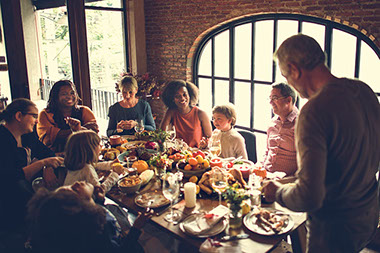
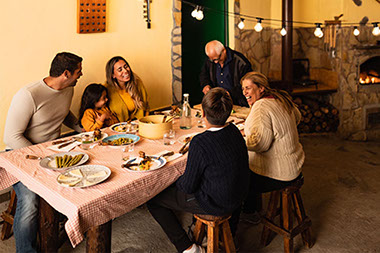
    Family and friends sitting around the table having dinner.

    Most of us think of Thanksgiving as a huge meal where we enjoy our favorite foods. But you don’t have to feel guilty afterward. You can truly enjoy your holiday meal and hang on to your healthy habits.

    Don’t “save your appetite”

    Many people think that they should skip breakfast and lunch so they can be extra hungry for Thanksgiving dinner. This usually leads to extreme hunger and  overeating. In fact, you’ll probably eat much more than you would have done if you had eaten lunch!

    Instead of skipping meals, focus on eating very healthy meals early in the day to avoid feeling too hungry. This helps you make smart choices and control portion sizes when you show up for dinner.

    Enjoy every bite

    Start with smaller portions, and eat slowly while smelling and tasting each bite. We often overeat when we gobble food down quickly. We don’t truly enjoy it and experience how delicious it is. You can get just as much satisfaction and enjoyment from eating smaller portions.

    Small, slow and steady is key

    The appearance of food makes a difference in how much we eat. If you use a big plate, you may be more tempted to fill it up and eat more. It helps to start with a smaller plate.

    Put down your fork and wait a few minutes before getting second helpings. Give your stomach time to tell your brain that it’s full. You may find that you don’t need more food after all.

    Focus on colorful fruits and vegetables

    The fall harvest can be a great way to enjoy the season. Make your dish “to pass” a healthy plate of winter squash or baked apples (without added sugar). Or try roasted broccoli or cauliflower.

    If you’re hosting the meal, make sure you have lots of vegetables and fruits on the menu. For example, appetizers can be cut-up veggies, rather than chips.

    Don’t put healthy habits on “hold”

    The holidays are busy, but a 15-minute walk will help lower stress levels and burn a few calories. Keep exercise and healthy habits in mind, even if you decide to indulge in a few treats.

    Remember that one holiday slip-up doesn’t mean you have to give up your healthy eating or exercise plan! Get back on track tomorrow.

    Sources: Academy of Nutrition and Dietetics, American Heart Association

    © American Institute for Preventive Medicine
  • Mind Your Mindless Munching

    Weight Control

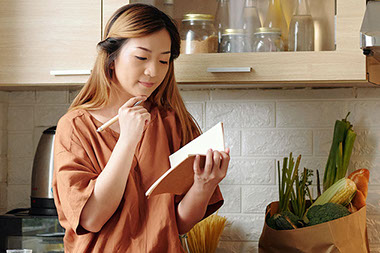
    Women in kitchen, writing in a journal.

    *  Calories from snacking throughout the day add up quickly.

    *  To find out how many calories you get from snacks, keep a food journal.

    *  Use a tracking tool, such as smartphone apps like MyFitness Pal.

    *  Once you see where excess calories come from, eat less and move more.

    *  Instead of snacking while watching TV, do some seated exercises, walk in place, or ride a stationary bike. Or turn off the TV and go for a walk.

    *  Do stretching exercises at your desk.

    *  Walk the perimeter of the mall.

    *  Have the coffee. Skip the doughnut. Calories Saved: 300+.

    *  Omit the large soft-pretzel and 16-ounce soda while you shop. Calories Saved: 640+.

    Page from HealthyLife Weigh book by the American Institute for Preventive Medicine. www.HealthyLife.com. All rights reserved.

    © American Institute for Preventive Medicine
  • Healthy Eating 4

    Nutrition

    Family sitting around table eating.

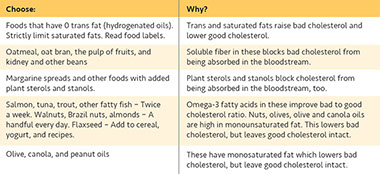
    Choose foods that help lower LDL (bad) cholesterol and raise HDL (good) cholesterol. Medicines have a big impact on improving blood cholesterol (lipid) levels.  Follow your doctor’s advice for taking medications.

    Action Step:Take a walk at least 30 minutes a day, five days a week. Lose weight. Weight loss and moderate physical activity raise HDL (good) cholesterol.

    Page from HealthyLife Weigh book by the American Institute for Preventive Medicine. www.HealthyLife.com. All rights reserved.

    © American Institute for Preventive Medicine
  • Mind Your Mindless Munching 2

    Weight Control

    Eating when you are distracted can pack on pounds.

    To lose weight, you need to make a conscious effort to watch what you eat. No more of that “it doesn’t count because it’s not on my plate” logic. Calories from mindless munching in front of the TV, at your desk, or in the car add up quickly.

    Lower the need for munching & snack attacks.

    Image of teenage boys eating out of big bag of chips.

    *  Eat meals at regular times. Have breakfast every day.

    *  Eat when you feel hungry.

    *  Set a timer for 20 minutes and make your meal last that long.

    *  Chew foods slowly. Sip; don’t gulp.

    *  Savor a food’s flavor.

    *  Put your fork or spoon down between bites.

    *  If your stomach feels satisfied, stop eating.

    Identify what, where, and why you eat between meals.

    When you keep your daily activity diary, highlight all the extras – the mindless munchies – and add up just those calories. Note the places and activities you are doing and how you are feeling.

    Substitute a healthier activity for munching.

    *  Instead of eating when you watch TV, exercise or work on a craft to keep your hands busy.

    *  Do you eat when you are nervous, on a deadline, or upset? Go for a short walk instead.

    *  Do you treat yourself every time you pass the jar of candy or nuts at work? Walk around it or look the other way.

    *  Do you order the large popcorn at the movies and munch for 90 minutes straight? Take a couple of hard candies in your pocket. Pop these into your mouth instead.

    *  Lunch at your desk again? Stop multi-tasking and focus on your food.

    *  TV dinners common in your house? Clear the clutter off the dining room table and enjoy an easily prepared home cooked meal.

    *  Are you an appetizer addict? Learn to say “No” to tortilla chips or any other pre-meal snacks. Drink a glass of water or chew sugarless gum while you are waiting for your meal.

    Action Step

    Fill your time with activities you like to do that do not involve eating. Go for a walk. Do a home improvement project. Volunteer to help others. Take up a new hobby or renew an old one.

    Page from Ways to Well-Being book by the American Institute for Preventive Medicine. www.HealthyLife.com. All rights reserved.

    © American Institute for Preventive Medicine
  • Make The Most Of Mealtime

    Mature Health: Over Age 50

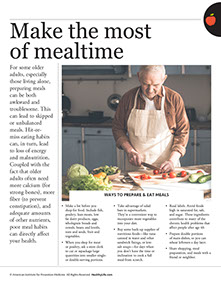
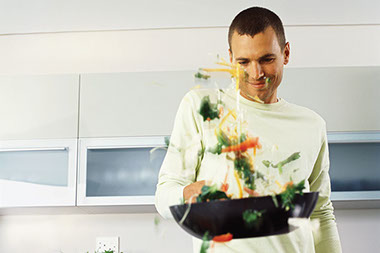
    Image of a man pan stirring vegetables.

    Mealtime is something to look forward to. But for some older adults, especially men living alone, preparing meals can be both awkward and troublesome. This can lead to the “tea and toast” syndrome of skipped or unbalanced meals. Hit-or-miss eating habits can, in turn, lead to loss of energy and malnutrition. Coupled with the fact that older adults often need more calcium than other folks (for strong bones), more fiber (to prevent constipation), and adequate supplies of other important dietary components, poor meal habits can directly affect your health.

    Here are a few hints to make preparing meals and eating meals more pleasant and convenient.

    *  Make a list before you shop for food. Include fish, poultry, lean meats, nonfat dairy products, whole-grain breads and cereals, fresh fruits and vegetables.

    *  When you shop for meat or produce, ask a store clerk to cut or repackage large quantities into smaller single- or double-serving portions.

    *  Take advantage of salad bars in supermarkets. They’re a convenient way to incorporate fresh vegetables into your diet.

    *  Buy some back-up supplies of nutritious foods-like tuna canned in water or low-salt soups-for days when you don’t have the time or inclination to cook a full meal from scratch.

    *  Read labels. Avoid foods high in fat, salt, and sugar. These ingredients contribute to many of the chronic health problems that affect people after age 40.

    *  Prepare double portions of main dishes, so you can reheat leftovers a day or two later.

    *  Share shopping, meal preparation, and meals with a friend or neighbor.

    A Year of Health Hints book by the American Institute for Preventive Medicine. www.HealthyLife.com. All rights reserved.

    © American Institute for Preventive Medicine
  • Eating At A Restaurant

    Healthylife® Weigh

    Part 3

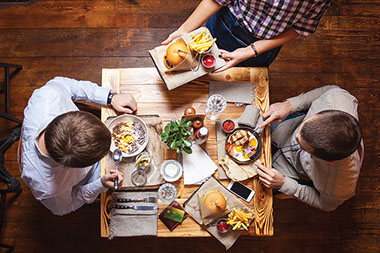
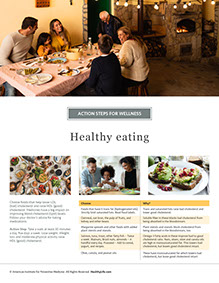
    Two people eating at a restaurant.

    Use the same guidelines for choosing food at the grocery store to help you make healthy choices at a restaurant. Compared to preparing food at home, you have less control over what is in your food, how it is prepared, and how much you are served. However, you DO have some control. Here are a few tips to help you follow your eating goals when you eat out:

    1. Choose a restaurant that offers healthy options.

    *  If you are dining with a group, offer to make the reservation.

    *  Read reviews to learn about experiences other people have had at the restaurant.

    *  Avoid all-you-can-eat buffets or anything that is offered in an “endless” supply.

    2. Look up menus ahead of time. Many restaurants, especially fast-food restaurants and other chain restaurants, offer nutrition information online for items on their menu.

    3. Look for clues in the menu. Menus can offer information about what is in the food and how it is made.

    *  Look for meat, poultry, and seafood that has been baked, broiled, steamed, poached, or grilled. Avoid fried choices. Or, ask if a fried food can be prepared with one of these healthier cooking methods.

    *  Pictures, if on the menu, can show you the size of the food groups on the plate. If you need more vegetables to meet your daily needs, ask for an extra serving or order a side salad.

    *  Choose from the “heart healthy” section of the menu, if available. These choices are usually lower in saturated fat and sodium.

    4. Ask for changes to an item, if needed. Menu items can usually be modified by the restaurant. Use the menu to learn what the restaurant has in the kitchen. Mix and match to create a meal that fits your goals. *Be kind and tip your wait staff generously if you are asking for a lot of changes to your order!

    5. Follow your healthy eating plan during the day. Skipping meals or ignoring hunger earlier in the day can lead to overeating or choosing foods higher in sugar, saturated fat, and salt at the restaurant.

    6. Choose your portion. Order your meal as a half-size order or split a meal with a friend. Take some of your food home for another meal.

    7. Set yourself up to be successful. Decline the bread basket, politely. If you are with a group that wants the basket on the table, keep it at the other end to avoid grabbing a piece out of habit. Or, share a piece.

    8. Limit alcohol. This can be a big source of added calories. Stick with one glass of wine or one beer. Or, avoid alcohol altogether.

    Most importantly, enjoy yourself!

    Restaurants can be places to try new foods and flavors and make wonderful memories with family and friends. Take your time. Use your napkin between bites and sip your water often. Engage in conversation. Appreciate the restaurant’s décor and the courtesy of the staff.

    © American Institute for Preventive Medicine

  • Estimate Serving Sizes

    Healthylife® Weigh

    Part 2

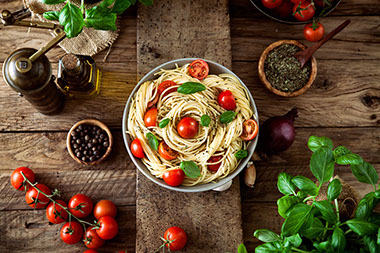
    Pasta with olive oil, garlic, basil and tomatoes.

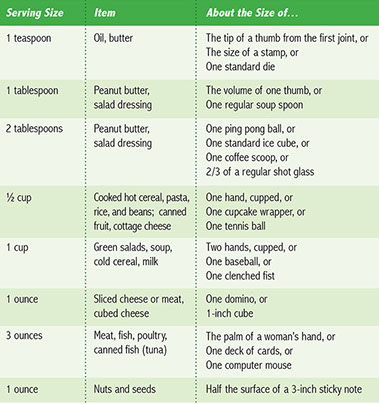
    To stay within the food group guidelines for your calorie needs, you need to use correct serving sizes. To be exact, you could use measuring cups and spoons or weigh foods on a scale. Do this when you can or when you are learning, but this is not always practical. You can estimate serving sizes using familiar objects.

    Chart showing serving sizes and items.

    © American Institute for Preventive Medicine
  • Feeling Full

    Healthylife® Weigh

    Part 6

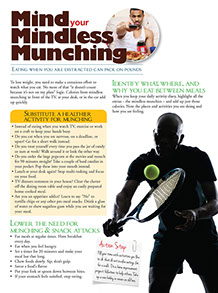
    Man feeling full.

    Learn to better evaluate your fullness. It can take twenty minutes to start feeling physically full.

    1. Be satisfied in other ways. Enjoy the taste of food, the people you are with, or the place you are eating.

    2. Express gratitude for your food. This includes who prepared the food (it may be you!) and where it comes from.

    3. Drink a glass of water throughout the meal. This will help with digestion and feeling full.

    4. Make half your plate vegetables. It will take longer to eat these nutrient-dense foods.

    5. Keep consistent “food rules” like sitting at the table and drinking a glass of water with each meal or snack. This can be a built in “speed bump” for overeating. If you don’t want to sit at the table or drink water, you may not be physically hungry and emotional hunger is your trigger.

    6. When tracking your intake, also track your hunger-fullness using the scale to the right. Try to eat in the gray area (range 4-7). Avoid being too hungry or too full.

    The Hunger-Fullness Scale

    0: Empty

    1: Ravenous

    2: Over-hungry

    3: Hunger pangs

    4: Hunger awakens

    5: Neutral

    6: Just satisfied

    7: Completely satisfied

    8: Full

    9: Stuffed

    10: Sick

    7. Slow down. If you can, try to increase the time it takes you to finish your meal by 50%. If you currently finish dinner in 10 minutes, set a timer to stretch the meal out by 5 minutes-or longer!

    © American Institute for Preventive Medicine
  • Sporting Events And Concerts

    Healthylife® Weigh

    Part 3

    Couple enjoying snacks at an outdoor event.

    Food courts and concession stands usually have very limited menus. Stadiums or arenas may not allow you to bring your own food or drink into the venue. Here are some tips to help you stick to your healthy goals:

    *  Eat before you go.

    *  Order water.

    *  Follow the fast food guidelines.

    *  Split a meal or snack with a friend.

    *  Choose treats wisely.

    *  Limit alcohol.

    What to do when no healthy choices are available:

    1. If you are hungry, eat something small. It may not be the healthiest choice, but it is important to listen to your body’s physical hunger cues.

    2. Drink water.

    3. Chew on sugar-free gum with xylitol.

    4. Make your next meal or snack a healthy one.

    5. Plan ways to make healthy choices for future events. If possible, eat a meal or have a healthy snack before the event. Plan to limit how much you will eat of items sold at the event.

    © American Institute for Preventive Medicine