Tag: portions

  • Pick & Pack A Healthy Lunch

    Nutrition

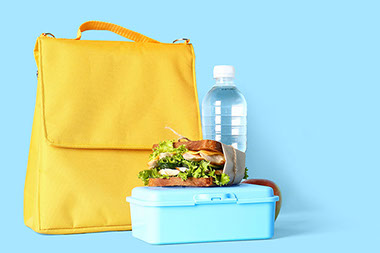
    Sandwich and water bottle sitting next to lunch bag.

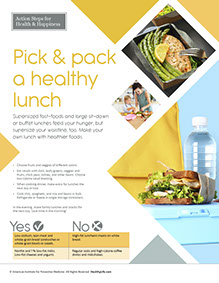
    Supersized fast-foods and large sit-down or buffet lunches feed your hunger, but supersize your waistline, too. Make your own lunch with healthier foods.

    *  Choose fruits and veggies of different colors.

    *  Eat salads with dark, leafy greens; veggies and fruits; chick peas, kidney, and other beans. Choose low-calorie salad dressing.

    *  When cooking dinner, make extra for lunches the next day or two.

    *  Cook chili, spaghetti, and rice and beans in bulk. Refrigerate or freeze in single storage containers.

    In the evening, make family lunches and snacks for the next day. Save time in the morning!

    Yes:

    *  Low-sodium, lean meat and  whole-grain bread sandwiches or whole-grain bowls or salads.

    *  Nonfat and 1% low-fat milks. Low-fat cheeses and yogurts.

    No:

    *  High-fat luncheon meats on white bread.

    *  Regular soda and high-calorie coffee drinks and milkshakes.
    Page from HealthyLife Weigh book by the American Institute for Preventive Medicine. www.HealthyLife.com. All rights reserved.

    © American Institute for Preventive Medicine
  • Portion Control

    Weight Control

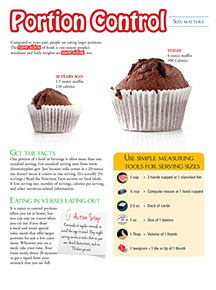
    Size matters.

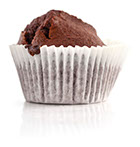
    Image of a small muffin size from 20 years ago.
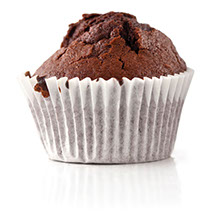
    Image of large muffin served today.

    Compared to years past, people are eating larger portions. The super-sizing of foods is one reason people’s waistlines and body weights are super-sizing , too.

    20 years ago:

    1.5 ounce muffin

    210 calories

    Today:

    4 ounce muffin

    500 Calories

    Get the facts

    One portion of a food or beverage is often more than one standard serving. Get standard serving sizes fromwww.choosemyplate.gov. Just because soda comes in a 20-ounce size doesn’t mean it counts as one serving. (It’s actually 2½ servings.) Read the Nutrition Facts section on food labels. It lists serving size, number of servings, calories per serving, and other nutrition-related information.

    Eating in verses eating out

    It is easier to control portions when you eat at home, but you can stay on course when you eat out if you share a meal and avoid special value meals that offer larger portions for just a few cents more. Wherever you eat a meal, take your time. Your brain needs about 20 minutes to get a signal from your stomach that you are full.

    Use simple measuring tools for serving sizes:

    1 cup = 2 hands cupped or 1 clenched fist

    ½ cup = Computer mouse or 1 hand cupped

    2-3 oz. =  Deck of cards

    1 oz. = Size of 1 domino

    1 Tbsp. = Volume of 1 thumb

    1 teaspoon = 1 die or tip of 1 thumb

    Action Step

    Eat meals at regular intervals to avoid the urge to snack. Buy single-serving snacks or make them on your own. Avoid distractions, such as TV when you eat.

    Page from Ways to Well-Being book by the American Institute for Preventive Medicine. www.HealthyLife.com. All rights reserved.

    © American Institute for Preventive Medicine
  • Put Your Menu On A Diet

    Nutrition

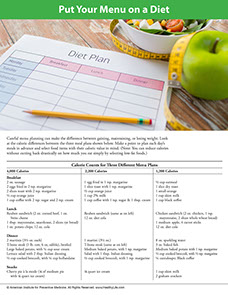
    Careful menu planning can make the difference between gaining, maintaining, or losing weight. Look at the caloric differences between the three meal plans shown below. Make a point to plan each day’s meals in advance and select food items with their caloric value in mind. (Note: You can reduce calories without cutting back drastically on how much you eat simply by selecting low-fat foods.)

    Page from A Year of Health Hints book by the American Institute for Preventive Medicine. www.HealthyLife.com. All rights reserved.

    © American Institute for Preventive Medicine
  • Tips For Dining Out Without Pigging Out

    Nutrition

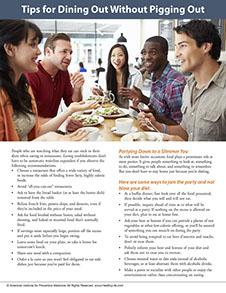
    Image of friends eating out.

    People who are watching what they eat can stick to their diets when eating in restaurants. Eating establishments don’t have to be automatic waistline expanders if you observe the following recommendations.

    *  Choose a restaurant that offers a wide variety of food, to increase the odds of finding fewer fatty, highly caloric foods.

    *  Avoid “all-you-can-eat” restaurants.

    *  Ask to have the bread basket (or at least the butter dish) removed from the table.

    *  Refuse french fries, potato chips, and desserts, even if they’re included in the price of your meal.

    *  Ask for food broiled without butter, salad without dressing, and baked or steamed food that’s normally fried.

    *  If servings seem especially large, portion off the excess and put it aside before you begin eating.

    *  Leave some food on your plate, or take it home for tomorrow’s lunch.

    *  Share one meal with a companion.

    *  Order a la carte so you won’t feel obligated to eat side dishes just because you’ve paid for them.

    Here are some ways to join the party and not blow your diet.

    *  At a buffet dinner, first look over all the food presented, then decide what you will and will not eat.

    *  If possible, inquire ahead of time as to what will be served at a party. If nothing on the menu is allowed on your diet, plan to eat at home first.

    *  Ask your host or hostess if you can provide a platter of raw vegetables or other low-calorie offering, so you’ll be assured of something you can munch on during the party.

    *  To avoid being tempted to eat hors d’oeuvres and snacks, don’t sit near them.

    *  Politely inform your host and hostess of your diet and ask them not to coax you to overeat.

    *  Choose mineral water or diet soda instead of alcoholic beverages, or at least alternate them with alcoholic drinks.

    *  Make a point to socialize with other people or enjoy the entertainment rather than concentrating on eating.

    Partying Down to a Slimmer You

    As with most festive occasions, food plays a prominent role at most parties. It gives people something to look at, something to do, something to talk about, and something to remember. But you don’t have to stay home just because you’re dieting.

    Page from A Year of Health Hints book by the American Institute for Preventive Medicine. www.HealthyLife.com. All rights reserved.

    © American Institute for Preventive Medicine
  • Be A Smart Meat Eater

    Nutrition

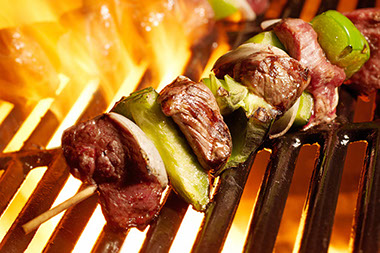
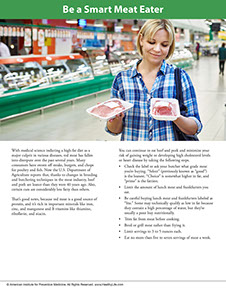
    Image of meat being grilled.

    With medical science indicting a high-fat diet as a major culprit in various diseases, red meat has fallen into disrepute over the past several years. Many consumers have sworn off steaks, burgers, and chops for poultry and fish. Now the U.S. Department of Agriculture reports that, thanks to changes in breeding and butchering techniques in the meat industry, beef and pork are leaner than they were 40 years ago. Also, certain cuts are considerably less fatty than others.

    That’s good news, because red meat is a good source of protein, and it’s rich in important minerals like iron, zinc, and manganese and B vitamins like thiamine, riboflavin, and niacin.

    You can continue to eat beef and pork and minimize your risk of gaining weight or developing high cholesterol levels or heart disease by taking the following steps.

    *  Check the label or ask your butcher what grade meat you’re buying. “Select” (previously known as “good”) is the leanest. “Choice” is somewhat higher in fat, and “prime” is the fattiest.

    *  Limit the amount of lunch meat and frankfurters you eat.

    *  Be careful buying lunch meat and frankfurters labeled as “lite.” Some may technically qualify as low in fat because they contain a high percentage of water, but they’re usually a poor buy nutritionally.

    *  Trim fat from meat before cooking.

    *  Broil or grill meat rather than frying it.

    *  Limit servings to 3 to 5 ounces each.

    *  Eat no more than five to seven servings of meat a week.

    Page from A Year of Health Hints book by the American Institute for Preventive Medicine. www.HealthyLife.com. All rights reserved.

    © American Institute for Preventive Medicine

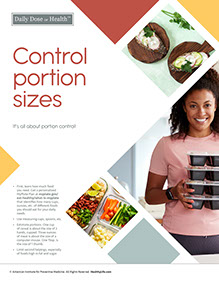
  • Control Portion Sizes

    Weight Control

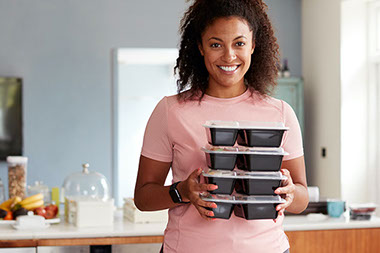
    Smiling women holding 4 pre-prepped meals.

    It’s all about portion control!

    *  First, learn how much food you need. Get a personalized MyPlate Plan atmyplate.gov/eat-healthy/what-is-myplatethat identifies how many cups, ounces, etc. of different foods you should eat for your daily needs.

    *  Use measuring cups, spoons, etc.

    *  Estimate portions. One cup of cereal is about the size of 2 hands, cupped. Three ounces of meat is about the size of a computer mouse. One Tbsp. is the size of 1 thumb.

    *  Limit second helpings, especially of foods high in fat and sugar.

    Page from HealthyLife Weigh book by the American Institute for Preventive Medicine. www.HealthyLife.com. All rights reserved.

    © American Institute for Preventive Medicine
  • Painless Ways To Eat Less Without Starving

    Weight Control

    It’s not always what you eat that determines whether or not you lose weight. Sometimes, small changes in the way you eat can help eliminate those extra pounds. Try these suggestions.

    *  Eat smaller amounts of food more often, and eat at least half of your intake earlier in the day (to increase your metabolism). You’ll burn off more calories that way. (Eat no more than six times a day-including snacks-however.)

    *  Use small plates, so portions look larger.

    *  Put less food on your fork or spoon, and take smaller bites. Chew slowly, and pause between mouthfuls.

    *  Wait 10 minutes before snacking. (The urge might pass.) Don’t prepare snacks for other people.

    *  If you feel like binge eating, put on tight clothes-it will discourage you.

    *  Choose more high-fiber and high-water foods like celery, watermelon, and plain popcorn. (You get more to eat without eating very many calories.)

    *  Mentally imagine yourself thinner–it’ll keep you going.

    *  Keep low-calorie snacks easily available.

    *  Never skip breakfast.

    *  Don’t eat anything after dinner.

    *  Brush your teeth after every meal. (You’ll be less inclined to continue nibbling.)

    *  Eat only if you feel relaxed to avoid “nervous munching.”

    *  Take the light bulb out of your refrigerator–it will cut down on “search-and-consume” forays.

    *  Drink lots of water every day, to suppress appetite.

    *  Never starve yourself all day in order to eat a special dinner. (You’ll be more likely to overeat.)

    Page from A Year of Health Hints book by the American Institute for Preventive Medicine. www.HealthyLife.com. All rights reserved.

    © American Institute for Preventive Medicine
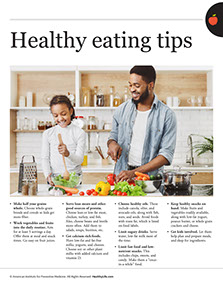
  • Healthy Eating Tips

    Children’s Health

    Image of young boy eating oranges.

    *  Make half your grains whole. Choose whole-grain food, like whole-wheat bread, oatmeal, and brown rice more often.

    *  Vary your veggies. Go dark green and orange with your vegetables. Eat spinach, broccoli, carrots and sweet potatoes.

    *  Focus on fruits. Eat them at meals. Eat them at snack times, too. Choose fresh, frozen, canned or dried fruits. Go easy on fruit juices.

    *  Go lean with protein. Eat lean or low-fat meat, chicken, turkey, and fish. Also, choose dry beans and peas more often. Add chick peas, nuts, or seeds to a salad. Add pinto beans to a burrito. Add kidney and/or other beans to soup.

    *  Get calcium-rich foods. Have low-fat and fat-free milks, yogurts, and cheeses. If you have soy milks and yogurts, choose ones with calcium. Have broccoli, kale and collard greens. Calcium helps to build strong bones.

    *  Change your oil. Get yours from fish, nuts, and liquid oils, like canola, corn, olive, and soybean. Avoid foods with trans fat. Read food labels.

    *  Don’t sugarcoat it. Choose foods and beverages that do not list sugar, corn syrup and other sugars as one of the first ingredients. Added sugars give calories, but have few, if any, nutrients.

    Page from Children's Self-Care book by the American Institute for Preventive Medicine. www.HealthyLife.com. All rights reserved.

    © American Institute for Preventive Medicine
  • Meal Planning Basics

    Healthylife® Weigh

    Part 3

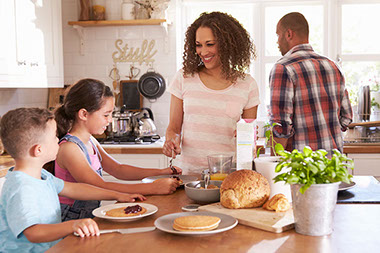
    Family at home eating breakfast in the kitchen.

    This online guide uses the terms breakfast, lunch, dinner, and snacks.

    *  Breakfast: The first time you eat upon waking

    *  Lunch: 3-4 hours later

    *  Dinner: 4-5 hours later

    *  Snacks: Small meals between breakfast, lunch, and dinner. These are optional, but snacks may help you manage hunger.

    Your work schedule, culture, travel, dietary restrictions, or preferences may mean you have a different meal schedule. Label each meal or snack in a way that makes sense to you.

    Goals for all meals and snacks:

    *  Get enough energy and nutrients.

    *  Choose foods from the main food groups.

    *  Meet, but try not to go over, your daily goals for all food groups.

    *  Avoid spikes or drops in blood sugar that can trigger overeating,  sugar cravings, mood swings, and tiredness.

    *  Include tasty foods.

    *  Build time management into the meal plan.

    Do I have to eat breakfast?

    Breakfast is an important meal that you shouldn’t skip. Eating breakfast:

    *  Gives your body energy after a long break in eating.

    *  Kick-starts your metabolism and helps you burn energy during the day.

    *  May help with memory, concentration, and focus.

    *  May lower your risk for heart disease, type 2 diabetes, and obesity.

    You don’t have to eat typical breakfast foods to get the benefits of eating breakfast. Choose foods high in protein and nutrient-dense carbohydrates. Try whole grain pancakes with yogurt and fruit. Or, re-heat leftovers from the night before.

    © American Institute for Preventive Medicine
  • Myplate

    Healthylife® Weigh

    Menus & Recipes

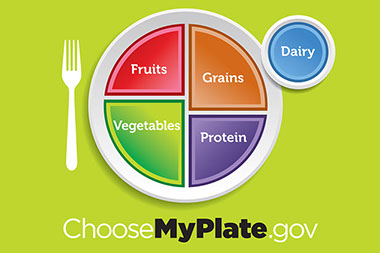
    Choose MyPlate logo.

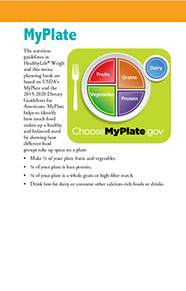
    The nutrition guidelines in HealthyLife® Weigh and this menu planning guide are based on USDA’s MyPlate and the 2015-2020 Dietary Guidelines for Americans. MyPlate helps to identify how much food makes up a healthy and balanced meal by showing how different food groups take up space on a plate:

    *  Make ½ of your plate fruits and vegetables.

    * ¼ of your plate is lean protein.

    * ¼ of your plate is a whole grain or high-fiber starch.

    * Drink low-fat dairy or consume other calcium-rich foods or drinks.

    Menus & Recipes

    QUICK LINKS: PART 1

    MyPlate

    Plan a Balanced Day

    Fruits & Vegetables

    Grains & Starches

    Protein

    Dairy

    Healthy Fats & Oils

    Limit Added Sugars

    Limit Sodium

    Getting Started with Menu Planning

    Plan MyPlate

    Plan Your Week

    Suggestions for Meals & Snacks

    Improve a Packaged Meal

    Eating Out

    Map Your Meal Plan

    © American Institute for Preventive Medicine