Tag: posture

  • Be Kind To Your Voice

    WORK LIFE

    Man smiling.

    Your voice is unique to you. You probably use it every day for work. But do you give it the TLC it needs to stay healthy and clear?

    Do you have a job where you use your voice often?

    Attorneys, teachers, sales people, human resources and customer service rely heavily on their voice for work.

    If you need your voice for work, avoid misusing it. If you misuse it, you may lose it!

    You can overuse or misuse your voice by talking in a large meeting room or noisy place by shouting or talking for long periods. You may have a sore throat or hoarseness afterward.

    Prepare your voice for long talks or loud meetings.

    Before a presentation or meeting, get plenty of rest. Drink water before, during and after your meeting. Use throat lozenges if needed. Use a microphone to help you avoid shouting.

    © American Institute for Preventive Medicine

  • Benefits Of Stretching

    BE FIT

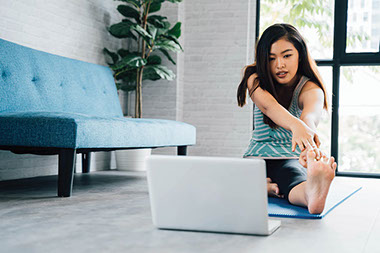
    Women stretching.

    When most people think of exercise they envision cardio or weight training. But, no workout routine is complete without stretching. Here are six unique benefits.

    Improve flexibility

    Flexibility is a well-known benefit of stretching. To increase your range of motion, hold each stretch for 90 seconds.

    Prevent injury

    Stretching increases blood flow to joints and muscles, decreasing stiffness and reducing the risk of injury.

    Decrease tension

    Stretching releases tension in your muscles, but it can also release mental tension if you take time to be still and breathe.

    Calm the mind

    Unlike vigorous exercise which pumps you up, the slow pace of stretching can be soothing for your mind.

    Counteract the effects of sitting

    If you are one of the many people who spend a lot of time sitting, stretching is essential to keep the body limber.

    Promotes mindfulness

    Stretching provides the chance to notice how your body feels, an essential aspect of mindfulness.

    © American Institute for Preventive Medicine

  • Find Your Balance

    SELF-CARE CORNER

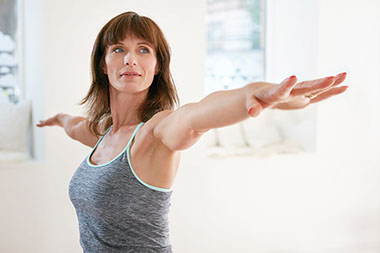
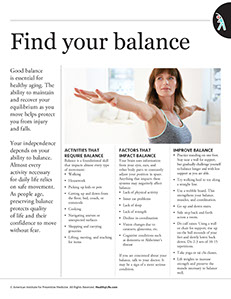
    Women with arms streched out, balancing.

    Good balance is essential for healthy aging. The ability to maintain and recover your equilibrium as you move helps protect you from injury and falls.

    Your independence depends on your ability to balance. Almost every activity necessary for daily life relies on safe movement. As people age, preserving balance protects quality of life and their confidence to move without fear.

    Activities that require balance

    Balance is a foundational skill that impacts almost every type of movement:

    *  Walking

    *  Housework

    *  Picking up kids or pets

    *  Getting up and down from the floor, bed, couch, or commode

    *  Cooking

    *  Navigating uneven or unexpected surfaces

    *  Shopping and carrying groceries

    *  Lifting, moving, and reaching for items

    Factors that impact balance

    Your brain uses information from your eyes, ears, and other body parts to constantly adjust your position in space. Anything that impacts these systems may negatively affect balance:

    *  Lack of physical activity

    *  Inner ear problems

    *  Lack of sleep

    *  Lack of strength

    *  Decline in coordination

    *  Vision changes due to cataracts, glaucoma, etc.

    *  Cognitive conditions such as dementia or Alzheimer’s disease

    If you are concerned about your balance, talk to your doctor. It may be a sign of a more serious condition.

    Improve balance

    *  Practice standing on one foot. Stay near a wall for support, but gradually challenge yourself to balance longer and with less support as you are able.

    *  Try walking heel to toe along a straight line.

    *  Use a wobble board. This strengthens your balance, muscles, and coordination.

    *  Go up and down stairs.

    *  Side step back and forth across a room.

    *  Do calf raises. Using a wall or chair for support, rise up on the ball mounds of your feet and slowly lower back down. Do 2-3 sets of 10-15 repetitions.

    *  Take yoga or tai chi classes.

    *  Lift weights to increase strength and preserve the muscle necessary to balance well.

    © American Institute for Preventive Medicine

  • Slouching Harms Your Health

    WORK LIFE

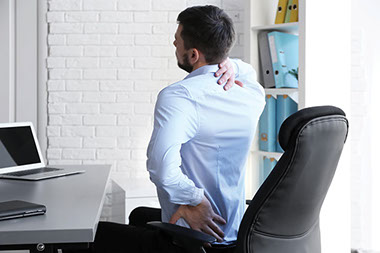
    Man sitting on chair at desk stretching his back.

    Many people sit at a desk for hours each day. And the way you sit can affect your health.

    Muscles & bones

    Your musculoskeletal system includes your bones, joints and muscles. These parts of the body work together to provide support and stability. They allow you to move around.

    The musculoskeletal system has to change and adapt to your life. The type of shoes you wear, how you walk and even how you use devices can affect your musculoskeletal system.

    The way you sit at your desk affects this system too. Slouching can cause wear and tear on the spine. This makes it more likely that you will hurt your back. It can also lead to neck or shoulder pain.

    Having bad posture at your desk can lower your flexibility. It can make it harder for your joints to move, too.

    Un-learning bad posture

    Many people slouch without thinking about it. It becomes a habit. But there are ways to fix it and prevent more injury to your back.

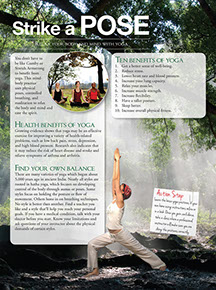
    Researchers think that yoga could have positive benefits for posture and health. Some evidence suggests that it could help with hyperkyphosis in older people. Hyperkyphosis is a condition that causes the spine to curve forward, giving a “hunched” appearance.

    To be safe, people should talk with their doctor before doing yoga or any exercise program.

    Other ways to improve posture include:

    *  Be aware of your posture. Set alarms or reminders that tell you to sit up straight.

    *  Think about your posture when you stand and walk. This can carry over to better sitting posture.

    *  Make sure your keyboard and computer are working for you. You shouldn’t be slouching to reach the keyboard or see the screen.

    *  Change positions often. Don’t sit all day with one leg crossed or your feet tucked under your chair.

    *  Get up for breaks. Don’t spend breaks at your desk. Take a walk or gently stretch. Don’t eat at your desk.

    *  Work toward a healthy weight. Extra weight around the belly can weaken abdominal muscles. This can lead to back pain.

    Talk to your doctor if you have back, shoulder or neck pain. Ask them about the best exercise options for you or a possible referral to physical therapy. Exercise can help you support your body and boost your overall health, whether you’re sitting or not.

    Source: National Institutes of Health

    © American Institute for Preventive Medicine

  • Stay Healthy At Work

    WORK LIFE

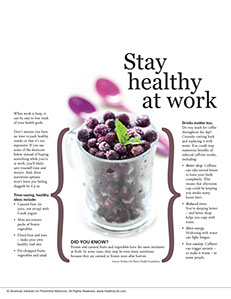
    Image of frozen berries in a glass.

    When work is busy, it can be easy to lose track of your health goals.

    Don’t assume you have no time to pack healthy snacks or that it’s too expensive. If you use some of the shortcuts below instead of buying something while you’re at work, you’ll likely save yourself time and money. And, these nutritious options won’t leave you feeling sluggish by 4 p.m.

    Time-saving, healthy ideas include:

    *  Canned fruit (in juice, not syrup) with Greek yogurt

    *  Mini microwave packs of frozen vegetables

    *  Dried fruit and nuts – make your own healthy trail mix

    *  Pre-chopped fruits, vegetables and salad

    Did you know?

    Frozen and canned fruits and vegetables have the same nutrients as fresh. In some cases, they may be even more nutritious because they are canned or frozen soon after harvest.

    Source: Produce for Better Health Foundation

    Drinks matter too.

    Do you reach for coffee throughout the day? Consider cutting back and replacing it with water. You could reap numerous benefits of reduced caffeine intake, including:

    *  Better sleep. Caffeine can take several hours to leave your body completely. This means that afternoon cup could be keeping you awake many hours later.

    *  Reduced stress. You’re sleeping better – and better sleep helps you cope with stress.

    *  More energy. Hydrating with water can fight fatigue.

    *  Less anxiety. Caffeine can trigger anxiety – or make it worse – in some people.

    © American Institute for Preventive Medicine

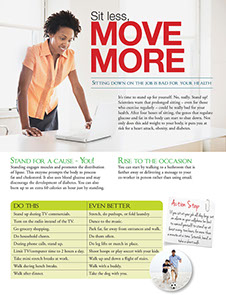
  • Sit Less, Move More

    Fitness

    Image of generational famiy running and walking at the park.

    Sitting down on the job is bad for your health.

    It’s time to stand up for yourself. No, really. Stand up! Scientists warn that prolonged sitting – even for those who exercise regularly – could be really bad for your health. After four hours of sitting, the genes that regulate glucose and fat in the body can start to shut down. Not only does this add weight to your body, it puts you at risk for a heart attack, obesity, and diabetes.

    Stand for a cause – You!

    Standing engages muscles and promotes the distribution of lipase. This enzyme prompts the body to process fat and cholesterol. It also uses blood glucose and may discourage the development of diabetes. You can also burn up to an extra 60 calories an hour just by standing.

    Rise to the occasion.

    You can start by walking to a bathroom that is farther away or delivering a message to your co-worker in person rather than using email.

    Do This

    Stand up during TV commercials.

    Turn on the radio instead of the TV.

    Go grocery shopping.

    Do household chores.

    During phone calls, stand up.

    Limit TV/computer time to 2 hours a day.

    Take mini stretch breaks at work.

    Walk during lunch breaks.

    Walk after dinner.

    Even Better

    Stretch, do pushups, or fold laundry.

    Dance to the music.

    Park far, far away from entrances and walk.

    Do them often.

    Do leg lifts or march in place.

    Shoot hoops or play soccer with your kids.

    Walk up and down a flight of stairs.

    Walk with a buddy.

    Take the dog with you.

    Action Step

    If you sit at your job all day long, set an alarm on your cellphone (on low) to remind yourself to stand up at least every two hours for more than a minute at a time. Stretch, bend, or take a short walk.

    Page image from the Ways to Well-Being book by the American Institute for Preventive Medicine. www.HealthyLife.com. All rights reserved.

    © American Institute for Preventive Medicine

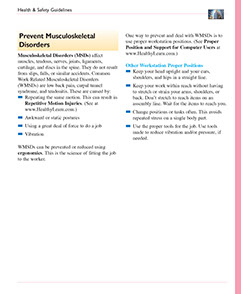
  • Prevent Musculoskeletal Disorders

    Work Life

    Musculoskeletal Disorders (MSDs) affect muscles, tendons, nerves, joints, ligaments, cartilage, and discs in the spine. They do not result from slips, falls, or similar accidents. Common Work-Related Musculoskeletal Disorders (WMSDs) are low back pain, carpal tunnel syndrome, and tendonitis. These are caused by:

    *  Repeating the same motion. This can result in Repetitive Motion Injuries.

    *  Awkward or static postures

    *  Using a great deal of force to do a job

    *  Vibration

    WMSDs can be prevented or reduced using ergonomics. This is the science of fitting the job to the worker.

    One way to prevent and deal with WMSDs is to use proper workstation positions.

    Other Workstation Proper Positions

    *  Keep your head upright and your ears, shoulders, and hips in a straight line.

    *  Keep your work within reach without having to stretch or strain your arms, shoulders, or back. Don’t stretch to reach items on an assembly line. Wait for the items to reach you.

    *  Change positions or tasks often. This avoids repeated stress on a single body part.

    *  Use the proper tools for the job. Use tools made to reduce vibration and/or pressure, if needed.

    Healthier at Home book by the American Institute for Preventive Medicine. www.HealthyLife.com. All rights reserved.

    © American Institute for Preventive Medicine

  • A Safer Way To Shovel Snow

    Personal Safety

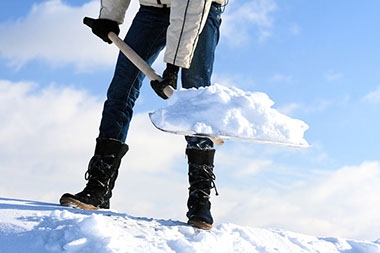
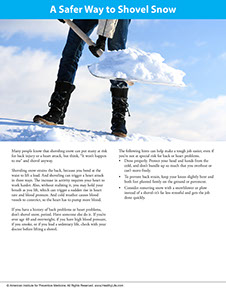
    Image of a person shoveling snow.

    Many people know that shoveling snow can put many at risk for back injury or a heart attack, but think, “It won’t happen to me” and shovel anyway.

    Shoveling snow strains the back, because you bend at the waist to lift a load. And shoveling can trigger a heart attack in three ways. The increase in activity requires your heart to work harder. Also, without realizing it, you may hold your breath as you lift, which can trigger a sudden rise in heart rate and blood pressure. And cold weather causes blood vessels to constrict, so the heart has to pump more blood.

    If you have a history of back problems or heart problems, don’t shovel snow, period. Have someone else do it. If you’re over age 40 and overweight, if you have high blood pressure, if you smoke, or if you lead a sedentary life, check with your doctor before lifting a shovel.

    The following hints can help make a tough job easier, even if you’re not at special risk for back or heart problems.

    *  Dress properly. Protect your head and hands from the cold, and don’t bundle up so much that you overheat or can’t move freely.

    *  To prevent back strain, keep your knees slightly bent and both feet planted firmly on the ground or pavement.

    *  Consider removing snow with a snowblower or plow instead of a shovel-it’s far less stressful and gets the job done quickly.

    A Year of Health Hints book by the American Institute for Preventive Medicine. www.HealthyLife.com. All rights reserved.

    © American Institute for Preventive Medicine

  • Workstation Exercises

    Work Life

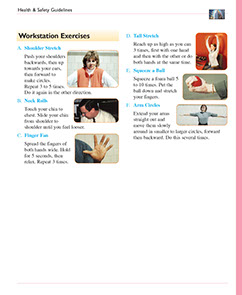
    Shoulder Stretch

    Push your shoulders backwards, then up towards your ears, then forward to make circles. Repeat 3 to 5 times. Do it again in the other direction.

    Neck Rolls

    Touch your chin to chest. Slide your chin from shoulder to shoulder until you feel looser.

    Finger Fan

    Spread the fingers of both hands wide. Hold for 5 seconds, then relax. Repeat 3 times.

    Tall Stretch

    Reach up as high as you can 3 times, first with one hand and then with the other or do both hands at the same time.

    Squeeze a Ball

    Squeeze a foam ball 5 to 10 times. Put the ball down and stretch your fingers.

    Arm Circles

    Extend your arms straight out and move them slowly around in smaller to larger circles, forward then backward. Do this several times.

    Healthier at Home book by the American Institute for Preventive Medicine. www.HealthyLife.com. All rights reserved.

    © American Institute for Preventive Medicine