Tag: prep

  • Simple Steps For A Safe Thanksgiving Turkey

    HEALTHY EATING

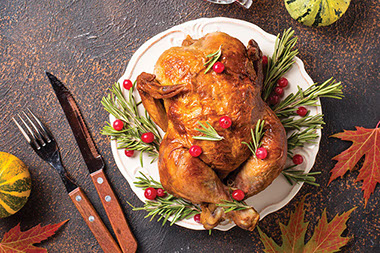
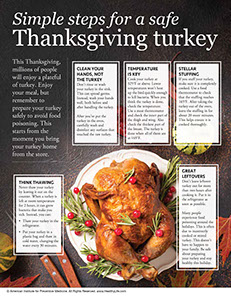
    Cooked turkey on plate.

    This Thanksgiving, millions of people will enjoy a plateful of turkey. Enjoy your meal, but remember to prepare your turkey safely to avoid food poisoning. This starts from the moment you bring your turkey home from the store.

    Think thawing

    Never thaw your turkey by leaving it out on the counter. When a turkey is left at room temperature for 2 hours, it can grow bacteria that make you sick. Instead, you can:

    *  Thaw your turkey in the refrigerator.

    *  Put your turkey in a plastic bag and thaw in cold water, changing the water every 30 minutes.

    Clean your hands, not  the turkey

    Don’t rinse or wash your turkey in the sink. This can spread germs. Instead, wash your hands well, both before and after handling the turkey. After you’ve put the turkey in the oven, carefully wash and disinfect any surfaces that touched the raw turkey.

    Temperature is key

    Cook your turkey at 325°F or above. Lower temperatures won’t heat up the bird quickly enough to kill bacteria. When you think the turkey is done, check the temperature. Use a meat thermometer and check the inner part of the thigh and wing. Also check the thickest part of the breast. The turkey is done when all of them are at 165°F.

    Stellar stuffing

    If you stuff your turkey, make sure it is completely cooked. Use a food thermometer to check that the stuffing reaches 165°F. After taking the turkey out of the oven, leave the stuffing in for about 20 more minutes. This helps ensure it is cooked thoroughly.

    Great leftovers

    Don’t leave leftover turkey out for more than two hours after cooking it. Put it in the refrigerator as soon as possible.

    Many people experience food poisoning around the holidays. This is often due to incorrectly cooked or stored turkey. This doesn’t have to happen to your family. Be safe about preparing your turkey and stay healthy this holiday.

    © American Institute for Preventive Medicine
  • Clean Cut: Cutting Board Safety

    HEALTHY EATING

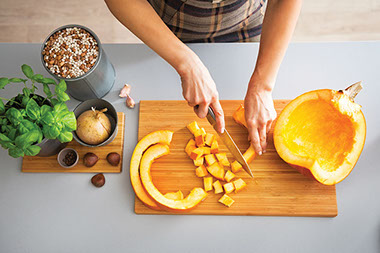
    Bird-eyes view, cutting vegetable on a cutting board.

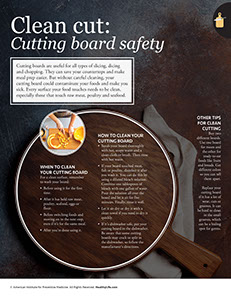
    Cutting boards are useful for all types of slicing, dicing and chopping. They can save your countertops and make meal prep easier. But without careful cleaning, your cutting board could contaminate your foods and make you sick. Every surface your food touches needs to be clean, especially those that touch raw meat, poultry and seafood.

    When to clean your cutting board

    For a clean surface, remember to wash your board:

    *  Before using it for the first time.

    *  After it has held raw meat, poultry, seafood, eggs or flour.

    *  Before switching foods and moving on to the next step, even if it’s for the same meal.

    *  After you’re done using it.

    How to clean your cutting board

    *  Scrub your board thoroughly with hot, soapy water and a clean cloth or brush. Then rinse with hot water.

    *  If your board touched meat, fish or poultry, disinfect it after you wash it. You can do this by using a diluted bleach solution. Combine one tablespoon of bleach with one gallon of water. Pour the solution all over the board and let it sit for five minutes. Finally, rinse it well.

    *  Let it air dry or dry it with a clean towel if you need to dry it quickly.

    *  If it’s dishwasher safe, put your cutting board in the dishwasher. Be aware that some cutting boards may crack or split in the dishwasher, so follow the manufacturer’s directions.

    Other tips for clean cutting

    Buy two different boards. Use one board for meats and the other for ready-to-eat foods like fruits and breads. Get different colors so you can tell them apart.

    Replace your cutting board if it has a lot of wear, cuts or grooves. It can be hard to clean in the small grooves, which can be a hiding spot for germs.

    © American Institute for Preventive Medicine
  • Make Your Kitchen A Healthy Eating Zone

    Healthylife® Weigh

    Part 4

    Three generation family eating dinner at home.

    You walk into the kitchen and see a box of cereal sitting out. You fill your cereal bowl and eye the leftover pie next to a bag of chips on the counter. It’s been a long day and you deserve a treat, right? When you are hungry, tired, bored, or stressed, food choices can be influenced by what is around you.

    First, learn about your kitchen. Your kitchen may be a place where you socialize with family and friends. It may be a place where you cook or pack lunches for children. Or, you have to walk through the kitchen to get to other rooms.

    *  How many times do you walk into your kitchen each day? If you aren’t sure, keep track for a day.

    *  List a few reasons you go into your kitchen.

    *  Without opening any doors (pantry, fridge, etc.), what foods can you see?

    *  If you were to select a snack right now, what would you choose? Why did you choose this snack?

    The kitchen can be one of your biggest allies in managing your weight. A kitchen can also be a battle zone that trips up your goals.

    © American Institute for Preventive Medicine
  • Master Food Prep

    Healthylife® Weigh

    Part 3

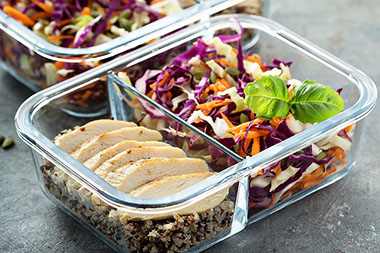
    Healthy meal prep with quinoa and chicken.

    Food preparation does not need to take a lot of time. The more you prepare food, the better you will get at being efficient in the kitchen!

    1. Make double batches of dinner meals. Freeze individual portions in airtight containers. Label with the date and what it is.

    2. Buy pre-cut vegetables, either fresh or frozen.

    3. Keep a supply of foods on hand that can be stored for weeks or months, such as brown rice, quinoa, whole grain pasta, frozen and canned vegetables, beans, tuna, oils, and spices.

    4. Cut up fruits and vegetables and store them in individual bags or containers for easy, grab-and-go snacks. Dry anything you have washed by laying it on a towel. This will help prevent mold.

    5. Freeze berries or sliced and peeled bananas. They can be easily added to smoothies or pancakes.

    Tips for Nibbling Cooks

    Be aware of how much you eat while cooking. A taste here and there can help you check for flavor, such as when seasoning a soup. Too many nibbles can add up to a lot of extra eating in your diet.

    *  Have a small snack before you start cooking, like a piece of fruit or raw veggies and hummus.

    *  Chew sugar-free gum with xylitol, which does not cause tooth decay.

    *  Brush and floss your teeth before you cook.

    *  Sip water every time you are tempted to snack on the meal you are preparing.

    *  Sit down when you eat. Use utensils for all items you eat.

    © American Institute for Preventive Medicine
  • Meal Planning Basics

    Healthylife® Weigh

    Part 3

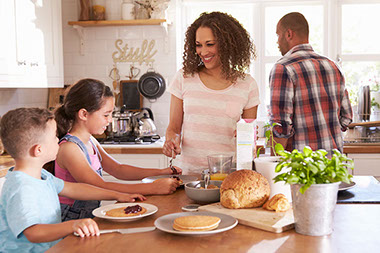
    Family at home eating breakfast in the kitchen.

    This online guide uses the terms breakfast, lunch, dinner, and snacks.

    *  Breakfast: The first time you eat upon waking

    *  Lunch: 3-4 hours later

    *  Dinner: 4-5 hours later

    *  Snacks: Small meals between breakfast, lunch, and dinner. These are optional, but snacks may help you manage hunger.

    Your work schedule, culture, travel, dietary restrictions, or preferences may mean you have a different meal schedule. Label each meal or snack in a way that makes sense to you.

    Goals for all meals and snacks:

    *  Get enough energy and nutrients.

    *  Choose foods from the main food groups.

    *  Meet, but try not to go over, your daily goals for all food groups.

    *  Avoid spikes or drops in blood sugar that can trigger overeating,  sugar cravings, mood swings, and tiredness.

    *  Include tasty foods.

    *  Build time management into the meal plan.

    Do I have to eat breakfast?

    Breakfast is an important meal that you shouldn’t skip. Eating breakfast:

    *  Gives your body energy after a long break in eating.

    *  Kick-starts your metabolism and helps you burn energy during the day.

    *  May help with memory, concentration, and focus.

    *  May lower your risk for heart disease, type 2 diabetes, and obesity.

    You don’t have to eat typical breakfast foods to get the benefits of eating breakfast. Choose foods high in protein and nutrient-dense carbohydrates. Try whole grain pancakes with yogurt and fruit. Or, re-heat leftovers from the night before.

    © American Institute for Preventive Medicine

  • Pack Travel Snacks

    Healthylife® Weigh

    Part 3

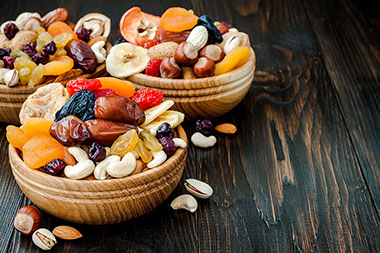
    Mix of dried fruits and nuts.

    Pack these items ahead of time. Take them with you when you drive, fly, or take a bus or train. Be sure to pack snacks for kids traveling with you as well. This can help kids get in the habit of packing their own travel snacks. It can also take away your excuse to stop for fast food and buy candy or salty snacks. Use these ideas for a healthy work snack as well. Keep a healthy snack in your desk drawer, locker or fridge, if they need to be kept cold, like hummus or fresh edamame.

    *  Homemade granola bars. Look for recipes with nuts, seeds, peanut butter, and dried fruit to help keep you full and give you lasting energy.

    *  Homemade trail mix.

    *  Peanut butter + apple slices, celery sticks, or whole grain crackers

    *  Hummus + sliced veggies (celery, carrots, cucumber slices)

    *  Apple slices with cinnamon

    *  Almonds, peanuts, walnuts, cashews

    *  Dried fruit

    *  String cheese

    *  Whole fruit, like apples and bananas

    *  Edamame

    *  Protein bar

    *  Small, single-serving boxes of whole grain cereal

    *  Small square of dark chocolate

    Respect Food Allergies

    If traveling in a public place (e.g., train, bus, airplane), avoid snacks that contain peanuts. If someone has a severe peanut allergy, you may be putting their life in danger.

    © American Institute for Preventive Medicine
  • Plan Your Week

    Healthylife® Weigh

    Part 3

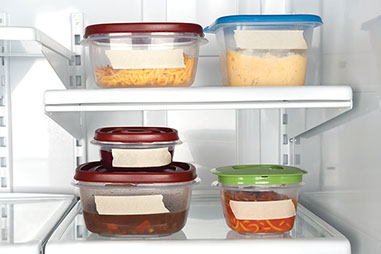
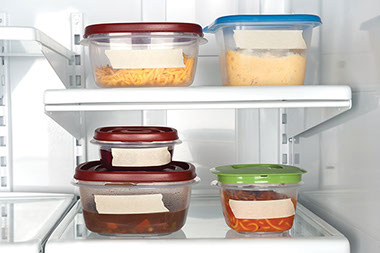
    Leftovers in the refrigerator.

    Plan about a half hour for writing your weekly meal plan and grocery list the first time. The more you plan, the easier it will become and the less time it will take.

    1. Check what you have at home. See what needs to be used up in your pantry, refrigerator, or freezer.

    2. Write down ideas, rather than specific recipes. (For example, “chicken and vegetables” or “broccoli soup.”) Find recipes after you have finished your plan. Some meals, like breakfast, may be easier to keep the same every day.

    3. Plan for meals to have leftovers. Plan to make extra food items that can be used for another meal. For example, make a double batch of quinoa to use in a casserole one day and a soup two days later.

    *  Have dinner leftovers at lunch the next day to further save on time.

    *  Freeze extra dinner servings in individual-serving freezer bags. Thaw and cook or microwave for a quick meal.

    © American Institute for Preventive Medicine
  • Plan Your Week 2

    Healthylife® Weigh

    Menus & Recipes

    Leftovers in the refrigerator.

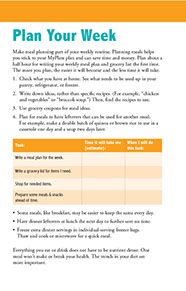
    Make meal planning part of your weekly routine. Planning meals helps you stick to your MyPlate plan and can save time and money. Plan about a half hour for writing your weekly meal plan and grocery list the first time. The more you plan, the easier it will become and the less time it will take.

    1. Check what you have at home. See what needs to be used up in your pantry, refrigerator, or freezer.

    2. Write down ideas, rather than specific recipes. (For example, “chicken and vegetables” or “broccoli soup.”) Then, find the recipes to use.

    3. Use grocery coupons for meal ideas.

    4. Plan for meals to have leftovers that can be used for another meal. For example, make a double batch of quinoa or brown rice to use in a casserole one day and a soup two days later.

    *  Some meals, like breakfast, may be easier to keep the same every day.

    *  Have dinner leftovers at lunch the next day to further save on time.

    *  Freeze extra dinner servings in individual-serving freezer bags. Thaw and cook or microwave for a quick meal.

    Everything you eat or drink does not have to be nutrient dense. One meal won’t make or break your health. The trends in your diet are more important.

    © American Institute for Preventive Medicine
  • Food Safety Before, During, And After A Power Outage

    HEALTHY EATING

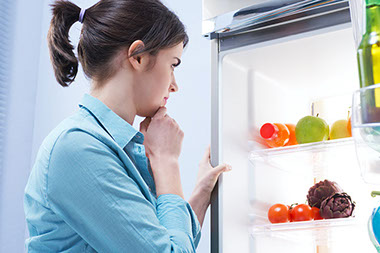
    Image of women looking inside refrigerator.

    Snowstorms, summer thunderstorms, and over usage can knock out power. The FDA says power outages can affect the safety of your food. Ensure that food stays safe by having a plan in place and knowing what food safety precautions to take if a power outage does occur.

    BEFORE

    *  Plan ahead. Stock up on supplies in advance or know where to obtain them if needed. Before an outage, check that the refrigerator temperature is at or below 40 degrees F and the one for the freezer is at or below 0 degrees F.

    *  Plan for ice. Know where you can get dry or block ice. Stock plenty of ice cubes and frozen gel packs. Freeze containers of water (plastic milk jugs do well). All of these help keep food cold in the freezer, refrigerator, or coolers. Keep coolers on hand to store refrigerated food in case the power is out for more than 4 hours. Stock your pantry with a few days’ worth of ready-to-eat foods that do not require cooking or refrigeration.

    DURING

    *  Keep refrigerator and freezer doors closed as much as possible to slow the growth of bacteria. The refrigerator will keep food cold for about 4 hours. A full freezer will keep the temperature for approximately 48 hours (24 hours if it is half full) if unopened. Use ice (dry or block, ice cubes, and frozen containers of water or gel packs) to keep your refrigerator and freezer as cold as possible.

    AFTER

    *  When power is restored, check the temperatures inside your refrigerator and freezer before eating any food. If the power was out for no more than 4 hours, refrigerated food should be safe as long as the doors were kept closed. Discard any perishable food (such as meat, poultry, seafood, milk, eggs, or leftovers) that has been above 40 degrees F for 2 hours or longer.

    *  Food is safe and may be refrozen if the freezer thermometer reads 40 degrees F or below. If you did not have a thermometer in the freezer, check each package to determine its safety; you can’t rely on appearance or odor. If the food still contains ice crystals or is 40 degrees F or below, it is safe to refreeze or cook.

    *  Be aware that perishable foods that are not kept adequately refrigerated or frozen may cause foodborne illness if eaten, even after they are thoroughly cooked.

    © American Institute for Preventive Medicine