Tag: prevent

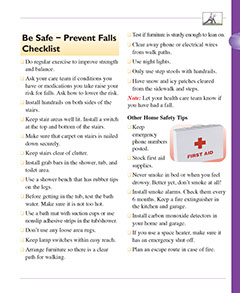
  • Be Safe – Prevent Falls Checklist

    Home Safety

    *  Do regular exercise to improve strength and balance.

    *  Ask your care team if conditions you have or medications you take raise your risk for falls. Ask how to lower the risk.

    *  Install handrails on both sides of the stairs.

    *  Keep stair areas well lit. Install a switch at the top and bottom of the stairs.

    *  Make sure that carpet on stairs is nailed down securely.

    *  Keep stairs clear of clutter.

    *  Install grab bars in the shower, tub, and toilet area.

    *  Use a shower bench that has rubber tips on the legs.

    *  Before getting in the tub, test the bath water. Make sure it is not too hot.

    *  Use a bath mat with suction cups or use nonslip adhesive strips in the tub/shower.

    *  Don’t use any loose area rugs.

    *  Keep lamp switches within easy reach.

    *  Arrange furniture so there is a clear path for walking.

    *  Test if furniture is sturdy enough to lean on.

    *  Clear away phone or electrical wires from walk paths.

    *  Use night lights.

    *  Only use step stools with handrails.

    *  Have snow and icy patches cleared from the sidewalk and steps.

    Note: Let your health care team know if you have had a fall.

    Other Home Safety Tips

    *  Keep emergency phone numbers posted.

    *  Stock first aid supplies.

    *  Never smoke in bed or when you feel drowsy. Better yet, don’t smoke at all!

    *  Install smoke alarms. Check them every 6 months. Keep a fire extinguisher in the kitchen and garage.

    *  Install carbon monoxide detectors in your home and garage.

    *  If you use a space heater, make sure it has an emergency shut off.

    *  Plan an escape route in case of fire.
    Health at Home Lifetime book by the American Institute for Preventive Medicine. www.HealthyLife.com. All rights reserved.

    © American Institute for Preventive Medicine
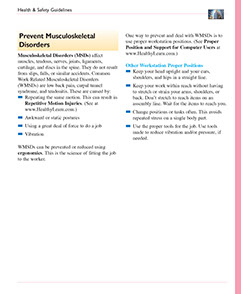
  • Prevent Musculoskeletal Disorders

    Work Life

    Musculoskeletal Disorders (MSDs) affect muscles, tendons, nerves, joints, ligaments, cartilage, and discs in the spine. They do not result from slips, falls, or similar accidents. Common Work-Related Musculoskeletal Disorders (WMSDs) are low back pain, carpal tunnel syndrome, and tendonitis. These are caused by:

    *  Repeating the same motion. This can result in Repetitive Motion Injuries.

    *  Awkward or static postures

    *  Using a great deal of force to do a job

    *  Vibration

    WMSDs can be prevented or reduced using ergonomics. This is the science of fitting the job to the worker.

    One way to prevent and deal with WMSDs is to use proper workstation positions.

    Other Workstation Proper Positions

    *  Keep your head upright and your ears, shoulders, and hips in a straight line.

    *  Keep your work within reach without having to stretch or strain your arms, shoulders, or back. Don’t stretch to reach items on an assembly line. Wait for the items to reach you.

    *  Change positions or tasks often. This avoids repeated stress on a single body part.

    *  Use the proper tools for the job. Use tools made to reduce vibration and/or pressure, if needed.

    Healthier at Home book by the American Institute for Preventive Medicine. www.HealthyLife.com. All rights reserved.

    © American Institute for Preventive Medicine
  • Keep Food Safe

    Healthylife® Weigh

    Part 3

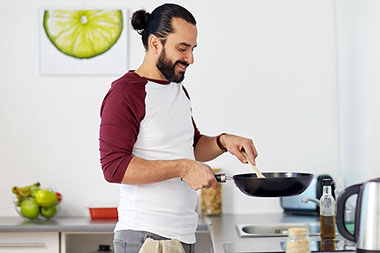
    Man with frying pan cooking food at home.

    *  Freezing: Keep freezer temperature at or below 0°F. Keep frozen foods in airtight containers.

    *  Refrigerator: Keep refrigerator temperature at or below 40°F. Store foods made from animal products in a drawer or in the back of the refrigerator, where it is cooler.

    *  Thawing: Thaw food on the bottom shelf of the refrigerator. Or, submerge the sealed container in cold water. Or, use the defrost settings on your microwave. Never thaw food on the counter.

    Heat to Safe Temperatures

    Use a food thermometer to make sure foods are safe to eat.

    *  145ºF: Fish, roasts, steaks, chops (beef, pork, veal, and lamb)

    *  160ºF: Egg dishes and ground meats (beef, veal, and lamb)

    *  165ºF: Stuffing, all poultry, casseroles, reheated leftovers

    Simple Cooking Methods

    When you cook vegetables, do so quickly and in little water. Some vitamins, like vitamin C, are lost when soaked in water or overcooked.

    Microwave: Place chopped vegetables in a microwave-safe dish with a lid. Or, use plastic wrap with a few holes poked for venting. Add 2 Tbsp. of water, or enough to cover the bottom of the dish. Microwave on high for 5 minutes. Check firmness. Add time to reach desired softness.

    Stove Top: Add 1 to 2 inches of water to a pot. Add vegetables. Simmer until tender, checking vegetables often after the first 5 minutes. Greens will cook faster, so check these after 2 minutes.

    Oven: Preheat oven to 450ºF. Coat a baking sheet with non-stick cooking spray or use a sheet of parchment paper. Toss vegetables with 1 Tbsp. of canola oil. Spread vegetables evenly and bake for at least 15 minutes. Check for desired softness. Add cooking time, if needed. Experiment with spices to flavor vegetables to your liking.

    © American Institute for Preventive Medicine