Tag: prevention

  • Teach Your Kids Not To Drink

    Substance Use & Abuse

    Underage drinking is a growing problem. All too often, teenage drinking leads to:

    *  Traffic accidents (many of them fatal).

    *  Destruction of property.

    *  Violent or antisocial behavior.

    *  Poor academic performance.

    *  Disciplinary problems.

    *  Withdrawal from social activities.

    *  Problems coping with stress.

    If you suspect (or know) your teenager drinks, don’t ignore it. To discourage or prevent underage drinking:

    *  Be a good role model. The best example you can set is to not drink. But if you choose to drink, drink responsibly. Children of alcoholics are four times as likely to develop a drinking problem as children of nonalcoholic parents.

    *  Show your children that you love them. Be affectionate, and show them you care and are interested in them.

    *  Make an effort to organize family activities. It may be hard to compete with your son’s or daughter’s peers for their attention at times, but make the effort anyway. Shared hobbies and sports can create bonds and strengthen a teen’s resistance to outside influences.

    *  Discuss the potential risks and consequences of alcohol use before it becomes a problem. Answer questions honestly and let your children know how you feel about them drinking before the situation arises.

    *  Tell your children to never get into a car with a drunk driver. Promise you’ll pick them up anytime, anywhere, no questions asked, if they call you instead of putting themselves at risk.

    Page from A Year of Health Hints book by the American Institute for Preventive Medicine. www.HealthyLife.com. All rights reserved.

    © American Institute for Preventive Medicine

  • Can Food Prevent Cancer?

    HEALTHY EATING

    A variety of baskets filled with fruits and vegetables.

    Studies have shown that eating healthy foods, especially plants, can help prevent certain health problems. It can help you avoid type 2 diabetes, heart disease and stroke. Some research also shows that a healthy diet can help prevent cancer.

    There is no single food or diet that will always prevent cancer. Many times, cancer is caused by things we cannot control. But there is promising research that says a healthy diet can lower your risk of some cancers. Here is what researchers have found.

    Fruits and vegetables

    We already know fruits and vegetables are good for you. They are full of vitamins, fiber and other nutrients. Eating lots of fruits and vegetables may lower the chances of getting lung, colorectal, oral, esophagus, stomach and colon cancer. The Mediterranean Diet, which includes lots of fruits and vegetables, is one diet plan that seems to have anti-cancer ability.

    In addition to fruits and vegetables, people should get enough calcium and vitamin D. These nutrients may play a role in lowering the risk of getting colorectal cancer.

    Phytochemicals – a health booster

    Phytochemicals are special chemicals found in plants. Some studies suggest that they can lower your cancer risk. Phytochemicals may:

    *  Boost your immune system

    *  Help block cancer-causing substances called carcinogens

    *  Lower inflammation that can lead to cancer

    *  Help your DNA repair itself

    *  Slow down the growth of cancer cells

    *  Get rid of damaged cells in the body

    Phytochemicals are found in fruits, vegetables, legumes and whole grains. Foods that have bright colors or strong flavors tend to have the most phytochemicals.

    What not to eat

    Some foods may increase the risk of some cancers. Avoid or limit:

    *  Heavily processed meats like ham, bacon, sausage and salami

    *  Alcohol, which may increase the risk of mouth, throat, esophagus, breast, colorectal and liver cancer

    *  Foods that cause indigestion and heartburn. Long-term heartburn can increase the risk of esophagael cancers

    Most experts agree that nutritional supplements have not been shown to fight cancer. Stick to eating healthy foods for more cancer-fighting power.

    Your doctor is your partner in helping to prevent cancer and other health problems. Be sure to discuss your cancer risk and the best diet for you.

    Sources: American Academy of Family Physicians, American Institute for Cancer Research, National Institute of Diabetes and Digestive and Kidney Diseases

    © American Institute for Preventive Medicine
  • How To Avoid Hospital Germs

    Medical Care

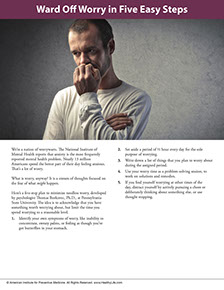
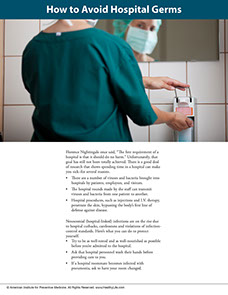
    Image of nurse using antibacterial dispenser.

    Florence Nightingale once said, “The first requirement of a hospital is that it should do no harm.”

    Unfortunately, that goal has still not been totally achieved. There is a good deal of research that shows spending time in a hospital can make you sick-for several reasons.

    *  There are a number of viruses and bacteria brought into hospitals by patients, employees, and visitors.

    *  The hospital rounds made by the staff can transmit viruses and bacteria from one patient to another.

    *  Hospital procedures, such as injections and I.V. therapy, penetrate the skin, bypassing the body’s first line of defense against disease.

    Nosocomial (hospital-linked) infections are on the rise due to hospital cutbacks, carelessness and violations of infection-control standards. Here’s what you can do to protect yourself.

    *  Try to be as well-rested and as well-nourished as possible before you’re admitted to the hospital.

    *  Ask that hospital personnel wash their hands before providing care to you.

    *  If a hospital roommate becomes infected with pneumonia, ask to have your room changed.

    Page from A Year of Health Hints book by the American Institute for Preventive Medicine. www.HealthyLife.com. All rights reserved.

    © American Institute for Preventive Medicine

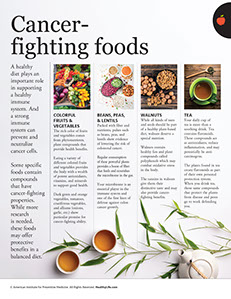
  • Cancer-Fighting Foods

    HEALTHY EATING

    Top view cup of tea and tea pot.

    A healthy diet plays an important role in supporting a healthy immune system. And a strong immune system can prevent and neutralize cancer cells.

    Some specific foods contain compounds that have cancer-fighting properties. While more research is needed, these foods may offer protective benefits in a balanced diet.

    Colorful fruits & vegetables

    The rich color of fruits and vegetables comes from phytonutrients, plant compounds that provide health benefits.

    Eating a variety of different colored fruits and vegetables provides the body with a wealth of potent antioxidants, vitamins, and minerals to support good health.

    Dark green and orange vegetables, tomatoes, cruciferous vegetables, and alliums (onions, garlic, etc.) show particular promise for cancer-fighting ability.

    Beans, peas, & lentils

    Packed with fiber and nutrients, pulses such as beans, peas, and lentils show evidence of lowering the risk of colorectal cancer.

    Regular consumption of these powerful plants provides a boost of fiber that feeds and nourishes the microbiome in the gut.

    Your microbiome is an essential player in the immune system and one of the first lines of defense against colon cancer growth.

    Walnuts

    While all kinds of nuts and seeds should be part of a healthy plant-based diet, walnuts deserve a special mention.

    Walnuts contain healthy fats and plant compounds called polyphenols which may combat oxidative stress in the body.

    The tannins in walnuts give them their distinctive taste and may also provide cancer-fighting benefits.

    Tea

    Your daily cup of tea is more than a soothing drink. Tea contains flavonoids. These compounds act as antioxidants, reduce inflammation, and may potentially be anti-carcinogens.

    The plants found in tea create flavonoids as part of their own personal protection system. When you drink tea, those same compounds that protect the plants from disease and pests go to work defending you.

    © American Institute for Preventive Medicine
  • Reduce Environmental Risk Factors For Chronic Diseases

    Personal Safety

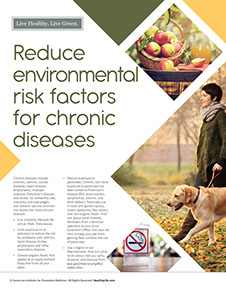
    Women walking dog.

    Chronic diseases include arthritis, asthma, cancer, diabetes, heart disease, emphysema, multiple sclerosis, Parkinson’s disease, and stroke. An unhealthy diet, inactivity and overweight, and tobacco use are common risk factors for many chronic diseases.

    *  Live a healthy lifestyle. Be active. Walk. Rake leaves.

    *  Limit exposure to air pollution to reduce the risk for problems with asthma, heart disease, stroke, emphysema and other respiratory diseases.

    *  Choose organic foods. Pick apples at an apple orchard. Enjoy the fruits of your labor.

    *  Reduce exposure to pesticides. Chronic, low-dose exposure to pesticides has been linked to Parkinson’s disease (PD), brain tumors, lymphomas, asthma, and birth defects. Pesticides are in lawn and garden sprays, insect repellants, flea collars, and non-organic foods. Find out about earth-friendly fertilizers from a fertilizer specialist at your local Extension Office. Ask your vet how to keep your pet from getting fleas without the use of pesticides.

    *  Use a digital or ear thermometer. Find out what to do about mercury spills, disposal, and cleanup fromepa.gov/mercury/spills/index.htm.

    A Year of Health Hints book by the American Institute for Preventive Medicine. www.HealthyLife.com. All rights reserved.

    © American Institute for Preventive Medicine
  • Exercise Lowers Breast Cancer Risk

    BE FIT

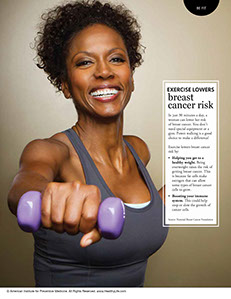
    Women using weights.

    In just 30 minutes a day, a woman can lower her risk of breast cancer. You don’t need special equipment or a gym. Power walking is a good choice to make a difference!

    Exercise lowers breast cancer risk by:

    *  Helping you get to a healthy weight. Being overweight raises the risk of getting breast cancer. This is because fat cells make estrogen that can allow some types of breast cancer cells to grow.

    *  Boosting your immune system. This could help stop or slow the growth of cancer cells.

    Source: National Breast Cancer Foundation

    © American Institute for Preventive Medicine

  • Health Screenings Can Save Lives

    Medical Exams

    Smiling doctor.

    You take your children for regular health checkups to protect their health. You, too, need preventive health screenings to increase your chances of living a longer and healthier life. For example:

    *  A colonoscopy can find and remove polyps. These overgrowths of tissue on the lining of your colon may turn into cancer.

    *  Cervical cancer can be prevented nearly 100 percent of the time with regular screenings and early treatment, if needed.

    *  Schedule health screenings you need this year. Write when you will have these.

    *  Don’t use excuses, such as “I don’t have time” or “That illness doesn’t run in my family” to keep you from getting health screenings you need.

    Approximately one half of all cancer deaths may be prevented by not smoking, staying at a healthy weight, eating nutritious foods, and being physically active.

    ays to Well-Being book by the American Institute for Preventive Medicine. www.HealthyLife.com. All rights reserved.

    © American Institute for Preventive Medicine
  • Nosebleeds

    Ear, Nose & Throat Conditions

    Signs & Symptoms

    *  Bleeding from a nostril.

    *  Bleeding from the nose and down the back of the throat.

    Causes

    Nosebleeds are often caused by broken blood vessels just inside the nose. Risk factors include:

    *  A cold or allergies.

    *  A dry environment.

    *  Frequent nose blowing and picking.

    *  Using too much nasal spray.

    *  A punch or other blow to the nose.

    A nosebleed is serious when heavy bleeding from deep within the nose is hard to stop. This type occurs most often in the elderly. It can be caused by: Hardening of nasal blood vessels; high blood pressure; and medicines that treat blood clots.

    Treatment

    Self-care treats most nosebleeds. A doctor can pack the nostril to stop the bleeding or do a treatment that seals the blood vessel that bleeds.

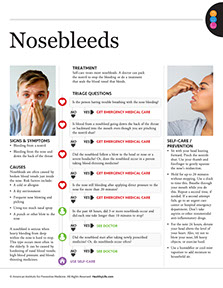
    Questions to Ask

    Self-Care / Prevention

    *  Sit with your head leaning forward. Pinch the nostrils shut. Use your thumb and forefinger to gently squeeze the nose’s midsection.

    *  Hold for up to 20 minutes without stopping. Use a clock to time this. Breathe through your mouth while you do this. Repeat a second time, if needed. If a second attempt fails, go to an urgent care center or hospital emergency department. Don’t take aspirin or other nonsteroidal anti-inflammatory drugs.

    *  For the next 24 hours, elevate your head above the level of your heart. Also, try not to blow your nose, lift heavy objects, or exercise hard.

    *  Use a humidifier or cool-mist vaporizer to add moisture to household air.

    Healthier at Home book by the American Institute for Preventive Medicine. www.HealthyLife.com. All rights reserved.

    © American Institute for Preventive Medicine