Tag: processed

  • The Skinny On Processed Foods

    HEALTHY EATING

    Turkey deli on cutting board.

    White bread, packaged cookies and turkey bacon. What do these foods have in common? They are all processed foods. Processed food is the opposite of “whole food,” or food in its natural state.

    What does “processed foods” mean?

    It means the food has been changed from its natural state. White bread, for instance, may contain wheat flour that has been bleached and stripped of some of its nutrients. Packaged cookies may have bleached and stripped flour in addition to added sweeteners, artificial colors, preservatives and flavors. Turkey bacon is cured, processed and packaged.

    Not all processed  foods are bad

    There is a difference between foods that are minimally processed and “junk foods.” Frozen vegetables, for instance, may be considered “minimally processed.” They are not quite the same as picking the vegetables right from a garden. But if they don’t have added sugar or salt, frozen vegetables are a very healthy option.

    In addition, some foods that are considered “processed” can help people eat better. Canned fruit (without added sugar) or bagged salads are a convenient option for many people. They eliminate the extra work of gathering the food, washing it and cutting it.

    Sugar & salt overload

    Many processed “junk” foods contain too much added sugar or salt. Also, they may have little to no fiber or vitamins.

    Processed foods, including crackers and packaged snacks, are a major reason that people get too much sodium in their diets. Too much sodium raises the risk of high blood pressure and heart disease.

    Many processed foods also contain added sugars. The American Heart Association says we should limit added sugars to 6 teaspoons a day for women and 9 teaspoons for men. One 12-ounce soda exceeds that amount. Too much added sugar increases risk for type 2 diabetes and heart disease.

    Processed = weight gain?

    A recent study by the National Institutes of Health suggests that processed foods can cause weight gain. Participants who were given processed foods ate about 500 calories more per day than people who ate unprocessed foods. They also gained weight, while the people who ate unprocessed foods lost weight. You don’t have to cut all processed foods out of your diet. But cutting back on them – and eating more whole foods – will help you work toward a healthier weight.

    Sources: Academy of Nutrition and Dietetics, American Academy of Family Physicians, American Heart Association, National Institutes of Health

    © American Institute for Preventive Medicine
  • A Safer Way To Bring Home The Bacon

    Nutrition

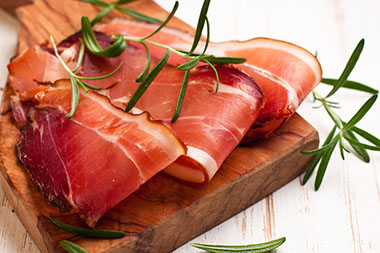
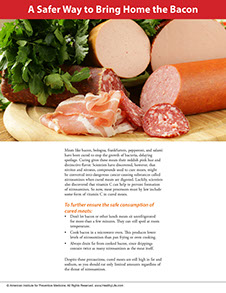
    Image of bacon and rosemary.

    Meats like bacon, bologna, frankfurters, pepperoni, and salami have been cured to stop the growth of bacteria, delaying spoilage. Curing gives these meats their reddish pink hue and distinctive flavor. Scientists have discovered, however, that nitrites and nitrates, compounds used to cure meats, might be converted into dangerous cancer-causing substances called nitrosamines when cured meats are digested. Luckily, scientists also discovered that vitamin C can help to prevent formation of nitrosamines. So now, meat processors must by law include some form of vitamin C in cured meats.

    To further ensure the safe consumption of cured meats:

    *  Don’t let bacon or other lunch meats sit unrefrigerated for more than a few minutes. They can still spoil at room temperature.

    *  Cook bacon in a microwave oven. This produces lower levels of nitrosamines than pan frying or oven cooking.

    *  Always drain fat from cooked bacon, since drippings contain twice as many nitrosamines as the meat itself.

    Despite these precautions, cured meats are still high in fat and sodium, so you should eat only limited amounts regardless of the threat of nitrosamines.

    Page from A Year of Health Hints book by the American Institute for Preventive Medicine. www.HealthyLife.com. All rights reserved.

    © American Institute for Preventive Medicine
  • The Salty 6: Hidden Sources Of Salt

    HEALTHY EATING

    Image of a bowl of soup.

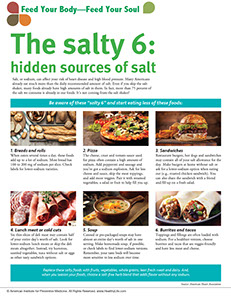
    Salt, or sodium, can affect your risk of heart disease and high blood pressure. Many Americans already eat much more than the daily recommended amount of salt. Even if you skip the salt shaker, many foods already have high amounts of salt in them. In fact, more than 75 percent of the salt we consume is already in our foods. It’s not coming from the salt shaker! Be aware of these “salty 6” and start eating less of these foods:

    1. Breads and rolls

    When eaten several times a day, these foods add up to a lot of sodium. Most bread has 100 to 200 mg of sodium per slice. Check labels for lower-sodium varieties.

    2. Pizza

    The cheese, crust and tomato sauce used for pizza often contain a high amount of sodium. Add pepperoni and sausage and you’ve got a sodium explosion. Ask for less cheese and sauce, skip the meat toppings, and add more veggies. Pair it with steamed vegetables, a salad or fruit to help fill you up.

    3. Sandwiches

    Restaurant burgers, hot dogs and sandwiches may contain all of your salt allowance for the day. Make burgers at home without salt or ask for a lower-sodium option when eating out (e.g., roasted chicken sandwich). You can also share the sandwich with a friend and fill up on a fresh salad.

    4. Lunch meat or cold cuts

    Six thin slices of deli meat may contain half of your entire day’s worth of salt. Look for lower-sodium lunch meats or skip the deli meats altogether. Instead, try hummus, sautéed vegetables, tuna without salt or eggs as other tasty sandwich options.

    5. Soup

    Canned or pre-packaged soups may have almost an entire day’s worth of salt in one serving. Make homemade soup, if possible, or check labels to find lower-sodium versions. Remember, your taste buds will become more sensitive to less sodium over time.

    6. Burritos and tacos

    Toppings and fillings are often loaded with sodium. For a healthier version, choose burritos and tacos that are veggie-friendly and have less meat and cheese.

    Replace these salty foods with fruits, vegetables, whole grains, lean fresh meat and dairy. And, when you season your foods, choose a salt-free herb blend that adds flavor without any sodium.

    Source: American Heart Association

    © American Institute for Preventive Medicine

  • 3 Steps To Cleaner Eating

    HEALTHY EATING

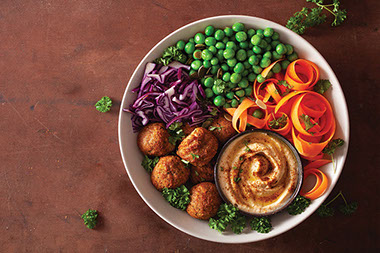
    A bowl of falafel with hummus, green peas, carrots, and purple cabbage.

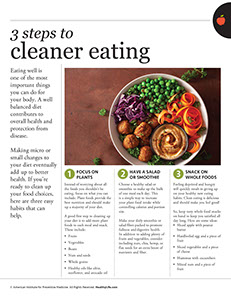
    Eating well is one of the most important things you can do for your body. A well balanced diet contributes to overall health and protection from disease.

    Making micro or small changes to your diet eventually add up to better health. If you’re ready to clean up your food choices, here are three easy habits that can help.

    1. Focus on plants

    Instead of worrying about all the foods you shouldn’t be eating, focus on what you can include. Plant foods provide the best nutrition and should make up a majority of your diet.

    A good first step to cleaning up your diet is to add more plant foods to each meal and snack. These include:

    *  Fruits

    *  Vegetables

    *  Beans

    *  Nuts and seeds

    *  Whole grains

    *  Healthy oils like olive, sunflower, and avocado oil

    2. Have a salad or smoothie

    Choose a healthy salad or smoothie to make up the bulk of one meal each day. This is a simple way to increase your plant food intake while controlling calories and portion size.

    Make your daily smoothie or salad fiber-packed to promote fullness and digestive health. In addition to adding plenty of fruits and vegetables, consider including nuts, chia, hemp, or flax seeds for an extra boost of nutrients and fiber.

    3. Snack on whole foods

    Feeling deprived and hungry will quickly result in giving up on your healthy new eating habits. Clean eating is delicious and should make you feel good!

    So, keep tasty whole food snacks on hand to keep you satisfied all day long. Here are some ideas:

    *  Sliced apple with peanut butter

    *  Hardboiled egg and a piece of fruit

    *  Sliced vegetables and a piece of cheese

    *  Hummus with cucumbers

    *  Mixed nuts and a piece of fruit

    © American Institute for Preventive Medicine