Tag: progress

  • Know Your Fitness Goals

    BE FIT

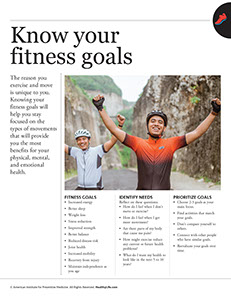
    Two men with hands in the air sitting on bikes.

    The reason you exercise and move is unique to you. Knowing your fitness goals will help you stay focused on the types of movements that will provide you the most benefits for your physical, mental, and emotional health.

    Fitness goals

    *  Increased energy

    *  Better sleep

    *  Weight loss

    *  Stress reduction

    *  Improved strength

    *  Better balance

    *  Reduced disease risk

    *  Joint health

    *  Increased mobility

    *  Recovery from injury

    *  Maintain independence as you age

    Identify needs

    Reflect on these questions:

    *  How do I feel when I don’t move or exercise?

    *  How do I feel when I get more movement?

    *  Are there parts of my body that cause me pain?

    *  How might exercise reduce any current or future health problems?

    *  What do I want my health to look like in the next 5 to 10 years?

    Prioritize goals

    *  Choose 2-3 goals as your main focus.

    *  Find activities that match your goals.

    *  Don’t compare yourself to others.

    *  Connect with other people who have similar goals.

    *  Reevaluate your goals over time.
    © American Institute for Preventive Medicine
  • See Your Fitness Progress

    BE FIT

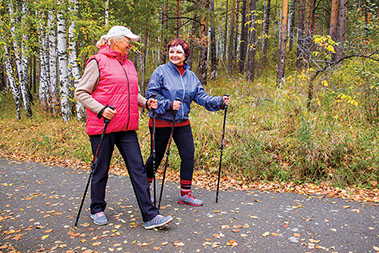
    Two women walking with walking sticks.

    When you’re trying to get fit, it can be hard to stay motivated. Look for ways that you’re making progress. This can help you keep going!

    Progress isn’t just about weight. You are making progress if:

    *  You have more energy. Do you feel less tired than you used to? Are you getting more done?

    *  Your daily tasks are easier. Maybe carrying the groceries isn’t as tough as it used to be. Or going upstairs doesn’t leave you out of breath.

    *  You’re getting better sleep. Exercise can help you sleep better, leaving you feeling refreshed and energized in the morning.

    Keep it up! The longer you exercise, the better you’ll feel!

    Source: National Institute on Aging

    © American Institute for Preventive Medicine
  • Reward Yourself For Weight Loss

    Weight Control

    When a behavior is followed by a reward, the behavior is more likely to be repeated. So the more you are rewarded for your weight-loss efforts, the more likely you’ll continue to succeed.

    But you don’t have to wait until you lose weight to reward yourself Rewards should begin the very first day of your diet. (Of course, food should not be a reward.)

    Here are just a few examples of the kinds of rewards that can help you to adhere to your weight-control plan.

    *  Buy yourself a bouquet of flowers.

    *  Call a friend long-distance.

    *  Give yourself some special “me” time.

    *  Try a new cologne.

    *  Get your car washed.

    *  Have a low-calorie picnic. (The picnic is the reward, not the food.)

    *  Treat yourself to a movie.

    *  Keep a diary of all the improvements you notice while dieting (more stamina, feeling attractive, fitting into smaller-size clothing).

    Page from A Year of Health Hints book by the American Institute for Preventive Medicine. www.HealthyLife.com. All rights reserved.

    © American Institute for Preventive Medicine
  • Test Your Fitness Level

    Fitness

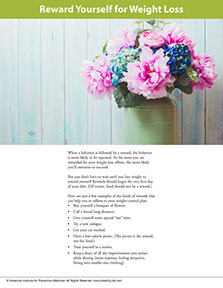
    Image of women talking to her fitness trainer.

    How do you measure the success of your fitness program? By how much weight you lose? How many inches you trim off your waistline or hips? How well you sleep at night? How energetic you feel?

    These are all worthwhile criteria. Another way to evaluate your fitness level-and assess your progress-is to keep track of your resting heart rate (that is, your pulse rate when you’re least active).

    The idea is, the lower your resting heart rate, the better shape your heart is in. So as you become more fit, your resting heart rate should drop.

    Here’s how to measure it.

    1.  Take your pulse as soon as you wake up in the morning, before you get out of bed.

    2.  Count the number of beats for 10 seconds and multiply by six. This will give you your pulse in beats per minute.

    3.  Repeat the following morning. Then calculate the average of the two. (That is, add the two numbers together and divide by two.) This is your resting heart rate.

    Calculate your resting heart rate every three months, as conditioning takes some time to have an effect.

    Take the “Talk Test”

    No, this isn’t a suggestion that you audition to guest host “The Tonight Show.” It’s just a simple way for you to tell if you’re overdoing it when you exercise. If you’re too out of breath to comfortably carry on a conversation with another person as you dance, run, or slam-dunk your way to fitness, you’re probably working too hard and should slow down. (On the other hand, you should be working hard enough to break a mild sweat.) And of course, any unusual sign of physical distress (such as chest discomfort, pain of any kind, or dizziness) is a signal to slow down to a stop.

    Page image from A Year of Health Hints book by the American Institute for Preventive Medicine. www.HealthyLife.com. All rights reserved.

    © American Institute for Preventive Medicine

  • Use The L.A.D.D.E.R. Technique 2

    Healthylife® QuitWell™

    Part 5

    Image of two friends talking.

    This is a step-by-step way to become more assertive.

    L:Look at your needs, wants, rights, and feelings about the situation.

    A:Arrange a meeting that is convenient for you and the other person to talk.

    D:Define the problem clearly to the other person.

    D:Describe your feelings using “I messages.” I message statements let you take charge of your feelings. The other person is less likely to get defensive.

    E:Express your needs and desires in an assertive manner using a few clear sentences. Be aware of your eye contact, hand gestures, posture, voice, and facial expression.

    R:Reinforce your remarks by saying what positive outcomes will occur for you and the other person.

    Example:

    L:I could use support from my close co-worker while I’m quitting vaping and I don’t want him to give me a hard time.

    A:I’ll arrange to speak to him first thing tomorrow.

    D:“Jack, I’m trying to quit and can really benefit from your support. I want to be able to take breaks with you, but it’s tough for me to do that if you offer me your vape.”

    D:“I feel like I could really achieve my goal with your help. Quitting is really important to me.”

    E:“I would like to take a walk with you instead of vaping, if you will join me. Or, we’ll have to catch up after work. Standing next to you while you vape is tough for me right now.”

    R:“I love getting away from hectic stuff at work by taking a break with you. I think taking a walk will help us both clear our heads and feel more ready to tackle the rest of the day.”

    © American Institute for Preventive Medicine
  • Appreciate The Journey

    Healthylife® Weigh

    Part 5

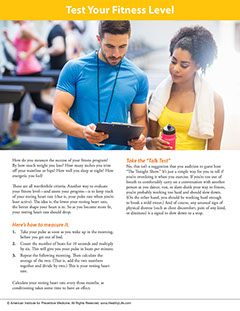
    Two women enjoying a run together.

    Know why you are being physically active. This will help get you motivated to start and to keep going.

    1.Connect with your interests.If you enjoy hiking, find a new trail to explore. If you are in a new place, plan a day with lots of walking to learn about your new neighborhood. You may find you can be active for much longer when you have distracting, interesting scenery around you.

    2.Be reflective.Take time to reflect as part of your workout or your cool-down. Appreciate your abilities and strengths. Express gratitude for those who encourage and guide you.

    3.Have fun.Find an organized fun run or “Couch to 5k” program in your community. Fun runs often have a theme, like color runs, glow-in-the-dark runs, and obstacle courses. Many can be done as a team. Having a goal that is bigger than the physical activity itself can motivate you, keep you accountable, and keep you moving longer than you may have otherwise!

    4.Connect with others.Make memories with your friends and family that revolve around being active. Have tough conversations while on a long walk or hike. You may be more likely to find a solution or think more clearly while being active.

    5.Listen to music.Music can be inspiring and distract you from a tough workout. It can also help you keep up your pace.

    © American Institute for Preventive Medicine
  • Build On Your Current Habits

    Healthylife® Weigh

    Part 4

    Group of friends sitting at table full of healthy snacks, salads and organic dishes.

    Your day-to-day activities include hundreds of habits. Some may be second nature or automatic, like reaching for your seatbelt when you get in a car. Some may be weaker and subject to change, like including fruits or vegetables with your meals and snacks. Be patient. It can take several weeks to form a new habit.

    As you went through Parts 1 to 3 of this online guide, you may have noticed differences between your habits and the healthy ones suggested. As you start to make changes, first focus on a habit that you do every day. Or, think of a habit that you do many times a day. Changes to everyday habits are going to make a big difference, as they are repeated more.

    Using the examples below, compare the impact of making changes to occasional habits versus making changes to everyday habits.

    *  Example A: Change an occasional habit, such as choosing healthy snacks at the airport.

    *  Example B: Change an everyday habit, such as having a glass of water with meals and snacks.

    Breaking old habits is not easy. It takes more than willpower. It takes a plan.

    © American Institute for Preventive Medicine
  • Use The L.A.D.D.E.R. Technique

    Healthylife® Weigh

    Part 4

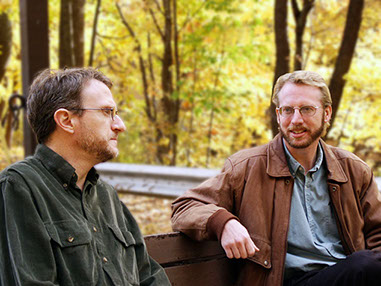
    Group of friends enjoying a meal outdoors.

    This is a step-by-step way to become more assertive.

    L – Look at your needs, wants, rights, and feelings about the situation.

    A – Arrange a meeting that is convenient for you and the other person to talk.

    D – Define the problem clearly to the other person.

    D – Describe your feelings using “I messages.” I message statements let you take charge of your feelings.

    E – Express your needs and desires in an assertive manner using a few clear sentences. Be aware of your eye contact, hand gestures, posture, voice, and facial expression.

    R – Reinforce your remarks by saying what positive outcomes will occur for you and the other person.

    Example:

    L – I wish my partner would stop stocking the pantry with a food I tend to over-eat when it is available.

    A – I’ll plan to talk with him or her after dinner tomorrow.

    D – Tell your partner, “When cookies are in the pantry, it is hard for me to have just one. I appreciate the treat, but this makes it harder for me to stick with my goal.”

    D – “I feel I could stick with my goals with your help.”

    E – “Let’s keep cookies off the grocery list. I am starting to enjoy fruit as a sweet treat. Let’s get that instead! Also, a hug would be a wonderful treat from you!”

    R – “This change would help me to reach my goal. As I lose weight, I am able to do more physical activity comfortably. Let’s plan a hike together this weekend!”

    © American Institute for Preventive Medicine
  • Every Step Helps

    BE FIT

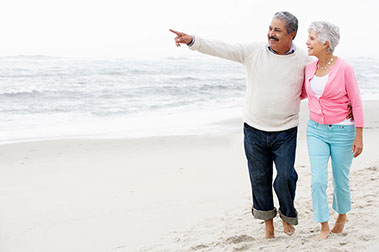
    Image of older Hispanic couple walking on the beach.

    You know exercising is great for you, but it’s hard to find time to do it. If going to the gym sounds impossible, why not walk? Research says that walking for just 30 minutes each day will improve your health. For those who are really short on time, you can even break those 30 minutes up. Walk for 10 minutes, three times a day – and you’re getting health benefits.

    The National Institutes of Health says regular exercise like walking can:

    *  Improve high blood pressure

    *  Lower your risk of heart disease

    *  Strengthen muscles and bones

    *  Improve type 2 diabetes

    *  Give you more energy

    *  Help you manage stress

    *  Reduce feelings of depression

    With exercise, every step helps. You don’t need fancy equipment or even a gym membership to get healthier – and you can start today.

    © American Institute for Preventive Medicine