Tag: protect

  • Blisters

    Skin Conditions

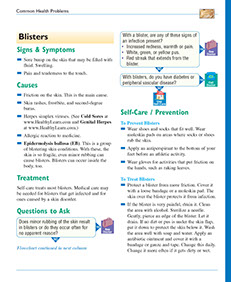
    Signs & Symptoms

    *  Sore bump on the skin that may be filled with fluid. Swelling.

    *  Pain and tenderness to the touch.

    Causes

    *  Friction on the skin. This is the main cause.

    *  Skin rashes, frostbite, and second-degree burns.

    *  Herpes simplex viruses.

    *  Allergic reaction to medicine.

    *  Epidermolysis bullosa (EB). This is a group of blistering skin conditions. With these, the skin is so fragile, even minor rubbing can cause blisters. Blisters can occur inside the body, too.

    Treatment

    Self-care treats most blisters. Medical care may be needed for blisters that get infected and for ones caused by a skin disorder.

    Questions to Ask

    Self-Care / Prevention

    To Prevent Blisters

    *  Wear shoes and socks that fit well. Wear moleskin pads on areas where socks or shoes rub the skin.

    *  Apply an antiperspirant to the bottom of your feet before an athletic activity.

    *  Wear gloves for activities that put friction on the hands, such as raking leaves.

    To Treat Blisters

    *  Protect a blister from more friction. Cover it with a loose bandage or a moleskin pad. The skin over the blister protects it from infection.

    *  If the blister is very painful, drain it. Clean the area with alcohol. Sterilize a needle. Gently, pierce an edge of the blister. Let it drain. If no dirt or pus is under the skin flap, pat it down to protect the skin below it. Wash the area well with soap and water. Apply an antibiotic ointment and cover it with a bandage or gauze and tape. Change this daily. Change it more often if it gets dirty or wet.
    Healthier at Home book by the American Institute for Preventive Medicine. www.HealthyLife.com. All rights reserved.

    © American Institute for Preventive Medicine

  • Seal Out Tooth Decay

    Dental & Mouth Concerns

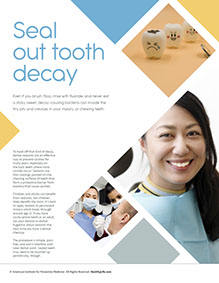
    Image of older women smiling and pointing to her mouth.

    Even if you brush, floss, rinse with fluoride, and never eat a sticky sweet, decay-causing bacteria can invade the tiny pits and crevices in your molars, or chewing teeth. To head off that kind of decay, researchers have developed sealants-special plastic coatings that form an effective barrier between bacteria and the chewing surfaces of your teeth, where fluoride is less effective.

    Approximately 90 percent of the cavities in school-age children occur in crevices in the back teeth, so sealants are best applied when the permanent molars first emerge. (The American Dental Association reports a significant decrease in cavities in children who have sealants applied to their teeth.) But that doesn’t mean sealants aren’t useful or appropriate for adults who have cavity-prone teeth. So ask your dentist or dental hygienist about sealants the next time you have a dental checkup.

    The procedure is simple, pain-free, and won’t interfere with later dental work. Sealed teeth may need to be touched up periodically, though.

    A Year of Health Hints book by the American Institute for Preventive Medicine. www.HealthyLife.com. All rights reserved.

    © American Institute for Preventive Medicine
  • Like It Loud? Your Ears Don’T

    WELL-BEING

    Image of man listening to music with headphones.

    What do a lawn mower, a motorcycle, and a music player have in common? They can all cause permanent hearing loss.

    Many people assume that only extremely loud sounds, such as gunshots, can damage the ears. But any loud noise, such as power tools, headphones turned up too loud, lawn equipment, or a concert, can lead to hearing loss. This is known as noise-induced hearing loss.

    Noise-induced hearing loss often happens gradually, so you don’t realize the damage that’s being done over time. For instance, being around loud machinery every day or listening to loud music in earphones regularly can cause hearing damage that adds up. The National Institutes of Health states that 26 million Americans between the ages of 20 and 69 have hearing loss caused by excessive noise.

    The Centers for Disease Control and Prevention (CDC) says anything over 85 decibels can damage hearing. The louder it is, the faster it can cause hearing loss if used regularly and/or for long periods. Normal conversation is 60 decibels, and a hair dryer is around 90.

    Save your hearing

    The best way to prevent noise-induced hearing loss is to avoid loud noises whenever you can. But, this may not be possible if your job requires you to be around certain equipment. If you can’t avoid it, always wear proper hearing protection. This includes earplugs and/or ear muffs that have a noise reduction rating (NRR) listed.

    If you notice you have trouble hearing, talk to your doctor.

    © American Institute for Preventive Medicine