Tag: quick

  • Quick & Easy Grain Bowls

    HEALTHY EATING

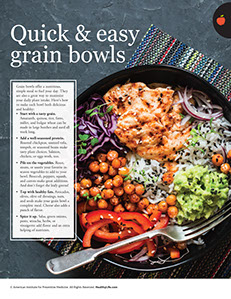
    Homemade grain bowl.

    Grain bowls offer a nutritious, simple meal to fuel your day. They are also a great way to maximize your daily plant intake. Here’s how to make each bowl both delicious and healthy:

    *Start with a tasty grain.Amaranth, quinoa, rice, farro, millet, and bulgur wheat can be made in large batches and used all week long.

    *Add a well-seasoned protein.Roasted chickpeas, sauteed tofu, tempeh, or seasoned beans make tasty plant choices. Salmon, chicken, or eggs work, too.

    *Pile on the vegetables.Roast, steam, or sautée your favorite in-season vegetables to add to your bowl. Broccoli, peppers, squash, and carrots make great additions. And don’t forget the leafy greens!

    *Top with healthy fats.Avocados, olives, olive oil dressings, nuts, and seeds make your grain bowl a complete meal. Cheese also adds a punch of flavor.

    *Spice it up.Salsa, green onions, pesto, sriracha, herbs, or vinaigrette add flavor and an extra helping of nutrients.

    © American Institute for Preventive Medicine

  • Meal And Snack Ideas

    Healthylife® Weigh

    Part 3

    Family eating dinner together at home.

    Below are ideas for basic meals and snacks. Use these ideas to start building your meal plan.

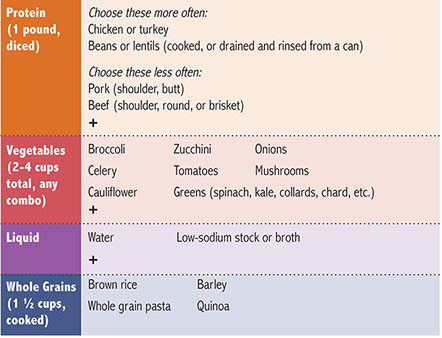
    Meal Idea: Pasta or Rice Dinner

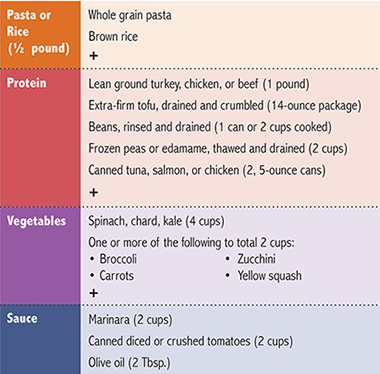
    Choose ingredients from the chart below. This recipe makes four servings.

    Chart of meal ideas, pasta or rice dinner.

    Directions:

    1. Cook pasta or rice according to package directions and drain.

    2. Cook protein choice as needed.

    3. Cook veggies by steaming, grilling, roasting, sautéing, or adding to boiling pasta water in the last few minutes of cooking.

    4. In a large pot, heat sauce over medium heat. If using spices, add them now. Add protein and veggies to heat through. Toss with hot cooked pasta or rice and serve.

    For a casserole, follow the directions above. Then, pour into a 9 x 13-inch baking pan and bake for 40-60 minutes until the top is golden brown.

    Meal Idea: Salad

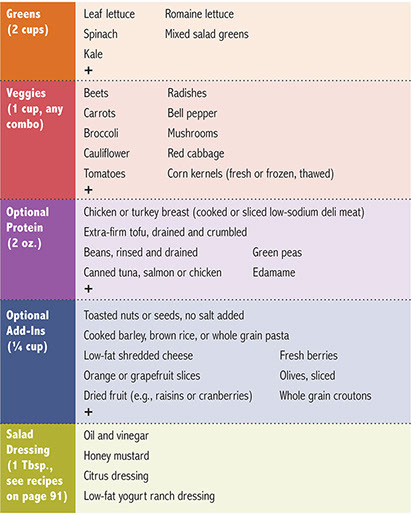
    Choose ingredients from the chart below. This salad recipe serves one person.

    Chart of meal ideas, salad.

    Directions:

    Toss ingredients together when ready to eat. Or, prepare a salad ahead of time in a container, keeping very moist ingredients (like tomatoes and dressing) separate. When you are ready to eat, toss and empty onto a plate or in a large bowl.

    Salad Dressing

    Salad dressing can be a healthy choice for your salad. Use healthy, unsaturated fats in salad dressing to:

    *  Help you feel full and more satisfied.

    *  Help your body get the benefits of other vitamins in your salad, like fat-soluble vitamins A, D, E, and K.

    *  Add flavor. Dressings are a great place for herbs, spices, and other powerful flavors to make your salad POP!

    *  Help you eat vegetables that you don’t like plain.

    Tips for Selecting a Dressing at a Restaurant:

    *  Ask for oil-based dressings, such as olive oil and balsamic vinegar.

    *  Ask for dressing on the side. Toss your salad with half the dressing provided and put the rest to the side. Most restaurants offer much more dressing than you need for your salad.

    *  If you are worried you may use too much dressing, ask for a half-size salad or order another vegetable as a side dish.

    *  On bottled dressings, look for ones made without added sugars.

    Make Your Own Salad Dressing

    Use 1-2 Tbsp. of the dressing on your salad. Store leftovers in a sealed jar.

    *  Oil and vinegar dressing: 3 Tbsp. olive oil, 2 Tbsp. red wine vinegar,  1/8 tsp. salt (a dash), ¼ tsp. black pepper. Serving size: 1 Tbsp.

    *  Honey mustard dressing: 6 Tbsp. mustard, ½ Tbsp. fresh lemon juice or cider vinegar, 1½ Tbsp. honey, 1 tsp. olive or canola oil, 1/8 tsp. salt  (a dash), ¼ tsp. black pepper. Serving size: 2 Tbsp.

    *  Citrus dressing: 2 Tbsp. lime, lemon, or orange juice; 3-4 Tbsp. canola or olive oil, 1/8 tsp. salt (a dash), ¼ tsp. black pepper. Serving size: 1 Tbsp.

    *  Creamy low-fat ranch dressing: 1 (6-ounce) container plain nonfat or  low-fat yogurt, 1/3 cup low-fat mayonnaise, 2 Tbsp. white vinegar, 1 Tbsp. dried dill, ¼ tsp. garlic powder, 1/8 tsp. salt (a dash). Serving size: 2 Tbsp.

    Meal Ideas: Stir-Fry

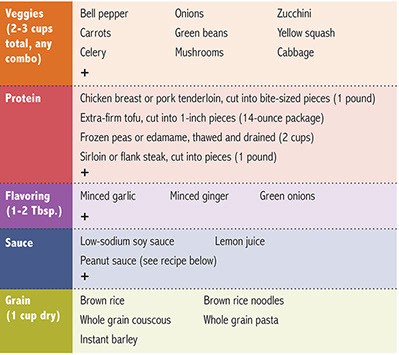
    Choose ingredients from the chart below. This recipe makes four servings.

    Chart of meal ideas, stir-fry.

    Peanut Sauce:In a small bowl, stir together ¼ cup peanut butter, 1/3 cup water, ¼ cup low-sodium soy sauce, 2 Tbsp. cider vinegar, and 4 tsp. sugar.

    Directions

    1. Cook grains. Follow package directions and set aside.

    2. If using meat: In a large skillet over medium heat, cook meat or poultry in 1 tablespoon canola or olive oil. Set aside.

    3. Add veggies to skillet, starting with harder veggies (these take longer to cook). Cook to desired softness. Add flavoring (garlic, ginger, or green onions). If adding tofu, peas, or edamame, add that now.

    4. Add sauce and cook for 1-2 more minutes. Stir in cooked meat.

    5. Serve over cooked grains.

    Meal Ideas: Soup

    Choose ingredients from the chart below. This recipe makes four servings.

    Chart of meal ideas, soup.

    Directions

    1. If using meat: Heat 1 Tbsp. of canola or olive oil in a soup pot. Add meat and cook for 5 minutes. If not using meat, skip this step.

    2. Add chosen vegetables and sauté for 5 minutes. If using frozen vegetables, thaw in the microwave first.

    3. Add liquid and beans or lentils (if using) and bring to a boil. Once boiling, reduce heat and simmer for 25-30 minutes. Stir occasionally.

    4. Add grains and seasonings. Cook for an additional 5 minutes.

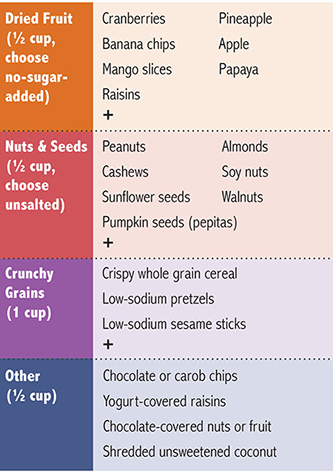
    Snack Ideas: Trail Mix

    Choose ingredients from the chart below. This recipe makes four servings.
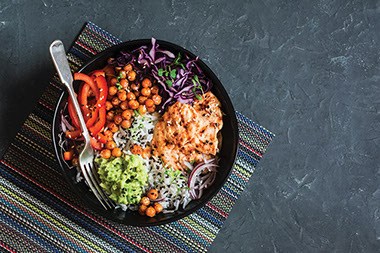
    Chart of snack ideas, trail mix.

    © American Institute for Preventive Medicine

  • 7 Quick And Easy Breakfast Tips

    HEALTHY EATING

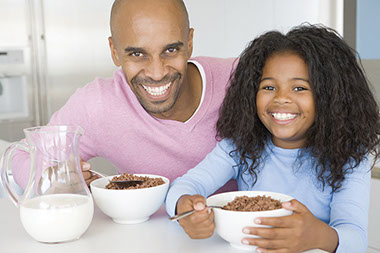
    Image of father and daughter having breakfast.

    A healthy breakfast is a must for kids. Skip it and your kids will be playing nutritional catch-up for the rest of the day, said Carole L. Adler, a dietitian at the Food and Drug Administration.

    When kids skip breakfast, they don’t get what they need to be at their best. “Growing bodies and developing brains need regular, healthy meals,” she said. According to the Academy of Nutrition and Dietetics, studies show that school children who eat breakfast perform better in the classroom.

    As with other meals, it’s a good idea for your kids (and you) to eat a healthy balance of fruits and vegetables, proteins, grains, and dairy-not just for breakfast but throughout the day.

    Here are Adler’s 7 quick and easy breakfast tips to ensure your children start their day off right.

    1.Breakfast doesn’t have to mean traditional breakfast foods.Anything goes. Even last night’s leftovers.

    2.Give kids foods they like.Put veggies on that left-over whole-grain pizza. Or make muffins with zucchini and carrots and spread with peanut butter with a glass of milk. Mix sugary cereal with a healthier nutrient-packed brand.

    3.Make healthy trade-offs.Nutritional balance is key. Not enough vegetables in the morning meal? Prepare extra carrot, celery, and broccoli sticks with a hummus dip as an afternoon snack.

    4.Take growth and activity levels into account.Adler says that having a breakfast that contains protein, fat, and carbohydrates helps children feel full and stay focused until lunch. Protein choices might include an egg, some nuts, a slice of deli meat or cheese, or a container of yogurt.

    5.Don’t take, “Mom, I don’t have time for breakfast” as an excuse.Make sure your kids grab a piece of fruit on the way out the door, and hand them a bag of nut-and-fruit trail mix or a whole-wheat tortilla spread with peanut butter or almond butter and a carton of milk.

    6.Prep the night before.Morning is a busy time for everyone-you included. So take ten minutes to think ahead and prep for breakfast the night before. Chop up fruit to layer in a yogurt parfait or add to cereal. Cut up vegetables for an omelet. Mix up muffin or whole-grain waffle batter, cover, and put in the fridge.

    7.Use the Nutrition Facts label and ingredient statement when you shop.

    Desk snacks.

    People who have snacks in or on the desk reported weighing 15.4 pounds more than those who don’t. Use an opaque candy dish with a lid and store candy in a drawer where it’s less visible and accessible, advises Cornell University researcher, Dr. Brian Wansink, author of Slim by Design. Or, keep dried fruit or unsalted nuts in your desk drawer.

    © American Institute for Preventive Medicine