Tag: realistic

  • Know Your Fitness Goals

    BE FIT

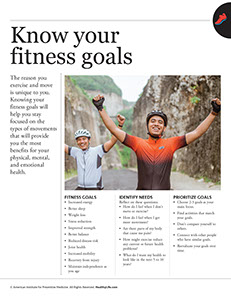
    Two men with hands in the air sitting on bikes.

    The reason you exercise and move is unique to you. Knowing your fitness goals will help you stay focused on the types of movements that will provide you the most benefits for your physical, mental, and emotional health.

    Fitness goals

    *  Increased energy

    *  Better sleep

    *  Weight loss

    *  Stress reduction

    *  Improved strength

    *  Better balance

    *  Reduced disease risk

    *  Joint health

    *  Increased mobility

    *  Recovery from injury

    *  Maintain independence as you age

    Identify needs

    Reflect on these questions:

    *  How do I feel when I don’t move or exercise?

    *  How do I feel when I get more movement?

    *  Are there parts of my body that cause me pain?

    *  How might exercise reduce any current or future health problems?

    *  What do I want my health to look like in the next 5 to 10 years?

    Prioritize goals

    *  Choose 2-3 goals as your main focus.

    *  Find activities that match your goals.

    *  Don’t compare yourself to others.

    *  Connect with other people who have similar goals.

    *  Reevaluate your goals over time.
    © American Institute for Preventive Medicine

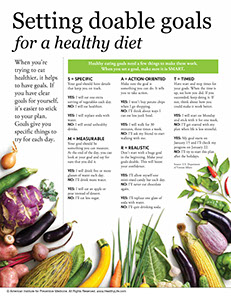
  • Setting Doable Goals For A Healthy Diet

    HEALTHY EATING

    A variety of vegetables.

    When you’re trying to eat healthier, it helps to have goals. If you have clear goals for yourself, it’s easier to stick to your plan. Goals give you specific things to try for each day.

    Healthy eating goals need a few things to make them work. When you set a goal, make sure it is SMART.

    S = Specific

    Your goal should have details that keep you on track.

    Yes: I will eat one extra serving of vegetables each day.

    No: I will eat healthier.

    Yes: I will replace soda with water.

    No: I will avoid unhealthy drinks.

    M = Measurable

    Your goal should be something you can measure. At the end of the day, you can look at your goal and say for sure that you did it.

    Yes: I will drink five or more glasses of water each day.

    No: I’ll drink more water.

    Yes: I will eat an apple or pear instead of dessert.

    No: I’ll eat less sugar.

    A = Action-oriented

    Make sure the goal is something you can do. It tells you to take action.

    Yes: I won’t buy potato chips when I go shopping.

    No: I’ll think about ways I can eat less junk food.

    Yes: I will walk for 30 minutes, three times a week.

    No: I’ll ask my friend to start walking with me.

    R = Realistic

    Don’t start with a huge goal in the beginning. Make your goals doable. This will boost your confidence.

    Yes: I’ll allow myself one mini-sized candy bar each day.

    No: I’ll never eat chocolate again.

    Yes: I’ll replace one glass of soda with water.

    No: I’ll quit drinking soda.

    T = Timed

    Have start and stop times for your goals. When the time is up, see how you did. If you succeeded, keep doing it. If not, think about how you could make it work better.

    Yes: I will start on Monday and stick with it for one week.

    No: I’ll get started with my plan when life is less stressful.

    Yes: My goal starts on January 15 and I’ll check my progress on January 22.

    No: I’ll try to start this plan after the holidays.

    Source: U.S. Department of Veteran Affairs

    © American Institute for Preventive Medicine