Tag: reduce

  • Modify Ingredients In Recipes 2

    Nutrition

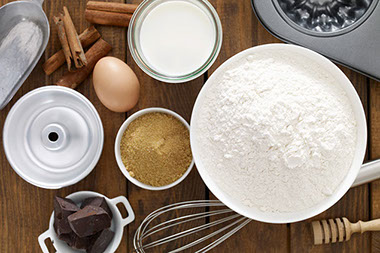
    Image of different ingredients.

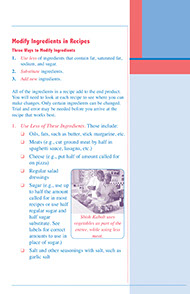
    Three Ways to Modify Ingredients

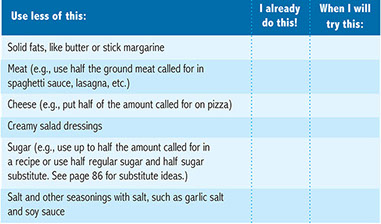
    1. Use less of ingredients that contain fat, saturated fat, sodium, and sugar.

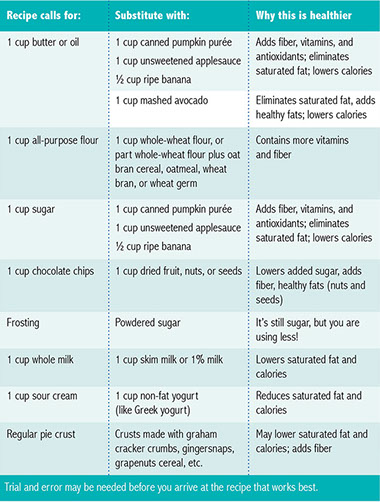
    2. Substitute ingredients.

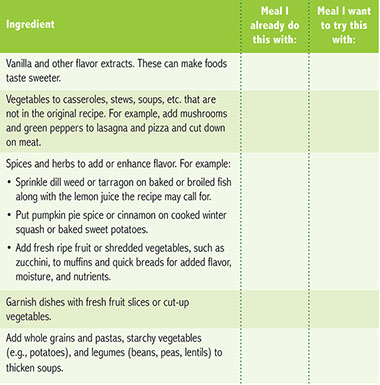
    3. Add new ingredients.

    All of the ingredients in a recipe add to the end product. You will need to look at each recipe to see where you can make changes. Only certain ingredients can be changed. Trial and error may be needed before you arrive at the recipe that works best.

    1. Use Less of These Ingredients

    These include:

    *  Oils, fats, such as butter, stick margarine, etc.

    *  Meats (e.g., cut ground meat by half in spaghetti sauce, lasagna, etc.)

    *  Cheese (e.g., put half of amount called for on pizza)

    *  Regular salad dressings

    *  Sugar (e.g., use up to half the amount called for in most recipes or use half regular sugar and half sugar substitute. See labels for correct amounts to use in place of sugar.)

    *  Salt and other seasonings with salt, such as garlic salt

    2. Substitute Ingredients

    * Diet margarine’s high water content may alter the texture of baked products. It works well, though, in sauces, as spreads, and for sauteing vegetables.

    ** When using yogurt for sour cream in heated sauces, mix 1 Tbsp. of cornstarch with 1 Tbsp. of the yogurt then add to the rest of the yogurt. Stir over medium heat until sauce thickens. This will prevent the yogurt from separating.

    3. Add New Ingredients

    Here are some examples:

    *  Vanilla and other flavor extracts. Adding vanilla or adding extra vanilla can make foods taste sweeter than they are.

    *  Vegetables to casseroles, stews, soups, etc. that are not in the original recipe. For example, add mushrooms and green pepper to lasagna and pizza and cut down on or don’t use any meats.

    *  Spices and herbs to add or enhance flavor. For example:

    – Sprinkle dill weed or tarragon on baked or broiled fish along with the lemon juice the recipe may call for.

    – Put pumpkin pie spice on cooked winter squash.

    – Add fresh ripe fruit or mashed cooked vegetables to muffins and quick breads for added flavor, moistness, and nutrients.

    *  Garnish dishes with fresh fruit slices and cut-up vegetables.

    *  Add grains, pastas, starchy vegetables, (potatoes, etc.) legumes (beans, peas, lentils) to thicken soups.

    *  Practice with changing recipes. The savings in total fat, saturated fat, trans fat, sodium, sugar, and calories can be great.

    Modify ingredients in the example below to lower fat, sugar, sodium, and calories.

    Resources

    American Heart Association

    www.heart.org/HEARTORG

    Search for “Nutrition Center.”

    National Heart, Lung, and Blood Institute (NHLBI)

    www.nhlbi.nih.gov

    Search for “Healthy Recipes.”

    NUTRITION.GOV

    www.nutrition.gov

    Search for “Healthy Eating.”

    Page from HealthyLife Weigh book by the American Institute for Preventive Medicine. www.HealthyLife.com. All rights reserved.

    © American Institute for Preventive Medicine

  • Limit Added Sugars

    Healthylife® Weigh

    Part 2

    White sugar assortment.

    Sugars are naturally present in many foods, including fruit, dairy, and grains. Your body can get all the sugar you need by digesting these foods. Sometimes, sugar is added during the processing of foods and drinks. Sugar adds calories, taste, and shelf-life to a product, but zero nutrients. There is no need for added sugars in your diet.

    Too much added sugars is associated with:

    *  Heart and blood vessel problems. This can lead to fatty liver disease, high blood pressure, type 2 diabetes, and kidney disease.

    *  Gut bacteria damage.

    *  Skin problems like irritation and acne.

    *  Headaches, aching limbs, and fatigue.

    *  Nervous tension, anxiety, and depression.

    *  Tooth decay and gum disease.

    *  Memory problems and memory loss. This can lead to Alzheimer’s (research ongoing).

    Sugar is Addicting

    It is okay to have a piece of chocolate every now and then and experience a little “lift” in the brain. Your brain activates dopamine, the brain chemical that gives you a “feel good” feeling. However, eating sugar too often can have addictive effects on the brain.

    Impulsive behavior, lack of control, and cravings can result. Your tolerance for sugar may also increase, especially if you are eating or drinking super-sweet artificial sweeteners with hundreds of times the sweetness of regular sugar.

    Over time, it becomes harder to control how much sugar you eat. Without fiber, healthy fats, and other nutrients that help you feel full, your natural “stop eating” system is hijacked. Sugar addiction leads to overeating, a highway to obesity.

    Hooked on Sugar:The pathway below shows how your body can become addicted to sugar.

    *  You eat a high sugar food. It tastes good, especially when combined with a fatty or salty food. Addiction pathways are activated in your brain. You feel a rewarding sensation.

    *  Your blood sugar spikes. Hormones are released to lower your blood sugar.

    *  Your blood sugar drops rapidly. Your body notices low blood sugar levels.

    *  You feel hungry and crave food, especially sugary foods. Your body thinks you are starving and demands sugar.

    Type 2 Diabetes

    Type 2 diabetes is a condition that makes it difficult for the body to properly get energy from food. Risk factors include family history and being overweight. Insulin, a hormone made in the pancreas, works like a key to a door, allowing sugar to go from the bloodstream into the cells.

    In addition to extra body weight, eating too much sugar (and foods that break down into sugar like bread and pasta) puts a strain on your pancreas to work harder. Over time, this means too much sugar stays in the bloodstream, which causes serious problems for your blood vessels, heart, and brain.

    Diabetes should be managed carefully to control blood sugar levels. If you already have type 2 diabetes, losing weight, following a healthy eating plan, and doing regular exercise can help you manage diabetes and may reduce the need for medication.

    Be a Label Detective: Find the Added Sugar

    How can you tell if a product has added sugars? Find a food package or drink bottle and follow the steps below.

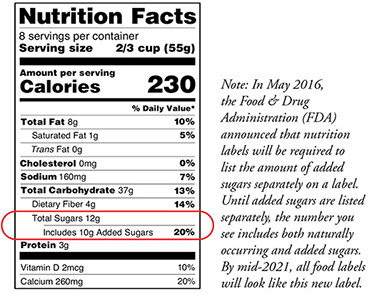
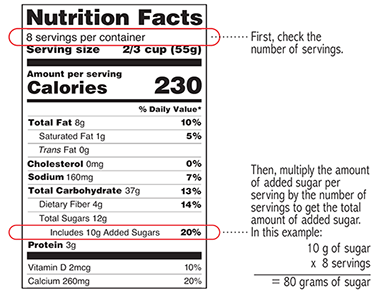
    Step 1: Check the Nutrition Facts

    Nutrition label highlighting total sugars.

    Step 2: Check the Ingredients List

    Read the ingredients list on a processed food’s label to tell if the product contains added sugars. There are many names for sugar. Some words you might find in a list of ingredients that indicate a sugar include:

    *  Sugar

    *  Syrup

    *  Nectar

    *  Juice

    *  Malt

    *  Molasses

    *  Honey

    *  Words that end in “-ose”

    Honey, maple syrup, molasses, brown rice syrup & stevia may be better choices among sugars. However, limit all added sugars.

    If a sweetener is one of the first 3 ingredients on the label, avoid this product. It may be high in calories but not include many nutrients.

    Step 3: Find out the real amount

    Nutrition label highlighting the real amount of added sugars.

    If you have more than the serving size listed on the label, you are getting even more sugar than the label says. If you have half of the serving size, you will get half of the sugar listed.

    How much added sugar is okay?

    It is almost impossible to avoid all added sugar. Sugar is added to nearly every processed food. Yogurt, salad dressing, ketchup, crackers, peanut butter, tomato sauce, and most bottled beverages contain added sugars.

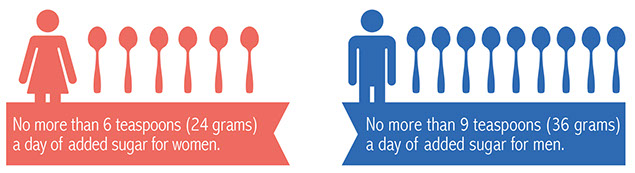
    The American Heart Association has set recommended limits on daily intake of added sugars:

    Reduce Sugar-Sweetened Drinks

    Sugar-sweetened drinks (including pop/soda, bottled tea and coffee drinks, juices, flavored waters, etc.) are some of the top sources of added sugars in the U.S. By choosing water or unsweetened drinks, you can reduce added sugar and calories, leaving room in your diet for nutrient-dense foods.

    *  What is one sugar-sweetened drink you consume now?

    *  Look at the label. How many grams of sugar does it contain per serving?

    If you drink sweetened beverages, you will very likely go over your daily limit for added sugar.

    What about Bottled Fruit Juice?

    100% fruit juice is more nutritious than soda, as it often contains vitamin C and may be fortified with calcium. However, fruit juice does not contain fiber to slow the absorption of sugar into the bloodstream. Instead, squeeze a lemon or orange slice into plain water. Or, have the whole fruit for a serving of heart-healthy fiber and a naturally sweet treat!

    Look for Hidden Sugar Traps

    Many foods you wouldn’t consider “sweets” contain a lot of added sugar. Find each of the food products below and check the Nutrition Facts. You may already have these products at home. Or, check next time you are in the store. For the product you are looking at, check how many grams of sugar are in this food. Would you typically only eat one serving?

    *  Yogurt

    *  Salad dressing

    *  Tomato sauce

    *  Ketchup

    *  Bread

    *  Cereal

    *  Granola bars

    What changes do you need to make to get your total added sugar below the number of teaspoons advised for your gender?

    Careful!“Low Fat” or “Lite” foods, other than dairy foods and drinks, often make up for taste and texture with sugar and artificial ingredients. Foods that are “sugar free” may have artificial sweeteners and other chemicals to make the product still taste sweet. Choose these foods less often.

    More Ways to Limit Added Sugars

    *  Add a slice of lemon, lime, or cucumber to water for a flavorful twist.

    *  Avoid buying sweet snacks or candy. Mentally practice passing by and not stopping to pick up sweets at the store or vending machine.

    *  Add your own natural sweetener, if needed, such as whole, dried, or canned fruit (packed in water or 100% juice).

    *  Toast whole grain bread to bring out natural sweetness.

    *  Schedule 30 minutes of physical activity and 30 minutes more sleep each night for a natural energy lift.

    *  Limit foods high in added sugars as occasional treats.

    *  Add fresh or canned fruit (packed in water or 100% juice) to plain yogurt instead of having yogurt that contains added fruits and sugar.

    *  Avoid rewarding children with sweets. Ask relatives and friends not to reward your child with sweets.

    *  Buy bread from your local bakery. These breads may have fewer added sugars.

    *  Make your own cakes, pies, and cookies. Reduce the sugar in the recipe by one-third or more. Use baking swaps.

    *  Order a child-size dessert or split a dessert.

    *  Cut back on added sugar in coffee and tea. Each week, cut the amount of sugar you add to these drinks by half until you add no sugar.

    Be realistic!Enjoy sweet treats, but make these foods “once in a while” foods. Savor and enjoy treats when you do have them. Eat them slowly and pay attention to the taste, texture, and pleasure from the food.

    © American Institute for Preventive Medicine

  • Limit Added Sugars 2

    Healthylife® Weigh

    Menus & Recipes

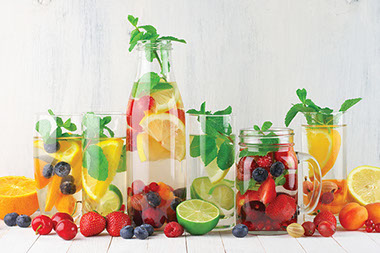
    A variety of flavored water.

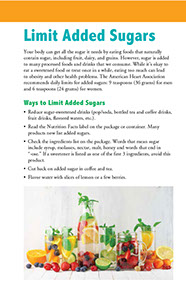
    Your body can get all the sugar it needs by eating foods that naturally contain sugar, including fruit, dairy, and grains. However, sugar is added to many processed foods and drinks that we consume. While it’s okay to eat a sweetened food or treat once in a while, eating too much can lead to obesity and other health problems. The American Heart Association recommends daily limits for added sugars: 9 teaspoons (36 grams) for men and 6 teaspoons (24 grams) for women.

    Ways to Limit Added Sugars

    *  Reduce sugar-sweetened drinks (pop/soda, bottled tea and coffee drinks, fruit drinks, flavored waters, etc.).

    *  Read the Nutrition Facts label on the package or container. Many products now list added sugars.

    *  Check the ingredients list on the package. Words that mean sugar include syrup, molasses, nectar, malt, honey and words that end in “-ose.” If a sweetener is listed as one of the first 3 ingredients, avoid this product.

    *  Cut back on added sugar in coffee and tea.

    *  Flavor water with slices of lemon or a few berries.

    © American Institute for Preventive Medicine

  • Limit Sodium

    Healthylife® Weigh

    Part 2

    Sea salt on wooden spoon and the word salt written in grain.

    Your body needs some sodium to:

    *  Maintain the right balance of fluids in your body.

    *  Transmit nerve impulses.

    *  Contract and relax muscles.

    Use added salt sparingly and limit foods high in sodium. Most people eat much more sodium than they need. There are important reasons to limit sodium in the diet. A low-sodium diet can help:

    *  Prevent high blood pressure. High blood pressure, if untreated, can lead to heart attack, stroke, poor eye health, headaches, and kidney failure.

    *  Lower your blood pressure if you have high blood pressure.

    *  Avoid swelling (edema) in legs, ankles, and internal organs.

    *  Reduce bloating and other side effects of premenstrual syndrome (PMS).

    Limit sodium to 2,300 milligrams per day (about 1 teaspoon). If you have high blood pressure, consult your doctor about the amount of sodium you should have each day. He or she may suggest you limit your sodium intake to 1,500 milligrams per day (about ¾ teaspoon). This includes sodium from all sources- salt added during cooking and at the table, salt in processed food, and sodium that occurs naturally in foods.

    Ways to Limit Sodium

    *  Choose low-sodium versions of canned foods, like soup, tomatoes and vegetables.

    *  Read nutrition information for restaurant items, when available. Choose from the “heart healthy” menu.

    *  Taste your food before adding salt. If needed, add a little.

    *  Leave the salt shaker off the table.

    *  Limit intake of processed meats like sausage and cold cuts.

    Flavor Foods Without Salt

    *  Beef – Bay leaf, marjoram, nutmeg, onion, pepper, sage, thyme

    *  Lamb – Curry powder, garlic, rosemary, mint

    *  Pork – Garlic, onion, sage, pepper, oregano

    *  Veal – Bay leaf, curry powder, ginger, marjoram, oregano

    *  Chicken – Ginger, marjoram, oregano, paprika, rosemary, sage, tarragon, thyme

    *  Fish – Curry powder, dill, dry mustard, lemon juice, marjoram, paprika, pepper

    *  Carrots – Cinnamon, cloves, marjoram, nutmeg, rosemary, sage

    *  Corn – Cumin, curry powder, onion, paprika, parsley

    *  Green – beans Dill, curry powder, lemon juice, marjoram, oregano, tarragon, thyme

    *  Peas – Ginger, marjoram, onion, parsley, sage

    *  Potatoes – Dill, garlic, onion, paprika, parsley, sage

    *  Summer squash – Cloves, curry powder, marjoram, nutmeg, rosemary, sage

    *  Winter squash – Cinnamon, ginger, nutmeg, onion

    *  Tomatoes – Basil, bay leaf, dill, marjoram, onion, oregano, parsley, pepper

    © American Institute for Preventive Medicine

  • Limit Sodium 2

    Healthylife® Weigh

    Menus & Recipes

    Sea salt on wooden spoon and the word salt written in grain.

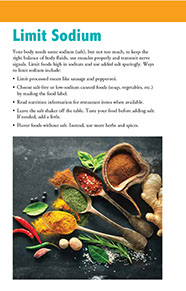
    Your body needs some sodium (salt), but not too much, to keep the right balance of body fluids, use muscles properly and transmit nerve signals. Limit foods high in sodium and use added salt sparingly. Ways to limit sodium include:

    *  Limit processed meats like sausage and pepperoni.

    *  Choose salt-free or low-sodium canned foods (soup, vegetables, etc.) by reading the food label.

    *  Read nutrition information for restaurant items when available.

    *  Leave the salt shaker off the table. Taste your food before adding salt. If needed, add a little.

    *  Flavor foods without salt. Instead, use more herbs and spices.

    © American Institute for Preventive Medicine

  • Modify Ingredients In Recipes

    Healthylife® Weigh

    Part 3

    Herbs and spices.

    Recipes offer guidelines, not rules. You may want to modify them if you:

    *  Don’t like an ingredient.

    *  Don’t have an ingredient.

    *  Want to include something different.

    *  Need to fulfill a need on MyPlate, like getting another serving of vegetables or whole grains.

    *  Want to reduce sodium, saturated fat, or added sugars.

    *  Are allergic or sensitive to an ingredient.

    3 Ways to Modify a Recipe:

    1. Use less of ingredients that have added sugar, sodium, or saturated fat.

    Chart of ideas on using less of ingredients.

    2. Substitute ingredients

    Chart of substitute ingredients ideas.

    3. Add new ingredients

    Chart of adding new ingredient ideas.

    © American Institute for Preventive Medicine

  • Sweet Sips, A Healthier Way!

    Healthylife® Weigh

    Part 3

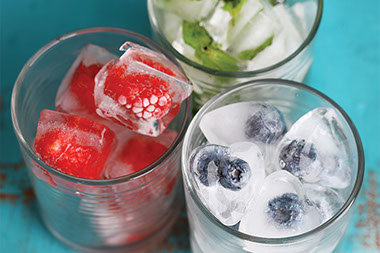
    Glasses of water with ice cubes that have berries frozen in them.

    Sugar-sweetened beverages can be a major source of added sugar. Cut back or eliminate these beverages from your everyday lifestyle. Save pop or soda for a once-in-a-while treat. As you reduce sugar in your diet, especially artificial sweeteners, you may find these drinks are too sweet for your new tastes!

    Make your own flavored water

    You can consume flavored beverages without added sugars AND get a few extra nutrients along the way! You will need:

    *  1-quart jars or a large pitcher

    *  Water

    *  Wooden spoon (or another long, sturdy spoon)

    Fruit and/or Fresh Herbs:

    You can start with just one cut-up fruit, but for a flavored water that will really pop, try combining at least two fruits or a fruit and an herb. Here are a few suggestions, but don’t be afraid to try your own combinations! For a single-serving, use less. For a whole pitcher, use more!

    Pineapple, Orange, & Ginger

    *  ½ cup cubed pineapple

    *  ½ an orange, sliced

    *  1 Tbsp. freshly-grated ginger

    Minty Cucumber Lime

    *  ½ a cucumber, sliced

    *  ½ a lime, sliced

    *  ¼ cup fresh mint leaves

    Orange and Blueberry

    *  1 Mandarin orange, broken into wedges

    *  Small handful of blueberries

    Strawberry, Lemon, & Basil

    *  ½ cup sliced strawberries

    *  ½ a lemon, sliced

    *  ¼ cup fresh basil leaves

    Watermelon Mint

    *  1 cup cubed watermelon

    *  ¼ cup fresh mint leaves

    Rosemary & Grapefruit

    *  ½ grapefruit (or ¼ grapefruit & ¼ orange)

    *  A few sprigs of rosemary

    Citrus with Cilantro or Mint

    *  2 large oranges, sliced

    *  1 lemon, sliced

    *  ½ large cucumber, sliced

    *  1 handful of fresh mint or cilantro

    Time to Build!

    1. Place the fruit, herbs, and any other ingredients in the bottom of a glass jar or pitcher. Or, using a wooden spoon, mash the ingredients to bring out the flavor. You can also scrunch the herbs in your hands before adding them to the jar. This helps bring out the flavor.

    2. Fill the jars with water and ice as desired. You can also add unsweetened carbonated/seltzer water if you are craving fizzy bubbles!

    3. The flavor will be more enhanced after the water sits for an hour. Or, refrigerate the water overnight. If you want to drink it right away, squeeze the fruit a little before you drop it in to help bring out the flavors faster.

    Other Sweet Beverage Ideas:

    Freeze ice cubes with fruit. Drop a few cubes of different colored fruits into a tall glass of cold water.

    Blend whole fruits in a smoothie with spinach, kale or other de-stemmed, leafy green vegetables.

    Diet or regular soda? Limit both.

    Most diet sodas contain artificial sweeteners. Studies have shown drinking diet soda is not any better at helping you manage your weight. Gradually cut back on soda.

    Even if you add a teaspoon of sugar to your coffee, this 4g of sugar is far less than the sugar found in the average soda. The average soda contains 39g of sugar in a 12-ounce can. In a 16-ounce bottle, a soda may contain 52g of sugar.

    © American Institute for Preventive Medicine

  • Easy Ways To Cut Back On Sugar

    HEALTHY EATING

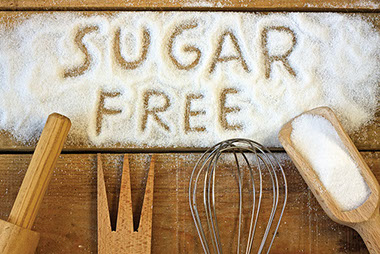
    Image of sugar spilled out on a table with the words "Sugar Free" spelled out.

    Lowering your sugar intake doesn’t have to be a struggle. Here are some tips:

    *  Keep your favorite fresh fruits ready-to-eat in the fridge or at work. Reach for these when you have a sugar craving.

    *  Get candy and sweet treats out of the house. Avoid vending machines at work. Out of sight, out of mind.

    *  Be selective about treats. Allow yourself a slice of grandma’s pumpkin pie if you really want it. Just make it a small piece and an occasional treat, not an  everyday habit.

    *  Drink water with lemon instead of soda, sports drinks, or juice. Or, make your own fruit water by putting your favorite fresh or frozen fruits in a large bottle, and fill the rest with ice water.

    *  Make a gradual change. Don’t try to cut out all sugar at once. Instead, try cutting a little here, and a little there, to get used to less of it.

    *  Decrease the sugar in recipes. When cooking or baking, try using about half the sugar you normally would. You may not notice a difference in taste.

    © American Institute for Preventive Medicine