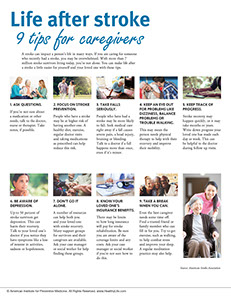
A stroke can impact a person’s life in many ways. If you are caring for someone who recently had a stroke, you may be overwhelmed. With more than 7 million stroke survivors living today, you’re not alone. You can make life after a stroke a little easier for yourself and your loved one with these tips.
1. Ask questions. If you’re not sure about a medication or other needs, talk to the doctor, nurse or therapist. Take notes, if possible.
2. Focus on stroke prevention. People who have a stroke may be at higher risk of having another one. A healthy diet, exercise, regular doctor visits and taking medications as prescribed can help reduce this risk.
3. Take falls seriously. People who have had a stroke may be more likely to fall. Seek medical care right away if a fall causes severe pain, a head injury, bruising or bleeding. Talk to a doctor if a fall happens more than once, even if it’s minor.
4. Keep an eye out for problems like dizziness, balance problems or trouble walking. This may mean the person needs physical therapy to help with their recovery and improve their mobility.
5. Keep track of progress. Stroke recovery may happen quickly, or it may take months or years. Write down progress your loved one has made each day or week. This can be helpful to the doctor during follow up visits.
6. Be aware of depression. Up to 50 percent of stroke survivors get depression. This can harm their recovery. Talk to your loved one’s doctor if you notice they have symptoms like a loss of interest in activities, sadness or hopelessness.
7. Don’t go it alone. A number of resources can help both you and your loved one with stroke recovery. Many support groups for survivors and their caregivers are available. Ask your case manager or social worker for help finding these groups.
8. Know your loved one’s insurance benefits. There may be limits to how long insurance will pay for stroke rehabilitation. Be sure you are aware of the coverage limits and any costs. Ask your case manager or social worker if you’re not sure how to do this.
9. Take a break when you can. Even the best caregiver needs some time off. Find a trusted friend or family member who can fill in for you. Try to get exercise, such as walking, to help combat stress and improve your sleep. A regular meditation practice may also help.
Source: American Stroke Association