Tag: relaxation

  • Wellness Gifts

    FAMILY LIFE

    Image of soccer ball with ribbon around it.

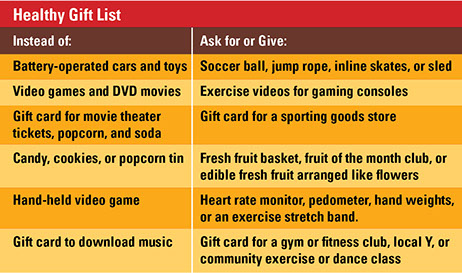
    Give presents that promote a healthy lifestyle. Keep health in mind when making your list and checking it twice.

    Ask for or give “Gift of Time Coupons” for shoveling snow, cooking a healthy meal, cleaning the house, and doing other active household chores throughout the year.

    © American Institute for Preventive Medicine

  • Massage

    Healthylife® Weigh

    Part 5

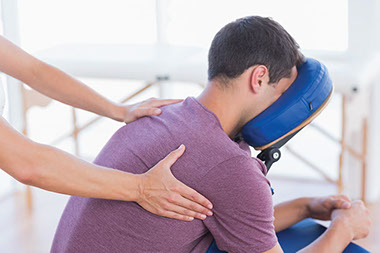
    Man getting a chair massage.

    Massage can be a form of recovery for your muscles. Massage, especially deep compression massage, can help relax tight muscles and knots that have formed between muscle layers. This can help with normal blood flow, keep your muscles flexible, and reduce pain.

    A professional massage therapist or a friend can assist you with massage.  Or, you can give yourself a massage.

    Self-Massage

    Use a foam roller, tennis ball, Thera Cane®, or muscle roller stick. These items are fairly inexpensive and can be purchased from major retailers and sporting goods stores. Or, using your fingers is free! Apply pressure to specific parts of your body. Go slowly. If you purchase a self-massage tool, follow package instructions.

    © American Institute for Preventive Medicine
  • Practice Relaxation Techniques

    Healthylife® Weigh

    Part 6

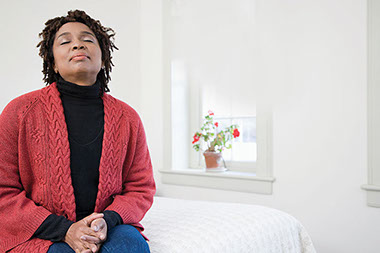
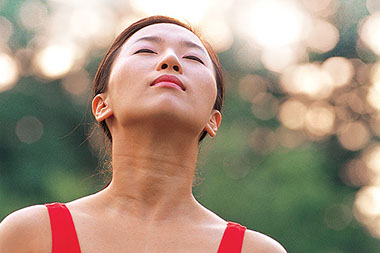
    Women deep breathing.

    Use relaxation techniques to manage emotional eating triggers.

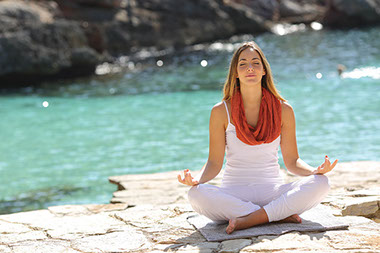
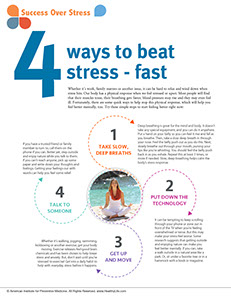
    Learn These Four Skills to Relax

    1. Relaxation Reflex: Get rid of muscle tension.

    2. Mindfulness: Be fully present in the moment.

    3. Deep Breathing: Feel relaxed by breathing in more oxygen.

    Plan Relaxation Time

    Plan 15 minutes during the day to intentionally relax. You can also do relaxation exercises as needed throughout the day. Practice these techniques before eating or to cope with an emotion that is triggering you to eat. Relaxation techniques can help reduce stress-related health problems, such as high blood pressure, headaches, and pain. These tools also help you to have greater mental and physical control and improve your response to negative emotions.

    How the mind can control the body:

    *  It can slow brain wave patterns.

    *  It can reduce heart and breathing rates.

    *  It can increase blood flow to the limbs.

    *  It can relax muscles.

    © American Institute for Preventive Medicine

  • Get Better Sleep Starting Tonight

    SELF-CARE CORNER

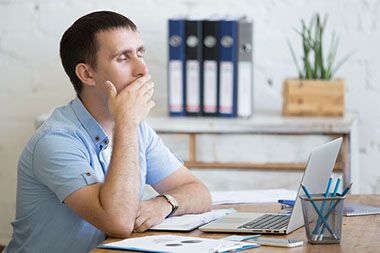
    Image of man feeling sleepy at his desk.

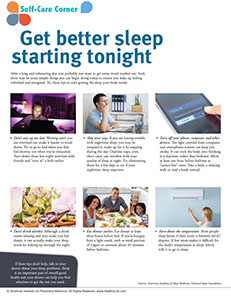
    After a long and exhausting day, you probably just want to get some much needed rest. And, there may be some simple things you can begin doing today to ensure you wake up feeling refreshed and energized. Try these tips to start getting the sleep your body needs:

    *  Don’t stay up too late. Waiting until you are overtired can make it harder to wind down. Try to go to bed when you first feel drowsy, not when you’re exhausted. Turn down those late-night activities with friends and “turn in” a little earlier.

    *  Skip your nap. If you are having trouble with nighttime sleep, you may be tempted to make up for it by napping during the day. Daytime naps, even short ones, can interfere with your quality of sleep at night. Try eliminating them for a few days to see if your nighttime sleep improves.

    *  Turn off your phone, computer and other devices. The light emitted from computer and smartphone screens can keep you awake. It can trick the body into thinking it is daytime, rather than bedtime. Allow at least one hour before bedtime as “screen-free” time. Take a bath, a relaxing walk or read a book instead.

    *  Don’t drink alcohol. Although a drink seems relaxing and may make you feel sleepy, it can actually make your sleep worse by waking up through the night.

    *  Eat dinner earlier. Eat dinner at least three hours before bed. If you’re hungry, have a light snack, such as small portion of yogurt or oatmeal, about 45 minutes before bedtime.

    *  Turn down the temperature. Most people sleep better if their room is between 60-67 degrees. A hot room makes it difficult for the body’s temperature to drop, which tells it to go to sleep.

    If these tips don’t help, talk to your doctor about your sleep problems. Sleep is an important part of overall good health and your doctor can help you find solutions to get the rest you need.

    Sources: American Academy of Sleep Medicine, National Sleep Foundation

    © American Institute for Preventive Medicine