Tag: research

  • Can Food Prevent Cancer?

    HEALTHY EATING

    A variety of baskets filled with fruits and vegetables.

    Studies have shown that eating healthy foods, especially plants, can help prevent certain health problems. It can help you avoid type 2 diabetes, heart disease and stroke. Some research also shows that a healthy diet can help prevent cancer.

    There is no single food or diet that will always prevent cancer. Many times, cancer is caused by things we cannot control. But there is promising research that says a healthy diet can lower your risk of some cancers. Here is what researchers have found.

    Fruits and vegetables

    We already know fruits and vegetables are good for you. They are full of vitamins, fiber and other nutrients. Eating lots of fruits and vegetables may lower the chances of getting lung, colorectal, oral, esophagus, stomach and colon cancer. The Mediterranean Diet, which includes lots of fruits and vegetables, is one diet plan that seems to have anti-cancer ability.

    In addition to fruits and vegetables, people should get enough calcium and vitamin D. These nutrients may play a role in lowering the risk of getting colorectal cancer.

    Phytochemicals – a health booster

    Phytochemicals are special chemicals found in plants. Some studies suggest that they can lower your cancer risk. Phytochemicals may:

    *  Boost your immune system

    *  Help block cancer-causing substances called carcinogens

    *  Lower inflammation that can lead to cancer

    *  Help your DNA repair itself

    *  Slow down the growth of cancer cells

    *  Get rid of damaged cells in the body

    Phytochemicals are found in fruits, vegetables, legumes and whole grains. Foods that have bright colors or strong flavors tend to have the most phytochemicals.

    What not to eat

    Some foods may increase the risk of some cancers. Avoid or limit:

    *  Heavily processed meats like ham, bacon, sausage and salami

    *  Alcohol, which may increase the risk of mouth, throat, esophagus, breast, colorectal and liver cancer

    *  Foods that cause indigestion and heartburn. Long-term heartburn can increase the risk of esophagael cancers

    Most experts agree that nutritional supplements have not been shown to fight cancer. Stick to eating healthy foods for more cancer-fighting power.

    Your doctor is your partner in helping to prevent cancer and other health problems. Be sure to discuss your cancer risk and the best diet for you.

    Sources: American Academy of Family Physicians, American Institute for Cancer Research, National Institute of Diabetes and Digestive and Kidney Diseases

    © American Institute for Preventive Medicine
  • Cancer-Fighting Foods

    HEALTHY EATING

    Top view cup of tea and tea pot.

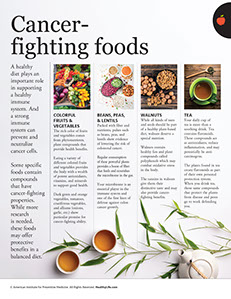
    A healthy diet plays an important role in supporting a healthy immune system. And a strong immune system can prevent and neutralize cancer cells.

    Some specific foods contain compounds that have cancer-fighting properties. While more research is needed, these foods may offer protective benefits in a balanced diet.

    Colorful fruits & vegetables

    The rich color of fruits and vegetables comes from phytonutrients, plant compounds that provide health benefits.

    Eating a variety of different colored fruits and vegetables provides the body with a wealth of potent antioxidants, vitamins, and minerals to support good health.

    Dark green and orange vegetables, tomatoes, cruciferous vegetables, and alliums (onions, garlic, etc.) show particular promise for cancer-fighting ability.

    Beans, peas, & lentils

    Packed with fiber and nutrients, pulses such as beans, peas, and lentils show evidence of lowering the risk of colorectal cancer.

    Regular consumption of these powerful plants provides a boost of fiber that feeds and nourishes the microbiome in the gut.

    Your microbiome is an essential player in the immune system and one of the first lines of defense against colon cancer growth.

    Walnuts

    While all kinds of nuts and seeds should be part of a healthy plant-based diet, walnuts deserve a special mention.

    Walnuts contain healthy fats and plant compounds called polyphenols which may combat oxidative stress in the body.

    The tannins in walnuts give them their distinctive taste and may also provide cancer-fighting benefits.

    Tea

    Your daily cup of tea is more than a soothing drink. Tea contains flavonoids. These compounds act as antioxidants, reduce inflammation, and may potentially be anti-carcinogens.

    The plants found in tea create flavonoids as part of their own personal protection system. When you drink tea, those same compounds that protect the plants from disease and pests go to work defending you.

    © American Institute for Preventive Medicine
  • Do Cell Phones Cause Cancer?

    WELL-BEING

    Women holding cell phone with head phones on.

    Many people have their phones in pockets or purses all the time.

    Is this safe?

    Cell phones and RF waves

    When they are turned on, cell phones give off radiofrequency (RF) waves. When a person holds a cell phone up to their ear, they are exposed to the RF waves from the phone.

    At very high levels, RF waves can cause heat. This is how microwave ovens heat food. But the energy given off by a cell phone isn’t enough to cause a person’s body to heat up.

    Most stuides say “NO”

    Studies on rats have found that exposing their entire bodies to RF waves for long periods of time may increase the risk of a certain type of tumor. The levels used in this study were much higher than what a person would experience from normal everyday cell phone use.

    Most studies on humans have found that people who have brain tumors do not use cell phones more than people who don’t have tumors. Other human studies have found that brain tumors don’t happen more on the side of the head where people hold their cell phones. Both results seem to suggest that cell phones do not cause brain tumors.

    But a few studies have found an increased tumor risk on the side of the head where a person usually holds their cell phone.

    Researchers believe we need more studies to find out for sure whether cell phones could be linked to cancer.

    What should I do?

    The American Cancer Society says RF waves are not as strong as different types of radiation like x-rays and UV light. X-rays and UV light can damage DNA. RF waves from cell phones are much weaker and don’t cause DNA damage. This means they would not make changes that could cause a tumor to form.

    But, if you want to avoid exposure to RF waves, you can:

    *  Keep your phone away from your body. Don’t keep it in your pocket when it’s turned on.

    *  Use the speaker function or an earpiece when talking on the phone.

    Source: American Cancer Society

    © American Institute for Preventive Medicine

  • Exercise Lowers Breast Cancer Risk

    BE FIT

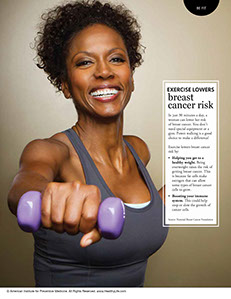
    Women using weights.

    In just 30 minutes a day, a woman can lower her risk of breast cancer. You don’t need special equipment or a gym. Power walking is a good choice to make a difference!

    Exercise lowers breast cancer risk by:

    *  Helping you get to a healthy weight. Being overweight raises the risk of getting breast cancer. This is because fat cells make estrogen that can allow some types of breast cancer cells to grow.

    *  Boosting your immune system. This could help stop or slow the growth of cancer cells.

    Source: National Breast Cancer Foundation

    © American Institute for Preventive Medicine

  • Should You Join A Mlm?

    FINANCIAL HEALTH

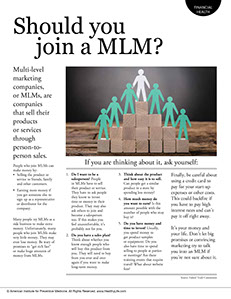
    Tier made of blocks with paper cut out of people.

    Multi-level marketing companies, or MLMs, are companies that sell their products or services through person-to-person sales.

    People who join MLMs can make money by:

    *  Selling the product or service to friends, family and other customers.

    *  Earning more money if you get someone else to sign up as a representative or distributor for the company.

    Many people try MLMs as a side business to make extra money. Unfortunately, many people who join MLMs make very little money. They may even lose money. Be wary of promises to “get rich fast” or make huge amounts of money from MLMs.

    If you are thinking about it, ask yourself:

    1.  Do I want to be a salesperson? People in MLMs have to sell their product or service. They have to ask people they know to invest time or money in their product. They may also ask others to join and become a salesperson too. If this makes you feel uncomfortable, it’s probably not for you.

    2.  Do you have a sales plan? Think about whether you know enough people who will buy this product from you. They will need to buy from you over and over again if you want to make long-term money.

    3.  Think about the product and how easy it is to sell. Can people get a similar product in a store by spending less money?

    4.  How much money do you want to earn? Is this amount possible with the number of people who may buy it?

    5.  Do you have money and time to invest? Usually, you spend money to get product samples or equipment. Do you also have time to spend selling to people at parties or meetings? Are there training events that require travel? What about website fees?

    Finally, be careful about using a credit card to pay for your start-up expenses or other costs. This could backfire if you have to pay high interest rates and can’t pay it off right away.

    It’s your money and your life. Don’t let big promises or convincing marketing try to talk you into an MLM if you’re not sure about it.

    Source: Federal Trade Commission

    © American Institute for Preventive Medicine
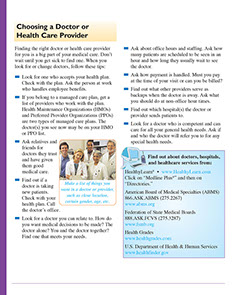
  • Choosing A Doctor Or Health Care Provider

    Medical Care

    Finding the right doctor or health care provider for you is a big part of your medical care. Don’t wait until you get sick to find one. When you look for or change doctors, follow these tips:

    *  Look for one who accepts your health plan. Check with the plan. Ask the person at work who handles employee benefits.

    *  If you belong to a managed care plan, get a list of providers who work with the plan. Health Maintenance Organizations (HMOs) and Preferred Provider Organizations (PPOs) are two types of managed care plans. The doctor(s) you see now may be on your HMO or PPO list.

    *  Ask relatives and friends for doctors they trust and have given them good medical care.

    *  Find out if a doctor is taking new patients. Check with your health plan. Call the doctor’s office.

    *  Look for a doctor you can relate to. How do you want medical decisions to be made? The doctor alone? You and the doctor together? Find one that meets your needs.

    *  Ask about office hours and staffing. Ask how many patients are scheduled to be seen in an hour and how long they usually wait to see the doctor.

    *  Ask how payment is handled. Must you pay at the time of your visit or can you be billed?

    *  Find out what other providers serve as backups when the doctor is away. Ask what you should do at non-office hour times.

    *  Find out which hospital(s) the doctor or provider sends patients to.

    *  Look for a doctor who is competent and can care for all your general health needs. Ask if and who the doctor will refer you to for any special health needs.

    Resources

    American Board of Medical Specialties (ABMS)

    866.ASK.ABMS (275.2267)

    www.abms.org

    Federation of State Medical Boards

    888.ASK.FCVS (275.3287)

    www.fsmb.org

    Health Grades

    www.healthgrades.com

    U.S. Department of Health & Human Services

    www.healthfinder.gov

    Page from the Healthier at Home book by the American Institute for Preventive Medicine. www.HealthyLife.com. All rights reserved.

    © American Institute for Preventive Medicine

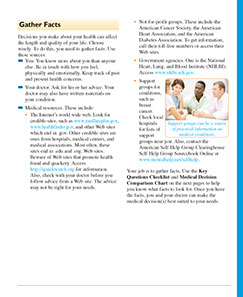
  • Gather Facts

    Medical Care

    Image of 4 people sitting and talking.

    Decisions you make about your health can affect the length and quality of your life. Choose wisely. To do this, you need to gather facts. Use these sources:

    *  You. You know more about you than anyone else. Be in touch with how you feel, physically and emotionally. Keep track of past and present health concerns.

    *  Your doctor. Ask for his or her advice. Your doctor may also have written materials on your condition.

    *  Medical resources. These include:

    – The Internet’s world wide web. Look for credible sites, such aswww.medlineplus.gov,www.healthfinder.gov, and other Web sites which end in .gov. Other credible sites are ones from hospitals, medical centers, and medical associations. Most often, these sites end in .edu and .org. Beware of Web sites that promote health fraud and quackery. Accesshttp://quackwatch.orgfor information. Also, check with your doctor before you follow advice from a Web site. The advice may not be right for your needs.

    – Not-for-profit groups. These include the American Cancer Society, the American Heart Association, and the American Diabetes Association. To get information, call their toll-free numbers or access their Web sites.

    – Government agencies. One is the National Heart, Lung, and Blood Institute (NHLBI). Accesswww.nhlbi.nih.gov.

    – Support groups for conditions, such as breast cancer. Check local hospitals for lists of support groups near you. Also, contact the American Self-Help Group Clearinghouse Self-Help Group Sourcebook Online atwww.mentalhelp.net/selfhelp.

    Your job is to gather facts. Once you have the facts, you and your doctor can make the medical decision(s) best suited to your needs.

    Page from the Healthier at Home book by the American Institute for Preventive Medicine. www.HealthyLife.com. All rights reserved.

    © American Institute for Preventive Medicine
  • Save By Being A Wise Consumer

    Medical Care

    What price, health care?

    It is more common to know the price of a car than the price of health care services. It is also more common to take more time looking for a car than a doctor. To be prepared to take care of your health and health care costs, plan ahead:

    *  Don’t wait until you get sick to find a doctor. Having a doctor can save the expense of having to go to an urgent care center or emergency room.

    *  Know what costs your health plan covers and what you need to pay.

    *  Post a list of places your health plan approves for treatment. When you need care, use them instead of out-of-plan ones, which could cost you extra money.

    *  If you have a yearly deductible, budget for this with the rest of your bills.

    Check credentials.

    You can’t afford to trust your health to just anyone. Find out about doctors from:

    *  American Board of Medical Specialties (ABMS) at 866.ASK.ABMS (275.2267) orwww.abms.org.

    *  DocFinder atwww.docboard.org/docfinder.html.

    *  The Federation of State Medical Boards at 888.ASK.FCVS (275.3287) orwww.fsmb.org.

    *  Health Grades atwww.healthgrades.com.

    Look for quality.

    Check out the track records of health plans, hospitals, and doctors. Contact the Agency for Health Care Research and Quality atwww.ahrq.gov.

    Protect yourself from medical errors.

    These could cost extra money and can even cost you your life. Be your own watch dog. Take an active role in every decision about your health care. If needed, have a family member or friend oversee your care.

    Know about tax breaks.

    Medical and dental expenses are tax deductible if they exceed 7.5% of your adjusted gross income. If you are self-employed, you may be allowed to deduct 45% of the cost of your health insurance premium. Find out fromwww.irs.gov.

    Cover image to the Healthy Savings book by the American Institute for Preventive Medicine. www.HealthyLife.com. All rights reserved.

    © American Institute for Preventive Medicine
  • Be A Wary Weight Loss Consumer

    Healthylife® Weigh

    Part 7

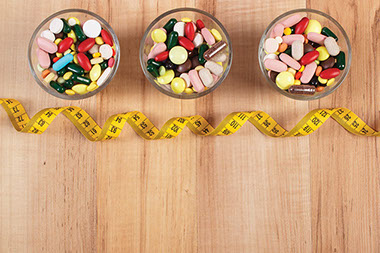
    Pills in glasses with tape measure.

    Be wary of miracle pills and quick fixes, even if offered by a “doctor” or someone claiming to be an expert. At many commercial weight loss centers, the staff may not have medical credentials or any advanced training in nutrition. They are often salespeople calling themselves “counselors,” without any medical training. Be wary of any center that pushes products and supplements over real food.

    Avoid injections or pills that advertise being able to block certain nutrients, like fat or carbohydrates. Avoid “fat burners” and anything claiming to target specific parts of your body for fat loss. These are likely a waste of money and can be dangerous.

    Having someone create your meal plan for you may help you get started, but be sure to learn how to do it yourself. Learn to make your own healthy choices. Avoid weight loss programs and schemes that encourage dependence on special products.

    © American Institute for Preventive Medicine