Tag: Respiratory Health

  • Questions Answered About Mers

    MEDICAL NEWS

    Illustration of lungs with MERS.

    As concern increases about Middle Eastern Respiratory Syndrome, or MERS, in the Middle East and in Asia, Dr. Peter Hotez, dean of the National School of Tropical Medicine at Baylor College of Medicine, answers questions on what we need to know about this emerging infectious disease.

    What is MERS?

    It is a serious lower respiratory infection caused by the MERS coronavirus. This emerging viral pathogen was first acquired from camels, but now has limited human-to-human transmission.

    What are the symptoms?

    The symptoms include fever, cough, and respiratory symptoms that could lead to respiratory failure and other organ system breakdown. This infectious disease is similar to SARS (severe acute respiratory syndrome) that caused a severe and highly lethal outbreak in South China in 2002-2003. Some data from previous SARS outbreaks indicate that 13% of cases may have no symptoms and this could also be true for MERS.

    How is it spread?

    The mode of spread is still not well known. In general, it involves close contact, especially in health care settings. For SARS, a related coronavirus, sneezing and cough seems to facilitate transmission.

    Is there a treatment? Is there a vaccine?

    There is no proven antiviral treatment, yet, for MERS. Several prototype vaccines are in different stages of development.

    Who is at risk? Any groups more at risk?

    For about 30 to 40%, of people who get MERS, the disease is fatal. At greatest risk of dying are the elderly and those with underlying heart and lung disease or diabetes.

    Should we be concerned?

    The MERS epidemic in South Korea looks as though it will be contained soon with all new cases appearing among the estimated 3,000 people in quarantine. However, in Saudi Arabia and elsewhere on the Arabian Peninsula, new cases continue to appear. Individuals thinking about travelling to the Arabian Peninsula should consult their doctor if they are elderly or have underlying chronic disease conditions.

    © American Institute for Preventive Medicine

  • Asthma

    Respiratory conditions

    Asthma is a chronic disease that causes the airways to narrow. Airflow is limited due to inflammation in the airways.

    General Information

    Symptoms

    *  A cough lasts more than a week. Coughing may be the only symptom. It often occurs at night or early in the morning.

    *  Shortness of breath. Breathing gets harder and may hurt. It is harder to breathe out than in.

    *  Wheezing (high pitched whistling sound)

    *  Tightness in the chest

    Causes & Risk Factors

    *  Genetic Factors. You are more likely to have asthma if other members of your family have or had it.

    *  Environmental Factors. Being exposed to certain things can set off an immune system response for asthma to develop. Examples are house-dust mites and viral respiratory infections.

    Diagnosis

    A doctor diagnoses asthma from:

    *  Your medical history

    *  Your family’s medical history

    *  Your symptoms

    *  A physical exam

    *  Lung function tests in persons age 5 years and older

    *  Other tests to check for conditions that have symptoms of asthma, but are not asthma

    Asthma Attack Triggers

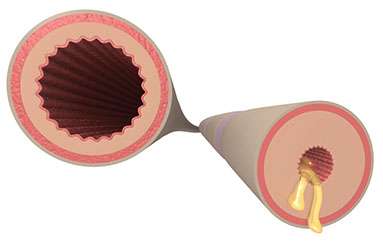
    People with asthma have very sensitive airways. Exposure to triggers causes a response in the airways called an asthma attack or an asthma episode.

    With an asthma attack:

    *  Air becomes trapped in the lungs.

    *  The lining of the airways becomes inflamed.

    *  The muscles around the air tubes tighten.

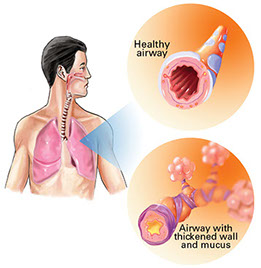
    *  Thick mucus clogs the airways.

    Illustration of airway.

    (The last three things cause the airways to narrow.)

    Problems That Make It Harder to Manage Asthma

    *  Reflux of stomach acids which cause heartburn, belching, or spitting up

    *  Being overweight or obese

    *  Allergic rhinitis or sinusitis

    *  Sleep apnea that obstructs breathing

    *  Stress and depression

    Treating these problems may help improve asthma control.

    Common Asthma Attack Triggers

    *  Respiratory infections (colds, flu, bronchitis, etc.)

    *  Tobacco smoke

    *  Dust mites

    *  Animal dander (small pieces of skin, hair, or feathers from warm-blooded animals, such as dogs, cats, birds, etc.)

    *  Cockroach droppings

    *  Molds (indoor and outdoor)

    *  Strong odors and sprays from paints, new carpet, perfumes, etc.

    *  Air pollution

    *  Cold air and changes in temperature and humidity. Weather changes can also affect how much pollen and mold are in the air.

    *  Having strong feelings (laughing, crying, etc.)

    *  Sulfites. These are additives in wine and some foods, such as processed potatoes and dried fruits. Shellfish packed in ice that has sulfites can pick up the sulfites from the ice.

    *  Aspirin and other nonsteroidal anti-inflammatory drugs (NSAIDs), such as ibuprofen

    *  Beta blocker medicines. These are prescribed for heart disease, high blood pressure, and migraine headaches.

    When to Seek Medical Care

    Reasons to Call Doctor

    Call your doctor when you feel the first change in your asthma status. Deal with a problem early to help prevent a severe problem.

    *  You have asthma and have a cold or a fever.

    *  You cough up mucus that is bloody-colored, green, or yellow.

    *  An asthma attack does not respond to your medication.

    *  Medication is not helping like it used to.

    *  Your peak expiratory flow (PEF) numbers are in the yellow zone.

    *  You have a harder time breathing or you are short of breath more often than before.

    *  You breathe faster than usual.

    *  Your asthma attacks are coming more often or are getting worse.

    *  You use your rescue medication more than 2 times a week.

    Reasons to Get Medical Care Fast

    *  Your peak expiratory flow (PEF) numbers are in the red zone.

    *  You have a fever with heavy breathing.

    *  You have extreme shortness of breath. It may feel as if you can’t breathe at all. Or, you can’t say 4 or 5 words because you are so short of breath. Call 911!

    *  You cough so much that you can’t take a breath. Call 911!

    *  Your lips or fingernails are bluish in color. Call 911!

    Focus on breathing slow and easy until you get medical care. Sit upright. Try to remain as calm and relaxed as you can.

    Peak Flow Meters

    These devices measure peak expiratory flow (PEF). PEF is the amount of air blown out after taking a deep breath. Your PEF readings can tell you and your health care provider:

    *  About asthma triggers

    *  If an asthma attack is starting. PEF is decreased with an asthma attack.

    *  If your medicine plan is working

    *  When to add or stop medicine

    *  How severe your asthma is

    Use your peak flow meter, as directed by your doctor or health care provider.

    Find Your Personal Best Peak Flow Number

    Your personal best peak flow number is the highest peak flow number you can get over a 2-week period when your asthma is under good control. Good control is when you feel good and do not have any asthma symptoms.

    Take peak flow readings:

    *  Twice a day for 2 weeks – when you wake up and  about 10 to 12 hours later

    *  Before and after taking an inhaled beta2-agonist (if you take this medicine)

    *  As advised by your doctor or health care provider

    The Peak Flow Zone System

    Once you know your personal best peak flow number, your health care provider will give you the numbers that tell you what to do. The peak flow numbers are put into zones that are set up like a traffic light.

    Green Zone (80 to 100 percent of your personal best number). This signals all clear. No asthma symptoms are present, and you may take your medicines as usual.

    Yellow Zone (50 to 80 percent of your personal best number). This signals caution. You may need to take more of your asthma medicine(s) to treat your asthma. Or, your overall asthma may not be under control, and the doctor may need to change your asthma action plan.

    Red Zone (below 50 percent of your personal best number). This signals a medical alert. You must take an inhaled beta2-agonist right away and call your doctor without delay if your peak flow number does not return to the Yellow or Green Zone and stay in that zone.

    Treatment

    The goals of treatment are to:

    A. Prevent asthma attacks and control or treat asthma symptoms as they occur

    B. Allow normal daily activities, including exercise

    C. Promote restful sleep, free from waking up with asthma symptoms

    D. Do A, B, and C with few or no side effects from asthma medications

    E. Have no need for emergency medical care or to be hospitalized due to asthma

    Treatment for asthma varies on how severe it is and how well it is controlled. Since a person’s asthma can change over time and the response to medications may be age-related, asthma treatment guidelines are given for three different age groups:

    *  0-4 years

    *  5-11 years

    *  12 years and older

    A good way to help you manage your asthma is to follow a written action management plan that you develop with your doctor or health care provider. Your plan should include:

    *  What to do daily to avoid and deal with your asthma triggers and what to do when you have an asthma attack

    *  Names and doses of medicines to take daily and when you have specific symptoms

    *  Reasons to contact your doctor or to get medical care fast

    *  Your plan should be tailored for your needs.

    Keep a journal of your asthma symptoms. Include:

    *  When you had symptoms and what may have caused them. What you did to treat the symptoms. List the medicines you took, how you took them, and how much you took.

    *  Your peak flow meter readings. Record these before and after treatment steps.

    *  Results of the treatment steps you took

    Self-Care

    *  Know your warning signs and peak flow zones so you can begin treatment early. Monitor your peak expiratory flow rates. (See “Peak Flow Meters”.)

    *  Keep your asthma rescue medicine handy.

    *  Get a yearly flu vaccine, as advised.

    During an asthma attack:

    *  Sit up. Don’t lie down.

    *  RELAX. Keep calm. Focus on breathing slow and easy. Remove yourself from any stressors.

    *  Take the right amount of medicine, as prescribed in your asthma control plan. Call your doctor if you need to take more medicine than prescribed.

    Avoid your asthma triggers

    *  Do not smoke. Do not allow smoking in your home, car, or around you. Avoid air pollution.

    *  Use bedding, flooring, paint, vaccum cleaners, toys, and other products that are “Certified Asthma & Allergy Friendly™.” (Search for items fromwww.asthmaandallergyfriendly.com.) It is especially helpful to use these products in your bedroom and/or:

    – Sleep with no pillow or one your doctor suggests. Use a “dust-mite proof” cover to enclose your mattress and pillow (if you use one). Wash all bedding in hot water every week.

    – Try not to keep stuffed animals in the bedroom. If you must, have only one that can be washed. Wash it in hot water once a week.

    – Use curtains and rugs that can be washed often. Avoid carpeting, bed ruffles, and throw pillows.

    – Get someone else to vacuum and dust once or twice a week. Use a vacuum with a HEPA filter or double-thickness bags. If you dust or vaccum, wear a dust mask.

    – Reduce clutter in your bedroom. Store items in plastic containers with lids.

    – It is best not to keep a TV, DVD-player, etc. in your bedroom. These, too, can collect dust.

    *  Put an air filter on your furnace or use a portable air purifier, such as one with a HEPA filter.

    *  Stay out of the cold weather as much as you can.

    *  Change and/or wash furnace and air conditioner filters on a regular basis. Keep indoor humidity below 60 percent.

    *  When you are outside in cold weather, wear a scarf around your mouth and nose to warm the air as you breathe in.

    *  Stop exercising if you start to wheeze.

    *  If you are sensitive to sulfites, don’t take foods or medicines that have them. Sulfites are in wine, some processed potatoes and dried fruits. Shellfish packed in ice that has sulfites can pick up the sulfites from the ice.

    *  Drink plenty of liquids (2-3 quarts a day) to keep secretions loose.

    *  Don’t take over-the-counter medications unless cleared first with your doctor or health care provider.

    – Antihistamines dry nasal secretions and can cause airways to plug up by making secretions thicker. Antihistamines are also found in some cold remedies, so check labels.

    – Some ulcer drugs increase the effects of some bronchodilators.

    – Aspirin can trigger an attack in 3-5 percent of persons with asthma who have nasal polyps. Acetaminophen doesn’t have this effect.

    Medications

    Some medications are to be taken with an asthma attack. Other kinds are taken daily (or as prescribed) to help prevent asthma attacks.

    Long-Term Control Medicines

    These are taken daily (or as prescribed) to help prevent asthma attacks. Examples are:

    *  Corticosteroids. These help with the swelling in the airways that cause asthma symptoms. They can prevent, reduce, and/or reverse the swelling.

    – Inhaled corticosteroids (ICSs). These are the most effective long-term medicines that control asthma. These are not the same as anabolic steroids that athletes may abuse.

    – Oral corticosteroids. An example is prednisone. These are usually given for a short time, when a person’s asthma is not being controlled. Long-term use of these may be prescribed for persons with severe asthma that persists.

    *  Cromolyn sodium and nedocromil. These help prevent swelling in the airways when exposed to asthma triggers. They treat mild asthma that persists.

    *  LABAs (long acting beta2-agonists). These are bronchodilators. They relax the muscles of the airways. They are usually taken with ICSs to help control moderate and severe asthma and to help prevent symptoms during the night.

    *  Leukotriene modifiers. These prevent swelling in the airways and decrease mucus in the lungs. They treat mild asthma that persists or are combined with ICSs to treat moderate or severe asthma.

    *  Theophyllines. These are mild to moderate bronchodilators that may have mild anti-inflammatory effects.

    *  Medicines that modify the body’s immune response.

    Quick-Relief Medicines

    These are used to treat symptoms of an asthma attack. They help stop asthma symptoms before they get worse. They may be prescribed for use at other times, too, such as before exercising. Examples are:

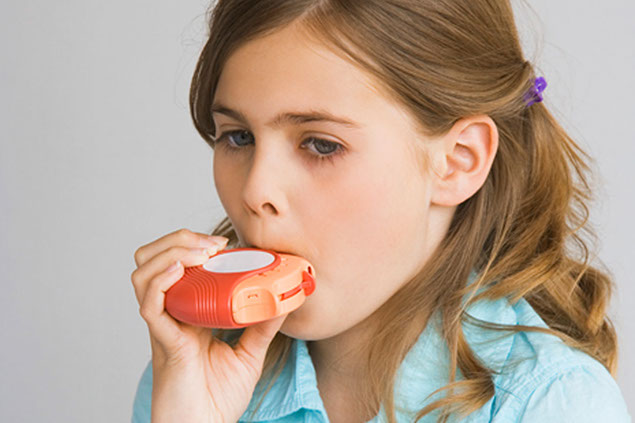
    *  SABAs (short-acting beta-agonists). These are bronchodilators. They work quickly to relax the muscles of the airways and open up the air passages in the lungs and are the treatment of choice to relieve acute symptoms. They are usually taken in an inhaled form.

    *  Anticholinergics. These help prevent airway muscles from tightening and help keep mucus from forming. These are usually taken in an inhaled form.

    With proper treatment and monitoring of symptoms, asthma can be controlled. People with asthma can live active and healthy lives.

    Resources

    The Asthma and Allergy Foundation of America

    800.7.ASTHMA (727.8462)

    www.aafa.org

    National Heart, Lung, and Blood Institute

    301.592.8573

    www.nhlbi.nih.gov

    Asthma brochure by the American Institute for Preventive Medicine. www.HealthyLife.com. All rights reserved.

    © American Institute for Preventive Medicine

  • Ragweed

    WELL-BEING

    Image of ragweed.

    Maybe you’ve never been allergic to ragweed. You may not be miserable at the end of summer during ragweed season like a lot of other people.

    But even if you’ve never had a problem with seasonal hay fever caused by ragweed, don’t assume that runny nose and itchy eyes are caused by a cold.

    The truth, according to the American College of Allergy, Asthma and Immunology, is that anyone can develop an allergy-including an allergy to ragweed-later in life.

    Scientists think it may be you’ve always had the allergy, but it might have taken exposure to another allergen to trigger your symptoms. If symptoms won’t go away, lasting more than 2 weeks, you probably have allergies.

    Common allergy symptoms include itchy eyes and nose, as well as sneezing, but the mucus is typically clear.

    You’ll want to talk with your doctor first about over-the-counter medications to try to relieve those annoying symptoms.

    © American Institute for Preventive Medicine

  • Breathe Comfortably

    Respiratory conditions

    Mom helping child with a breathing treatment.

    In colder climates, cold, dry air can irritate the airways and lungs. When you are outside in cold weather, wear a scarf and try to breathe through your nose. Don’t let indoor air drop below 64 degrees. Regularly use a nasal saline spray or gel. If you have pre-existing lung conditions, such as asthma, avoid using any wood-burning fireplaces in the winter. The smoke from the fire may also irritate your nasal passages. And, stay on top of your medication regimens.

    Be More Earth-Friendly

    When it gets cold outside, bring your plants inside! Find a sunny spot in a well-lit area of your house. Only water indoor plants when the soil feels dry and avoid placing them near air vents.

    Health at Home Lifetime book by the American Institute for Preventive Medicine. www.HealthyLife.com. All rights reserved.

    © American Institute for Preventive Medicine

  • What To Know About Whooping Cough

    SELF-CARE CORNER

    Image of man coughing.

    Pertussis, or whooping cough, is more than just an annoying cough. It is a serious and highly contagious disease. The coughing is so severe it causes those affected to gasp for air in between coughs, which make a “whooping” sound that can last for weeks or months. The cough may cause a person to stop breathing temporarily, turn blue, and even vomit. Many people are unable to eat or sleep due to the severe coughing spells. It can lead to complications, such as pneumonia, cracked ribs, and seizures. It can also be life-threatening.

    Whooping cough is on the rise in the U.S. Here’s what you should know to protect yourself and those around you.

    You can spread it before you even know you have it.

    Whooping cough may feel like you have a cold at first. This stage lasts one to two weeks. It often includes a runny nose, sneezing, low-grade fever, and a mild cough. Unfortunately, many people don’t realize they have whooping cough during this stage and can spread it to others.

    Infants under 6 months of age are the most likely to die from pertussis.

    Babies are given whooping cough vaccine at two, four and six months of age. Until they have had all these vaccines, they are more likely to catch whooping cough. The Immunization Action Coalition says babies under six months of age are the most vulnerable because they don’t yet have strong immunity to protect against it.

    Adults are the most likely to pass the infection to young infants.

    The National Foundation for Infectious Diseases (NFID) says adults are the most common source of whooping cough infection in babies.

    Even if you already had a whooping cough vaccine, you might need another one.

    Vaccines aren’t just for babies and kids. Recommendations for whooping cough vaccination have changed in recent years.

    The NFID says the following adults should be vaccinated:

    *  All adults age 19 and older need a whooping cough booster. This is called a Tdap vaccine. It also protects against tetanus and diphtheria.

    *  Pregnant women need a Tdap vaccine during the third trimester (between 27 and 36 weeks of every pregnancy).

    *  Adults of any age who may be in close contact with babies younger than 1 year of age should get a Tdap vaccine. It should be given at least two weeks before being around the baby, if possible.

    *  Health care employees in hospitals and health centers should get the Tdap.

    *  After getting the Tdap vaccine, all other adults should get the Td (tetanus and diphtheria) booster every 10 years.

    © American Institute for Preventive Medicine

  • Breathe Healthy

    Respiratory conditions

    Man standing outside, arms open, eyes closed, breathing fresh air.

    Take a slow, deep breath while counting to 5. Now blow it out slowly to the count of 5. Isn’t it amazing how the simple act of taking a breath can make you feel calm? You have your lungs to thank. Together, they provide oxygen for every cell in your body and influence every part of your health. When your lungs are healthy, the rest of you can be too. But unhealthy lungs make everyday activities a struggle.

    To breathe easier, protect your lungs from irritants like cigarette smoke and pollutants, exercise for optimal lung health, and practice deep breathing to exercise your lungs.

    Health at Home Lifetime book by the American Institute for Preventive Medicine. www.HealthyLife.com. All rights reserved.

    © American Institute for Preventive Medicine

  • Bronchitis

    Respiratory conditions

    Acute bronchitis is swelling of the air passages of the lung. Chronic bronchitis is swelling of the air passages of the lung that persists for a long time or occurs again and again.

    Acute Bronchitis

    Signs & Symptoms

    *  A cough starts out dry. Then mucus or phlegm come with the cough. Hoarseness or a sore throat can also occur.

    *  Chills. Fever less than 102ºF.

    *  Feeling of pressure behind the breastbone or a burning feeling in the chest.

    These symptoms can last from 3 days to 3 weeks. They go away when the acute episode is over.

    Causes

    *  A viral or bacterial infection.

    *  Pollutants, such as smog.

    These attack the mucus membranes within the windpipe or air passages in your respiratory tract leaving them red and inflamed. Acute bronchitis often develops after a cold or other respiratory infection.

    Treatment

    Most of the time, this type is caused by a virus and goes away without treatment. Sometimes, a doctor may prescribe:

    *  Bronchodilators. These medicines open up air passages in the lungs.

    *  An antibiotic if you smoke, are older than age 40, or if you have a condition or take medication that makes it hard for you to fight infections.

    Chronic Bronchitis

    Signs & Symptoms

    *  A cough with mucus or phlegm for 3 or more months at a time. This occurs for more than 2 years in a row.

    *  Shortness of breath with exertion (in early stages).

    *  Shortness of breath at rest (in later stages).

    Many people, most of them smokers, develop emphysema (destruction of the air sacs) with chronic bronchitis. This is chronic obstructive pulmonary disease (COPD).

    Causes

    *  Cigarette smoking. This is the most common cause.

    *  Air pollution.

    *  Repeated infections of the air passages in the lungs.

    Chronic bronchitis causes permanent damage to the respiratory tract. It can make you more prone to respiratory infections like acute bronchitis and pneumonia. Chronic bronchitis is not contagious.

    Treatment

    *  Not smoking. Avoiding secondhand smoke.

    *  Avoiding or reducing exposure to air pollution, chemical irritants, and cold, wet weather.

    *  Medical treatment as needed, for airway infections and heart problems.

    *  Oxygen, as prescribed.

    Questions to Ask

    Self-Care / Prevention

    *  Don’t smoke. Avoid secondhand smoke.

    *  Reduce your exposure to air pollution. Use air conditioning, air filters, and a mouth and nose filter mask if you have to. Stay indoors during episodes of heavy air pollution.

    *  Rest. Drink plenty of liquids.

    *  Breathe air from a cool-mist vaporizer. Bacteria grows in vaporizers, so clean your unit after each use. Breathing in mist with bacteria can make bronchitis worse. Use distilled (not tap) water in the vaporizer.

    *  Take an over-the-counter medicine for fever, pain, and/or inflammation as directed.

    *  Instead of cough suppressants, use expectorants.

    *  Use bronchodilators and/or take antibiotics as prescribed by your doctor.

    Resources

    American Lung Association

    800.LUNG.USA (586.4872)

    www.lungusa.org

    Healthier at Home book by the American Institute for Preventive Medicine. www.HealthyLife.com. All rights reserved.

    © American Institute for Preventive Medicine

  • Copd

    Respiratory conditions

    The letters COPD are for chronic obstructive pulmonary disease. This is lung disease that worsens over time. With COPD, airways are narrowed and blocked. The lungs are damaged. Having COPD makes it hard to breathe in and out. In the U.S. and throughout the world, COPD is a major cause of illness and death. Most often, COPD is due to one or both of these problems:

    *  Chronic bronchitis. This causes swelling and the build-up of mucus in the lungs.

    *  Emphysema. This damages the walls of the air sacs in the lungs.

    Illustration of COPD.

    Signs & Symptoms

    *  A chronic cough. The cough brings up mucus or phlegm.

    *  Shortness of breath. This is usually worse with exercise or when you exert yourself.

    *  Feeling like you can’t take a full, deep breath

    *  Chest tightness

    *  Wheezing. This is a whistling sound when you breathe.

    *  Frequent colds and other respiratory infections

    *  Swelling in the legs, ankles, and feet

    Symptoms of COPD usually start after 40 years of age and slowly worsen over time.

    Diagnosis

    COPD is usually diagnosed with a breathing test called spirometry. Spirometry measures how much air your lungs can hold and how fast you can blow air out of your lungs. It is a simple and fast test. Your doctor or nurse technician will ask you to take a deep breath and then breathe out as hard and as fast as you can into a mouthpiece. The spirometer will measure and record the results.

    A chest X-ray or CT scan can also diagnose COPD. Sometimes, a blood sample is taken  to test levels of oxygen and carbon dioxide in the blood.

    Causes

    *  Smoking. This is the main cause. More than 90 percent of people with COPD are smokers or former smokers.

    *  Breathing in other lung irritants over a long period of time. These include air pollution and dust or chemicals used in the mining and textile industries.

    *  In some rare cases, having a genetic disorder called Alpha-1 antitrypsin deficiency. This is due to a defective protein in the blood.

    When to Seek Medical Care

    Reasons to Call Your Health Care Provider

    *  You have a much harder time catching your breath.

    *  You have sudden tightness in your chest.

    *  You cough a lot more, it becomes difficult to cough, or you cough up yellow, green, brown or red-colored mucus.

    *  You have a fever.

    *  You have heart palpitations or a faster pulse   than usual.

    *  You have a sudden increase or loss of appetite.

    *  You have blurry vision or see double.

    *  You become unusually dizzy or sleepy or you can’t think clearly.

    *  You are anxious or depressed.

    Reasons to Get Emergency Care

    *  Your lips or fingernails are blue or gray.

    *  It is hard for you to talk or walk.

    *  Your breathing is fast and hard, even after taking medicine.

    *  Your heart is beating very fast or irregularly.

    Prevention

    The best way to prevent COPD is to not smoke. If you smoke, commit to quit! Talk to your doctor about over-the-counter or prescribed medications that can help you quit. To increase your chances of success, take part in a stop smoking class or program.

    *  Avoid secondhand smoke and other lung irritants.

    *  If you work in an at-risk industry, wear protective clothing and equipment. Follow the safety measures of your workplace.

    You can get help to quit smoking from:

    1-877-44U-QUIT (448-7848)

    1-800-QUIT-NOW (784-8669)

    www.lungusa.org

    www.smokefree.gov

    Treatment

    Work with your health care provider to develop and follow a treatment plan to meet your needs.

    Medications

    *  Bronchodilators relieve shortness of breath and keep airways open.

    *  Anticholinergics relax airway muscles.

    *  Inhaled steroids reduce swelling in the airways.

    *  Antibiotics and antiviral drugs treat infections that occur with COPD and that make it worse.

    Oxygen Therapy

    Your doctor may prescribe oxygen therapy if oxygen levels in your blood are too low. Oxygen is provided by an oxygen cylinder or concentrator and delivered through a nasal tube. It can help you be more active and lead a better life.

    *  Use your oxygen, as advised by your doctor or care specialist.

    *  Do not smoke or let people around you smoke while oxygen is in use.

    *  Before you travel, ask your doctor how to have your oxygen needs met. Discuss where you plan to go and your method of travel. If you are flying, check with the airline for rules about traveling with oxygen. You may need a letter from your doctor or copies of your oxygen prescription, so plan ahead.

    Vaccines

    People who have COPD are more likely to be sicker longer and may have more serious health problems when they get the flu or pneumonia.

    *  Get a yearly flu shot. Get information fromwww.cdc.gov/fluor 1-800-CDC-INFO (232-4636).

    *  Get a pneumonia vaccine, as advised by your doctor.

    *  Lower your risk of illness. Wash your hands often with soap and water and keep them away from your eyes, nose, and mouth. When you can’t wash your hands, use alcohol-based hand cleaners. Avoid crowded places when possible.

    Pulmonary Rehabilitation

    You work with a team of health care providers to create a personal treatment plan and set goals. You learn to manage your COPD to live a more normal life. Pulmonary rehabilitation includes:

    *  Exercise. This strengthens your muscles and improves your endurance. It makes it easier for you to move, do activities, and take care of yourself. You will find out how often to exercise, for how long, and how hard to push yourself.

    *  Emotional Support. Many people who have COPD also deal with depression, anxiety, and low self-esteem. Some programs offer emotional support, group counseling, and/or relaxation training.

    *  Disease Education. You will learn how to quit smoking, eat healthy, and manage symptoms.

    Self-Care

    Quit smoking! This is the most important thing you can do to manage your COPD.

    Learn your triggers and know how to avoid them.

    *  Don’t smoke.

    *  Control household triggers, such as dust. Wear a filter mask when you vacuum, dust, and do hobbies or work that involve dust and other irritants. Use a damp (not dry) cloth for dusting.

    *  Keep your home well-ventilated.

    *  Do not use aerosols, ammonia, lye, kerosene, powders or solvents. Find out about products that are safe for you and the environment at Indoor Air Quality (IAQ) House atwww.epa.gov/iaqandwww.epa.gov.

    *  Stay inside when air quality is poor. Find Air Quality Index forecasts fromwww.airnow.gov.

    *  Follow your health care provider’s advice for using air filters and air purifiers.

    Manage your coughing.

    *  Do not take over-the-counter cough or other medicines unless your doctor tells you to. Your health care provider can teach you techniques for coughing comfortably and productively.

    *  Unless you are told by your doctor to limit your fluids, drink at least 8 glasses of water a day to keep mucus thin and easier to cough up.

    Practice pursed lip breathing to relieve shortness of breath:

    *  Relax. Close your mouth. Breathe in through your nose. Do this slowly and count: one, two.

    *  Purse your lips like you are going to whistle. Breathe out slowly and count: one, two, three, and four.

    *  Do not do this tight-lipped.

    Resources

    The Asthma and Allergy Foundation of America

    800.7.ASTHMA (727.8462)

    www.aafa.org

    National Heart, Lung, and Blood Institute

    301.592.8573

    www.nhlbi.nih.gov

    COPD brochure by the American Institute for Preventive Medicine. www.HealthyLife.com. All rights reserved.

    © American Institute for Preventive Medicine

  • Emphysema

    Respiratory conditions

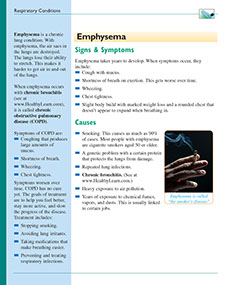
    Emphysema is a chronic lung condition. With emphysema, the air sacs in the lungs are destroyed. The lungs lose their ability to stretch. This makes it harder to get air in and out of the lungs.

    When emphysema occurs with chronic bronchitis it is called chronic obstructive pulmonary disease (COPD).

    Signs & Symptoms

    Emphysema takes years to develop. When symptoms occur, they include:

    *  Cough with mucus.

    *  Shortness of breath on exertion. This gets worse over time.

    *  Wheezing.

    *  Chest tightness.

    *  Slight body build with marked weight loss and a rounded chest that doesn’t appear to expand when breathing in.

    Symptoms of COPD are:

    *  Coughing that produces large amounts of mucus.

    *  Shortness of breath.

    *  Wheezing.

    *  Chest tightness.

    Symptoms worsen over time. COPD has no cure yet. The goals of treatment are to help you feel better, stay more active, and slow the progress of the disease. Treatment includes:

    *  Stopping smoking.

    *  Avoiding lung irritants.

    *  Taking medications that make breathing easier.

    *  Preventing and treating respiratory infections.

    Causes

    *  Smoking. This causes as much as 90% of cases. Most people with emphysema are cigarette smokers aged 50 or older.

    *  A genetic problem with a certain protein that protects the lungs from damage.

    *  Repeated lung infections.

    *  Chronic bronchitis.

    *  Heavy exposure to air pollution.

    *  Years of exposure to chemical fumes, vapors, and dusts. This is usually linked to certain jobs.

    Treatment

    *  A program, medication, and/or nicotine replacement to stop smoking.

    *  Physical therapy to loosen mucus in the lungs for chronic bronchitis.

    *  Medicines, such as bronchodilators, corticosteroids, and antibiotics.

    *  Flu and pneumonia vaccines.

    *  Surgery that removes the most severely diseased parts of the lung. A lung transplant may be needed for some persons with very severe disease.

    Emphysema can’t be reversed. By the time it is found, 50% to 70% of lung tissue may already be destroyed. Prevention is the only way to avoid permanent damage.

    Questions to Ask

    Self-Care / Prevention

    *  Don’t smoke. If you smoke, quit. Avoid secondhand smoke.

    *  Limit exposure to air pollution and lung irritants. Follow safety measures when working with materials that can irritate your lungs.

    *  Use a cool-mist vaporizer indoors.

    *  Drink plenty of fluids.

    *  Avoid dust, fumes, pollutants, etc.

    *  Do breathing exercises as advised by your doctor.

    *  Exercise daily as prescribed by your doctor or exercise therapist.

    Resources

    American Lung Association

    800.LUNG.USA (586.4872)

    www.lungusa.org

    National Cancer Institute’s Smoking Quitline

    877.44U.QUIT (448.7848)

    National Heart, Lung, and Blood Institute

    www.nhlbi.nih.gov

    Smokefree.Gov

    800.QUIT.NOW (748.8669)

    www.smokefree.gov

    Healthier at Home book by the American Institute for Preventive Medicine. www.HealthyLife.com. All rights reserved.

    © American Institute for Preventive Medicine

  • Hiccups

    Respiratory conditions

    Image of women drinking a glass of water.

    Hiccups are simple to explain. The diaphragm (the major muscle which sits like a cap over the stomach) goes into spasms. The vocal cords close rapidly. This causes the “hiccup” sound.

    Causes

    *  Eating too fast. Swallowing air with the food.

    *  Drinking carbonated beverages. Drinking too much alcohol.

    *  Doing things to make the stomach full enough to irritate the diaphragm, such as eating a lot of fatty foods in a short period of time.

    Treatment

    Hiccups seldom cause harm. Usually, they don’t last very long. Self-Care treats most cases of hiccups. Hiccups that persist could be a sign of a nervous system problem. A doctor needs to diagnose and treat this.

    Questions to Ask

    Self-Care / Prevention

    Common Remedies for Hiccups

    *  Swallow 1 teaspoon of dry table sugar. If this doesn’t stop the hiccups right away, repeat it 3 times, at 2-minute intervals. {Note: For young children (that do not have diabetes), use a teaspoon of corn syrup.}

    *  Hold your tongue with your thumb and index finger and gently pull it forward.

    *  Drink a glass of water rapidly. {Note: Young children should drink a glass of milk slowly.}

    Healthier at Home book by the American Institute for Preventive Medicine. www.HealthyLife.com. All rights reserved.

    © American Institute for Preventive Medicine