Tag: Respiratory Health

  • Lung Cancer

    Respiratory conditions

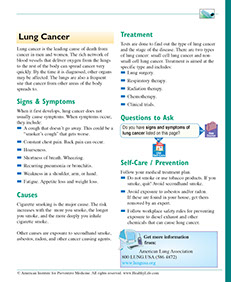
    Lung cancer is the leading cause of death from cancer in men and women. The rich network of blood vessels that deliver oxygen from the lungs to the rest of the body can spread cancer very quickly. By the time it is diagnosed, other organs may be affected. The lungs are also a frequent site that cancer from other areas of the body spreads to.

    Signs & Symptoms

    When it first develops, lung cancer does not usually cause symptoms. When symptoms occur, they include:

    *  A cough that doesn’t go away. This could be a “smoker’s cough” that gets worse.

    *  Constant chest pain. Back pain can occur.

    *  Hoarseness.

    *  Shortness of breath. Wheezing.

    *  Recurring pneumonia or bronchitis.

    *  Weakness in a shoulder, arm, or hand.

    *  Fatigue. Appetite loss and weight loss.

    Causes

    Cigarette smoking is the major cause. The risk increases with the  more you smoke, the longer you smoke, and the more deeply you inhale cigarette smoke.

    Other causes are exposure to secondhand smoke, asbestos, radon, and other cancer causing agents.

    Treatment

    Tests are done to find out the type of lung cancer and the stage of the disease. There are two types of lung cancer: small cell lung cancer and non-small cell lung cancer. Treatment is aimed at the specific type and includes:

    *  Lung surgery.

    *  Respiratory therapy.

    *  Radiation therapy.

    *  Chemotherapy.

    *  Clinical trials.

    Questions to Ask

    Self-Care / Prevention

    Follow your medical treatment plan.

    *  Do not smoke or use tobacco products. If you smoke, quit! Avoid secondhand smoke.

    *  Avoid exposure to asbestos and/or radon. If these are found in your house, get them removed by an expert.

    *  Follow workplace safety rules for preventing exposure to diesel exhaust and other chemicals that can cause lung cancer.
    Healthier at Home book by the American Institute for Preventive Medicine. www.HealthyLife.com. All rights reserved.

    © American Institute for Preventive Medicine
  • Pneumonia

    Respiratory conditions

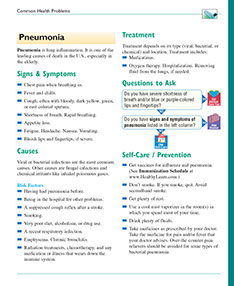
    Pneumonia is lung inflammation. It is one of the leading causes of death in the U.S., especially in the elderly.

    Signs & Symptoms

    *  Chest pain when breathing in.

    *  Fever and chills.

    *  Cough, often with bloody, dark yellow, green, or rust-colored sputum.

    *  Shortness of breath. Rapid breathing.

    *  Appetite loss.

    *  Fatigue. Headache. Nausea. Vomiting.

    *  Bluish lips and fingertips, if severe.

    Causes

    Viral or bacterial infections are the most common causes. Other causes are fungal infections and chemical irritants like inhaled poisonous gases.

    Risk Factors

    *  Having had pneumonia before.

    *  Being in the hospital for other problems.

    *  A suppressed cough reflex after a stroke.

    *  Smoking.

    *  Very poor diet, alcoholism, or drug use.

    *  A recent respiratory infection.

    *  Emphysema. Chronic bronchitis.

    *  Radiation treatments, chemotherapy, and any medication or illness that wears down the immune system.

    Treatment

    Treatment depends on its type (viral, bacterial, or chemical) and location. Treatment includes:

    *  Medications.

    *  Oxygen therapy. Hospitalization. Removing fluid from the lungs, if needed.

    Questions to Ask

    Self-Care / Prevention

    *  Get vaccines for influenza and pneumonia.

    *  Don’t smoke. If you smoke, quit. Avoid secondhand smoke.

    *  Get plenty of rest.

    *  Use a cool-mist vaporizer in the room(s) in which you spend most of your time.

    *  Drink plenty of fluids.

    *  Take medicines as prescribed by your doctor. Take the medicine for pain and/or fever that your doctor advises. Over-the-counter pain relievers should be avoided for some types of bacterial pneumonia.

    Healthier at Home book by the American Institute for Preventive Medicine. www.HealthyLife.com. All rights reserved.

    © American Institute for Preventive Medicine
  • Wheezing

    Respiratory conditions

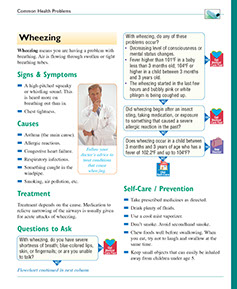
    Wheezing means you are having a problem with breathing. Air is flowing through swollen or tight breathing tubes.

    Signs & Symptoms

    *  A high-pitched squeaky or whistling sound. This is heard more on breathing out than in.

    *  Chest tightness.

    Causes

    *  Asthma (the main cause).

    *  Allergic reactions.

    *  Congestive heart failure.

    *  Respiratory infections.

    *  Something caught in the windpipe.

    *  Smoking, air pollution, etc.

    Treatment

    Treatment depends on the cause. Medication to relieve narrowing of the airways is usually given for acute attacks of wheezing.

    Questions to Ask

    Self-Care / Prevention

    *  Take prescribed medicines as directed.

    *  Drink plenty of fluids.

    *  Use a cool-mist vaporizer.

    *  Don’t smoke. Avoid secondhand smoke.

    *  Chew foods well before swallowing. When you eat, try not to laugh and swallow at the same time.

    *  Keep small objects that can easily be inhaled away from children under age 5.

    Healthier at Home book by the American Institute for Preventive Medicine. www.HealthyLife.com. All rights reserved.

    © American Institute for Preventive Medicine
  • Allergy Or Asthma? Know The Difference

    SELF-CARE CORNER

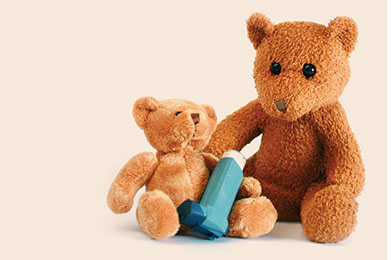
    Image of 2 teddy bears next to an asthma inhaler.

    Allergies are caused by an over-reaction of the immune system to certain substances (called allergens) in the air (pollen, dust mites, for example), eaten (such as peanuts or shrimp), injected (like a bee sting or certain medicines), or touched (poison ivy or latex are good examples), according to the Asthma and Allergy Foundation of America.

    Symptoms of an allergy may be some or all of these:

    *  Sneezing

    *  Runny nose (clear discharge)

    *  Itchy nose or throat

    *  Coughing

    *  Skin rashes or hives

    Asthma occurs when airways become temporarily blocked or narrowed because of exposure to allergens, irritants, strenuous exercise, anxiety, or other triggers. If an asthma attack is severe, a person may need emergency treatment.

    Asthma symptoms can include some or all of these:

    *  Sudden shortness of breath

    *  Difficulty breathing

    *  Tight chest

    *  Wheezing or coughing

    © American Institute for Preventive Medicine