Tag: routine

  • Sleep Tips

    Sleep Well

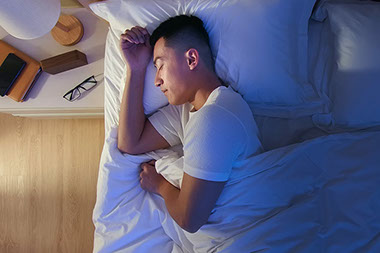
    Man sleeping.

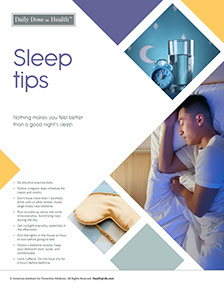
    Nothing makes you feel better than a good night’s sleep.

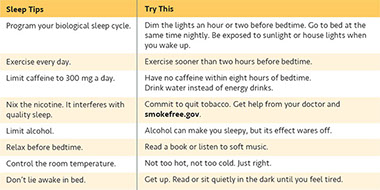
    *  Do physical exercise daily.

    *  Follow a regular daily schedule for meals and snacks.

    *  Don’t have more than 1 alcoholic drink with or after dinner. Avoid large meals near bedtime.

    *  Plan to wake up about the same time everyday. Avoid long naps during the day.

    *  Get sunlight everyday, especially in the afternoon.

    *  Dim the lights in the house an hour or two before going to bed.

    *  Follow a bedtime routine. Keep your bedroom dark, quiet, and comfortable.

    *  Limit caffeine. Do not have any for 6 hours before bedtime.

    © American Institute for Preventive Medicine

  • Sleep Well, Be Well

    Sleep Well

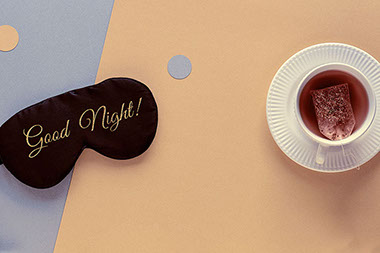
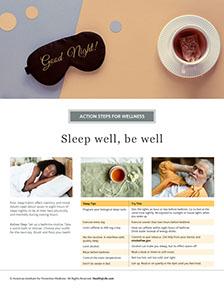
    A cup of tea and an eye mask with the word "Good Night!"

    Poor sleep habits affect memory and mood. Adults need about seven to eight hours of sleep nightly to be at their best physically and mentally during waking hours.

    Action Step: Set up a bedtime routine. Take a warm bath or shower. Choose your outfit for the next day. Brush and floss your teeth.

    © American Institute for Preventive Medicine

  • Move Outside The Exercise Box

    BE FIT

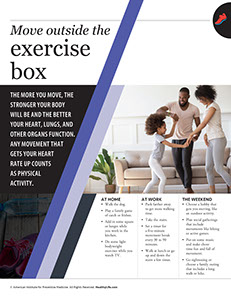
    Family dancing around.

    The more you move, the stronger your body will be and the better your heart, lungs, and other organs function. Any movement that gets your heart rate up counts as physical activity.

    At home

    *  Walk the dog.

    *  Play a family game of catch or frisbee.

    *  Add in some squats or lunges while you work in the kitchen.

    *  Do some light bodyweight exercises while you watch TV.

    At work

    *  Park farther away to get more walking time.

    *  Take the stairs.

    *  Set a timer for a five-minute movement break every 30 to 90 minutes.

    *  Walk at lunch or go up and down the stairs a few times.

    The weekend

    *  Choose a hobby that gets you moving, like an outdoor activity.

    *  Plan social gatherings that include movements like hiking or active games.

    *  Put on some music and make chore time fun and full of movement.

    *  Go sightseeing or choose a family outing that includes a long walk or hike.

    © American Institute for Preventive Medicine

  • Own Your Work From Home

    WORK LIFE

    Man working on laptop.

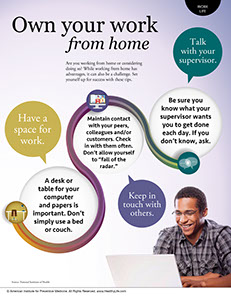
    Are you working from home or considering doing so? While working from home has advantages, it can also be a challenge. Set yourself up for success with these tips.

    Talk with your supervisor.

    Be sure you know what your supervisor wants you to get done each day. If you don’t know, ask.

    Keep in touch with others.

    Maintain contact with your peers, colleagues and/or customers. Check in with them often. Don’t allow yourself to “fall of the radar.”

    Have a space for work.

    A desk or table for your computer and papers is important. Don’t simply use a bed or couch.

    © American Institute for Preventive Medicine

  • Simple Steps To A Great Work Day

    WORK LIFE

    Smiling man with arms crossed.

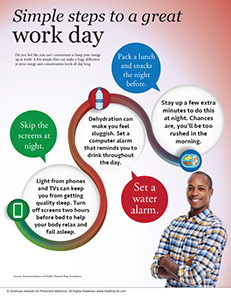
    Do you feel like you can’t concentrate or keep your energy up at work? A few simple fixes can make a huge difference in your energy and concentration levels all day long.

    Pack a lunch and snacks the night before.Stay up a few extra minutes to do this at night. Chances are, you’ll be too rushed in the morning.

    Set a water alarm.Dehydration can make you feel sluggish. Set a computer alarm that reminds you to drink throughout the day.

    Skip the screens at night.Light from phones and TVs can keep you from getting quality sleep. Turn off screens two hours before bed to help your body relax and fall asleep.

    Sources: National Institutes of Health, National Sleep Foundation

    © American Institute for Preventive Medicine

  • Weekly Family Meetings

    FAMILY LIFE

    Young family smiling and laughing togething.

    A weekly family meeting is a time to be together, check in, and address any issues that arise.

    *  Make the meeting fun: Plan a special dessert to enjoy. Create a relaxed mood with special lighting or comfy pillows.

    *  Have an agenda: While you don’t want the meeting to be too formal, you should have a schedule to keep you on task.

    *  Get everyone involved: Let people take turns leading discussions. Encourage input and prioritize creative problem-solving.

    *  Set a respectful tone: This is a good time to practice resolving conflict with respect and consideration.

    *  End on a good note: If a tough topic needed to be addressed, be sure to end with something positive. Talk about fun upcoming events or brainstorm vacation ideas.

    © American Institute for Preventive Medicine

  • Benefits Of Walking

    Fitness

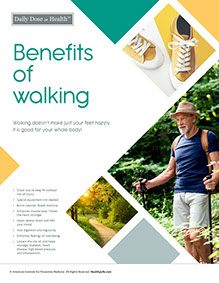
    Couple hiking through trees with walking sticks.

    Walking doesn’t make just your feet happy. It is good for your whole body!

    *  Great way to keep fit without risk of injury.

    *  Special equipment not needed.

    *  Burns calories. Builds stamina.

    *  Enhances muscle tone. Makes the heart stronger.

    *  Helps relieve stress and lifts your mood.

    *  Aids digestion and regularity.

    *  Enhances feelings of well-being.

    *  Lowers the risk of, and helps manage, diabetes, heart disease, high blood pressure, and osteoporosis.

    Page from HealthyLife Weigh book by the American Institute for Preventive Medicine. www.HealthyLife.com. All rights reserved.

    © American Institute for Preventive Medicine

  • Choose An Exercise That Suits Your Body Type

    Fitness

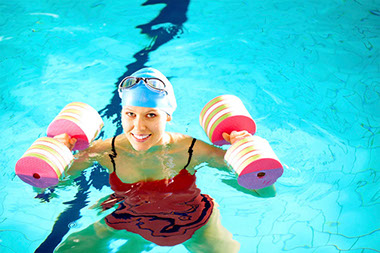
    Image of women doing water aerobics.

    Exercise can do wonders to get rid of unwanted pounds and tone up flabby muscles. But it can’t turn a short, stocky person into a tall, willowy reed, or a slightly built person into a brawny bruiser. However, your body type may make you better suited to some activities than to others. Most people fall into one of three categories: endomorphs, mesomorphs, or ectomorphs, based on their overall build, distribution of body fat, muscle tone, and height. (Some people show characteristics of more than one type.)

    Endomorphs may be described as:

    *  Chubby, round, or soft looking.

    *  Broader at the hips than at the shoulders.

    *  Small-boned.

    *  Not very muscular.

    *  Carrying a higher-than-average amount of body fat.

    Endomorphs are poor candidates for jogging or any activity that calls for high impact with the ground. They’re good candidates for low-impact or nonimpact activities like biking, walking, or swimming, which minimize strain on the body frame.

    Mesomorphs are usually described as:

    *  Big-boned, with a strong, muscular physique.

    *  Broad-shouldered, with a narrow waist.

    *  Rugged looking.

    Mesomorphs are good candidates for walking, and short-distance running (like 5-kilometer races) but not marathons, martial arts, or sports requiring balance, power, and agility (like power lifting, tennis, or boardsailing).

    Ectomorphs are usually described as:

    *  Tall, with a long, slender neck.

    *  Having narrow shoulders, chests, and hips.

    *  Relatively long limbed.

    *  Having small wrists and ankles.

    *  Having little body fat.

    *  Having difficulty developing powerful muscles.

    Ectomorphs are poor candidates for swimming (since they have so little body fat for buoyancy) and sprinting. They’re good candidates for jogging, skipping rope, basketball, tennis and other racquet sports, and cross-country skiing.

    Page image from A Year of Health Hints book by the American Institute for Preventive Medicine. www.HealthyLife.com. All rights reserved.

    © American Institute for Preventive Medicine