Tag: routine

  • Family Meals: Healthy & Simple

    HEALTHY EATING

    Image of mother with 2 young kids wearing chef hats.

    Try these time-saving tips to make eating healthier simpler for you and your family, says Penny Kris-Etherton, PhD, RD, professor of nutrition at Penn State University.

    Plan out 2 to 4 weeks of healthy meals for breakfast, lunch, and dinner.Sit down and map out meals that include your family’s heart-healthy favorites. Update your list as you come across new recipe ideas.

    Use the weekend to make menus.Start by using the list from the first tip and make sure you grab the ingredients you need when you go grocery shopping. Keep an eye out for fresh, seasonal items that are on sale.

    If you work during the week, cook over the weekend and store leftovers in the fridge or freezer.Meals can be hassle-free when you’re just thawing and reheating for quick lunches and dinners.

    Cut up vegetables and keep them handy in the fridge.You’ll have ready-made nutritious snacks and ingredients.

    Shop sales, clip coupons, and buy fruits and vegetables in season.Look for less-expensive items. For example, blueberries cost less in spring and summer, when they’re in season. You’ll pay more in the fall and winter when they’re shipped from warmer continents.

    Skip the ready-made foods.They can be higher in sodium and often cost more than homemade foods.

    Replace high-calorie or high-fat favorites with nutrition-rich foods one at a time.Your family won’t feel shocked or deprived of their favorites if the changes to their diets are gradual. Try one change per week as a starting point.

    © American Institute for Preventive Medicine
  • Insomnia

    Women’s Health

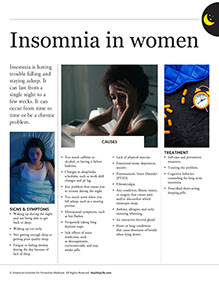
    Insomnia is having trouble falling asleep. It can last from a single night to a few weeks. It can occur from time to time or be a chronic problem.

    Signs & Symptoms

    *  Waking up during the night and not being able to get back to sleep.

    *  Waking up too early.

    *  Not getting enough sleep or getting poor quality sleep.

    *  Fatigue or feeling drowsy during the day because of lack of sleep.

    Causes

    *  Too much caffeine or having it before bedtime.

    *  Changes in sleep/wake schedules, such as work shift changes and jet lag.

    *  Going to bed with a full bladder or any problem that causes you to urinate or have a bowel movement during the night.

    *  Too much noise when you fall asleep. This includes a snoring partner.

    *  Menopausal symptoms, such as hot flashes.

    *  A lack of physical exercise.

    *  Lack of a sex partner.

    *  Side effects of some medicines, such as decongestants, corticosteroids, and stay-awake pills.

    *  Emotional stress. Depression. Anxiety.

    *  Posttraumatic Stress Disorder (PTSD).

    *  Fibromyalgia.

    *  Any condition, illness, injury, or surgery that causes pain and/or discomfort which interrupts sleep.

    *  Asthma, allergies, and early-morning wheezing.

    *  An overactive thyroid gland.

    *  Heart or lung conditions that cause shortness of breath when lying down.

    Treatment

    *  Self-care and prevention measures.

    *  Treating the problem.

    *  Prescribed short-acting sleeping pills.

    Questions to Ask

    Self-Care / Prevention

    *  Avoid caffeine for 8 hours before bedtime. Caffeine is in coffee, tea, chocolate, colas, and some other soft drinks. Check labels for caffeine content in over-the-counter medicines.

    *  Avoid long naps during the day.

    *  Have no more than 1 alcoholic drink with or after dinner. Even though alcohol is a sedative, it can disrupt sleep. Check with your doctor about using any alcohol if you are taking medicines.

    *  An hour or two before going to bed, dim the lights in the house.

    *  Before you go to bed, have food items rich in the amino acid L-tryptophan, such as milk, turkey, or tuna fish. Do not take L-tryptophan supplements, though. Eating foods with carbohydrates, such as cereal, breads, and fruits, may help as well.

    *  Do regular exercise, but not within a few hours of going to bed.

    *  Before bedtime, take a warm bath or read a book or do some type of repetitive, calm activity. Avoid things that hold your attention, such as watching a suspense movie.

    *  Keep your bedroom quiet, dark, and comfortable. Use clean, fresh sheets and pillows. Keep the room temperature neither too warm nor too cool.

    *  Ban worry from the bedroom. Don’t rehash the mistakes of the day as you toss and turn.

    *  Follow a regular bedtime routine. Lock or check doors and windows, brush your teeth, etc.

    *  Count sheep! Picturing a repeated image may bore you to sleep.

    *  Listen to recordings that help promote sleep. Look for them at a library or bookstore.

    *  If you’ve tried to fall asleep, but are still awake after 30 minutes, get out of bed. Read a relaxing book or sit quietly in the dark. Do this for about 20 minutes. Then go back to bed. Repeat this as many times as you need to until you are able to fall asleep.

    *  Take over-the-counter sleep aids (e.g., melatonin, Tylenol PM, etc.) as advised by your doctor. Don’t take anyone else’s sleeping pills.

    Resources

    National Center on Sleep Disorders Research

    www.nhlbi.nih.gov/about/ncsdr

    National Sleep Foundation

    www.sleepfoundation.org

    Women's Self-Care book by the American Institute for Preventive Medicine. www.HealthyLife.com. All rights reserved.

    © American Institute for Preventive Medicine

  • Fitting In Fitness When Life Is Busy

    BE FIT

    Image of two female friends walking outside in the winter.

    Regular exercise improves your physical and mental health in many ways. Despite its benefits, exercise can be hard to fit into a busy schedule. But no matter how busy your life is, there are ways to make physical activity a part of your routine. Try these small steps to work toward a more active life.

    *Focus on small chunks of time.Many people feel overwhelmed when they think about having to exercise for 30 to 60 minutes. But even 10 minutes of exercise has health benefits. Instead of surfing the web for 10 or 15 minutes, turn on some music and dance, climb the stairs or take a walk.

    *Schedule it in.Most people have at least a few minutes a day they could spend doing exercising instead of leisure activities. TV or Internet time are great examples of things you could cut back on to make time for physical activity. Put your exercise time in your calendar or set an alarm to remind you to get up and move.

    *Make it convenient.Try to find a gym that’s close to your home or work so you can stop by without going out of your way. Or, check out fitness DVDs from the library to use at home. If you make it easier to get started, it may be easier to stick with it.

    *Don’t forget about weekends.Use your days off to get in a few extra minutes of exercise. Instead of quick 10-minute walks, make it 30 minutes. Or, go to a park or walking trail and enjoy the scenery and the extra time for yourself. Go for a family exercise outing to help everyone get healthier!

    *Make the most of break time.Take just five to 10 minutes to walk around the building or up some stairs when you have a break from work.

    © American Institute for Preventive Medicine

  • Insomnia 2

    General Health Conditions

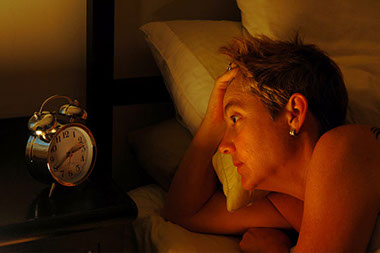
    Image of woman in bed awake at 2:40am.

    Do You Have Insomnia?

    Answer these questions:

    1. Do you have trouble falling asleep?

    2. Do you have problems staying asleep?

    3. Do you wake up too early and can’t get back to sleep?

    4. Do any of these problems last at least 3 weeks?

    If you answered yes to number 4, answer these questions about problems that occur when you are awake:

    5. Do you feel like you do not get enough refreshing sleep?

    6. Do you yawn and feel tired?

    7. Do you lack energy or have fatigue?

    8. Do you have a hard time concentrating?

    9. Do you feel depressed and/or cranky?

    If you answered yes to question number 4 and yes to any question from number 5 through 9, you could have insomnia.

    Why You Need Sleep

    Getting enough sleep and good quality sleep helps you maintain good health and function your best during the day. You need sleep to:

    *  Have energy.

    *  Think clearly.

    *  React quickly.

    *  Be productive.

    *  Learn and remember things.

    *  Help your immune system fight infections.

    According to the National Sleep Foundation, about 50% of adults in the U.S. have problems with sleep at least a few nights a week. And recent studies find that the average person gets less than 6 hours of sleep per night. (On average, adults need at least 7 to 8 hours of sleep each night.)

    A lack of sleep or getting poor quality sleep can lead to a wide range of health problems.

    Health Problems from a Lack of Sleep

    *  Anxiety, depression, and alcohol abuse.

    *  Obesity.

    *  Heart disease.

    *  High blood pressure.

    *  Diabetes.

    *  Stroke.

    *  Gum disease.

    *  Accidents and an increased risk for injury and death. About 20% of all serious car crashes are linked to driver sleepiness. Also, workers with severe insomnia make 2½ times more serious work errors than persons who get proper sleep.

    Getting enough, quality sleep is as vital to good heath and long life as are healthy eating and regular exercise.

    Do’s & Don’ts for Insomnia

    Do’s

    *  Do regular exercise daily. Physical activity releases muscle tension, relieves anger, and improves mood.

    *  Do mild exercises four or more hours before bedtime.

    *  Do relaxation exercises as needed throughout the day and before you go to bed.

    *  Follow a regular daily schedule for meals and snacks.

    *  Choose larger meals at breakfast and lunch than at dinner. At each meal, have complex carbohydrate foods, such as whole-grain breads and cereals, fruits and vegetables.

    *  Limit caffeine to 300 milligrams (mgs.) a day. More than 500 to 600 mgs. a day may cause you to be anxious, nervous, and makes it harder to sleep well.

    *  Cut down on caffeine gradually. Daily usage of caffeine can result in physical dependence. If caffeine is stopped abruptly, withdrawal symptoms can occur. These include headache, feeling down, having a hard time concentrating, and fatigue.

    Don’ts

    *  Don’t do vigorous exercise within six hours of going to bed.

    *  Don’t have large meals near bedtime. These may keep you awake, especially if you have heartburn or a similar problem.

    *  Don’t have caffeine for 6 hours before bedtime.

    HealthyLife SleepWell by the American Institute for Preventive Medicine. www.HealthyLife.com. All rights reserved.

    © American Institute for Preventive Medicine
  • Get Back Into The Exercise Habit

    BE FIT

    Image of 2 females jogging.

    Stressful and busy times in our lives often get in the way of exercise. Whether you’ve been busy with your job, family, or other commitments, it is possible to get back into a fitness habit. If you haven’t exercised for months or even years, here are some safe ways to start fresh and enjoy all the healthy benefits of exercise again.

    1.Go easy at first.Understand that your body will need to work back up to its prior fitness level. Go for a shorter and lighter workout and see how you feel the next day. Gradually make it longer and more difficult each time. This will help you avoid injury and soreness.

    2.Don’t be frustrated.Perhaps you can’t run as fast or lift as many pounds as you did before. That’s to be expected. You can, however, keep working at your fitness goals to be your healthiest self. Each day you exercise, you get closer to that goal.

    3.Recovery is important.You may notice more soreness at first, as your body adjusts to exercise again. Be sure you cool down at the end of your workout and stretch your muscles.

    4.Set realistic goals.Fitness goals can help move you forward. But goals that are too difficult to reach may cause you to throw in the towel. Be proud of any progress you make and each day you choose to be active.

    5.Ask a friend to join you.Having a workout buddy can help you stay motivated and make it fun. Perhaps your friend can join you at the gym or for walks around the neighborhood a few times a week.

    6.Consider a coach or trainer.Professional fitness experts can help you avoid injury and get you on a good fitness plan. Some gyms offer free or low-cost training sessions to new members.

    Source: Office of Disease Prevention and Health Promotion

    © American Institute for Preventive Medicine
  • Set Up Good Sleep Habits

    Student Health

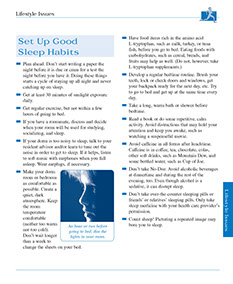
    *  Plan ahead. Don’t start writing a paper the night before it is due or cram for a test the night before you have it. Doing these things starts a cycle of staying up all night and never catching up on sleep.

    *  Get at least 30 minutes of sunlight exposure daily.

    *  Get regular exercise, but not within a few hours of going to bed.

    *  If you have a roommate, discuss and decide when your room will be used for studying, socializing, and sleep.

    *  If your dorm is too noisy to sleep, talk to your resident advisor and/or learn to tune out the noise in order to get to sleep. If it helps, listen to soft music with earphones when you fall asleep. Wear earplugs, if necessary.

    *  Make your dorm room or bedroom as comfortable as possible. Create a quiet, dark atmosphere. Keep the room temperature comfortable (neither too warm nor too cold). Don’t wait longer than a week to change the sheets on your bed.

    *  Have food items rich in the amino acid  L-tryptophan, such as milk, turkey, or tuna fish, before you go to bed. Eating foods with carbohydrates, such as cereal, breads, and fruits may help as well. (Do not, however, take L-tryptophan supplements.)

    *  Develop a regular bedtime routine. Brush your teeth, lock or check doors and windows, get your backpack ready for the next day, etc. Try to go to bed and get up at the same time every day.

    *  Take a long, warm bath or shower before bedtime.

    *  Read a book or do some repetitive, calm activity. Avoid distractions that may hold your attention and keep you awake, such as watching a suspenseful movie.

    *  Avoid caffeine in all forms after lunchtime. Caffeine is in coffee, tea, chocolate, colas, other soft drinks, such as Mountain Dew, and some bottled water, such as Cup of Joe.

    *  Don’t take No-Doz. Avoid alcoholic beverages at dinnertime and during the rest of the evening, too. Even though alcohol is a sedative, it can disrupt sleep.

    *  Don’t take over-the-counter sleeping pills or friends’ or relatives’ sleeping pills. Only take sleep medicine with your health care provider’s permission.

    *  Count sheep! Picturing a repeated image may bore you to sleep.

    Student Self-Care book by the American Institute for Preventive Medicine. www.HealthyLife.com. All rights reserved.

    © American Institute for Preventive Medicine

  • Get Better Sleep Starting Tonight

    SELF-CARE CORNER

    Image of man feeling sleepy at his desk.

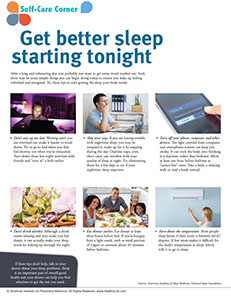
    After a long and exhausting day, you probably just want to get some much needed rest. And, there may be some simple things you can begin doing today to ensure you wake up feeling refreshed and energized. Try these tips to start getting the sleep your body needs:

    *  Don’t stay up too late. Waiting until you are overtired can make it harder to wind down. Try to go to bed when you first feel drowsy, not when you’re exhausted. Turn down those late-night activities with friends and “turn in” a little earlier.

    *  Skip your nap. If you are having trouble with nighttime sleep, you may be tempted to make up for it by napping during the day. Daytime naps, even short ones, can interfere with your quality of sleep at night. Try eliminating them for a few days to see if your nighttime sleep improves.

    *  Turn off your phone, computer and other devices. The light emitted from computer and smartphone screens can keep you awake. It can trick the body into thinking it is daytime, rather than bedtime. Allow at least one hour before bedtime as “screen-free” time. Take a bath, a relaxing walk or read a book instead.

    *  Don’t drink alcohol. Although a drink seems relaxing and may make you feel sleepy, it can actually make your sleep worse by waking up through the night.

    *  Eat dinner earlier. Eat dinner at least three hours before bed. If you’re hungry, have a light snack, such as small portion of yogurt or oatmeal, about 45 minutes before bedtime.

    *  Turn down the temperature. Most people sleep better if their room is between 60-67 degrees. A hot room makes it difficult for the body’s temperature to drop, which tells it to go to sleep.

    If these tips don’t help, talk to your doctor about your sleep problems. Sleep is an important part of overall good health and your doctor can help you find solutions to get the rest you need.

    Sources: American Academy of Sleep Medicine, National Sleep Foundation

    © American Institute for Preventive Medicine

  • Build On Your Current Habits

    Healthylife® Weigh

    Part 4

    Group of friends sitting at table full of healthy snacks, salads and organic dishes.

    Your day-to-day activities include hundreds of habits. Some may be second nature or automatic, like reaching for your seatbelt when you get in a car. Some may be weaker and subject to change, like including fruits or vegetables with your meals and snacks. Be patient. It can take several weeks to form a new habit.

    As you went through Parts 1 to 3 of this online guide, you may have noticed differences between your habits and the healthy ones suggested. As you start to make changes, first focus on a habit that you do every day. Or, think of a habit that you do many times a day. Changes to everyday habits are going to make a big difference, as they are repeated more.

    Using the examples below, compare the impact of making changes to occasional habits versus making changes to everyday habits.

    *  Example A: Change an occasional habit, such as choosing healthy snacks at the airport.

    *  Example B: Change an everyday habit, such as having a glass of water with meals and snacks.

    Breaking old habits is not easy. It takes more than willpower. It takes a plan.

    © American Institute for Preventive Medicine
  • How To Make The Grade This School Year

    FAMILY LIFE

    Image of a group of school children.

    Start talking about the upcoming school year. Listen closely for fears or concerns, advises Dr. Amie Duncan of Cincinnati Children’s Hospital. “It is important that parents listen to and respond to their child’s potential anxieties about the new school year, especially if they are making a big transition such as from an elementary school to a middle school. It is perfectly normal to experience first day jitters,” she said. These feelings can be relieved with some of these suggestions.

    Preschoolers and kindergartners need to know what will happen.

    *  Visit the school together. Let them play on the playground, walk through the classroom, and meet new teachers.

    *  Go on a school shopping trip for a backpack and supplies. Assign a school prep area at home for supplies and lunchboxes.

    *  Tuck a small family picture in a backpack or lunch.

    *  Set bedtime and wake-up routines 4 weeks before school starts.

    *  Be positive and excited for the new school year.

    Elementary and middle-school children will need to adjust to new beginnings.

    *  Expect that your child may want trendy or “cool” school supplies.

    *  Take a quick trip to school before classes start to help find classrooms, lockers, the cafeteria, and the bus drop-off location.

    *  Right from the start, help your child get and stay organized. Choose places to store their backpack and a distraction-free area to complete homework.

    *  Talk to your child about high-risk behaviors, such as drinking, drug use, and sexual activity. Have this talk early and often.

    *  Encourage your child to choose to take part in at least one school club, sport, or other activity outside of school hours.

    *  Don’t hesitate to make an appointment with the school counselor right away if you have concerns about how your child is adjusting to school. Keep the lines of communication open.

    High schoolers need and thrive on positive reinforcement.

    *  Help your teen set realistic goals on how to earn the best grades and complete assignments.

    *  Stay organized. Buy a daily planner and teach your teen how to use it correctly or teach them how to organize their schedule with a tablet computer or laptop.

    *  Encourage your teen to get involved in at least one extracurricular activity or sport because it will help them meet people.

    *  Continue to support and encourage good study habits with regular homework/study times. Search for ways to offer positive support.

    *  Ask about what’s going on in your child’s life. (Use open-ended questions, rather than those that require only a “yes” or “no” response). Be an active listener without judging your child.

    *  Stay involved in your child’s school life and you will know what is going on, and how they are doing.

    © American Institute for Preventive Medicine

  • Check Your Current Exercise Habits

    Healthylife® Weigh

    Part 5

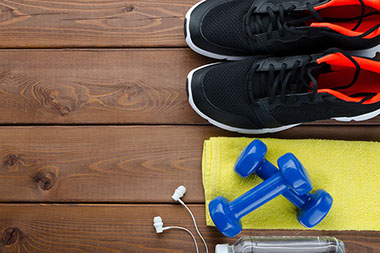
    Fitness concept with sneakers dumbbells headphones and bottle of water.

    How would you describe your current exercise habits?

    *  I do not engage in additional exercise beyond my daily activities.

    *  I exercise 1-3 times per week, for at least 30 minutes at a time.

    *  I exercise most days of the week, for at least 30 minutes at a time.

    *  I sit most of the day for my job.

    *  I am on my feet most of the day for my job.

    *  I am very active during most of the day for my job.

    What are your favorite ways to be physically active?

    Recommendation: Be physically active for at least 2 ½ hours (150 minutes) per week. You can do this in blocks of time that you choose. Any amount of physical activity counts toward the weekly amount.

    *  Have a chronic health problem, such as heart disease or diabetes.

    *  Have high blood pressure.

    *  Feel faint or very dizzy when you try to exercise.

    *  Have an injury or bone or joint problems, such as arthritis, that has been or could become aggravated by exercise.

    © American Institute for Preventive Medicine