Tag: routine

  • Lightening The Load: Dividing Household Chores

    FAMILY LIFE

    Image of couple ready to clean.

    Chores are a part of daily life for families. And, the way they are divided can have a big impact on your family relationships. A survey by the Pew Research Center found that sharing household chores was among the top three things that make a marriage work.

    This can be easier said than done in many households. Many families have to work outside the home, attend kids’ activities and deal with other demands every day. With all these things taking up time, chores may be an additional source of stress.

    First, have a good talk

    It’s easy to get angry or upset with someone for not doing enough chores.

    But before you do this, stop and think. Did you clearly tell them when and how you wanted this chore done? Have they been busy with other activities?

    Be kind and respectful when talking about chores; then you may find that the other person is more willing to take part. Try to look at things from their perspective. Perhaps they’ve been overwhelmed with other things or simply didn’t know that something needed to be done. Or, if you feel like you’ve been doing most of the work, ask if others can help take some things off your plate. Be specific with which chores you would like them to do and when.

    Get the kids involved

    Even small children can do chores. Toddlers can pick up toys and help make their beds. Preschool kids can help clean up spills, feed a pet and even take their laundry to the hamper. Older children may be able to wash dishes, and do laundry and fold clothes.

    Younger children often do well with a chore list so they know what is expected of them. If they can’t read yet, use pictures and stickers.

    Set aside a few minutes

    One strategy that works for many families is finding just 10 or 15 minutes a day to do some basic chores. This can be anything that needs to be done. Examples include picking up and putting things away, cleaning a bathroom or running the vacuum. You can even set a timer so it doesn’t feel so overwhelming. Make it fun by turning on music while you clean. Or, make it a “race” with little ones: who can pick up their room first? When the time is up, everyone can feel good about helping out around the house.

    © American Institute for Preventive Medicine

  • Get Enough Sleep

    Healthylife® Weigh

    Part 3

    Man sleeping.

    Not getting enough sleep can affect your appetite and make it harder to manage your blood sugar. A shortage of sleep also:

    *  Triggers ghrelin, a hunger hormone. Ghrelin increases appetite, especially for sweets, salty foods, and starches.

    *  Decreases another hormone, leptin. Leptin helps your body know when you are full.

    *  Increases anxiety and negative feelings, which can lead you to eat unhealthy snacks and overeat “comfort foods.”

    *  Decreases energy to exercise.

    Tips for Improving Sleep

    *  Create a comfortable place to sleep. Make sure your bed, pillows, and bedding are comfortable.

    *  Maintain a slightly cool temperature in the bedroom.

    *  Avoid looking at a screen (TV, laptop, smartphone, tablet, etc.) 30 minutes before bed.

    *  Create a bedtime and waking routine.

    *  Reserve the bed for sleep and sex. Avoid doing other activities in bed, like work or having an argument.

    *  Have a small snack before bed if you are hungry.

    *  Avoid foods high in sugar or refined carbohydrates just before bed. The rise in blood sugar can provide a burst of energy that keeps you alert and makes it difficult to go to sleep.

    *  Avoid foods that are likely to cause acid reflux (heartburn), gas, cramping, or indigestion if you are prone to these problems. Fatty or spicy foods, beans, garlic, peanuts, and dairy foods may cause discomfort for some people.

    © American Institute for Preventive Medicine
  • No Family Dinner? Other Options To Try

    FAMILY LIFE

    Image of laughing family as dad feeds daughter a piece of fruit.

    Today’s families are busier than ever. Parents’ jobs, kids’ activities, social events, and homework seem to leave little time for anything else.

    Research shows that sitting down as a family for dinner is good for everyone at the table. The Family Dinner Project says sharing a family meal is good for the brains and health of all family members. But some families simply can’t make this happen every night. So what should you do? Don’t give up on finding time for each other. There are other options for family bonding that don’t need to happen at the dinner hour.

    *Consider breakfast.If everyone is home in the morning, why not take a few extra minutes to enjoy a family breakfast? It can get everyone off on the right foot.

    *Try weekend lunches.If dinner only happens once or twice a week, weekend lunches can be a great choice too. A picnic outside in the warmer months makes for a fun change of pace.

    *Think about your schedule.If you can’t get everyone together for a meal at least twice a week, consider rearranging activities or saying “no” to some commitments. The benefits of family meals together are worth the effort.

    © American Institute for Preventive Medicine

  • Be Physically Active

    Healthylife® Weigh

    Part 5

    Group of friends outside exercising.

    All physical activity has benefits for the body and mind. This section will help you find reasons to be active that go beyond weight management. This section will also help you to:

    *  Add variety to the physical activity you already enjoy.

    *  Value different types of activity that have different benefits.

    *  Make a plan to be more physically active.

    *  Manage time and other barriers to do physical activity.

    *  Develop a healthy relationship with your body.

    *  Appreciate what your body is capable of doing.

    HealthyLife® Weigh

    QUICK LINKS: PART 5

    Current Exercise Habits

    Find Reasons to Care About Physical Activity

    Mental Health

    Energy, Learning, Focus

    Physical Health

    Exercise and Sleep

    Reduce Sit-Time

    Do Activities You Enjoy

    Types of Physical Activity

    Cardio Training

    Resistance Training

    Stretching & Rehabilitation

    Yoga

    Massage

    Avoid Injury

    Appreciate the Journey

    Set Fitness Goals

    Plan Physical Activity

    Tackle Limitations

    Injury and Disability

    Manage Your Time

    Set Up for Success

    What Are You Waiting For?

    Responsibility for Change

    Create “If, Then” Plans

    Exercise and Eating

    Eating and Body Image

    How Do You View Your Body?

    Identify Disordered Eating

    Review and Prepare

    © American Institute for Preventive Medicine

  • Simple Ways To Get Better Sleep

    WELL-BEING

    Image of man sleeping.

    Lack of sleep can affect the body in many ways. Beyond just feeling tired, long-term sleep deprivation may be linked to health problems such as heart disease, obesity and depression. Try these tips to get better sleep each night:

    *Have a consistent schedule.Get up at the same time each morning and go to bed at the same time each night. This will help to set your body’s internal clock. Over time, you’ll fall asleep quicker and may sleep better throughout the night.

    *Skip screens.The light given off by smartphones, tablets and computers can actually keep you awake. Avoid electronics in the evening, at least 2 hours before bedtime.

    *Think about skipping naps.Although a nap may feel great when you’re tired, it could be causing more sleep problems. Napping can interfere with your sleep schedule and make you too alert at bedtime. If you have trouble falling asleep at night, skip the nap and get to bed a little sooner.

    *Get moving.Exercise during the day has been shown to improve sleep quality. Walking, jogging, or any activity you enjoy can be helpful. Don’t exercise within 2 hours of bedtime, though, if you have trouble falling asleep.

    *Be careful about caffeine.That afternoon cup of coffee could still be in your system at bedtime, making it difficult to fall asleep. Try to avoid soda, tea and coffee after lunch.

    *Don’t smoke.Nicotine interferes with sleep and harms your health in many other ways. If you need help quitting, talk to your doctor or visitsmokefree.govfor free help with quitting. It’s never too late to quit.

    *Don’t eat a big meal before bed.Heavy meals can interfere with sleep and make you restless. Eat dinner about 2 to 3 hours before bedtime. If you need a snack, make it small and light, such as yogurt and fruit or a handful of nuts.

    Source: National Sleep Foundation

    © American Institute for Preventive Medicine

  • Plan Physical Activity

    Healthylife® Weigh

    Part 5

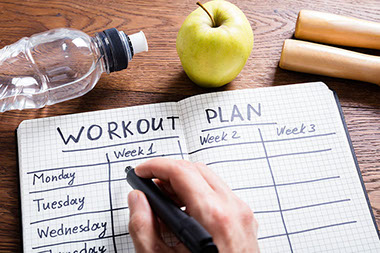
    Workout plan in notebook.

    *  What do you want to do?

    *  Are you doing this alone? Or, who will you do it with?

    *  Where and when will you do this?

    *  What do you need to wear? What do you need to bring?

    *  Write down your specific goals for this workout. If planning a HIIT or resistance training session, write down each part of your exercise plan. Bring this with you when you exercise.

    –  Warm-Up:

    –  Main Activity:

    –  Cool-Down/Stretching:

    © American Institute for Preventive Medicine
  • Solve The Homework Hassle

    FAMILY LIFE

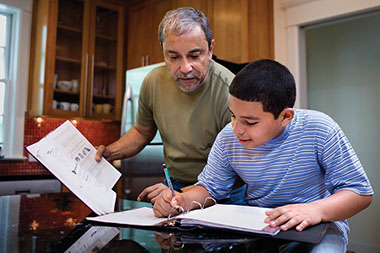
    Image of father helping son with homework.

    Do you dread those long nights of homework hassle-for parents and students? Homework does not have to be a time of great stress for families, according to Paula Kramer, chair and professor of occupational therapy at University of the Sciences. Dr. Kramer suggests the following ways to help avoid arguments over turning off the TV and hitting the books:

    *  Come to an understanding with your child that homework is a necessity-and must be done every day.

    *  Communicate (in person and by email) with the teachers and find out how much time the student is expected to devote to homework each night. Setting expectations and time limits will make the child more productive.

    *  Allow for active playtime before homework. If the child does not have an after-school activity such as a sport or dance class, provide 45 minutes to an hour for the child to engage in active behavior prior to homework. The physical activity will help the child burn off energy, settle the nervous system, and refocus mentally for homework.

    *  Create a designated area for homework and studying-desk in a bedroom or the kitchen table. Just keep the homework spot the same, quiet, and free from distractions.

    *  Create charts to track homework progress. The chart will not only set a schedule that visibly shows that homework needs to be done every night, but will also allow the child to track progress. Rewards can be given for homework completed successfully a few nights in a row.

    *  Use positive praise to encourage good homework and study habits.

    *  Be a role model for the child. School cannot teach everything. Responsibility for successful behavior also lies at home. Parents need to take an active role in their child’s education and should check in on the child during homework to make sure it is completed properly.

    © American Institute for Preventive Medicine

  • Plan Time To Plan Meals

    Healthylife® Weigh

    Part 3

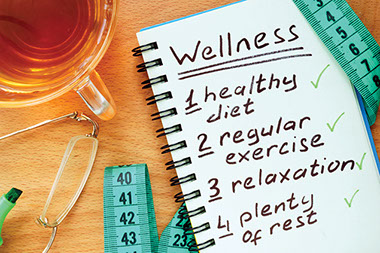
    Notebook with wellness checklist, including diet, fitness and rest.

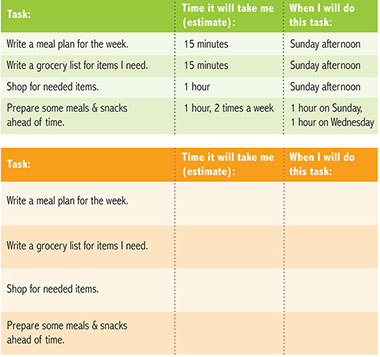
    Make planning your food part of your weekly routine, like going to work or doing laundry. Planning meals helps you select and eat foods in your MyPlate plan, as well as save time and money.

    Having variety is important over time, but it can help to have the same breakfast each day, plan a similar snack, or prepare a dish that covers several meals. You will need time to:

    Look at the Big Picture

    As you get ready to plan your meals, look at the big picture of your wellness goals. Your lifestyle change is about more than just food! Set a non-food goal that will help you take another step toward living a healthy lifestyle. Use this page to pick an idea for the week or write a new idea.

    Make healthy living something you enjoy.

    *  Walk a new trail or part of my neighborhood.

    *  Volunteer at a local food bank to give back and help others eat well.

    *  Find a positive person to follow on social media.

    *  Give a friend or family member a call.

    © American Institute for Preventive Medicine

  • Stretching Exercises To Do At Your Desk

    WORK LIFE

    Image of office with employees working on computers.

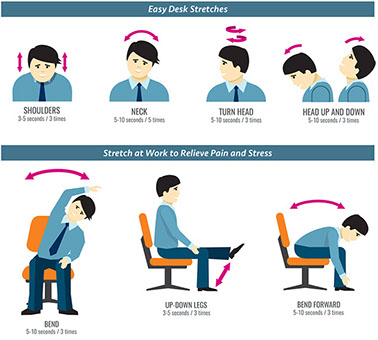
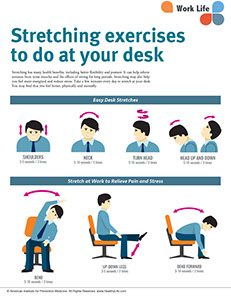
    Stretching has many health benefits, including better flexibility and posture. It can help relieve soreness from tense muscles and the effects of sitting for long periods. Stretching may also help you feel more energized and reduce stress. Take a few minutes every day to stretch at your desk. You may find that you feel better, physically and mentally.

    Illustration showing different desk stretches.

    © American Institute for Preventive Medicine

  • Scramble Your Daily Behaviors

    Healthylife® Weigh

    Part 4

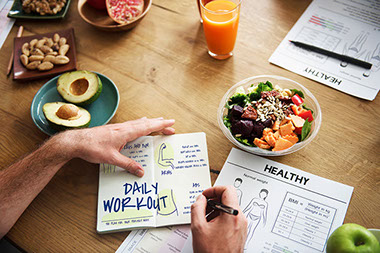
    Person writing in fitness notebook with healthy snacks on table.

    Changing how you go about your day can help get rid of eating cues and prepare you to establish new, healthy habits. Examples:

    *  Change the order of morning events: get up, shower, brush hair, eat breakfast, brush teeth, read paper, walk dog.

    *  Change the order of work events: take off coat, talk with co-workers, organize desk, review appointments or assignments, open email,  make calls.

    *  Alter driving routine: wear gloves, turn on/off radio, raise/lower volume, try listening to a new station, open/close windows, take a new route to work.

    *  Develop new telephone behavior. Stand instead of sit, hold phone with your opposite hand to your opposite ear, talk in a different room, walk as you talk.

    Be realistic.Allow time to establish a new habit. Some new habits are picked up quickly. Others may take several weeks or months of practice.

    Be consistent.Practice your new behaviors every day. This is how your new behavior will become a reliable habit.

    © American Institute for Preventive Medicine