Tag: salt

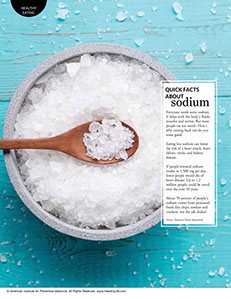
  • Quick Facts About Sodium

    HEALTHY EATING

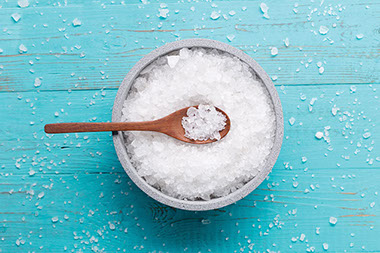
    A bowl filled with salt and a wooden spoon.

    Everyone needs some sodium. It helps with the body’s fluids, muscles and nerves. But most people eat too much. Here’s why cutting back can do you some good:

    Eating less sodium can lower the risk of a heart attack, heart failure, stroke and kidney disease.

    If people lowered sodium intake to 1,500 mg per day, fewer people would die of heart disease. Up to 1.2 million people could be saved over the next 10 years.

    About 70 percent of people’s sodium comes from processed foods like chips, cookies and crackers, not the salt shaker!

    Source: American Heart Association

    © American Institute for Preventive Medicine

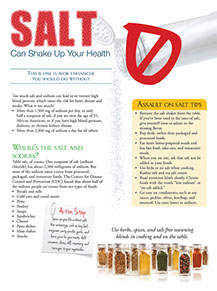
  • Salt Can Shake Up Your Health

    Nutrition

    Close up image of the top of a salt shaker.

    This is one flavor enhancer you should do without.

    Too much salt and sodium can lead to or worsen high blood pressure which raises the risk for heart disease and stroke. What is too much?

    *  More than 1,500 mg of sodium per day, or only half a teaspoon of salt, if you are over the age of 51, African American, or if you have high blood pressure, diabetes, or chronic kidney disease

    *  More than 2,300 mg of sodium a day for all others

    Where’s the salt and sodium?

    Table salt, of course. One teaspoon of salt (sodium chloride) has about 2,300 milligrams of sodium. But most of the sodium eaten comes from processed, packaged, and restaurant foods. The Centers for Disease Control and Prevention (CDC) found that about half of the sodium people eat comes from ten types of foods:

    *  Breads and rolls

    *  Cold cuts and cured meats

    *  Pizza

    *  Poultry

    *  Soups

    *  Sandwiches

    *  Cheese

    *  Pasta dishes

    *  Meat dishes

    *  Snacks

    Shake Salt Out of Your Diet

    Before refrigeration, salt served as a valuable way to preserve food. Unfortunately, in some people, high-sodium diets are linked to high blood pressure and an accumulation of fluid, called edema. (Salt is 40 percent sodium and 60 percent chlorine. Together they form sodium chloride.)

    The taste for salt is acquired, not inborn. So it’s possible to wean yourself off salt with no ill effects. We’ve already suggested you make salt-free soups. Here are some other ideas.

    *  Put away your salt shaker, and forget about using it while cooking or at the table.

    *  Use less seasoned salt, soy sauce, barbecue sauce, and other salty condiments.

    *  Buy only unsalted varieties of snack foods.

    *  Avoid foods prepared with salt brine like pickles, olives, or sauerkraut.

    *  Limit foods like smoked fish, kippered herring, anchovies, sardines, and caviar.

    *  Prepare meals from fresh ingredients instead of relying heavily on commercial products that contain salt or other sodium compounds.

    *  When dining out, ask that foods be made to order, with no salt.

    Assault on salt tips:

    *  Remove the salt shaker from the table. If you’ve been used to the taste of salt, give yourself time to adjust to the missing flavor.

    *  Buy fresh, rather than packaged and processed foods.

    *  Eat more home-prepared meals and less fast food, take-out, and restaurant meals.

    *  When you eat out, ask that salt not be added to your foods.

    *  Use little or no salt when cooking. Kosher salt and sea salt count.

    *  Read nutrition labels closely. Choose foods with the words “low sodium” or “no salt added.”

    *  Go easy on condiments, such as soy sauce, pickles, olives, ketchup, and mustard. Use ones lower in sodium.

    Action Step

    Spice up your life without salt. Use seasonings, such as bay leaf, marjoram, curry powder, garlic, and lemon juice for your meats. Add cinnamon, cloves, dill, rosemary, and tarragon to your vegetables.

    Page from Ways to Well-Being book by the American Institute for Preventive Medicine. www.HealthyLife.com. All rights reserved.

    © American Institute for Preventive Medicine

  • A Safer Way To Shovel Snow

    Personal Safety

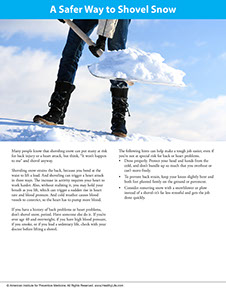
    Image of a person shoveling snow.

    Many people know that shoveling snow can put many at risk for back injury or a heart attack, but think, “It won’t happen to me” and shovel anyway.

    Shoveling snow strains the back, because you bend at the waist to lift a load. And shoveling can trigger a heart attack in three ways. The increase in activity requires your heart to work harder. Also, without realizing it, you may hold your breath as you lift, which can trigger a sudden rise in heart rate and blood pressure. And cold weather causes blood vessels to constrict, so the heart has to pump more blood.

    If you have a history of back problems or heart problems, don’t shovel snow, period. Have someone else do it. If you’re over age 40 and overweight, if you have high blood pressure, if you smoke, or if you lead a sedentary life, check with your doctor before lifting a shovel.

    The following hints can help make a tough job easier, even if you’re not at special risk for back or heart problems.

    *  Dress properly. Protect your head and hands from the cold, and don’t bundle up so much that you overheat or can’t move freely.

    *  To prevent back strain, keep your knees slightly bent and both feet planted firmly on the ground or pavement.

    *  Consider removing snow with a snowblower or plow instead of a shovel-it’s far less stressful and gets the job done quickly.

    A Year of Health Hints book by the American Institute for Preventive Medicine. www.HealthyLife.com. All rights reserved.

    © American Institute for Preventive Medicine

  • Limit Sodium

    Healthylife® Weigh

    Part 2

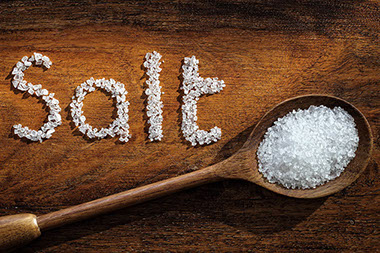
    Sea salt on wooden spoon and the word salt written in grain.

    Your body needs some sodium to:

    *  Maintain the right balance of fluids in your body.

    *  Transmit nerve impulses.

    *  Contract and relax muscles.

    Use added salt sparingly and limit foods high in sodium. Most people eat much more sodium than they need. There are important reasons to limit sodium in the diet. A low-sodium diet can help:

    *  Prevent high blood pressure. High blood pressure, if untreated, can lead to heart attack, stroke, poor eye health, headaches, and kidney failure.

    *  Lower your blood pressure if you have high blood pressure.

    *  Avoid swelling (edema) in legs, ankles, and internal organs.

    *  Reduce bloating and other side effects of premenstrual syndrome (PMS).

    Limit sodium to 2,300 milligrams per day (about 1 teaspoon). If you have high blood pressure, consult your doctor about the amount of sodium you should have each day. He or she may suggest you limit your sodium intake to 1,500 milligrams per day (about ¾ teaspoon). This includes sodium from all sources- salt added during cooking and at the table, salt in processed food, and sodium that occurs naturally in foods.

    Ways to Limit Sodium

    *  Choose low-sodium versions of canned foods, like soup, tomatoes and vegetables.

    *  Read nutrition information for restaurant items, when available. Choose from the “heart healthy” menu.

    *  Taste your food before adding salt. If needed, add a little.

    *  Leave the salt shaker off the table.

    *  Limit intake of processed meats like sausage and cold cuts.

    Flavor Foods Without Salt

    *  Beef – Bay leaf, marjoram, nutmeg, onion, pepper, sage, thyme

    *  Lamb – Curry powder, garlic, rosemary, mint

    *  Pork – Garlic, onion, sage, pepper, oregano

    *  Veal – Bay leaf, curry powder, ginger, marjoram, oregano

    *  Chicken – Ginger, marjoram, oregano, paprika, rosemary, sage, tarragon, thyme

    *  Fish – Curry powder, dill, dry mustard, lemon juice, marjoram, paprika, pepper

    *  Carrots – Cinnamon, cloves, marjoram, nutmeg, rosemary, sage

    *  Corn – Cumin, curry powder, onion, paprika, parsley

    *  Green – beans Dill, curry powder, lemon juice, marjoram, oregano, tarragon, thyme

    *  Peas – Ginger, marjoram, onion, parsley, sage

    *  Potatoes – Dill, garlic, onion, paprika, parsley, sage

    *  Summer squash – Cloves, curry powder, marjoram, nutmeg, rosemary, sage

    *  Winter squash – Cinnamon, ginger, nutmeg, onion

    *  Tomatoes – Basil, bay leaf, dill, marjoram, onion, oregano, parsley, pepper
    © American Institute for Preventive Medicine

  • Limit Sodium 2

    Healthylife® Weigh

    Menus & Recipes

    Sea salt on wooden spoon and the word salt written in grain.

    Your body needs some sodium (salt), but not too much, to keep the right balance of body fluids, use muscles properly and transmit nerve signals. Limit foods high in sodium and use added salt sparingly. Ways to limit sodium include:

    *  Limit processed meats like sausage and pepperoni.

    *  Choose salt-free or low-sodium canned foods (soup, vegetables, etc.) by reading the food label.

    *  Read nutrition information for restaurant items when available.

    *  Leave the salt shaker off the table. Taste your food before adding salt. If needed, add a little.

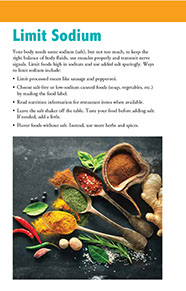
    *  Flavor foods without salt. Instead, use more herbs and spices.

    © American Institute for Preventive Medicine

  • Sodium In Packaged Foods

    Healthylife® Weigh

    Part 3

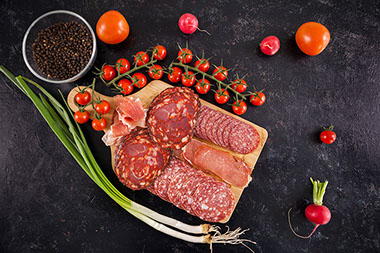
    Deli meat on cutting board with fresh tomatoes and green onions.

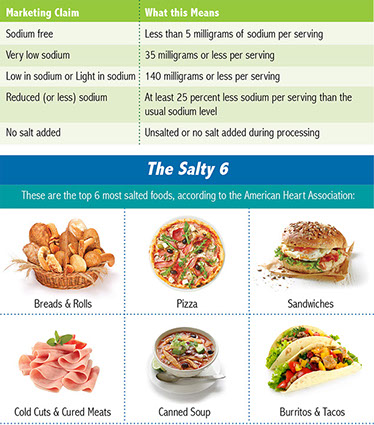
    Many packaged foods have sodium added. Use the food label to compare sodium content between products. Choose options lower in sodium. This chart shows what different sodium-related marketing claims mean.

    Chart of marketing claims and what they mean. And, the salty 6.

    For restaurant items, check the posted nutrition facts or go to the restaurant’s website. Learn more about making healthy choices while eating out and on the go inPart 4of this online guide.

    © American Institute for Preventive Medicine

  • The Salty 6: Hidden Sources Of Salt

    HEALTHY EATING

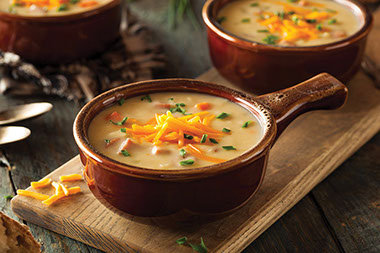
    Image of a bowl of soup.

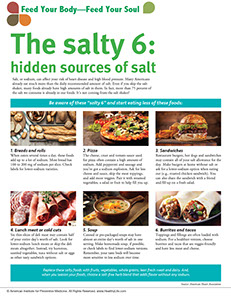
    Salt, or sodium, can affect your risk of heart disease and high blood pressure. Many Americans already eat much more than the daily recommended amount of salt. Even if you skip the salt shaker, many foods already have high amounts of salt in them. In fact, more than 75 percent of the salt we consume is already in our foods. It’s not coming from the salt shaker! Be aware of these “salty 6” and start eating less of these foods:

    1. Breads and rolls

    When eaten several times a day, these foods add up to a lot of sodium. Most bread has 100 to 200 mg of sodium per slice. Check labels for lower-sodium varieties.

    2. Pizza

    The cheese, crust and tomato sauce used for pizza often contain a high amount of sodium. Add pepperoni and sausage and you’ve got a sodium explosion. Ask for less cheese and sauce, skip the meat toppings, and add more veggies. Pair it with steamed vegetables, a salad or fruit to help fill you up.

    3. Sandwiches

    Restaurant burgers, hot dogs and sandwiches may contain all of your salt allowance for the day. Make burgers at home without salt or ask for a lower-sodium option when eating out (e.g., roasted chicken sandwich). You can also share the sandwich with a friend and fill up on a fresh salad.

    4. Lunch meat or cold cuts

    Six thin slices of deli meat may contain half of your entire day’s worth of salt. Look for lower-sodium lunch meats or skip the deli meats altogether. Instead, try hummus, sautéed vegetables, tuna without salt or eggs as other tasty sandwich options.

    5. Soup

    Canned or pre-packaged soups may have almost an entire day’s worth of salt in one serving. Make homemade soup, if possible, or check labels to find lower-sodium versions. Remember, your taste buds will become more sensitive to less sodium over time.

    6. Burritos and tacos

    Toppings and fillings are often loaded with sodium. For a healthier version, choose burritos and tacos that are veggie-friendly and have less meat and cheese.

    Replace these salty foods with fruits, vegetables, whole grains, lean fresh meat and dairy. And, when you season your foods, choose a salt-free herb blend that adds flavor without any sodium.

    Source: American Heart Association

    © American Institute for Preventive Medicine